How to Live

I’ve been thinking lately about the various ways different peoples at different times have thought about living life.

There are, of course, those who lean toward religion, who believe following the dictates of their particular faith and avoiding sinful ways will lead to the preferred after-life results. Then, there are those level headed logicians who advocate maintaining an even keel, all things in moderation and embracing fate as fairly inevitable. Amor Fati they call it: Love of Fate, which I guess means wishing for things to happen exactly the way they do. I suppose for the more pessimistic among these folks, what one fears most will probably happen so you might as well get used to the idea. These moderate Stoic thinkers advocate practicing a thought experiment: imagine this is the last day of your life, that this instant is your last one and then ask yourself this question: Am I living a good life?

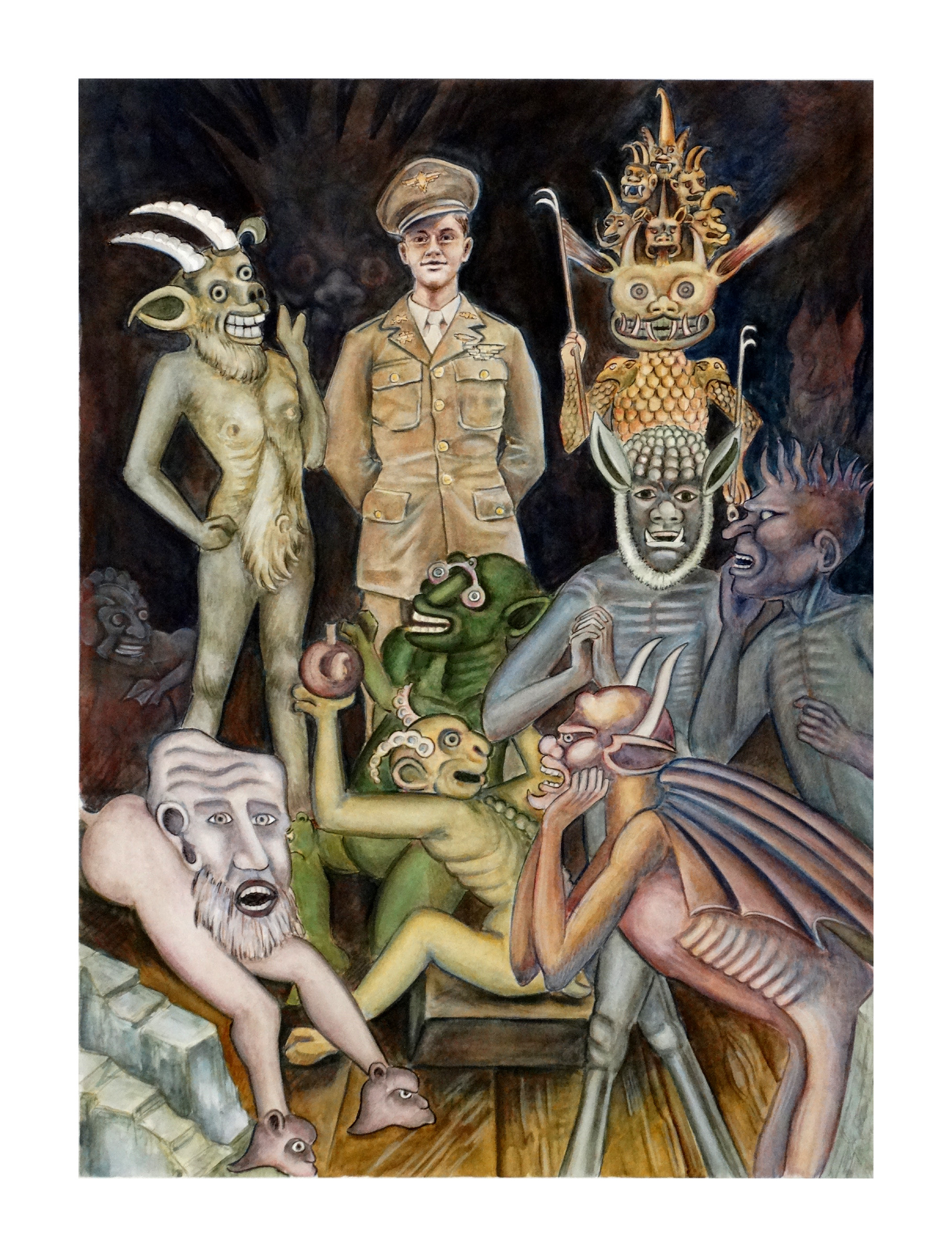
Well, all this is well and good I suppose but I would think certain situations would make practicing these philosophic poses difficult at the very least. For instance, if you were a peasant living in France in the 16th century your very survival might depend on your religious affiliation.  Declaring yourself Catholic or protestant at any given time might be pretty dangerous and forget altogether about claiming agnosticism.  Or, if you were an infantryman during World War II you probably would have a hard time thinking about anything other than whether or not you were going to get shot or blown up. Your demons, in both cases, would be very real and not easily dismissed by belief in a promised after-life or pacified by thought experiments.

Well, not being in any sort of threatening or seriously uncertain situation myself (other than possibly being left out in the rain) I guess I can contemplate ‘Best Living’ if I so choose which, I guess, is, in itself, a pretty satisfying way to live.
Horrors of War

Horrors of War

Preparing for the Afterlife

I got left in the sauna the other day. They forgot about me for quite some time. I needn’t tell you it was pretty hot- and steamy- to the point that my plastic body began softening a bit. Eventually I was found and returned to the playroom but the experience got me thinking about what awaits us in the afterlife.

Assuming, of course, there is an afterlife, which given the uncertainties inherent in Quantum Field Theory seems to be at least worth considering. Anyway, given the choice, I’d opt for warmth, fully aware, as I am, of the implications of such a choice to the Christian community.

Nevertheless, it’s heat I’d prefer. The sub-atomic particles of my disintegrated physical body reuniting with the Great Oneness of the molten plastic vat suggest to me a great comfort. That is, assuming I can experience it. In order to do so, I imagine my consciousness would need to transcend my physical body which raises the question of where exactly my consciousness would reside, assuming further it (my consciousness that is) has some sort of corporeal being.

And then, I suppose, one must consider that the afterlife may be this life over again or perhaps inhabitance of a different body in this world, which might mean my desired warmth might not be available and my afterlife might be less than desirable.

Well, I’m going to put off planning the Meaningful Event that Celebrates Life and I’ll wait on the construction of the Celebratory Container to house my remains for a while. I feel pretty good and I really need to think about how much control I may have over what comes next.

meltingdeidei3


Free Thought

I’ve thought, now, for a long time, being the skeptic I am, my thinking is relatively free of doctrinal or dogmatic influences. So, I found it interesting reading about the origins of a group of individuals calling themselves freethinkers. This organization was and still is, I guess, based on certain tenets generally in opposition to the kind of dogmatic, authoritarian beliefs generally associated with religions. They believe (or should I say operate upon the notion) truth can only be obtained through rational inquiry and speculation; any sort of supernatural phenomena is discounted out of hand.

These freethinkers, as a group, apparently share a fairly common mindset which makes, in my mind, calling themselves Freethinkers rather oxymoronic. I have to wonder, after all, whether any set of organizational tenets might not imply doctrinal restrictions. In the Freethinkers’ case the elimination of the possibility of expanding one’s views beyond the rational, logical and empirical.

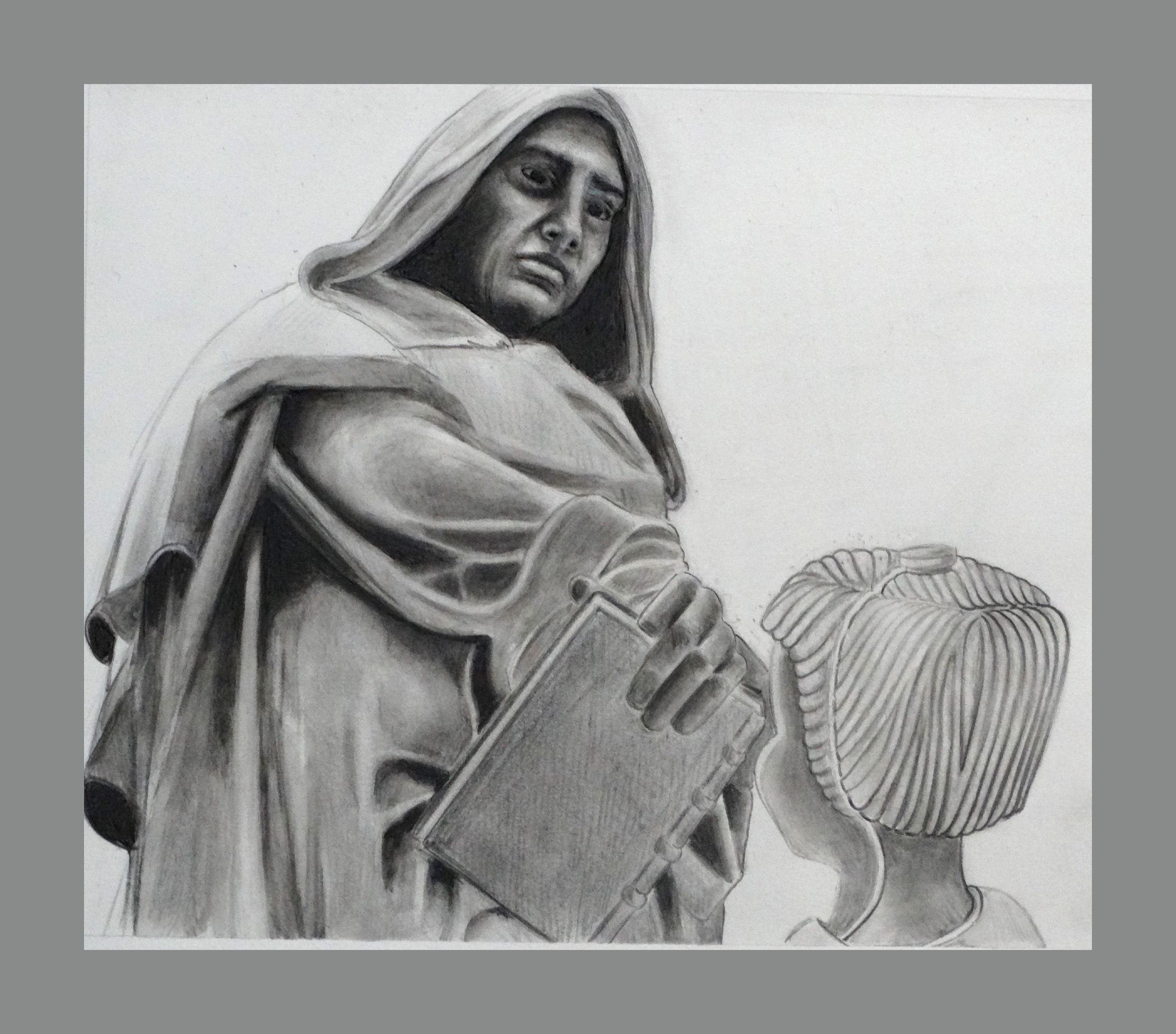
I guess it’s only human nature for people to seek out others who think like they do; it’s nice to have social support, after all. Maybe this group just needs to come up with a different name, perhaps they could name themselves after one of the great freethinkers of the past, someone like Giordano Bruno or Michel de Montaigne, both great 16th century minds at odds with the doctrinal and dogmatic beliefs of the day.

But, I suppose the moderns might look askance at the fact that both of these men maintained a vibrant sense of a noumenal reality which, in the day, was usually attributed to supernatural entities.  And I suppose such a name as, say, Montaigneist might be pretty obscure in terms of attracting new members.  Maybe, though, de-emphasizing the ‘groupness’ of the organization might not be such a bad thing.

With Giordano Bruno

With Giordano Bruno


Holy Family

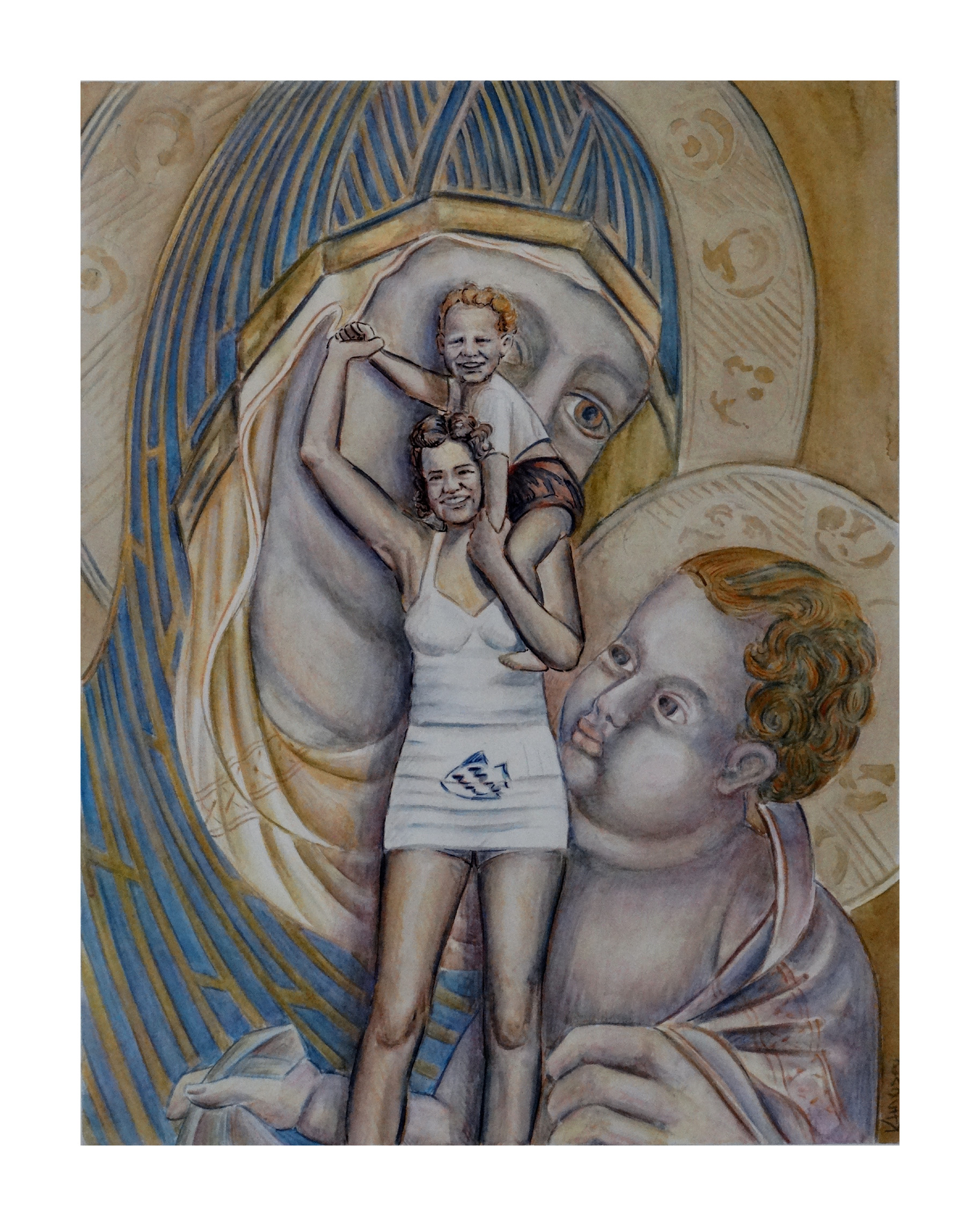
As I continue to view the pictures in the old family albums, I contemplate the confidence the figures seem to exude. I wonder about the philosophical basis upon which these people operated. I have a feeling at least some of the optimism their appearance seems to imply is the result of the economic boom brought on by all that war production. Capitalism’s finest hour provided the likelihood of material gains for all. The idea of ‘getting ahead’ must have seemed pretty realistic.

These folks were members of the ‘greatest generation’: the post-World War II nation that probably saw itself as saving the world from unspeakable evil. There must have been a sense that God was on their side, a belief carried right through to the present day to justify a tendency to micro-manage world order (something, it’s becoming pretty clear we’re not very good at).

Which is not to say these aren’t inherently good people ready and willing to do for others in need and wishing ill on no one (although one must surmise a certain racist undercurrent existed evidenced by the segregation in the armed forces not to mention the blind eye turned toward the impending holocaust).

I guess it’s pretty easy to look critically at these people in retrospect and if I turn the same critical eye to me and my fellows I suppose much could be found to be wanting. And, I guess all we can hope for in the future is to learn from the past which, when I think about it is probably pretty unlikely.

holyfamily2


Family Values

I’ve been looking at old pictures in my adopted family’s photo albums recently. I can’t say I’m familiar with everyone pictured but family resemblance is pretty easy to discern. One thing that strikes me about these photos is the facial expressions in which, invariably, everyone is smiling, and, in most cases seem not to be simply mugging for the camera but, rather, exhibiting a true sense of joy, innocence and well-being.

I must assume that life on the whole was and is just as much of a struggle for these people as for anyone else, so I have to wonder what lies behind these smiles: some sort of assurance of innate goodness in the universe, a confidence that everything is essentially right with the world? I know this family has been deeply religious so perhaps that may explain the conundrum at least in part. But I prefer to think of these people as having realized a true Élan Vital, that they have come face to face with the ineffable essence of life, that they have innate understanding that they are participants in the natural, universal Oneness.

I do have the feeling, though, if I were able to ask these folks about this they would be inclined to offer the religious explanation. Maybe, over all, it doesn’t really matter how the essence of life is framed as long as we all stay focused on the world we know and love.

Mother and Child

Mother and Child