
Hannah Arendt: Defining Fascism
The majority of the American population maintains political values that fall between ‘the forty yard lines’. Certain beliefs, while dominant, are overridden in the media by louder voices; elements wishing to impose, nefariously, interests that, if forced upon the country, would undermine democracy.
This far right focus on education, undermining public schools, is on top of their agenda. They will argue public schools are indoctrinating youth with Critical Race Theory and Diversity Equity, Inclusion programs, they argue, without basis, produce atheism and moral relativism.
Once their dishonest condemnation of public schools is sold they, with considerable financial support by like-minded donors, will pursue the legal installation of voucher programs that will allow them to tap public money to support the Christian Academies that, they believe, will indoctrinate all youth into their narrow Christian beliefs.
The criminal danger that must not be ignored here is the indoctrination they desire is exclusive, meant to instill their beliefs in a diverse population. The indoctrination, on the other hand, public education is accused of is inclusive, meant for all citizens’ children.

In the 1930’s, in Germany, a self-serving elite gained power through suppression of the press and creation of a scapegoat (the Jewish population) on which to blame any perceived ills that the fascist regime saw to be pre-ordained as they moved toward establishment of a totalitarian state.
In today’s America we see a federal government reducing civil services, working to suppress the press and attempting to erode constitutional restraints while aiming to instill an extreme nationalism on a population increasingly alienated by the destruction of the pluralistic policies on which the country was built. Repeated falsehoods of illegal voters and stolen elections intended to deny democracy in favor of the fascism meant to turn America into a totalitarian state.
Hannah Arendt foresaw the dangers in Germany and, as a Jew, realized the need to seek refuge. Her thoughtful discourse on the subject stands as a warning that fascistic tendencies must continue to be opposed and suppressed.
As I find myself, these days, sinking into an uncomfortable anticipation of what might come next, my mind bounding from upcoming responsibilities to the realization uncomfortable situations are likely in my near future, I realize the need to clear my mind. Rather than losing myself in imaginary scenarios or feel-good fantasies found in light reading or simply imagined, I sense the need to stay firmly in the present, apply the discipline to let imagined difficulties pass by.
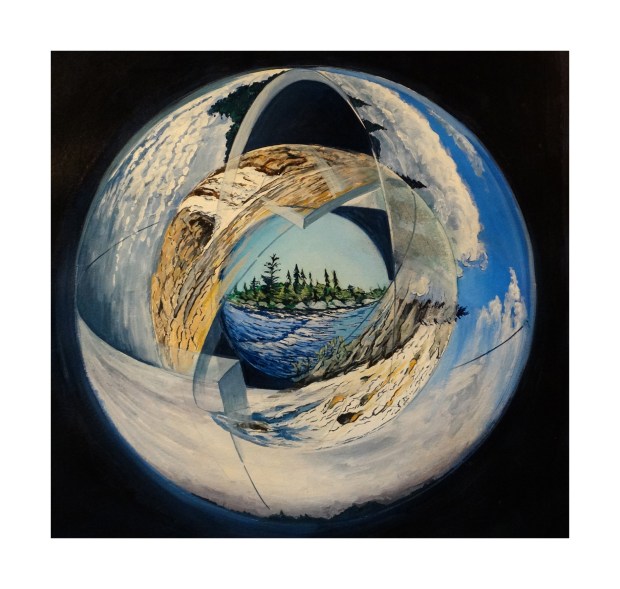
But perhaps a better strategy will be to realize the transcending nature of the NOW, the unlimited potential ripe within every moment, thoughts or actions that can absorb difficulties by providing innovative solutions. Rather than locking down, restricting thought, breaking the boundaries and releasing the inherent energy within will be a much better way to face the future.
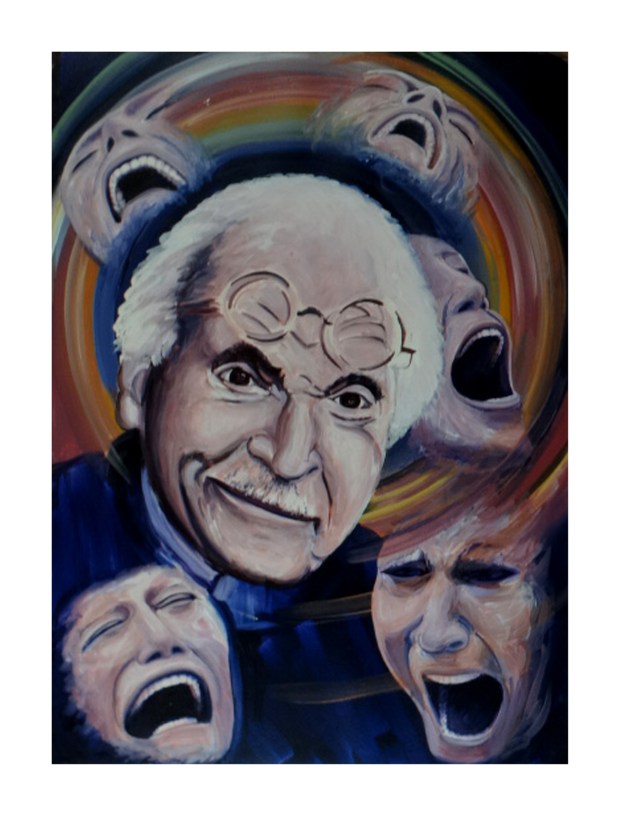
Carl Jung’s interest in the subconscious mind developed, I guess, at least in part, from his experience with hypnogogia: the sharply focused visions occurring during the intervals between waking and sleep. Detailing these visions to his colleague, Sigmund Freud led the latter to wonder if Carl might be losing his sanity. Carl, though, was not psychotic; he fully realized the nature of reality, but he saw the hypnogogic state as defining a richer, more complex subconscious.
As I recall my own experiences with hypnogogia I can appreciate the idea that one’s subconscious might have greater significance than it’s often given credit for.
Thinking this morning as I look out across the smooth glass-like surface of the lake, the pink glow filtering through the distant trees, of times, years ago, while still quite young, of embracing ideas of infinite possibility, realizing an over-riding sense of well-being that, as I think about it, has disappeared, been replaced by the knowledge of what really lies beyond that ‘horizon’, a reality, the product, I guess, of aging.
Still, being allowed the remembrance is gratifying. I must relish those youthful thoughts and appreciate that they haven’t disappeared completely.

I’ve been thinking lately about the multitudes of good and sincere people in the world who have arrived at dramatically conflicting views as to the nature of reality.
Most all of us rely on what we consider to be unimpeachable support sources for our views and usually a contingent of like-minded others that reinforce our beliefs. The evangelical Christian, the Qanon conspiracy buff and the liberal mainstreamer will tend to approach daily occurrences with sets of premises and then conclusions that are quite different. Such conflicting perspectives are the stuff of the social divisiveness manifesting itself these days; the dilemma of free thought in a free society free from coercive oversight, I guess.
I have no answers other than responding with patient tolerance in the knowledge that most everyone deserves respectful acknowledgement of their usually carefully considered views. The hope is that we can all spot disinformation when it presents itself. Hopefully, we can think past the response of the recently interviewed lady asked why she embraces her position on a current controversial idea. ‘I know it’s not true’, she said, ‘but it’s consistent with my beliefs.’

I’ve been reading about knowledge boundaries and the idea of island as metaphor. Within the island, our body of knowledge, we pursue lines of thought, traverse the island, and eventually reach the shore beyond which lies the unknowable. The island grows as the breadth of our knowledge increases, the shoreline expands, and we are confronted with more mysteries and incomprehensive considerations that, when the island was smaller, were beyond our wildest imaginings. I guess the idea is, the more we know the more we don’t know.
For those of us who are not inclined to add dilemmas to the one’s we already struggle with, perhaps limiting knowledge is a preferrable strategy. We gain the peace of unquestioning acceptance of things simply being the way they are as opposed to living the uncertainty of constantly seeking answers; the problem the chronically curious must deal with.
Maybe it doesn’t have to be either/or. I can appreciate peaceful contemplation and still entertain intermittent bouts of curiosity. I think, these days, my island is still slowly growing. I’m just not venturing to the beach as often as I used to.
I’ve been thinking about the George Orwell novel 1984, how the totalitarian regime in the book implemented catch phrases to secure the minds of the populace. ‘War is Peace’ is used to establish a permanent enemy, a scapegoat, that can be blamed for any and all ills that befall the citizenry. ‘Freedom is Slavery’ discourages individualism tribalism in order to keep everyone bound to the collective. ‘Ignorance is Strength’ encourages the subservient populace to forego intellectual reflection, follow the dictates of those in power, not think about things to hard and they will realize contented peace. The message is, I guess, that given such ideas along with sufficient deterrents a totalitarian regime turns people into sheep without them realizing it.
It does seem a bit familiar these days but I guess as long as a free exchange of ideas remains in place reasonable responses can happen.

There are certain theoretical physicists contemplating, as I understand it, the idea that perhaps we are not living a base reality but are in a simulation, a simulated reality. We may be, they surmise, virtual beings created by a higher intelligence with infinite computational facility. Our limited capacity to fully understand our world renders impossible to grasp the closed system provided by our overseers.
The overseers, acting as game players, pit us against each other, create inventive situations for us to deal with and suffer through and then play favorites, much as the ancient Greek gods did. The idea is, I guess, our overseers are using us as players in the ultimate virtual Game of Life.
Well, if I am existing in a virtual closed system, I really can’t complain too much, reclining, as I am, in my lounger in the warm summer breeze. There are difficulties that occur, of course, from time to time but they’re solvable and life is, all in all, good.