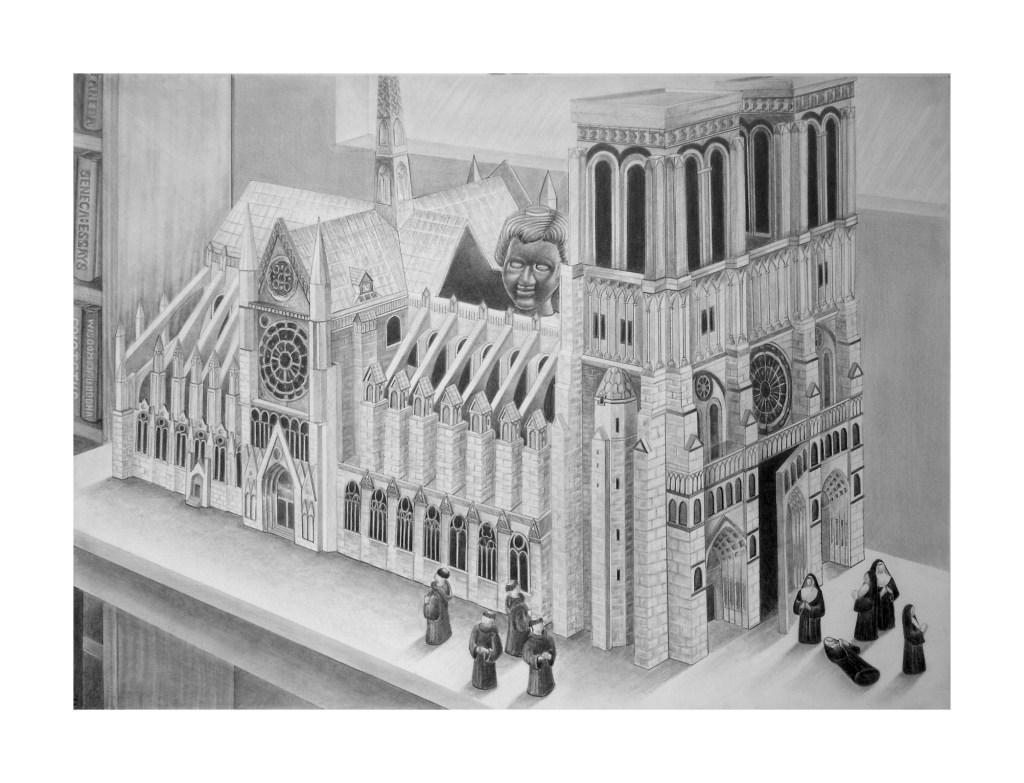
Reunion

I just attended my high school class reunion. I must say I was a bit uneasy about going thinking as I did about certain uncomfortable relationships that I experienced during those high school days.

But I was pleasantly surprised at how welcoming everyone was, genuinely happy to see each other, no sense of the teenage cliques I remembered. And, the bullies had mellowed, were really quite pleasant to visit with.

How many years of maturing should it take, I wondered, for a group of diverse individuals to reach common empathy? In this case it was sixty.

The Uncommon Man

I’ve been reading, lately, about the common man, the 99% of the population that make up the social milieu and wondering what exactly common men have in common. I’m guessing these folks (well, us folks) are mostly of middle-of-the-road social and economic status, probably have limited educational accomplishment, likely adhere to some sort of religious beliefs and most certainly rely on a social network of other individuals of more-or less like mind. We’re the everyday working stiffs who execute our often-uninteresting daily toils in the hope there lies ahead a future of personal economic progress which will provide and secure leisurely retirement.
The uncommon man on the other hand is the intellectual or man of action who drives the public narrative. Maintaining his superior status in a democratic society requires he keep a finger on the pulse of the populace. When the common man begins to lose his sense of hope in a favorable future the uncommon man, in order to maintain his status, must placate the masses by providing a positive vision that a favorable future lies in wait. To maintain societal stability, keep the masses striving for more and better, the uncommon man paints a picture of prosperity near at hand, the good life awaiting those who sustain the necessary drive to be successful.
The philosopher Eric Hoffer thought an uneasy, socially and economically threatened populace of common men who, perhaps, had lost the dream of upward mobility have the potential to produce mass movements that have in the past and will likely in the future dramatically affect the course of history.
Given the state of our world, these days, it seems to me, what we need to do is seek out an uncommon man of superior artistic ability.

Mythical Thinking

I’ve been trying to understand, lately, what exactly perpetuates the fairly widespread ideas of conspiracy theory surfacing these days in the political sphere. It occurs to me that perhaps many of us are being visited in our thinking by a deep-seeded primal intuition: that appearance and reality are intertwined.
The problem with such thinking is that appearances change; what appeared to be one thing one day takes on different meaning at another time in another context. For mythic believers, a rigidity develops. The idea that once an ‘appearance’ is defined and locked in and what is thought to be the case must be the case, any sort of subtle change in or redefinition of what appeared to be the case can only be thought of in terms of conspiracy. Someone or something must be manipulating Truth.
I suppose one who engages in mythical thinking does realize a richly imaginative existence, one that can be shared with other like-minded conspiracy theorists, of which, it appears, there are many. One would hope, in the interests of a healthier society, reality will make an appearance at some point.


Mental Changes

Experiencing, as I am, the mental changes of aging, I’m finding certain positives occurring. Although being unable to remember what I had for dinner two hours after eating can be annoying, the advantages of ‘forgetting’ an unappealing event or appointment, accepted as excusable, has its advantages. On the downside, along with the short-term memory loss comes the inability to keep up with conversational topic switches, as when talk of a fishing trip abruptly segues to local politics.

All in all, I guess one must cheerfully accept the inevitable decline aging presents and stay upbeat. One’s longevity likely depends on it.

Exasperation

Following the public discourse online these days amounts to consumption of sensationalized soundbites that are anything but enlightening. I find it upsetting focusing, as the various media does, on the extremes whether it be weather, politics or divisive personalities.

The negative vibes have caused me to reduce my nightly news viewing to three days a week, still painful but I guess necessary in order to maintain a sense of current events even as they ominously portend a world on the brink of collapse.

Just thinking about it exacerbates my exasperation. I guess I should be thankful my world is still a place I can vent.

Accommodating the Uncomfortable

I’m anticipating, as summer approaches, extended social encounters I will likely find uncomfortable. The realization that my visitors live their lives within realities different than mine, that the narratives they spin are often contradictory to my own makes for a certain tension, always present and energy sapping.

The rule to avoid talk of religion and politics is always warranted but even with that, philosophical conflicts are bound to occur. In other years I have relied on a bit of chemical numbing to see me through but I’m aware now, as my functioning slows, my ability to quickly retort wains, I must take care, to stay articulate so as not to produce even greater discomfort.

But, as you might have guessed, these visitors are family and the value of maintaining an open communication with them may be the most important thing I ever do.

Michel de Montaigne’s Enlightened Views

In 16th Century Europe, Luther’s Reformation provided a popular alternative for a population aggrieved by the excessive taxation imposed by the Roman church. The schism produced opposing factions that felt the need to impose doctrinal absolutes on their respective believers in order to reinforce professed Christian legitimacy. Heretics were found, declared and burned and in France the protestant Huguenots were slaughtered by ruling Catholics.

In response to the unchristian-like actions the French philosopher Michel de Montaigne offered some enlightening insights. He suggested if one took any one of his firmly held beliefs and then took time to consider the opposite view openly and thoroughly, he might very well change his opinion.

Unfortunately, his skepticism of rigid dogmatic belief did little to defer the unsettled populations, who ignored reason and continued to each passionately pursue their preferred narratives.
Some things never change.

The Downside of the Reformation

I’ve been reading that, while the reformation of the Christian Church in 16th century Europe, the establishment of Protestantism in reaction to a corrupt Catholic Church, would, on the face of it, appear to be a time of enlightened reform, quite the opposite was true.

Luther’s translation of the Bible into German made it available to a laity that was then able to form churches based on their understanding of Biblical truth, which tended to vary, sometimes considerably, from one congregation to the next. This precipitated accusations of heresy and totalitarian mindsets closed to sectarian differences, leading to an intolerance greater even than that of the Catholic hierarchy.

These issues were all pretty important back then, people believing, as they did, that Hell was in store for most of the population.

Plato, Aristotle and Medieval Christianity

I’ve been reading about the influence Plato and Aristotle had on the medieval Christian church. The thoughts of these two Greek philosophers were responsible for doctrinal controversy within the church hierarchy.

Plato, whose concept of ‘Ideal Forms’, on which the flawed material world was derivative provided some in the early church insight to see Plato as foretelling the existence of the Christian God, a God beyond rational understanding, a God unknowable before the Christ, to be accepted and revered through faithful observance. Thomas Aquinas, empiricist, thoughtful inquirer, found Aristotle’s sensate investigations proof of an ordered, natural world made that way by an omnipotent God. The contradictory thinking produced on the one hand the necessity of ‘blind faith’, the faithful encouraged to accept the mystery that is God, and, on the other an enquiring laity whose faith and rational understanding was based on knowledge.

The philosophical controversy still exists to this day but at the time paled in comparison to the power struggles and corruption within the medieval church.

A Dark Age

I’ve been reading about the intellectual world in Western Europe as it existed in the early centuries of the second millennium.

With the fall of Roman Civilization 600 years earlier, scholarship had declined, knowledge of the past had been reduced to monastic reproductions of Latin texts providing the church the opportunity to re-imagine the historical narrative to its own advantage, limiting it to a closed Christian perspective and its reliance on the ‘Word of God’ to explain the complexities of the natural world.

This constrictive culture led the few scholars of the time, whose concern for self-preservation amid accusations of heresy, to temper any announcements of research findings setting back intellectual development for centuries.

The eventual breaking free of such a restrictive situation can only be attributed to the indomitable human spirit, even though it did take a long time.