Dream World

I’ve been revisiting the ideas of the dream/reality conundrum as depicted in the Matrix scifi stories. The dream state the films present is so intensely real, there are no give aways, no non-contextual interludes as often happens in actual dreams. The dreamer is unaware that he is physically inactive and sedated, kept alive by chemical means, he’s living a dream.

Anyway, I’ve been finding myself lately mentally wandering off, envisioning imaginary places and situations I’m pretty sure never existed or occurred. But, upon further consideration perhaps these memories are in fact reality and what I’m presently experiencing with pencil in hand is a dream.

I’m really not too concerned, though, because in either case, real or imagined, my experiences are fairly pleasant.

What’s That Smell?

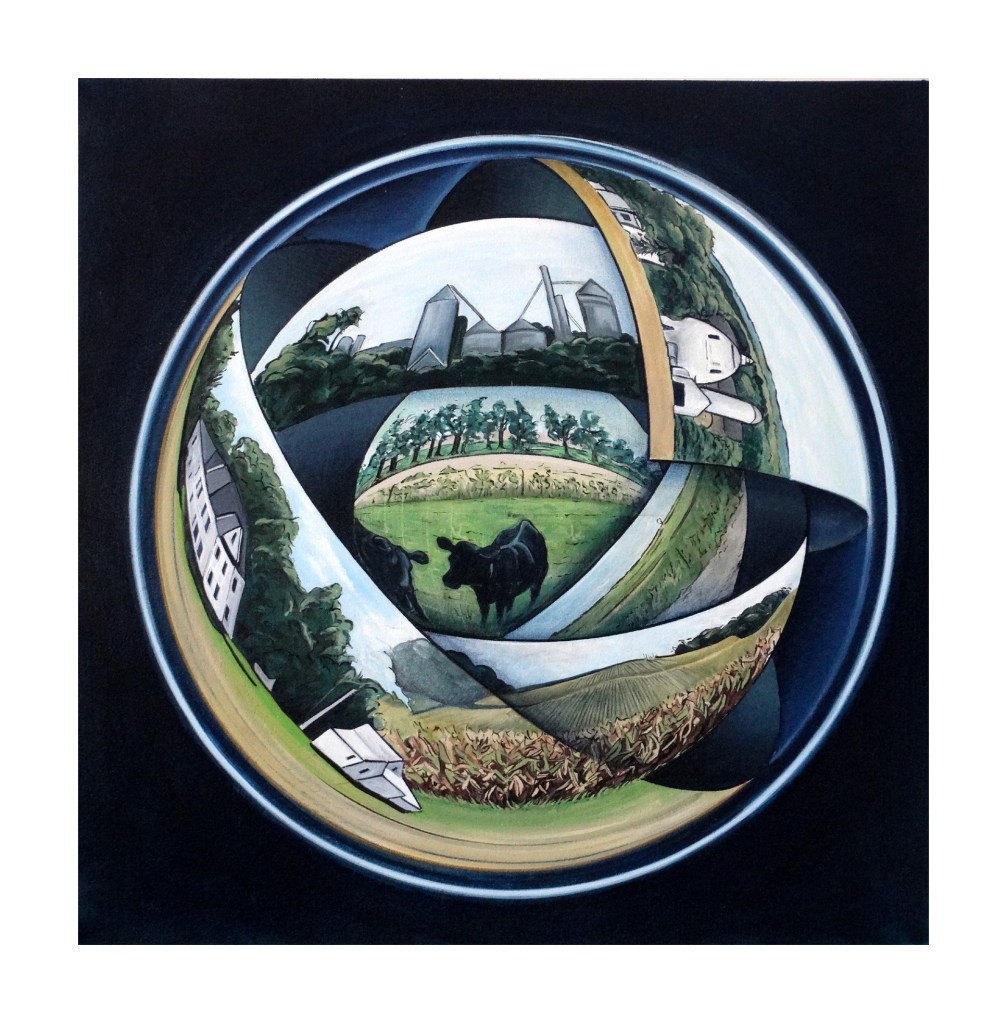
I’ve been reading lately about the complexities involved in understanding one’s sense of smell. Exposures over time to different odors can affect how individuals experience scents in the present. Some smells are undetectable to some people while eliciting strong reactions from others.

Researchers theorize that the smells one grows up with may affect how odors are processed. A dairy farm childhood might elicit fond memories of the smell of cattle manure that differs considerably from that of someone who grew up in the city, whose exposure to the same smell recalls dog excrement stepped in on the sidewalk. Experiencing, assigning quality to odors depends not only on the health of the olfactory receptacles one’s nose contains but also on the variety of scents one has experienced in the past and the psychological baggage that goes with those memories.

I wonder what sort of mindset medieval city dwellers had dealing with the smells of chamber pot content poured from windows, horse excrement in the streets and the flow of human waste through town gutters.

I’ll bet a trip to the country was a breath of fresh air.

Aristotle’s Legacy

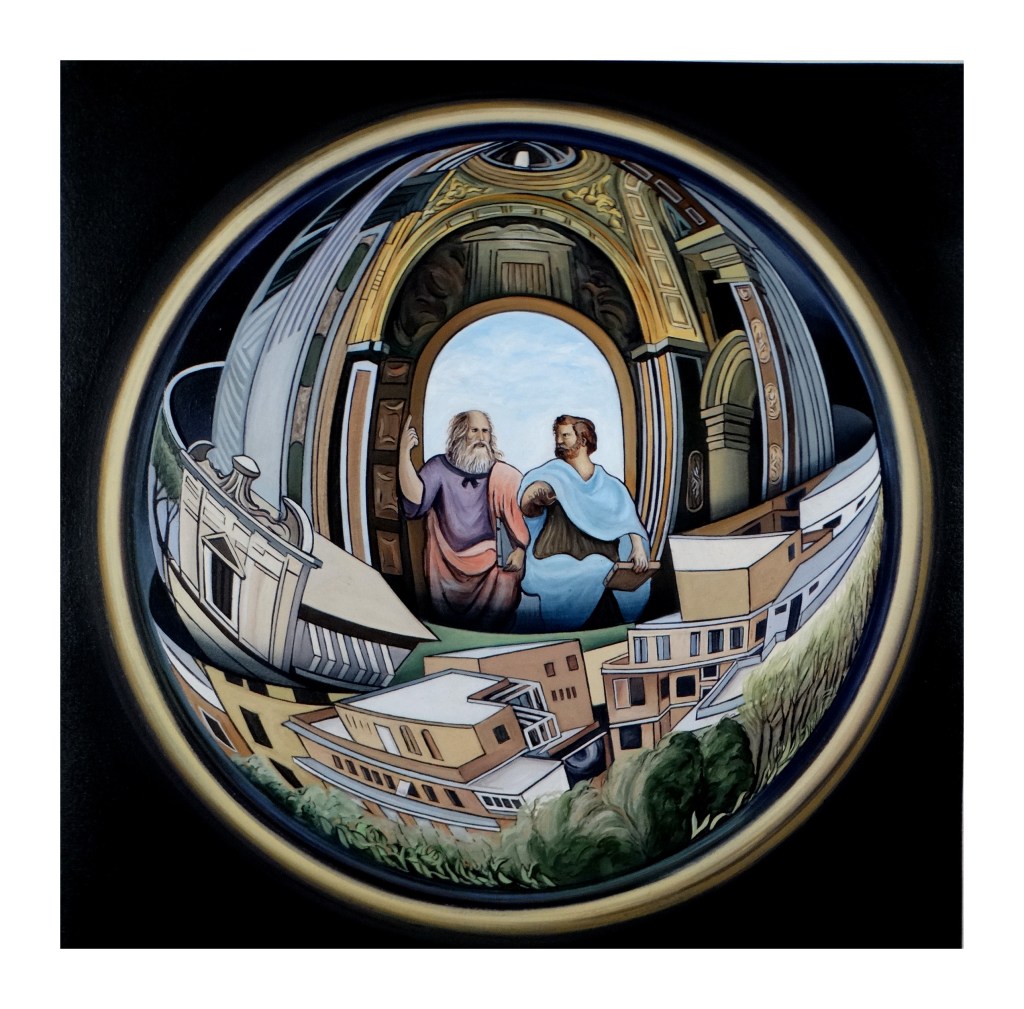
I’ve been reading that, in the mid-20th century, natural philosophy was dominated by logical positivism: the idea that truths are established in terms of clearly perceivable facts, such as size, shape, age, quantity, etc. The logical structure of this theory might be thought of as analogous to billiard balls on a table caroming off one another in blind chain-reactions of cause and effect. Such theory rejects value or quality judgements which are subject to individual interpretation, being of opinion or belief rather than fact.

By 1945, as the atrocities of the Nazi death camps were revealed, some thinkers began to see some otherwise subjective value assignments, evil particularly, as having objective validity. Taking Aristotle as a starting point, the dissenters found a biological paradigm to define the natural world: alive and in constant change, developing, reproducing and transitioning. Rather than blind cause and effect everything in nature is in the process of self-directed development.

These ideas have me thinking of a recent experience I had while paddling my canoe along a shoreline. I startled a duck, most certainly a recent mother, who in the interest of her ducklings hidden somewhere in the rushes, put on the most amazing show of feigned injury, flopping along the water, drawing me away from her brood. Choices were there for her to make: stay hidden or risk her life to draw me off; no ‘blind effect’ to the cause there.
I’m with Aristotle on this one.

Full Circle

It’s evening. The day has taken its toll. The aches and pains have accumulated over the day’s (relatively) strenuous physical activities. I’m exhausted. I can do little right now but convalesce. Maintaining the mantra: ‘use it or lose it’ is becoming increasingly difficult to voice with enthusiasm. Like others in my aging community vigor and flexibility are diminishing. The unable to perform list awaits and is never empty. Common medical knowledge informs us to cut back our physical (and mental) expectations, don’t push so hard, accept limitations if you wish to maintain your earthly existence.

Morning now. I feel invigorated, competitive again, ready to face any adversity. Age, after all, is experience, an equalizer against youthful exuberance. Bring it on. I’m more than ready for challenge.

Evening again and the cycle continues.

Mind Parasites

As I’ve been recalling, lately, events of my teenage years in the small town I grew up in, I’m getting the eerie feeling that the occurrences I recall didn’t happen as I remember them occurring rather in a world of unreality, a fantasy world that, viewed in retrospect couldn’t ever have been.

Even though my recent remembrances aren’t all happy memories as one might suppose imagining a nostalgic past: I think of unpleasant things and actions sometimes that make me wince at my naivete, the bizarro world I imagine is unreal, the sense I have of these past events and places is unexplainable as being due simply to my youthful lack of worldly knowledge.

Anyway, I’ve been reading about mind parasites that exist, as I understand it, in everyone’s deepest subconscious floating about in the ocean of collective consciousness subtly poking and prodding, manipulating memories in parasitic acquisition that may be detrimental to the unaware driving some to harmful personal behaviors. The only way to counter these parasites is to maintain awareness of their existence but to not call them out, maintain rather a personal center of stability in order to overcome their manipulations.
I’m not fully on board with such theory but I guess it doesn’t hurt to stay a bit vigilant; review the past, seek photo references and such.

I Recently Discovered that My Brain is Shrinking

The science section of the Sunday paper often has an unsettling item or two, usually involving reports by researchers who have determined the dangers of various common behaviors that will likely shorten one’s life. The article that caught my attention most recently warned that alcohol consumption will shrink the brain. Researchers apparently measured brain sizes of some several hundred people and determined that as little as one drink a day will cause one’s brain not only to stop growing but to actually reduce in size.

As I think about this and being aware, as I am, of my forgetfulness as well as the consistency of my inability to come up with the word I want in a conversation, I’m led to believe the researchers may be on to something. The fact that I’ve been consuming alcohol for probably fifty years has me wondering whether dementia may be just around the corner. After all this time it probably wouldn’t make any difference if I quit my daily glass of wine or not; how much smaller could my brain get?

I guess I’ll just have to add alcohol consumption to my other life-shortening behaviors: too much coffee will give me cancer and I can expect diabetes from the sweetened sodas I drink. Such thoughts dim the brightness of the generally healthy lifestyle I see myself living. I guess the realization of life’s fragility will keep me reading such reports even though I won’t be thinking about them too long: shrinking brain, you know.

A Cosmic Road Trip

A recent long road trip had me listening to audio books of the sort providing lots of easy-to-follow action. The books I listen to while traveling are ones I would likely not spend time reading but they’re books I find helpful in passing the time during the long expressway miles.

One of the books I listened to offered believable (but pseudo, I suppose) science that got me thinking. The idea that caught my attention was Spontaneous Creation. The beginnings of life on earth, the book’s protagonist explained, was not due to the Big Bang or an Act of God but by natural physical processes responding to thermo-dynamics, the energy required to ward off entropic disintegration: the idea being that the sun’s heat brings sub-atomic particles into alignment eventually forming complexities that evolve over time into life as we know it.

The idea seemed pretty sound to me but, as the author pointed out the ‘laws’ of thermo-dynamics and entropic disintegration imply the existence of a First Cause, something above and beyond imposing order on the universe. A well-reasoned assumption, I guess, but a cynical nature has me wondering if, perhaps, the author was thinking less about science than about book sales.

Subliminal Truth

I’ve been reading, lately, about art and meaning, specifically how the intended communication the art maker might initially wish to convey becomes confused and intermingled with personal urges or desires that are then made manifest in the work during the intensive painstaking making process.

An uninhibited free reign provides the art maker’s mind the opportunity to bypass the political correctness of moral restraint untroubled by any sort of critical push-back (well, at least until the work is presented) and if the work is coming from the depths of the maker’s being without ulterior motive the work will be true: not necessarily attractive in an aesthetic sense nor morally uplifting nor of profound meaning; just honest.

Anyway, this got me thinking about my motivations as I proceeded to develop and execute my painting of the Mother Tree. Making the painting turned out to be a fairly involved undertaking in more ways than I usually find myself engaged. So now I’m led to consider that a project I’ve intended to have a lightly humorousness, anthropomorphizing tree forms as I have might in fact suggest a subliminal libidinous undertone that not only have I been preoccupied with female anatomy I present them (the female entities) as subservient

.Well, I must claim innocence. I really was just intending a light-hearted take on the natural process. But, who can say what the unconscious mind holds. I just hope the PC police won’t come down on me too hard.

Self-Awareness

I’ve been reading an interesting commentary on self-awareness. The suggestion the author makes is that the ‘whys’ of our intuitive actions and reactions are mysteries we rationalize by creating narratives that justify our otherwise unexplainable behaviors.

This, you might guess, has me thinking about my own behaviors, wondering where some of my recent actions and reactions come from, why I’m so inclined, sometimes, to take things personally. It occurs to me after some thought that often my more emotional responses are driven by doubts and uncertainties: being inclined, as I am, to ruminate on multiple points of view.

Did I just justify my emotional responses? Well, it’s all pretty complicated. I guess telling ourselves stories about why we do what we do is a human inevitability. We should hope when emotional build-up makes things intense, we can at least take responsibility rather than seek scapegoats. (The ‘deep state’ is pretty popular these days.)

Controlled Hallucinations

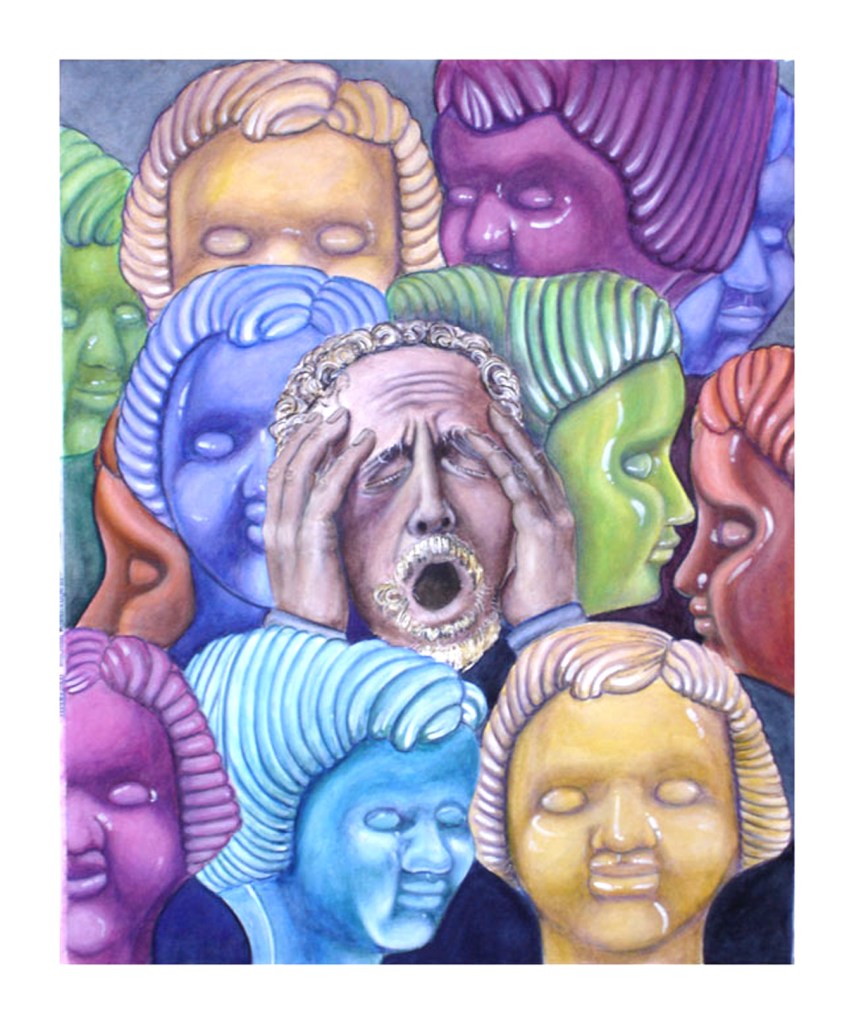
I’ve been reading that certain neuro-scientists have determined that ‘reality’, the domain within which we all live, embodies a world existing in the intersection of memory and observation: that our cognitive awareness consists of ‘controlled hallucinations’.

I guess what this must means is that the memories we rely on will undergo change over time, likely soften, flex toward favorable interpretation and what our senses observe at one point in time will likely vary with age and experience.

I wonder if the ‘controlled’ part of this idea is about dealing with the psychological baggage I carry around with me that gets in the way of my otherwise generally pleasant existence. I can live well enough with the idea my reality consists of hallucinations.