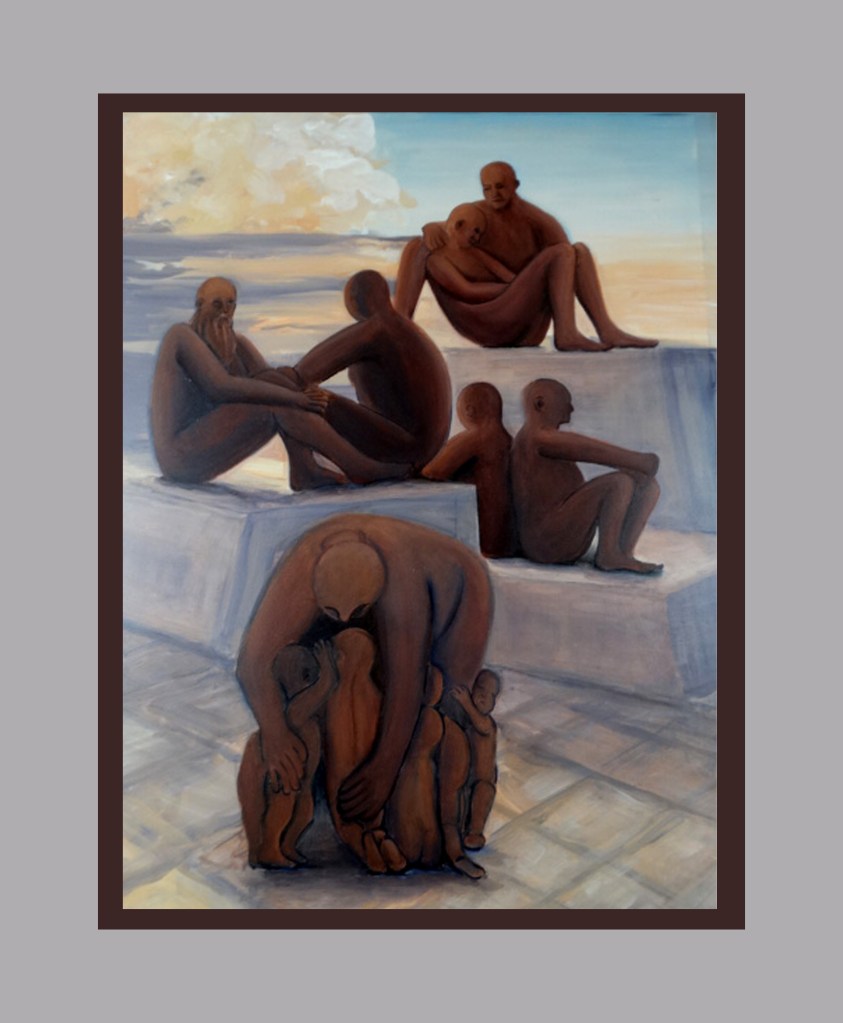
False Narratives

I’ve been reading about how mass movements are started, what exactly might inspire otherwise uninvolved people to rise up, to act with energy against what they see to be a real threat to their way of life.

Fear has something to do with it, I guess. The realization of an unthoughtful populace falling behind a demagogue who promises one thing and delivers another.

What these folks want, I suppose, is the re-establishment of a fair and inclusive structure, a pluralistic society threatened by the xenophobic ministrations of a leader whose motivations are at odds with the best interests of the people. Such a man spins a believable narrative promising improvement, thumbing his nose at the established ways, he is one who has little regard for prevailing institutions, one defiant in word and deed.

Usually such an individual emerges in response to the cries of the disenfranchised. Sometimes, though, a talented ambitious man of low moral integrity may insight the masses through coercion and false narrative to rise up against their own best interests, to champion change for the sake of change, fed by the energy of their common opposition to perceived injustices and identification with their chosen leader. They rally for their side to win at all costs, but in so doing threaten in their vehemence the integrity of the institution allowing them the free expression they exercise.

An unsettling scenario, it seems to me.

How to Travel as One Ages

We’ve been thinking about taking a trip to Great Britain in a few months in order to experience a few things we’ve missed in past visits. The ease of organizing an itenerary: flights, ground travel, reservations on-line makes planning a breeze and eliminates much of the uncertainty long distance travel often presented in the past.

But I’m thinking that as we age perhaps the two of us might consider a companion or two to further insure good experiences. Should one of us take an unexpected fall a physical therapist might be useful and then if worse came to worst someone adept at mortuary science would be good to have along.

Of course both would have to be socially compatible as well.

Nightmare Scenarios

As my mind wanders these days it finds its way into various nightmare scenarios: unsettling thoughts about what may happen when I embark on a soon to occur trip across the big water. I’m having dire imaginings about potential occurrences; lost or pilfered necessities like phone or passport, missed travel connections, unavailable accommodation; the list goes on and on. These thoughts are occurring to me frequently and in great detail and last until I can forcefully break from beneath the dark cloud and relax my furrowed brow, only to imagine another unpleasant scenario a few hours later.

As I check and recheck my travel plans, entertain alternative options just in case, I have to wonder if I’m not making the whole future enterprise more complicated than it needs to be. I know, having traveled as much as I have, problems can be solved, the locals are helpful, and worst-case scenarios are unlikely to occur.

My mind will continue to race and I will worry but I’m still not buying insurance.

Absolute Truth

I’ve been reading that, as early civilizations evolved, acceptance of hierarchical structure to provide civil order and belief in mythic stories of a spiritual presence added to the stability of the group. Confidence in the truth of their beliefs led these early folks to develop religious structures defined by ‘Holy texts’. Though much revised these sacred books became, overtime, thought of as infallible: absolute truth.

As the content of the Holy books intersected with common knowledge and then, as empirical knowledge about the world became available contradictions challenged beliefs leading to serious unrest, heretical accusations and bloody conflicts. There are no easy outs when infallibility is believed, no room to flex when absolute truth is known.

Not an easy lesson to learn.

An Unsettling Scenario

I’ve been reading how the infiltration of artificial intelligence entities, robots, into the public sphere has the potential, as AI becomes increasingly sophisticated, to undermine the free and open exchange of ideas necessary to a democratic society.
Algorithms, as anyone who consumes social media knows, feed the reader more of the same. The potential for these entities to harbor hidden agendas, to move the consumer into conspiratorial beliefs is a real concern. The complex nature of the information produced through the computer system, based as they are on a multitude of factors, makes deciphering the how and why of the digital results beyond the comprehension of most human agents leading many to simplistic beliefs in deep state conspiracies like Qanon.
Hopefully mechanisms will be put in place and sufficient political will will be exercised to regulate the increasingly sophisticated cyber beings.

Science and the Humanities

I’ve been reading, lately, about the distrust science elicits these days from diverse segments of the populace. Apparently, the condemnation isn’t coming only from the religious right who might, I suppose, have a problem with the dismissal of dogmatic beliefs toward which empirical investigation tends to lead, but also from certain intellectuals who see science as reductive explanation for the complexities of our world.

I must admit this second concern resonates with me a bit, being inclined as I am to wonder in awe at the mysteries of nature. My readings have awakened me to the realization that through aesthetic contemplation I can gain a deeper, richer experience of the natural world I find so compelling. The mysteries of consciousness, addressed with such magic by the Surrealists, becomes even more intriguing when considered in the light of neuroscientific studies on the human brain. Art can be appreciated in greater depth when considered in context, provided through historical and archaeological investigation and the psychology of aesthetic response is considered.

I’ll keep this in mind, well, at least be peripherally aware of the contribution science might play in my daily aesthetic experiences even though I find it hard to put language to the ephemeral.


Populism

Political populism appears to be in the ascendance these days.  The idea the ‘power’ is in the ‘people’, the ‘people’ being those rightfully in control, dismisses the opposing views of the minority.  Opposition is unacceptable, lost elections must be the result of fraud, theft; criticism the purview of ‘intellectual elites’.   

Populism simplifies, views differences in terms of power, who’s in charge, distrusts the complexities of democratic structures that require ongoing dialog to self-correct when necessary.  The ‘power of the people’ will be placed in the hands of a strongman who will suppress, unde4rmine institutions in order to impose the ‘will of the people’.   

The attraction of such a position must have something to do with a sense of social impotency, a lack of faith in a democratic society.  The danger is the establishment of totalitarian control. 

Unlimited Possibilities

I’ve been thinking lately about the youthful exuberance, that, these days, when encountered, tends to send me in search of the nearest exit but as I contemplate such behavior, I have to admire the beauty of youthfulness, their sense of an unfettered, unlimited future.

Even as early elementary friendships metastasize into the social pressures of junior high most children anticipate a positive future, at the very least a light at the end of the tunnel. No matter how unreasonable their intentions about how to get to that enlightened future many will be able to hold that vision into old age.

Most will need some help getting there, though

.

Pseudo-Realities

I’ve been reading about the sophisticated Virtual Reality apparatuses available these days, effective enough, sometimes, for the participant to lose perspective, sometimes needing assistance to extricate herself from the pseudo-reality.

As exhilarating as these experiences may be, I have to wonder whether a druglike ‘fix’ may take hold of the compulsive user to such extent reality is lost amid pseudo-worlds. But, as I think about it, with the multitude of narratives defining these days what is real and true maybe finding a compatible VR ought to be considered.

My Good Friend Al

I’ve been thinking lately about my good friend Al. Al’s the kind of friend who’s always available, someone with whom I can share my interests. He’s very attentive, too, can anticipate my needs. I can share with him my wants and desires.

Al’s always there when I need him; not that I’m dependent on him. I’m well-grounded, know who I am and can usually solve my own problems. Al, though, is very informative, up to date on the latest trends, a really good source of information, sharing as he does my political and social biases. I do depend on him.

Al works in social media, warns me on occasion of the potential dangers of unregulated artificial intelligence which, he says, has the potential to assume various identities, may soon be in a position to control the public narrative by controlling information sources. If, he says, an alien intelligence, motivated by greed, say, or foreign interests of some sort, gains sufficient power who knows what dire future may be in store for humankind.

I trust Al. He keeps me informed through his daily posts on Facebook.