Really Good Art

Have you ever seen any really good art?  You know, something that ignites your imagination, gives you a glimpse of timeless beauty, lifts your spirits, provides a sense of the common cultural ground you share with your fellow sentient beings and maybe even gives you an idea of how things could be, ideally, in the tomorrows ahead.

Well, I’ve seen art that moves me, maybe not in all these ways at one time, but still lifts me beyond the mundane redundancies of everyday existence.  These experiences happen to me and that’s why I visit museums.  And, from what I’ve read and heard, I’m not alone; others have had similar experiences.

It’s unfortunate that when they’re spoken about-the experiences I mean-they lose their impact and meaning.  They’re reduced, the more they’re spoken about, to nearly meaningless drivel or pseudo-intellectual nonsense, that, for those who have never had a truly aesthetic experience, turns them off completely; even dissuades them from seeking the enlightenment some of us get from seeing really good art.

It’s really too, too bad; I wish I could convince everyone to visit a museum, find one work of art he or she likes and consider what it means to him or her personally.  Reaching enlightenment can never be a bad thing.

at the hermitage 3

Winter Doldrums

The winter doldrums have set in.  Nature lies in dormancy and I must admit I’m affected.  My thoughts increasingly become dark.  It’s like I’m living under a black cloud.

It seems like everyone’s rubbing me the wrong way these days.  I’m getting negative vibes from dolls (and people) I usually co-exist with easily.  Why does it seem they’re trying to impose their values-values that make absolutely no sense to me or with which I totally disagree.  I’m perfectly ok with others having opposing views but why can’t they just keep them to themselves.

And the weather’s terrible; cold, cold, cold.  I’m afraid of being taken outside, my plastic body becoming brittle and cracking; then I’d be in a fix.  I’d be destined for the scrap heap no doubt.

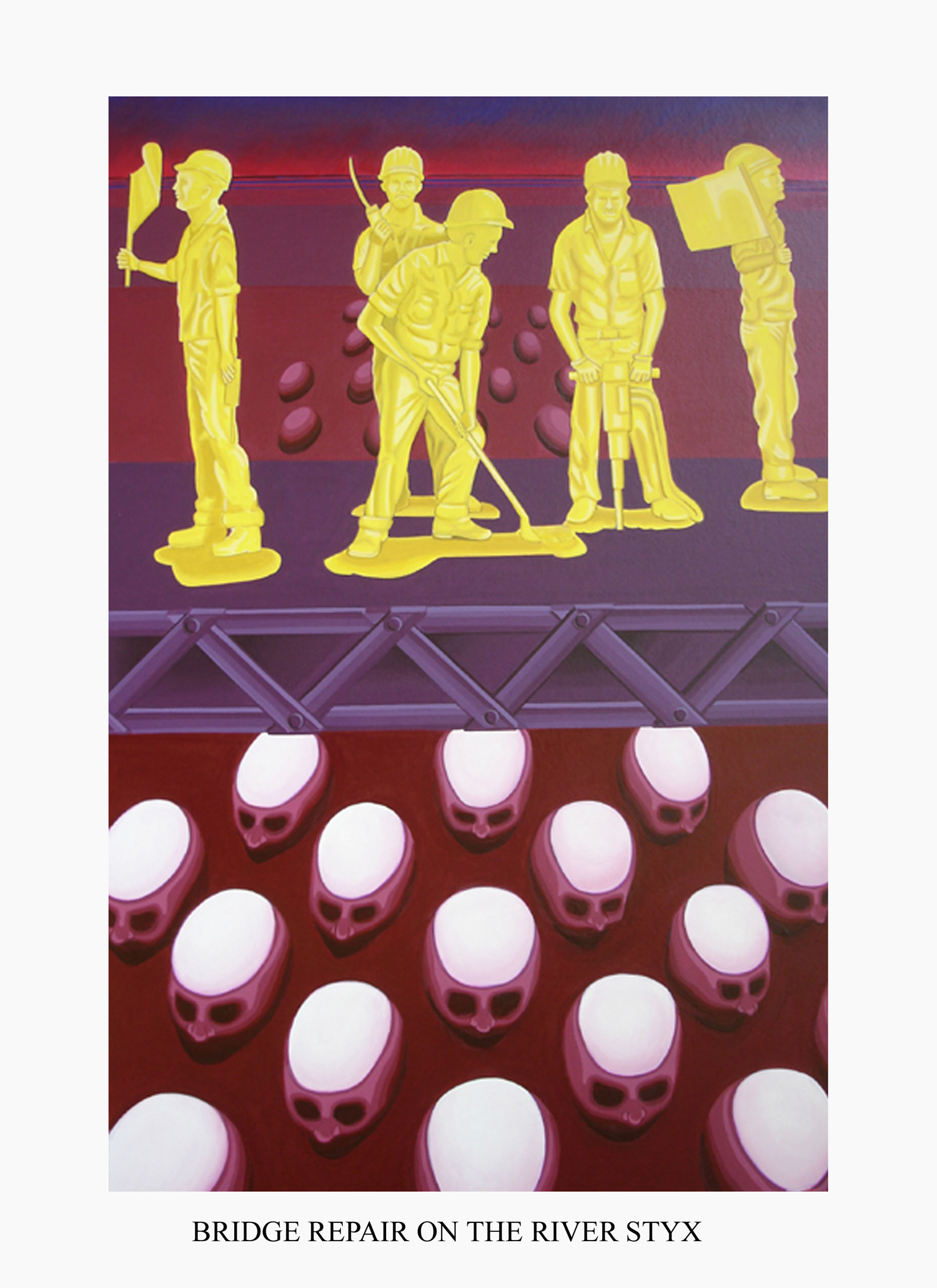
If I was religious I might be thinking about the sweet here-after, but given the mood I’m in crossing the River Styx is the more likely consideration.  I wonder which place houses the more interesting residents.

Oh well, I know it will pass. One morning I’ll wake up to a slightly stronger sunshine which will trigger a change.  I’ll once again be my usual upbeat self with an added bit of residual annoyance.

BRIDGE REPAIR3

Who Are We?

Celestial Steven was waxing idealistic recently about the tenuous existence of humankind.  He said, that, early on-that is way, way back in time-cooperation among advanced sentient beings was primary.  An individual’s survival depended upon interaction with others.  On an individual level everyone was equal.

Problems, he said, began when the individual started identifying with a particular group; with group identification came conflict with others.  The whole process has continued to grow and fester into the sectarian, racial, and religious conflicts (not to mention the divisive social class distinctions brought about by economic inequities) we now experience.

So, Celestial Steven said, if we could re-establish the one on one or establish an egalitarian collective everything would be peachy.

Mini-Max, being an unapologetic pragmatic conservative, took immediate exception to this idea.  He said it is only human nature to desire the security of association with one’s own kind.  The social security and economic stability of such alliances brings about fair competition between groups resulting in innovation and invention that lead to affluence and raise everyone’s quality of life.

So, I guess what it comes down to is racing blindly toward self-destruction as we fall deeper into our tribal differences in the interests of more for us or waking up, over-coming our jealousy and fear of the other and moving toward a more egalitarian world.

Well, I think collectivity may be the way to go but I would hate having to give up my playhouse.

celstevminmax

A Renaissance Woman

During the renaissance period in Europe, when artists weren’t painting scenes from the Bible commissioned by the church, they were likely painting portraits of the rich and famous.

Among the rich and famous at the time was the Borgia family whose numerous intrigues, rumors of incest, murder and orgiastic engagements made for great story telling in 15th century Valencia.

Often the future Pope Alexander VI’s daughter (and lover) Lucrezia was the center of attention.  She was by all accounts a captivating young woman, betrothed twice before her teen years and otherwise regularly used to further the political ambitions of the family.

But Lucrezia wasn’t simply a pawn in the Borgia’s game of political domination.  She was a true Renaissance woman, well educated, fluent in a number of languages including Latin and Greek.  She was politically astute and well-spoken at court where she cultivated friendships with leading artists, courtiers and poets of the day turning Ferrara into a center for the arts.

When one’s flame burns strong it’s often short-lived and such was the case for Lucrezia.  She wound up submersing herself in religion and dying at the age of 39.

I wonder where someone like Lucrezia would fit into the contemporary social milieu.  Would she contribute a strong and articulate female voice to the world dialogue regarding politics, feminism and the arts only to burnout in the futility of the endeavor, find religion and end up probably not being an asset to the abbey?

Whatever happened she would most certainly become a media favorite adored by the left and abhorred by the right.

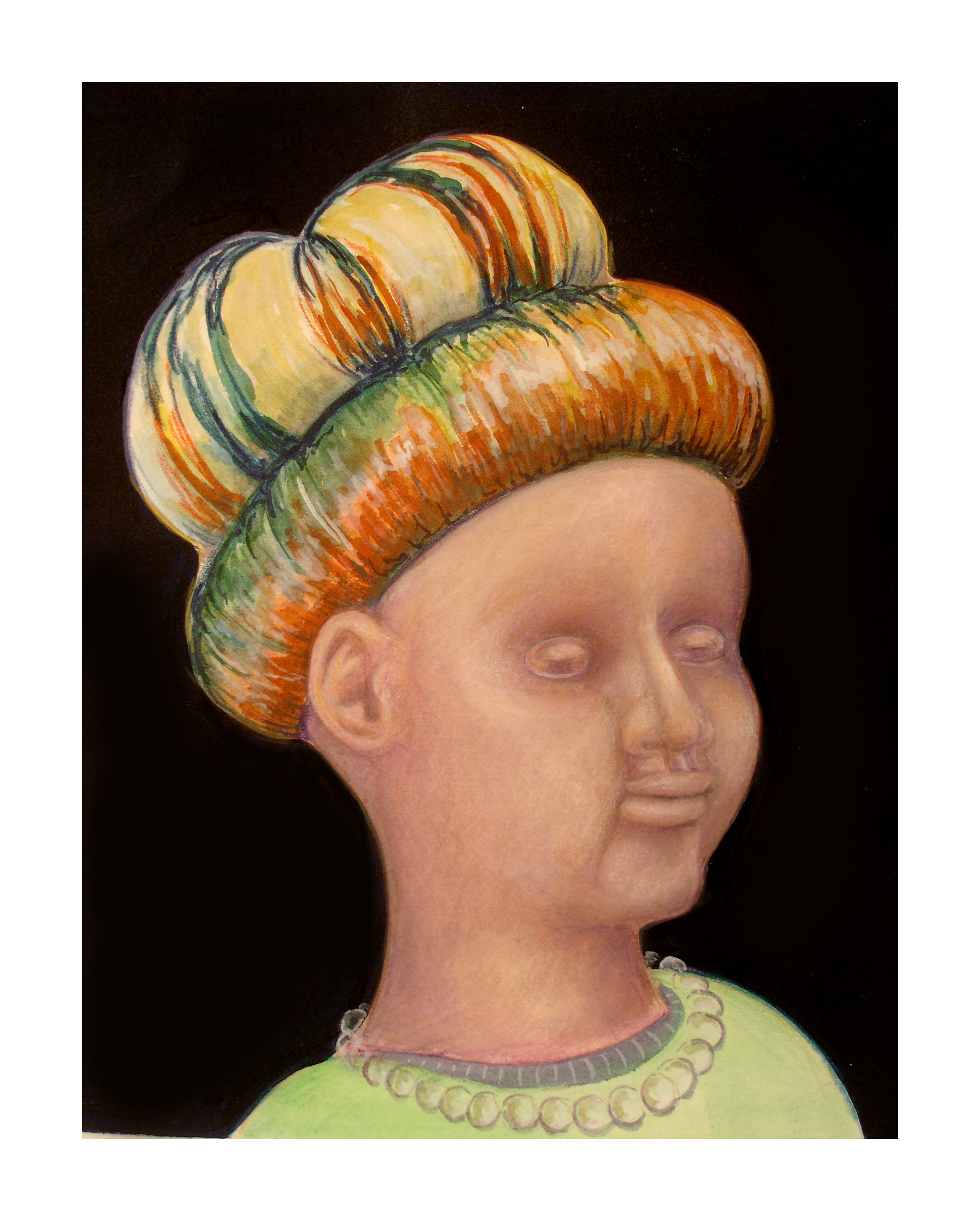
ddsquashhat1

Cultural Autism

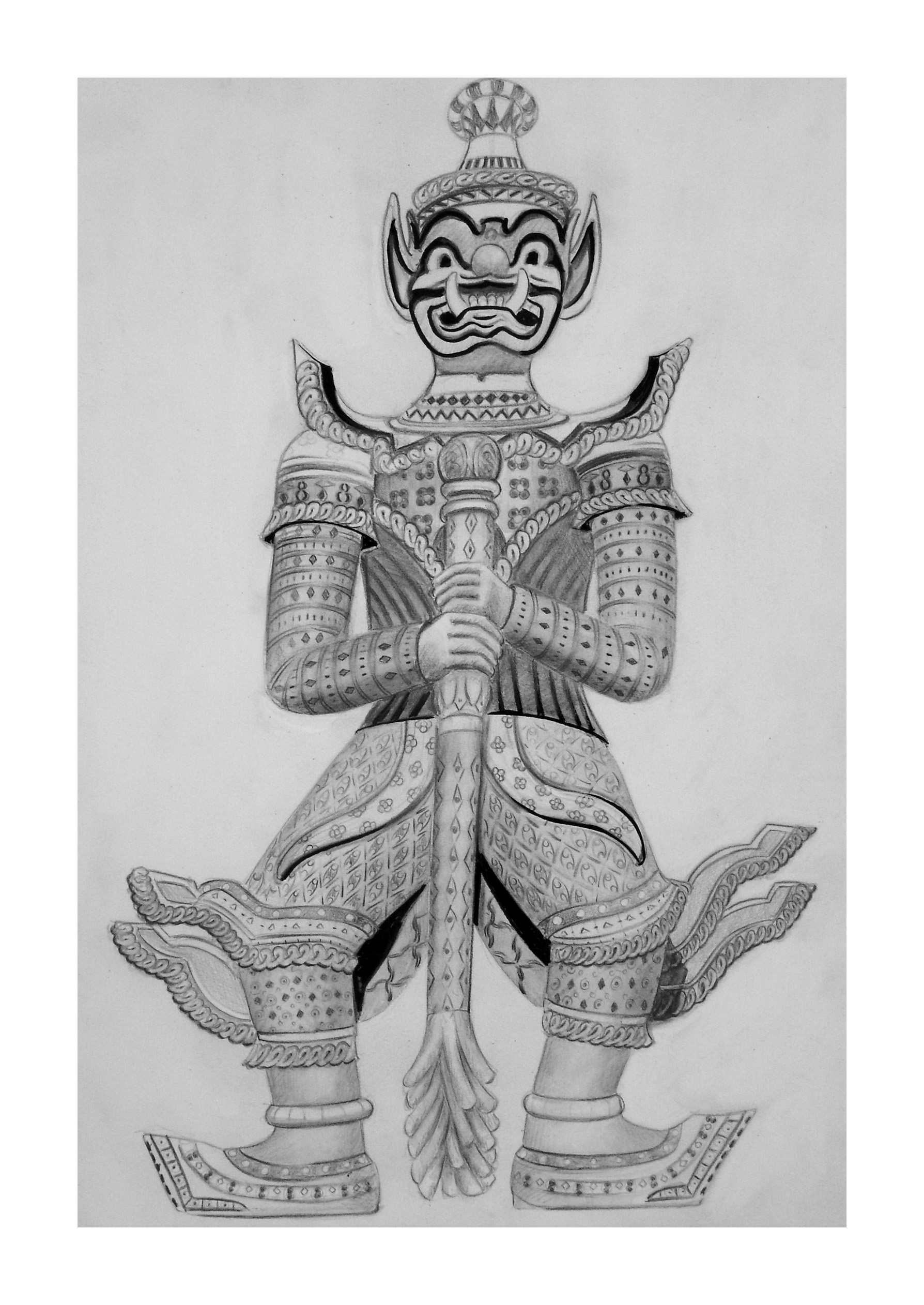
I was thinking the other day about the significance of the temple guardian figures one finds at the entrances of eastern religious shrines and temples.  The guardian, I understand, is the symbolic protector of the sanctity of the sacred space; he stands as defender against essence or evil threatening contamination or dilution of the truth within.

For many, the temple (or church or other social or economic institution) embodies a culture with which they deeply identify.  So I got to wondering what would happen if that culture was compromised.  What would happen if our sacred cultural space(s) were invaded by a malevolence that convinced us the tenets we’ve always held to be irrefutable were in fact not only refutable but quite false; without merit of any sort?

Since so much of who we are, how we identify ourselves to ourselves and others is tied to these now discarded cultural tenets do we become ‘culturally autistic’-blank stare meeting blank stare as we pass on the street unable to relate in any way to our neighbors beyond basic physical functioning?

I’m really not too worried about this happening to us dolls as we’re pretty tightly united by our vulnerabilities.  Here in the playroom, we have managed to maintain our basic values even with a fairly steady influx of new and diverse members.  The rules we set for ourselves focus on maintaining a mutual respect for each other’s self-worth as well as a collective sense of strong group participation that leaves no one out.

So, I think we have pretty good control of the sanctity of our playroom space and I guess we probably don’t need a symbolic guardian figure although there has been some discussion about forming political parties.  Is two too many?

temple guardian3

The Post-Modern Man

I-Ron, the post-modern man, was telling me the other day he never misses church on Sundays even though he doesn’t believe in God.  He said he enjoys the company of the faithful while knowing he will probably never and, anyway, had no interest in experiencing the faith himself. Then, he said that, come to think about it, he didn’t really believe in anything particularly other than those immediate impressions that allowed him to go about his daily activities.

So, when he found out one of the members of his congregation had taken his own life recently and how unsatisfactory that action was in the eyes of the congregation and the church, all he could think of was the scene from Dante’s Inferno where the suicides are imprisoned in trees and are constantly pestered by the nasty Harpies landing on them, breaking off limbs and causing much pain and distress.

Although he felt a bit guilty about not feeling any remorse and pretending concern, I-Ron could only see the story as colorful and not the least bit disturbing.

Well, even though I do lean toward a moral relativity myself I had to feel a bit sorry for I-Ron; how can one really enjoy life without having strong moral feeling of any sort?  I wondered to what level of Hell Dante might assign I-Ron.

suicideand harpies

Dr. Freud and the Superego

Dr. Freud said if you have a strong superego it will help you subdue those baser instincts and depraved inclinations (which he called the id) and keep you on the straight and narrow.

I guess my superego must be pretty good because I’ve pretty much avoided participating in any of the seven deadly sins very much.  As I think about it, I’m pretty modest, my desires are nearly non-existent, I don’t eat very much, am generally pretty good natured and I really try to keep my room clean.

So I guess maybe I might be thought of, in all modesty, as a good role model for the younger dolls, you know, someone to look up to.  They might even find me admirable even saintly, after I’m gone; someone they can place on a pedestal as the paradigm of virtue.  And then maybe they’ll build a temple for me where I can be forever held in the highest esteem-even worshiped.  Maybe the Church will canonize me and actually make me a saint.

Boy, what a thought!  I wonder what Dr. Freud would say.  I hope he wouldn’t think I’m suffering delusions of grandeur.

temple of babydeidei

Why?

I was listening to my friends the other day discussing which of the big ‘W’s’ (you know, where, when, who, what, why) they thought was the most important.  The Barbies were clearly in the ‘who’ camp: who was the hottest celeb, who would the next bachelorette pick, who would ask them to spring prom.

IMac girl thought space and time to be most significant; when and where the next notable meteorological occurrences and/or ecological disasters would take place. Being of a social nature, she also was concerned with the where and when of the next Philosophical Society Social.

Tiny Tina could be forgiven for seeing the importance of the ‘what’ her parents and teachers would next demand of her.

Poor Pitiful Pearl (who is neither poor nor pitiful) suggested that all that really mattered was ‘why.’  With ‘why’, she offered, one can question the legitimacy of those social values that have led us to believe short-term popularity is important; with ‘why’ we can question the importance of our artificial time structures as well as the legitimacy of our subservience to those who render power over us; with ‘why’ Pearl said, we can eliminate superfluous concerns and find the path to our true natures.

Pearl’s argument pretty much fell on deaf ears.  The Barbies said they knew their true nature which was being the most popular girls in school; IMac girl said one’s true nature hardly mattered in relation to the immanent destruction of civilization as we know it and Tina said she might be able to overlook the demands of her father and teachers but her mother was simply not to be trifled with.

I felt like I had just witnessed a microcosm of the essential dilemma of doll-kind: It’s not simply that were not all reading the same page; some of us are making paper airplanes.

why3

Absolute Certainty

I’ve been thinking lately how difficult it is to know something for certain.  How can I be sure that what I know to be true is indeed true?

I have a lot of doubts.  There are many things I’m quite uncertain about; too uncertain to make a judgment as to their truth or falsity.

And there are quite a few things I have opinions about; things I judge to be so with a pretty high degree of certainty but am not absolutely sure to be the case.

Then, there are things I’m sure are true because they behave or exist in a manner consistent with what my mind expects them to do or be.

But can I be sure these things I’m sure are true are absolutely true?  Are they true for everyone all the time for ever and ever?  And if these sure things aren’t true for everyone all the time for ever and ever how can I be sure of their truth?

Well, it’s a true enigma; how can I know that I know what I know, that’s what I’d like to know.

multipledeideis3

The Dollsheviks

I was thinking, the other day about Vladimir Lenin, leader of the Bolsheviks who overthrew the Tsarist monarchy and established the People’s Republic- a social organization in which all people participated and shared equally in the fruits of their labors. What a truly great idea!
Well, I guess that was the way it was supposed to work, but as truly as mankind has an inherent social conscience, a concern for it’s fellows, it also has an inherent selfishness, an inherent primacy of concern for number one.
So, as almost always happens among people of unequal abilities and more or less selfish inclinations the power and control and wealth gravitated into the hands of the few and the promised equality never materialized.
Despite the drawbacks I still think the idea has potential, at least for dollkind. Dolls, at least most of the one’s I know tend to be compliant and generally happy beings. Many maintain a constant smile on their faces. They’re able to keep their egos in check and very seldom complain when left out in the rain or are ignored to gather dust for weeks at a time. Most have no inclination to lord it over their fellows in any way. Establishing a Socialist Dolls’ Republic, it seems to me, would be just the thing to insure we’re all dusted off occasionally, have our minor damages repaired, you know, get fair and equal treatment.
I think I’ll offer the idea at the next meeting of the Dollsheviks; I think we could make it happen without the need for a revolution.
near vilnius 3