Acronyms

I’ve been thinking about the plethora of acronyms we all must keep track of these days to stay even remotely in touch with what’s going on in the world. For instance: The MAGA folks have enabled DOGE to fire NIH staff and medical researchers and are pressuring universities to cut DEI programs and suppress support for BLM protests. Enabled by congressional majorities MAGA has exacerbated natural disasters by cutting FEMA staff, has created ICE to arrest and deport BRCs, cut funding to PBS and NPR.

It’s all very difficult to follow. Because of my ADD leading to OCD and, I fear, PTSD, I’m finding it hard to decide on BLT’s or PB&J for lunch.

Teen Terrors

I’ve been thinking about the anxieties that may invade the teen mind as it proceeds by fits and starts into adulthood. Of all the nightmare scenarios an adolescent mind can conjure: torments of bullying, of not measuring up physically, mentally, emotionally, of lacking popularity or whatever other conceived ills may occur to the teen person, all pale in comparison to the absolute horror of finding oneself to be insignificant, a nobody. You realize yourself to be forgotten among your peers not even having achieved sufficient identity to be disliked, or cancelled, you are a perpetual stranger, neither included nor excluded in any sense.

Now, clearly, such an imagined horror will never be fully realized since humankind are social animals and will seek out and find like minds, others who share interests, likes and dislikes. Even the most reticent, anti-social, awkward and unlikeable an adolescent may be there will be someone who can relate, someone to share the misery with. So, buck up, life will be tolerable and school soon a thing of the past.

Eternal Recurrence

I’ve been reading about the fairly difficult existence that the philosopher Friedrich Nietzsche endured over his life time. Given his self-imposed isolation and the debilitating health issues that he endured: fairly constant migraines and nausea, it’s small wonder many of his thoughts were less than uplifting.
But, the physical and mental infirmities led him, I suppose, to one of his most notable ideas.

Eternal recurrence, stated simply, is to “live this life again in all its aspects, every pain and every joy, every thought and sigh and everything unspeakably small and great in the same succession and sequence over and over for ever and ever”, which must have been a pretty horrible idea for Nietzsche given his health and loneliness issues.

So, I’ve been thinking, maybe there’s something to be learned here, you know, make friends, go to the doctor, do good things; if life is indeed cyclical than maybe recurrence wouldn’t be so bad. There still would be periods of boredom to deal with though, I suppose.
The Effete Aesthete

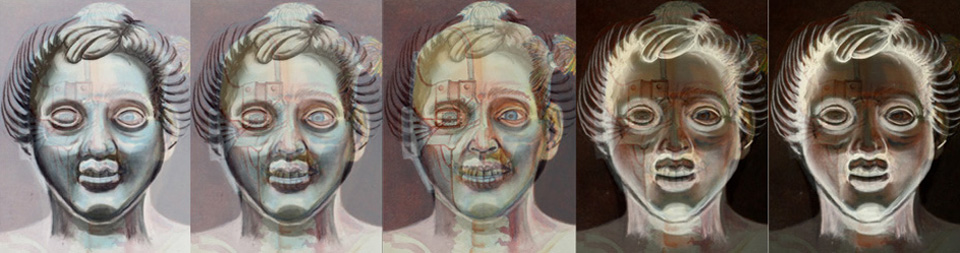
I’ve been thinking about how visual art is consumed. I’m inclined to believe most people, viewing representational artwork relate favorably or unfavorably as the content reflects their interests: outdoor lovers and landscapes, hunters and wildlife, etc. Then, there are the aesthetes who revel in the beauty of color and composition or disdain the lack thereof. They seek rhythm, form and pictorial depth rather than meaningful subject matter.

The Effete Aesthete takes the visual art experience a step further. She seeks aesthetic nuance, contextual reference or artist intent as basis for value judgement, even though such meaning depends on secondhand interpretation provided by a critic or curator thereby eliminating the need for an honest interpretation of her own. Such action would seem to be a sterile and overrefined approach to visual art viewing.

How to Travel as One Ages

We’ve been thinking about taking a trip to Great Britain in a few months in order to experience a few things we’ve missed in past visits. The ease of organizing an itenerary: flights, ground travel, reservations on-line makes planning a breeze and eliminates much of the uncertainty long distance travel often presented in the past.

But I’m thinking that as we age perhaps the two of us might consider a companion or two to further insure good experiences. Should one of us take an unexpected fall a physical therapist might be useful and then if worse came to worst someone adept at mortuary science would be good to have along.

Of course both would have to be socially compatible as well.

Nightmare Scenarios

As my mind wanders these days it finds its way into various nightmare scenarios: unsettling thoughts about what may happen when I embark on a soon to occur trip across the big water. I’m having dire imaginings about potential occurrences; lost or pilfered necessities like phone or passport, missed travel connections, unavailable accommodation; the list goes on and on. These thoughts are occurring to me frequently and in great detail and last until I can forcefully break from beneath the dark cloud and relax my furrowed brow, only to imagine another unpleasant scenario a few hours later.

As I check and recheck my travel plans, entertain alternative options just in case, I have to wonder if I’m not making the whole future enterprise more complicated than it needs to be. I know, having traveled as much as I have, problems can be solved, the locals are helpful, and worst-case scenarios are unlikely to occur.

My mind will continue to race and I will worry but I’m still not buying insurance.

Absolute Truth

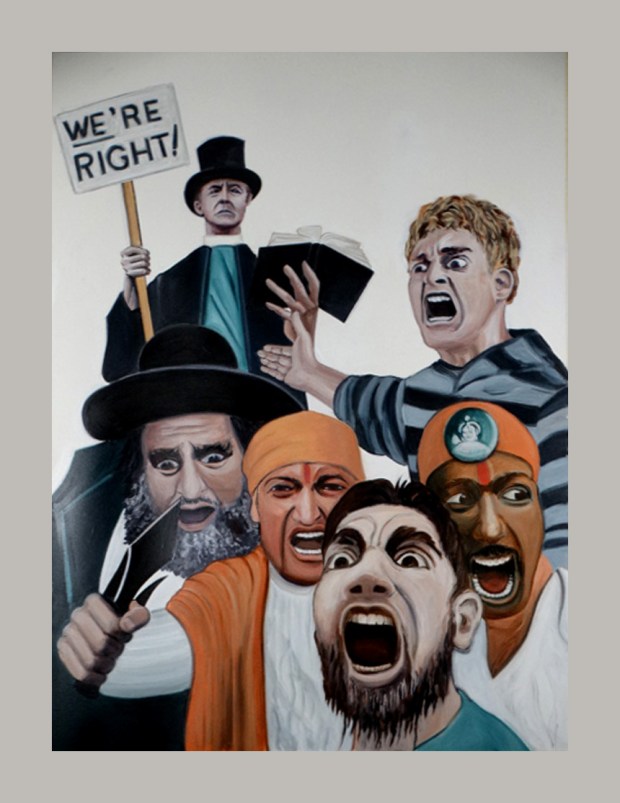
I’ve been reading that, as early civilizations evolved, acceptance of hierarchical structure to provide civil order and belief in mythic stories of a spiritual presence added to the stability of the group. Confidence in the truth of their beliefs led these early folks to develop religious structures defined by ‘Holy texts’. Though much revised these sacred books became, overtime, thought of as infallible: absolute truth.

As the content of the Holy books intersected with common knowledge and then, as empirical knowledge about the world became available contradictions challenged beliefs leading to serious unrest, heretical accusations and bloody conflicts. There are no easy outs when infallibility is believed, no room to flex when absolute truth is known.

Not an easy lesson to learn.

Science and the Humanities

I’ve been reading, lately, about the distrust science elicits these days from diverse segments of the populace. Apparently, the condemnation isn’t coming only from the religious right who might, I suppose, have a problem with the dismissal of dogmatic beliefs toward which empirical investigation tends to lead, but also from certain intellectuals who see science as reductive explanation for the complexities of our world.

I must admit this second concern resonates with me a bit, being inclined as I am to wonder in awe at the mysteries of nature. My readings have awakened me to the realization that through aesthetic contemplation I can gain a deeper, richer experience of the natural world I find so compelling. The mysteries of consciousness, addressed with such magic by the Surrealists, becomes even more intriguing when considered in the light of neuroscientific studies on the human brain. Art can be appreciated in greater depth when considered in context, provided through historical and archaeological investigation and the psychology of aesthetic response is considered.

I’ll keep this in mind, well, at least be peripherally aware of the contribution science might play in my daily aesthetic experiences even though I find it hard to put language to the ephemeral.


Populism

Political populism appears to be in the ascendance these days.  The idea the ‘power’ is in the ‘people’, the ‘people’ being those rightfully in control, dismisses the opposing views of the minority.  Opposition is unacceptable, lost elections must be the result of fraud, theft; criticism the purview of ‘intellectual elites’.   

Populism simplifies, views differences in terms of power, who’s in charge, distrusts the complexities of democratic structures that require ongoing dialog to self-correct when necessary.  The ‘power of the people’ will be placed in the hands of a strongman who will suppress, unde4rmine institutions in order to impose the ‘will of the people’.   

The attraction of such a position must have something to do with a sense of social impotency, a lack of faith in a democratic society.  The danger is the establishment of totalitarian control.