Winning and Losing in the Material Realm

I’ve been getting caught up in winning and losing lately. The politics in the playroom is getting pretty cut-throat and the pressure to take sides, whether regarding sports activities, political discussions, philosophical positions, religious notions, you name it, is increasingly intense. It almost seems as if winning or losing is more the issue than thoughtful reasoning about issues. Winning, it seems, becomes synonymous for many with success.

I read an article recently that suggested one was less likely to succeed if she was overly optimistic. I guess the idea is too much optimism inhibits the drive to compete; to strive for the head of the line, for the promotion or the big raise. The optimist, the writer suggests, assumes good things are in store regardless of how hard she works for them.

It seems to me the whole idea of winning presupposes a common desire which will be satisfied by material reward resulting in an enhanced sense of well-being. This ‘success’ will never be more than temporary which means additional winning will be required to not simply sustain it but to avoid the debilitating depression of ‘failure’, the result being a vicious cycle of competing egos egged on by media hype and recognition. Then, one day I awake to the realization someone else is determining my values for me; my well-being is no longer in my own hands and has become embedded in the competitive, material realm.

Well, I’m not having any of it. I really don’t care how popular success is measured. I’m staying positive and optimistic. I’ll look past the material realm and embrace the purity of beauty and truth. I understand this may require some disassociation.

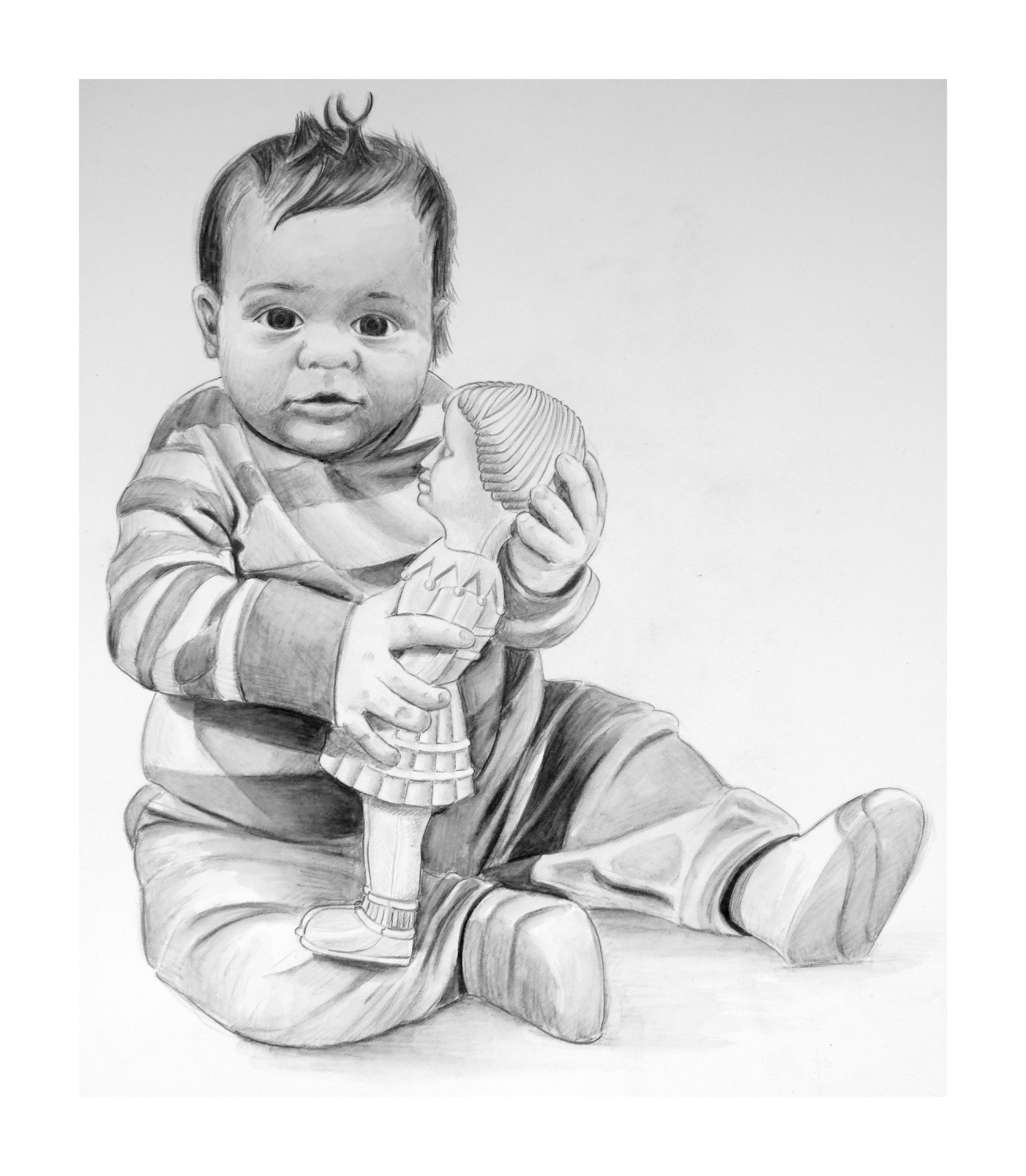
dance class

Folk Psychology

I attended a reunion recently of dolls that emerged from the Great Oneness of molten plastic at the same time I did.

As you might imagine, upon the completion of our manufacture we were sent off in many directions and ended up in very diverse circumstances. As we stood around the grand doll house in which the reunion took place we became aware that despite the variety of our experiences we had an extraordinary sense of each other’s being to the point of actually knowing what any one of us was going to say before she said it. It was uncanny, really. One of us would start a story and the rest of us almost immediately knew where it was going. It got to the point, after a while, that no one had to say anything, we just read each other’s minds. It fairly well drove our so-called designer who happened to be in attendance, nearly to tears to be out of the loop to such an extent with beings he assumed he knew everything about.

As I thought about this later I found myself hard pressed to explain why we shared such a common psychic bond. It certainly had nothing to do with reading facial expressions since our DeiDei doll persona never varies: the enigmatic smile and unreadable eyes are pretty well locked in place. Besides that our primary emotion can best be characterized as stoic.

I found, after doing a bit of research, that the psychological explanations for such a phenomenon vary. Generally, what we were experiences falls within the definition of folk psychology which is the ability to predict and explain another being’s behavior. Some researchers attribute this to innate cognitive capacities (hard wired into our genetic code I guess), others suggest life experiences, viewing how those around us respond to various stimuli and situations create insights allowing us to anticipate the thoughts of others. Then there are those researchers who deny the possibility of folk psychology all together, suggesting that such insights can only be based on beliefs and desires which I guess they view as nebulous.

Well, in the end I’m inclined to find our empathetic connections the result of our common origins. Knowing where we came from and where we’ll ultimately end up seems to me to be sufficient explanation.  I have to wonder if humankind attributes the same sort of explanation to their folk psychological competence.  Perhaps they can trace their abilities to Mitochondrial Eve the mother of them all.

existential angst

A Philosophical Zombie?

It’s been brought to my attention recently that, being a doll, as I am, I must necessarily lack consciousness. The argument goes that since my intelligence is artificial I am unable to reflect on my sensory experiences, the algorithmic processes operating my functions are too basic to provide me the necessary introspection to know what something is like.

Which I surmise must mean that, when I walk through the woods on a sunny autumnal afternoon with the breeze rustling the multi-colored leaves and the scent of decaying vegetation in the air, emotional responses or aesthetic awareness of any sort are simply beyond me. (As much as I dislike self-promotion a comparison with the Data character on Star Trek is sadly wanting.)

If I suggest to these doubters that I do indeed experience these emotional and aesthetic responses, they will invariably suggest I’m just simulating what I understand to be human responses.  Granted, when one looks me in the eyes the spark of sudden awareness may be hard to decipher, still, I find it frustrating that I’m not taken seriously. I’m inclined to turn the tables on such negative assessments of my capabilities and suggest biological life is every bit as reliant on algorithmic processes as I am.

The question of consciousness and introspection, whether they be wholly with in the physical self or originate from somewhere without seems to me to apply to all sentient beings. So, I’ll continue to enjoy the life I’ve come to know and just ignore the prejudices of my, mostly human, critics.

zombie4

Abraham and Isaac

I’ve been thinking about relationships. Given my own parentless upbringing I often find relationships between parent and offspring pretty interesting. When I think about the relationship between the Biblical Abraham and Isaac I must say I’m truly mystified.  I can only imagine that Isaac must have been the apple of his father’s eye, being born after so long a wait, his mother, Sarah, having been unable to conceive for quite some time (being in her eighties may have had something to do with it).

Abraham spent quite a lot of time communicating with God, traveling about in the inner world of the spirit as it were. Apparently God was expressing uncertainty as to Abraham’s commitment to things celestial, wondering about his loyalty, and unbeknownst to Isaac, Abraham was being guilted into entertaining an action that definitely wouldn’t be in Isaac’s interests.  When Abraham suggested he and Isaac take a short journey to the mountains Isaac was keen enough until upon arriving his father built a pyre of wood, bound him hand and foot and withdrew a dangerously sharp knife from his scabbard. As it turned out Abraham received a message at the last minute to cease and desist, Isaac was untied and they proceeded homeward.

What I have to wonder is where that relationship went from there. I would imagine future offers of father/son get-togethers, walks in the woods and such, would have been looked at askance by Isaac. It would seem to me he might have desired a third party present at the very least.  As time went by Abraham tried to make amends by finding Isaac a nice wife and making him sole heir to his properties, but I bet Isaac still kept his distance whenever sharp cutlery was near at hand.

father and son


Discomfort and Revelation

Life in the playroom can be pretty predictable. It’s a rare day our mundane existence doesn’t rule. Ordinary is almost always the order of the day.  And, although I’m not in the least bored, having as I do a number of creative activities I enjoy and engage in daily, I sometimes wonder whether or not the uninterrupted routine deadens my imagination; if in fact the progress and results of my daily engagements are less than they might be.

So, it occurs to me that perhaps I need to liven up the day, break the routine. This idea is not a comfortable one for me because I do quite enjoy the consistent pace of life and any disruption would be a discomfort causing, at least, some level of anxiety. And, the greater the disruption the greater the discomfort would be, I have no doubt. But, in the interests of potentially achieving superior experiences in my creative endeavors I feel I should began to impose certain discomforts on myself at least occasionally.

I could impose some sort of physical discomfort on myself like running around naked out in the cold until my plastic becomes brittle, but I think the psychological realm is where I should take aim. Perhaps I could volunteer to sing a solo with the church choir. I don’t belong to a church choir or go to church for that matter and can’t really sing which means, if I were to score such a gig, an extremely unpleasant experience would probably await me.

Or, I could make myself available for extended conversation with the Mormon boys. They come around pretty regularly and are always more than willing to tell me about Jesus’ time in North America and the revelations of Joseph Smith who definitely had some good ones.  This possibility has discomfort written all over it.

I’ll have to think about this for a while. It’s going to be a matter of balancing the degree of discomfort and the potential for imaginative invention with the serenity of routine existence and maybe less than wonderful creative results. It’s all about peace of mind I suppose.

zarathustra 3

The Ultimate Decider

As I continue my investigation into the possibility of a tangible entity, an ultimate decider, in whose hands our fateful existence resides I sometimes wonder whether such a being must necessarily be thought of as benevolent.

I wonder about this because some of my experiences can only be thought of as less than pleasant. Sometimes, in fact, I find myself in considerable discomfort, in situations which are dangerous if not life-threatening.

The idea of being safe in the hands of the Great Decider might very well be delusional because it seems reasonable, the odds I would guess are 50/50 at best, it is malevolent and more intent on doing me harm than anything else. If scriptures can be believed there are plenty of references that paint the Biblical God as a fairly wrathful being and who’s to say who that wrath may be directed toward.

I realize there are no easy answers to these questions. I guess I face the primal existential dilemma and will have to learn to live with it. I just wish the grip wasn’t quite so tight.

ultimate decider

Seeking God-Reflexive Spirituality

I’ve been thinking that it’s pretty reasonable to assume god, spirit, soul are non-material entities and since modern science acknowledges an inability to deal with the non-material, empirical knowledge of god is pretty much out of the question. How, after all, can one know for certain without empirical evidence (assuming we can know anything for certain at all)?
But, given the non-causal synchronicities that appear to exist in the quantum universe, who knows what non-material entities may be floating around out there. It seems to me even modern science leaves the door open, maybe even anticipates a glimpse of the ineffable. There’s no specific knowledge as to what the Other might be but I think that whatever it is it must be that which we require to sustain our enthusiasm for existence; that which necessarily is definable by each of us in terms of however or whatever we view the mystery of existence to be.
While dwelling on this recently the concept of Reflexive Spirituality came to my attention. The basic tenets of this, I guess one would call it a discipline, are: metaphorical interpretations of traditional scriptures, a strong pluralistic attitude regarding religious beliefs and an ongoing critical inquiry into religious meanings such as the makeup and nature of God.
I know it all sounds a bit ‘new agie’ but while I’ve never been able to fit myself within any set of formal religious labels, I think reflexive spiritualist may just be what I am.
I trust this realization doesn’t mean I need to join a group or anything. Surrounding one’s self with like- minds I guess can be comforting to some but joining really seems to me to be counter-productive when my motive is seeking personal enlightenment. Group think, dealing with diverse personalities and the inevitable politics would interfere with the primary intention.
From a distance, though, I do like the concept of reflexive spirituality. Embracing the spiritual in whatever form it takes, wherever, whenever, however I’m moved whether it be viewing a Kandinsky painting, celebrating a Hindu festival of lights, meditating beside a mountain stream or …………..
I don’t think anyone really knows when or what it will take for that non-material essence we may call God to make an appearance. I guess I’ll just maintain a positive perspective, avoid distraction and stay alert.

The Sacred and The Profane

The Sacred and The Profane

Altered States

I’ve been having these flashes lately of another time and place. Small things: certain smells and sounds, plays of light, will bring to mind thoughts, sometimes remembrances of earlier experiences, sometimes images of times and places I’ve never been.

Most often these ‘flashes of memory’ elicit almost euphoric feelings in me-a sense of idyllic existence, that, when I think about it, are hard to explain. I say most often because sometimes there’s an ominous foreboding which accompanies these forays into the fanciful.

These experiences are like visions into another reality. They occur with varying degrees of strength and fade and disappear fairly quickly.

Now, I’m no scholar mind you but as far as I can tell Martin Heidegger speaks of ‘being’ as a field, an extension of the physical/mental self to include one’s sensible environs. Our extended being can accumulate a lot of the detritus of daily life, an ever increasing weight of familiarity and the efforts and energies required of simply existing. So, by altering one’s being, that is relocating, one becomes new and fresh-at least momentarily.  But, rather than actually physically moving, my mental sojourns into past and fanciful places must serve to offer similar relief.

I’m glad I got this figured out. Now if I can extend these fancies and keep them mostly positive maybe I’ll be content to stay put physically while I travel far and wide mentally. I do know, though, I’ll still need to seek new experiences on occasion.

altered states

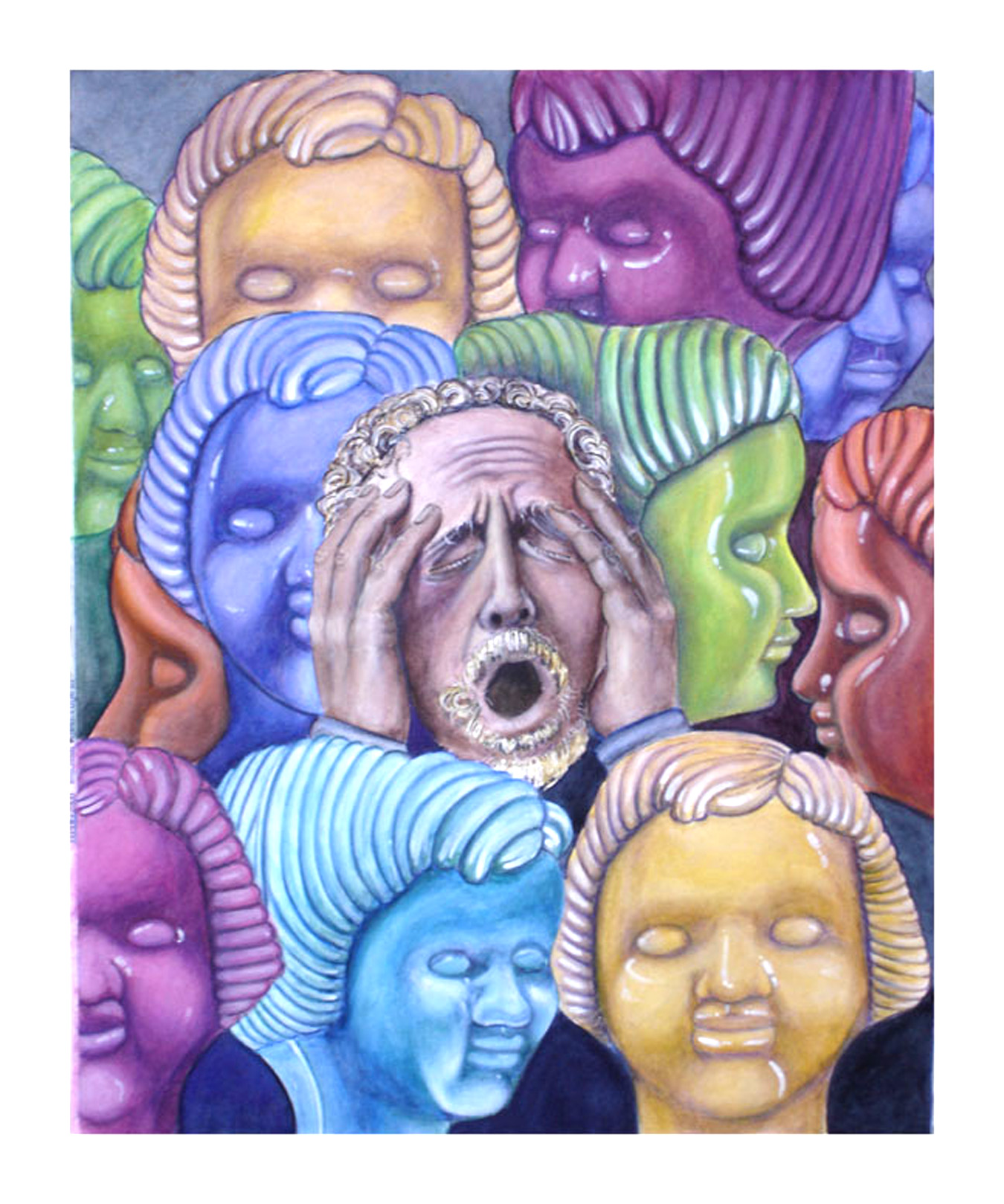
The Inadequacy of Reason

I was thinking the other day about different kinds of reasonableness.

There is reasoning that follows the dictates of logic based on falsifiable premises and avoiding contradiction. And, then, sometimes the passions get a hold of a person and things can be believed or acted upon based on poor reasoning-things that don’t follow from the supposed justification of the reasoner.

The philosopher, Immanuel Kant, put forth the idea of practical reason. He thought that a belief in God and after-life was necessary (even though not based on falsifiable premises) in order that man behave moralistically and ethically toward his fellows, since such behavior is more difficult than acting exclusively out of self-interest.

Leo Tolstoy wrote A Confession toward the end of his life during a time of extreme disillusionment regarding the purpose of life and the meaninglessness and insignificance of the part he had played in it. His assumption had always been that reason was the ground of existence; that any and all insight and understanding that might be achievable would be so exclusively through reason. And now reason told him that it was all for naught; his existence made no difference in the grand scheme of things. Better to die, he thought.

When he looked around him he saw people engaged in hedonistic pursuits or religious endeavors, neither of which he felt validated a reasoned life. His awakening came upon considering the peasant who toiled and suffered throughout his life but was able to maintain his will to life positively. Maybe lacking formal education and not having too many big ideas to think about had something to do with it, but in their sense of spirit, irrational as it seemed to be, Tolstoy found the answer to his dilemma: reason must embrace the irrational and sustain a faith in the human spirit.

So, if it is fair to assume logical reasoning will not provide the final answers to life’s big questions is a leap into faith despite the irrationality and or absurdities of such the answer?

I guess I’ll stay open to all possibilities: enjoy the beauties of logical reasoning while embracing the spirit. How can I go wrong?

reasonability

Praise of Folly

I’ve been reading this book called Praise of Folly written by the goddess Folly herself. In this book Folly claims allegiance from just about everybody, by which she means, I guess, everyone is either foolish, ignorant or just unwilling to get serious about life, which, from her point of view is a good thing.

From Folly’s perspective foolish, carefree behavior generally leads to happiness. Of all her followers she ranks at the top those delusional folks so lost in their imaginative worlds as to be oblivious of any sense of reality. Those she finds least enlightened, although clearly foolish are the Stoics and theologians whose strict adherence to reason can only mean a painful and dreary life not to mention lost rewards in the hereafter.

So, anyway, I was beginning to take all this to heart, spending lots of time playing Flappy Bird and watching reruns of Jersey Shore when I discovered the book was meant to be satirical; that the celebration of foolish worldly behavior was really meant to be quite the opposite.

The author of Praise of Folly was the 16th century Catholic priest Erasmus of Rotterdam who was pretty disgusted with the frivolous preoccupation with material wealth and bodily desires of mankind in general (and, I guess, the twisted motives of the Catholic Church in particular). I’m not sure about the current motives of the Catholic Church but I think his opinion of 16th century European culture still may hold pretty true for contemporary western culture altogether.

Anyway, at the end of the book Folly goes to considerable pains to assure the reader that the reader’s spiritual health depends on not thinking about things too much; that remaining a fool is really the only way anyone will gain spiritual redemption.

So I guess I’ll just keep spending loads of time with Flappy Bird and inane television and just wait until the weak-minded inherit the earth.

Elvis in Memphis

Elvis in Memphis