Altered States

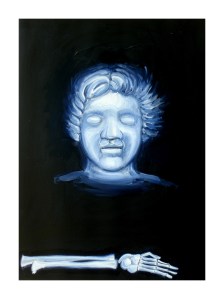
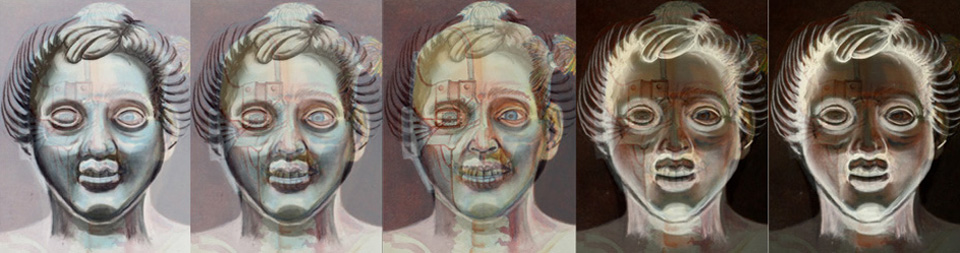
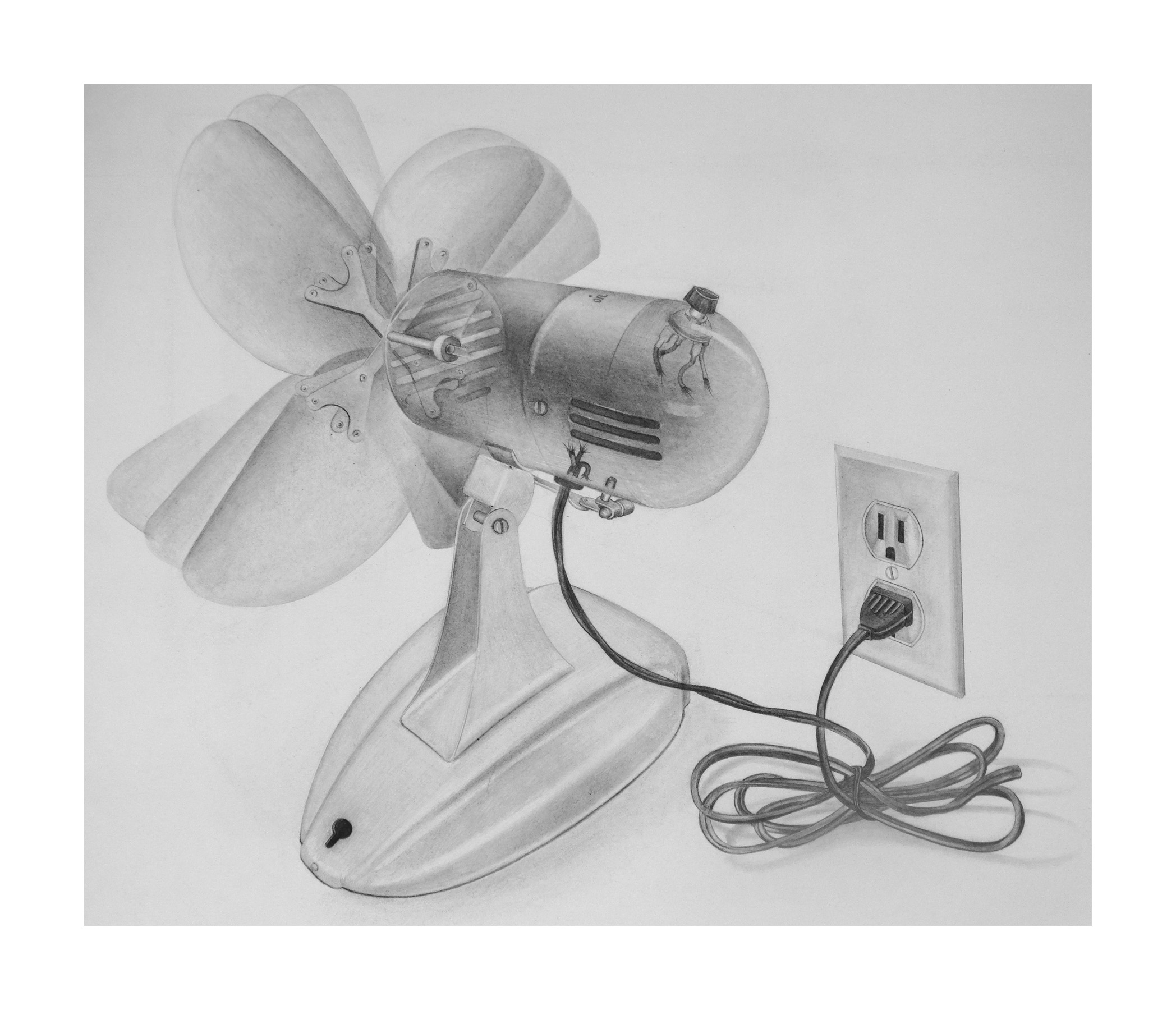
I’ve been having these flashes lately of another time and place. Small things: certain smells and sounds, plays of light, will bring to mind thoughts, sometimes remembrances of earlier experiences, sometimes images of times and places I’ve never been.

Most often these ‘flashes of memory’ elicit almost euphoric feelings in me-a sense of idyllic existence, that, when I think about it, are hard to explain. I say most often because sometimes there’s an ominous foreboding which accompanies these forays into the fanciful.

These experiences are like visions into another reality. They occur with varying degrees of strength and fade and disappear fairly quickly.

Now, I’m no scholar mind you but as far as I can tell Martin Heidegger speaks of ‘being’ as a field, an extension of the physical/mental self to include one’s sensible environs. Our extended being can accumulate a lot of the detritus of daily life, an ever increasing weight of familiarity and the efforts and energies required of simply existing. So, by altering one’s being, that is relocating, one becomes new and fresh-at least momentarily.  But, rather than actually physically moving, my mental sojourns into past and fanciful places must serve to offer similar relief.

I’m glad I got this figured out. Now if I can extend these fancies and keep them mostly positive maybe I’ll be content to stay put physically while I travel far and wide mentally. I do know, though, I’ll still need to seek new experiences on occasion.

altered states

The Inadequacy of Reason

I was thinking the other day about different kinds of reasonableness.

There is reasoning that follows the dictates of logic based on falsifiable premises and avoiding contradiction. And, then, sometimes the passions get a hold of a person and things can be believed or acted upon based on poor reasoning-things that don’t follow from the supposed justification of the reasoner.

The philosopher, Immanuel Kant, put forth the idea of practical reason. He thought that a belief in God and after-life was necessary (even though not based on falsifiable premises) in order that man behave moralistically and ethically toward his fellows, since such behavior is more difficult than acting exclusively out of self-interest.

Leo Tolstoy wrote A Confession toward the end of his life during a time of extreme disillusionment regarding the purpose of life and the meaninglessness and insignificance of the part he had played in it. His assumption had always been that reason was the ground of existence; that any and all insight and understanding that might be achievable would be so exclusively through reason. And now reason told him that it was all for naught; his existence made no difference in the grand scheme of things. Better to die, he thought.

When he looked around him he saw people engaged in hedonistic pursuits or religious endeavors, neither of which he felt validated a reasoned life. His awakening came upon considering the peasant who toiled and suffered throughout his life but was able to maintain his will to life positively. Maybe lacking formal education and not having too many big ideas to think about had something to do with it, but in their sense of spirit, irrational as it seemed to be, Tolstoy found the answer to his dilemma: reason must embrace the irrational and sustain a faith in the human spirit.

So, if it is fair to assume logical reasoning will not provide the final answers to life’s big questions is a leap into faith despite the irrationality and or absurdities of such the answer?

I guess I’ll stay open to all possibilities: enjoy the beauties of logical reasoning while embracing the spirit. How can I go wrong?

reasonability

Praise of Folly

I’ve been reading this book called Praise of Folly written by the goddess Folly herself. In this book Folly claims allegiance from just about everybody, by which she means, I guess, everyone is either foolish, ignorant or just unwilling to get serious about life, which, from her point of view is a good thing.

From Folly’s perspective foolish, carefree behavior generally leads to happiness. Of all her followers she ranks at the top those delusional folks so lost in their imaginative worlds as to be oblivious of any sense of reality. Those she finds least enlightened, although clearly foolish are the Stoics and theologians whose strict adherence to reason can only mean a painful and dreary life not to mention lost rewards in the hereafter.

So, anyway, I was beginning to take all this to heart, spending lots of time playing Flappy Bird and watching reruns of Jersey Shore when I discovered the book was meant to be satirical; that the celebration of foolish worldly behavior was really meant to be quite the opposite.

The author of Praise of Folly was the 16th century Catholic priest Erasmus of Rotterdam who was pretty disgusted with the frivolous preoccupation with material wealth and bodily desires of mankind in general (and, I guess, the twisted motives of the Catholic Church in particular). I’m not sure about the current motives of the Catholic Church but I think his opinion of 16th century European culture still may hold pretty true for contemporary western culture altogether.

Anyway, at the end of the book Folly goes to considerable pains to assure the reader that the reader’s spiritual health depends on not thinking about things too much; that remaining a fool is really the only way anyone will gain spiritual redemption.

So I guess I’ll just keep spending loads of time with Flappy Bird and inane television and just wait until the weak-minded inherit the earth.

Elvis in Memphis

Elvis in Memphis

Really Good Art

Have you ever seen any really good art?  You know, something that ignites your imagination, gives you a glimpse of timeless beauty, lifts your spirits, provides a sense of the common cultural ground you share with your fellow sentient beings and maybe even gives you an idea of how things could be, ideally, in the tomorrows ahead.

Well, I’ve seen art that moves me, maybe not in all these ways at one time, but still lifts me beyond the mundane redundancies of everyday existence.  These experiences happen to me and that’s why I visit museums.  And, from what I’ve read and heard, I’m not alone; others have had similar experiences.

It’s unfortunate that when they’re spoken about-the experiences I mean-they lose their impact and meaning.  They’re reduced, the more they’re spoken about, to nearly meaningless drivel or pseudo-intellectual nonsense, that, for those who have never had a truly aesthetic experience, turns them off completely; even dissuades them from seeking the enlightenment some of us get from seeing really good art.

It’s really too, too bad; I wish I could convince everyone to visit a museum, find one work of art he or she likes and consider what it means to him or her personally.  Reaching enlightenment can never be a bad thing.

at the hermitage 3

Why?

I was listening to my friends the other day discussing which of the big ‘W’s’ (you know, where, when, who, what, why) they thought was the most important.  The Barbies were clearly in the ‘who’ camp: who was the hottest celeb, who would the next bachelorette pick, who would ask them to spring prom.

IMac girl thought space and time to be most significant; when and where the next notable meteorological occurrences and/or ecological disasters would take place. Being of a social nature, she also was concerned with the where and when of the next Philosophical Society Social.

Tiny Tina could be forgiven for seeing the importance of the ‘what’ her parents and teachers would next demand of her.

Poor Pitiful Pearl (who is neither poor nor pitiful) suggested that all that really mattered was ‘why.’  With ‘why’, she offered, one can question the legitimacy of those social values that have led us to believe short-term popularity is important; with ‘why’ we can question the importance of our artificial time structures as well as the legitimacy of our subservience to those who render power over us; with ‘why’ Pearl said, we can eliminate superfluous concerns and find the path to our true natures.

Pearl’s argument pretty much fell on deaf ears.  The Barbies said they knew their true nature which was being the most popular girls in school; IMac girl said one’s true nature hardly mattered in relation to the immanent destruction of civilization as we know it and Tina said she might be able to overlook the demands of her father and teachers but her mother was simply not to be trifled with.

I felt like I had just witnessed a microcosm of the essential dilemma of doll-kind: It’s not simply that were not all reading the same page; some of us are making paper airplanes.

why3

Spectral Visions

I’ve always been a huge fan of Edvard Munch.  The psychological weight he was able to express in his paintings is just amazing to me.  But, I guess when you think about his life it’s not too surprising his artwork is loaded with existential angst.

First of all, his mother died when he was five and his favorite sister when he was fourteen.  His mother’s death so upset his father that he developed extreme religious anxieties; he would tell Edvard and his sisters stories about the eternal punishments awaiting them in Hell.  On top of that, Edvard was often ill causing him to miss a lot of school meaning he got to spend even more time with his father.

By the time he reached manhood he was spending a lot of time drinking and fighting and generally being unhappy.  Then, he was shot in a struggle with the only woman he ever loved (other than his mother and sisters).

After that he suffered a nervous breakdown, nobody liked his paintings and things were generally pretty terrible, but he continued making art; recording the painfulness of his life and eventually people came around to understand the beauty of his work; how effectively his images capture man’s existential dilemma.

Things got better.  Norway built a museum to house his works.  They even put his image on a bank note.

It all sounds familiar doesn’t it: another story of a misunderstood genius whose strength of vision carries mankind to new insights that help people to better understand who they are?

I guess it’s a story with a happy ending even though there was a lot of suffering involved.

spectralvisions3

Life Stories

Friends and I were sitting around the other day chatting over afternoon tea. Sister Chloe got into talking about the providential nature of her life: How God had seen fit to bless her with strong, supportive parents who had taught her right from wrong, follow the Golden Rule, do no harm and help others when possible and to follow the path that God had laid out for her.  She acknowledged God’s ways were sometimes mysterious and were not always easy to understand, like when her brother was left on the driveway behind the family car and subsequently ended up looking like Flat Stanley.  She questioned how God could let that happen but said she believes he must have had his reasons as he does for everything.

Well, Lala then proceeded to offer that she saw her life in quite different terms.  Fortune, she said, had been kind to her.  Following a particularly potent incantation her father had won the favors of a Toys-R-Us manager and ended up being featured in a toy exhibit which enabled him to secure a fine home for the family.  Even though the family had had their share of bad occurrences, mother having been purchased by a quite rowdy child and very likely ended up moldering in a damp basement her stuffing infested with centipedes and spiders,  cosmic justice had, for the most part, shined upon her and she hoped the stars would continue to do so.  She showed us an amulet she was wearing that came from her ancient ancestors.  She felt sure this would continue to protect her through the travails of life.

Then it was my turn.  I told them that my father was fond of telling us when difficulties arose that there was no reason to fear unpleasantness or worry about things because what would be would be and we had the freedom to make choices in our lives that would lead us, in all probability, provided they were wise choices, to a content and happy life.  I told them this advice had worked out pretty well, that I’ve always done well in school, able to overlook the prejudices of my human classmates and even the potentially devastating event of my aunt being lost in a family move (I think the dog carried her off and buried her somewhere) was met by us all with stoic acceptance.  I said that I was content in my ability to choose and felt comfortable letting each day unfold as it will.

Sister Chloe asked me how I can go about without faith in the existence of a benevolent overseer.  Lala asked Chloe how she could possibly believe her ‘Superman in the sky’ could care about the events in her life.  I asked how either of them could attribute future occurrences to the Supernatural.

As I poured our second cup of tea we all agreed it was time to change the subject.  We decided to talk about the weather.

life stories3

Hypocrisy

I was visiting with Granny Applehead the other day.  She was waxing nostalgic about her days in secondary school.  She remembers each day began with students rising from their seats, putting hands to hearts and pledging allegiance to the flag.  No one really questioned the validity of the activity back then but, she said, as she thinks about it in retrospect it was pretty clear there was strong intention to instill in young minds a religious sense of nationalistic propriety: America, land of the free and brave has God on her side.

She surmised it was easier back then when everyone was pretty well on the same page regarding God and country.  There were a lot fewer people asking the big questions.

I guess explanation can be found in the post-WWII politics of the times and dealing with godless Communism.  You know, prep these young minds for Holy Wars to come.

Social critique has tempered the blatant flag waving.  The mind manipulation of the young is subtler now but it’s pretty clear we still think of ourselves as being in God’s favor; ready and willing to impose our beliefs and life-style on the rest of the world.

Granny just shakes her head at what she sees as the hypocrisy of our self-perceived sense of fairness and equality for all: as long as everyone conforms to our values and beliefs.

On my way home I was thinking about what the world would be like if everyone was like me: skeptical seekers, always questioning, investigating the new, comparing the old, reaching toward the limits of one’s capabilities to find what may lay beyond.  As egotistical as it may sound, I can’t see that as being a bad thing in the least.

fear of the other 3

Complacency

I find myself wallowing in contentment these days; consciously maintaining a positive outlook, simply putting the negatives out of my mind.

Breathe deeply:  inhale, exhale.

Avoiding confrontation means avoiding interaction to a large extent; companionship is reserved for one or two close friends.  I follow the news but refuse to dwell on tragedy.  Like Emil Cioran says: better not to act; action can only lead to regrets.

So, I stand here, day after day, feeling the soft summer breezes, inhaling the sweet scents of garden flowers, listening to the optimistic bird song.  What could be better?

I refuse to allow myself to be upset.  Why can’t little Annie sing on key?  What is LeonardD doing with that power saw?  What if those neighbor children want to play with me?  They’re so rough.

Never mind.

I’m afraid I’m becoming complacent.  Nothing excites me.  I think maybe there’s a difference between the calm of a centered discipline and my near lethargy.  Perhaps it would be good to step into an uncomfortable situation; force myself to face phenomena that will upset me; get my blood (such as it is) boiling.  Maybe Nietzsche’s right: ‘what doesn’t kill you makes you stronger.’

Well, I’ll think about it.  I’m a bit drowsy; the gentle patter of the water fountain is very relaxing.  I’m not sure that I really need a challenge anyway.

zarathustra 3

Born Again

For me, I don’t think there’s anything as energizing as the onset of spring.  As the temperature becomes mild, the birds began to sing and the crocuses began to appear I feel my spirits lift.  There’s a sense of rebirth in the air; life reappears after months of dormancy.  In some ways it’s like a religious experience.

My friend Pearl said this idea reminded her of an experience she had while attending a revival meeting a while ago.  She said the evangelist told the congregation that life was suffering because of the guilt of their sins and the only way to overcome the depths of despair, the fear and trembling of existence was to leap into faith and be born again.

Pearl thought about this awhile but being a bit of a skeptic and seeing rebirth wasn’t in her plans for the evening, she decided to pass on the leap and just deal with the despair and absurdity of human existence the best she could.

Well, all I can say is if our existence is essentially despairing and absurd then why do I have spring fever?

born-again-3.jpg