An Open Society

The history of humankind records periods of time when openness to multicultural interactions and beneficial trade opportunities sped the development of civilization. Intellectual exchange produced new ideas that led to economic stability that freed up time for the revelation of personal skill sets that provided a more functional society. Cities grew; living standards improved.

History informs us of other periods of time, of isolationism, when strong leaders were unwilling to participate in open exchange, were content in their belief that autonomous existence was safer, superior to competition imposed by multicultural exchange. Such a mindset, though, was unprepared to flex when the need for innovation to overcome extended drought, for instance, are fend off enemy incursions when alliances weren’t available for support.

The old trope that ignoring history means repeating mistakes of the past seems to be happening again.

The Einsteins

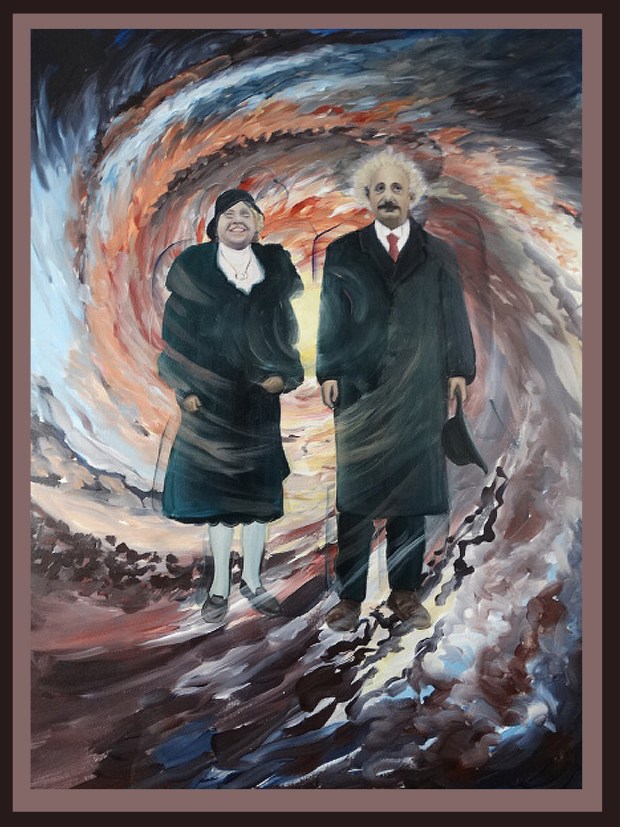
Anecdotal evidence informs us Albert Einstein did not fare well within a formal educational environment. One might surmise, considering the discoveries he later made in theoretical physics, the pace and structure of conventional rote learning didn’t work for him.

His Theory of Relativity remains the paradigm for understanding the relationships between space/time and gravity. The idea that large bodies in space warp the trajectory of light means, I guess, that the actual location of the celestial body emitting that light is somewhere other than the location of the light we see, a situation exacerbated by our own movement over time. This idea of there being a fourth dimension to our three-dimensional world, the mathematical specifics of which notwithstanding, offers, when considered from a scifi perspective, immense opportunity for the creative mind.

Human Nature

A Pragmatist is someone who sees true reality and works with it, within the limitations of what is at hand. An Idealist sees the reality of what is, finds it lacking and seeks to change things for the better. In either case, these are all people of action, seeking positive outcomes, though the results they seek may differ, one being of a personal nature the other altruistic.

There are, however, those pragmatists who choose a life path of least resistance as they seek the easiest means of finding a comfortable existence, which might mean overstepping legal and moral imperatives, taking advantage of an open society. And there are those idealists, who, finding society resistant to change, are unable to reach their goals, give up, living out their lives amorally on the social fringes.

Human nature determines the path taken, but success and well-being will require a moral commitment.

Sigmund

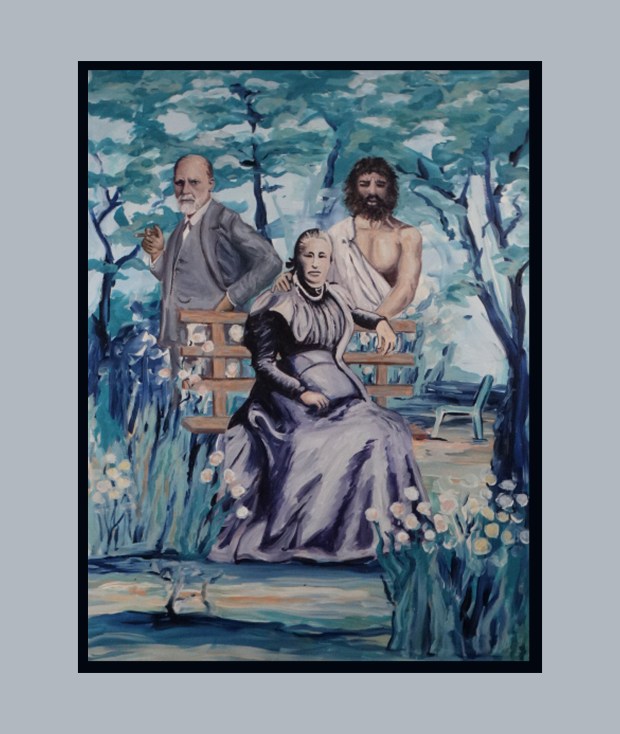
In the late 19th century, Sigmund Freud developed his theories on the nature of the human psyche. The primary motivation for most everyone’s behavior, he determined, was the sex drive. Beginning in early childhood, oral and anal fixations, then phallic and genital fascination defined the libido, the personality and life-force through the id, ego and superego: the realization of desire than tempered with age.

Problems of social adjustment were often caused, he surmised, by suppression of one’s natural sex drive, so, through psychoanalysis, he believed he could cure his troubled patients by making them aware of their latent sexuality.

Certain personality disorders Sigmund traced back to a childhood infatuation with his mother from whom the patient’s sexual inhibitions originated, an illness he labeled an Oedipal Complex after the tragic Greek figure Oedipus who fell in love with his mother and killed his father.

Anecdotally, it turns out Sigmund was his mother’s favorite and while he did produce progeny, it appears his sexual activity was short-lived.

The Avant-Guarde

It used to be the case, as I remember it, an ambitious artist, seeking recognition, would attempt to stretch the envelope. As an artist in the 60’s and 70’s there was great impetus to go beyond what had been done in the arts, to expand the notion of what art is. Not simply to seek ‘the new’ in itself but to find ways to make meaning unavailable to traditional means of artmaking.

Mid-20th century, recognition in an increasingly competitive art world depended on reaching beyond, developing new techniques, challenge tradition aesthetic values. Success in such endeavor would depend on receiving hostile reviews and negative responses from the art establishment. Whether such art offered meaningful content or was simply exploitive, recognition was the key to success, which was likely to be short-lived, undermined by the eventual critical recognition and acceptance, the critics themselves seeking acknowledgement of their depths of understanding.

It being understood, then, that nothing is truly new even as convoluted explanation fought the inevitable decline of the Avant-Guarde.

Spectral Visions

Stupidogenics

VI’ve been reading about the concerns educators are having regarding technology in the classroom. While the distraction of smart phones can be reasonably curtailed, a more insidious issue is the use of AI to manage homework. Chat GPT, for instance, can produce assigned essays without the need for students to hardly think about the topic. In a test study, students who used the AI app were unable to answer questions about what exactly the produced document said.

Apparently, the problem isn’t restricted to the classroom. The business world, too, is in danger of AI relieving businessmen and women of having to think. Executives may use Chat GPT to produce reasoned argument/policies acceptable in the moment but potentially damaging to corporate goals.

So, it appears, using AI bypasses the need for contextual understanding opening the door to belief in conspiracy theory and the acceptance of disinformation for the multitude of users who find in it justification for their chosen narrative.

It would appear that artificial intelligence may be turning us into a stupidogenic society.

Cancel Culture

I’ve been thinking lately about some of the public individuals who have been fading from view, have virtually disappeared from the cultural narrative in recent months (or years). Some of these folks have found themselves in disfavor for a variety of reasons: perceived racial bias, sexual improprieties, sometimes simply political incorrectness or holding views found to be inappropriate by the more sensitive of our cultural judges.

I can think of a particularly clever and insightful comedian, a creative radio personality, a talented dramatic actor and several pols who suffer the sins of behaving badly in a moral or ethical sense. There appears to be a particularly virulent group of vigilantes sifting through the pasts of those deemed suspicious seeking condemning information. I suppose condemnation may be in order in some particularly egregious cases even though the perpetrator may have contributed to the public good most of his/her life.

It all makes me think back, wonder if there’s anything there, in my past, that might be brought up, maybe by a disgruntled neighbor or former friend, that I might find embarrassing were it to be revealed.

And, of course, there is.

Preppers and the End Times.

I’ve been reading, lately about the vast numbers of American preparing for the Apocalypse. Some sources estimate as many as 10% of the US population harbors deep survivalist instincts informing them civilization is teetering, nearing collapse, and preparation need be made for surviving the end times.

Well maybe all these folks don’t foresee ‘End Times’ exactly, maybe the extravagant preparations being made: building bunkers that include gyms, pools, libraries and shooting ranges complete with moats skimmed with flammable liquid, is just a use of expendable income for an insurance policy that will ease the fear our tumultuous times are imposing. But, considering the political craziness that perpetuates an Us vs Them mentality, it’s not hard to imagine ‘The Four Horseman’ ushering in the demise of civilization and there’s plenty of literature that adds believable detail to what an apocalypse will look like.

Time to reread ‘A Canticle for Liebowitz’ offering, as it does, a light at the end of the civilization terminating tunnel in the person of a young child, maybe she’s a GenAlpha who will be able to correct some of our mistakes.

Sister Chloe

Evolutionary Upheaval

I’ve been thinking lately about the monumental impact the discoveries of Charles Darwin had on the religious communities of the early 20th century.

The early Christian conception of mankind as being created by God in his image were found to be in total contradiction to Darwin’s evolutionary theories. His discoveries of the evolutionary changes to finch populations on the Galapagos Islands as their habitat changed were irrefutable. Subsequent connections realized between humankind and simian populations exacerbated the matter. Christian revivalists preaching ‘Hellfire and Damnation’ condemned evolutionary thinking, creating fury among the conservative religious community.

Still an issue, I guess, for some, but morality as a uniquely human trait that spurs love of neighbor and awareness of a presence beyond the physical should ease the matter, although such understanding does require nuanced thinking.

The Disappearance of Truth

What to believe? It appears many of us (more than 50% of the U. S. population some sources estimate) get our news through social media, a source of information through which anyone can post thoughts of their own, ideas that may or may not be consistent with reality.

Expecting, as we do, our daily consumption of news to be based on fact, social media offers instead biases of opinion sometimes meant to deceive or to shock. Motivated by self-interest, unedited, the scroll of ideas repeated over and over will take hold, algorhythms feeding intuitions, reinforcing what the individual consumer believes to be true, bad enough in itself but made many times worse by exacerbating societal divisiveness.

We owe it to ourselves to dig deeper into the news of the day, to seek the facts beyond our intuitive inclinations, as uncomfortable as that may be. Moral truth is out there to be found.