God and Conspiracy Theory

I’ve been wondering how often the accepted explanation of events is correct. Examining the facts sometimes leads me to think that, often times, there may be a conspiracy of cover-up in play; or that those believed responsible are scapegoats for the truly culpable. Can it be that we the public are being manipulated into accepting a false reality? If so, I have to wonder whose doing the manipulating; how deep and broad does the conspiracy go?

Some people think there’s a New World Order in play; a secretive power elite manipulating events to suit their purposes which sounds to me a bit like God but maybe without too much benevolence involved.

The thing about believing or even entertaining the idea of conspiracy (at least on such a large scale) against a widely accepted explanation is, that if I were to mention this conspiracy idea I would immediately be looked at askance by most. And to belabor the idea with facts and figures will only endear me to a like-minded minority-most will discount my claims and probably find most of any other ideas I might offer in the future immediately invalid or at least deeply questionable (unless the ideas fall within the boundaries of their well-established reality).

Similarly, if I were to admit intimate knowledge of God, that God speaks to me regularly and directs my actions, I would very likely be discredited among most people. I believe this to be true despite the fact people like Joseph Smith convinced huge numbers of people of his Godly revelations.

So, I guess if I’m transparent about my intimate knowledge of God or my belief in a New World Order I can pretty much kiss my credibility good-by. The upside of this situation, I suppose, might be my potential ability to bring unwanted discussions to an abrupt finish.
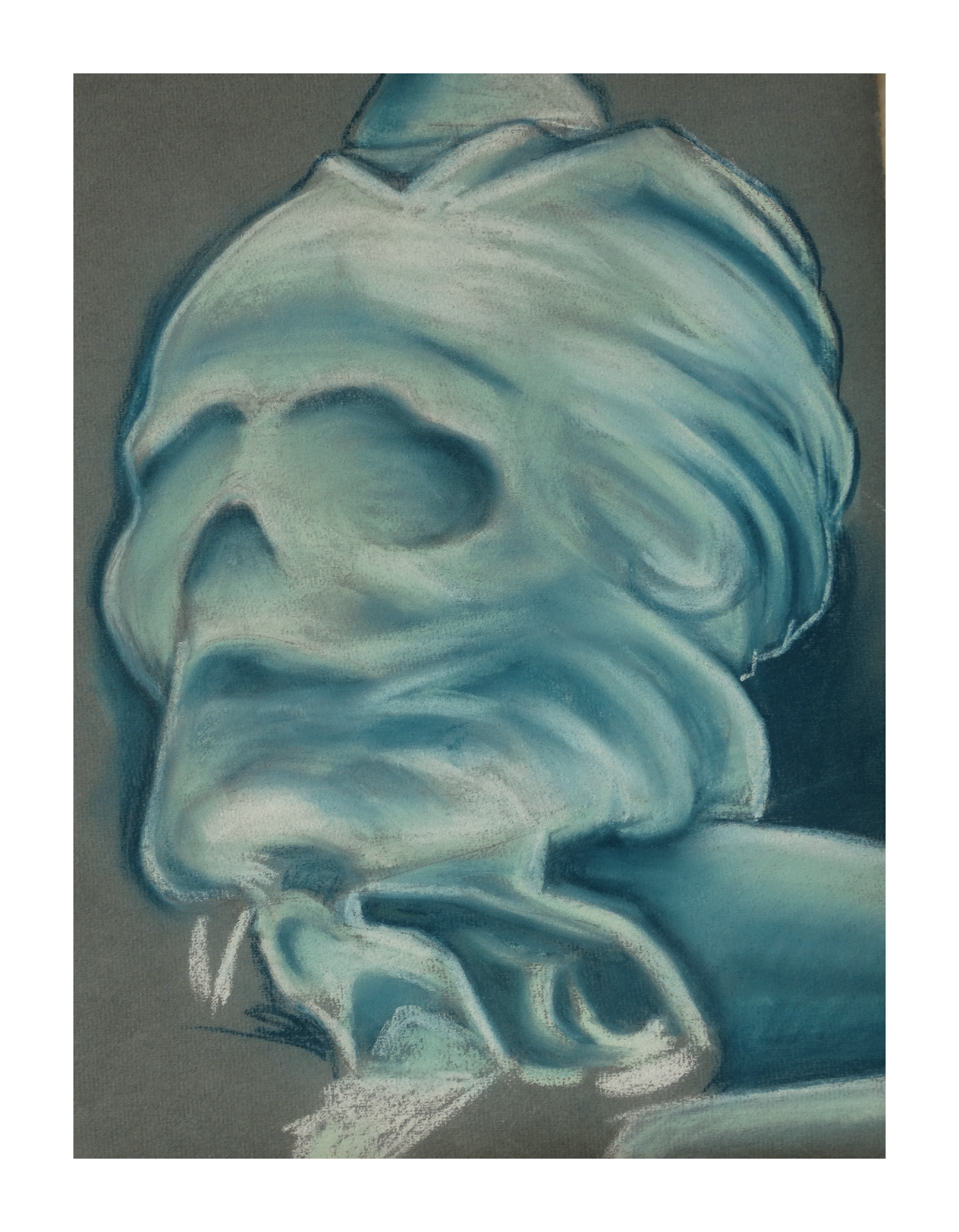
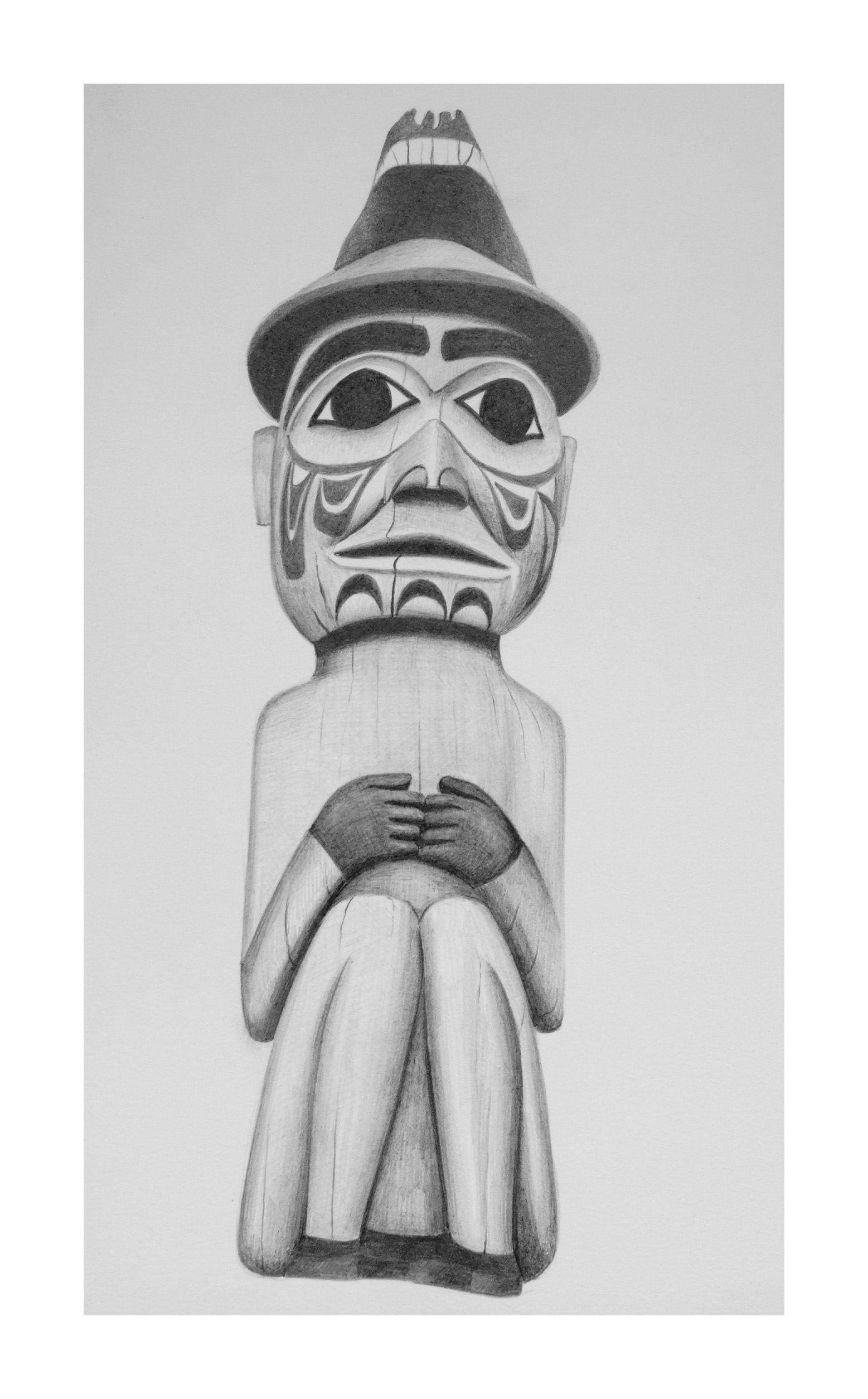
masked skull

Contemplation

I read the other day about a study that found that most people have a really hard time sitting alone with their thoughts.

The story related how researchers had asked volunteers to sit alone in a room for fifteen minutes. The room contained nothing but a table and chair and a machine that would produce mild electrical shocks if one chose to use it. Apparently a fairly large percentage of the research subjects chose to administer shocks to themselves rather than sit alone with their thoughts for even fifteen minutes.

Letting one’s mind wander to past occurrences or future possibilities seems to me pretty natural so I guess I don’t understand what the problem was. Focusing on the eternity of now, I must admit, isn’t always easy but my mind is pretty good at wandering.

In fact, I was just thinking about the movie, Altered States, in which the protagonist, played by William Hurt, submerses himself in a sensory deprivation chamber, which is essentially a tank of warm water in a totally darkened cubicle, for hours on end, day after day. His idea was that by doing this he could get in touch with his primal inner self. And I guess he does because he ends up developing simian characteristics.

So, I’m wondering if the reason most people are unable or unwilling to be alone with their thoughts is that they fear glimpsing their innate animal natures.

If this is the case it sure explains our inclination to constantly be distracting ourselves.

contemplation

Inner-Glow

I’ve been experiencing this strong sense of inner spirit recently. It’s a feeling of strength within, a sense of groundedness and a confidence that I’ll be able to not only cope with but decisively defeat any adversity that may come my way. I find quite a wonderful peacefulness in this.

But, along with this sense of inner strength comes the nagging thought that my ego may be a bit out of control, having been taught from a very early age the virtues of humility. This realization leads me to consider my own short comings which include but are not limited to average intelligence, unapproachable countenance and various biases and intolerances. This in turn brings me back to the anxiety that has been a predominant aspect of my nature as long as I can remember. Someone said, Martin Heidegger I think, that anxiety is the fundamental mood of existence. Boy, sometimes I can really relate to that.

So, I’m wondering if I’m better off in the possibly delusional world of inner strength or in the anxiety ridden reality of humble me.

I think I’ll bask in the inner glow as long as I can. Here’s to positive thinking.

deidei innerlight

Back from the Wilderness

Having returned from the wilderness without incident I have quickly re assumed my generally distracted existence. While in the wilderness I managed to maintain my eating and sleeping routine almost to the minute. When I think about that I have to admit it seems pretty strange since I obviously had no deadlines to meet, places to be at a certain hour or people to coordinate with. I guess it’s pretty amazing how effectively I’ve been culturally conditioned. It does make me wonder about the nature of free will.

The only tangible remnants of my wilderness experience consist of a few small paintings that are now more real than the rock, water and vegetation they represent. And, as I view them in their balanced, rectangular format it’s clear to me they really haven’t captured the intense sensory experience that inspired them. I guess I’ll keep them anyway for their memory value. When I think about it, maybe there’s no better reason to produce art in the first place.

landscape8

Alone in the Wilderness (part 4)

I’ve been thinking about who would really miss me if I were not to come back from the wilderness. I think there are people who would care but also that there are different degrees of mourning.

For instance you might feel bad at a friend’s disappearance but the loss might be harder to deal with if the deceased were a parent or sibling. If the lost one were a partner or spouse you depended on daily I would guess it may be really hard to take.

I have no spouse or siblings, but I guess there are folks out there who would consider my passing significant.   I don’t anticipate any problems returning from the wilderness provided I keep my canoe upright.  I have no desire to disappear.  The spirit is still willing.

Outside of any eschatological interferences I plan to return.

landscape1


Alone in the Wilderness (part 3)

Another think I miss while alone in the wilderness is distraction. Other than the occasional animal rustling or bird song there are no distractions here. I can’t even get a cell phone signal.

The awareness of not being distracted makes me think I must be distracted a lot usually. I wonder how much of my life I spend distracted.

Which is one reason I didn’t mind falling in the water while trying to get into my canoe so much. It temporarily distracted me. Wilderness is so in your face, so absolute, such stark reality.

So, to deal with stark reality I brought along some distractions in the form of reading material and, obviously, writing pad.

One of the books is Wittgenstein’s Mistress by David Markson. The person telling the story in this book reminds me somewhat of myself. She goes on and on about whatever comes into her head. She tells in the book about having once been mad. I don’t think she ever fully recovered by the end of the book.

I don’t know what that says about me.

landscape4


Alone in the Wilderness (part 2)

I’ve been alone in the wilderness now for more than twenty-four hours. Other than the occasional canoe passing by I’ve seen or talked with no one.

Nothing particularly unusual has happened here other than last evening I fell in the lake trying to get into my canoe. I spent considerable time after that rigging up lines to dry things out which they pretty well were by morning.

So, I was thinking about what I miss being in the wilderness and one of the first things that came to mind is music which when I’m not in the wilderness I am usually listening to or is at least playing in the background.

I find it interesting how some musicians’ names seem to fit their profession so well. Take Esa-Pekka Salonen or Luigi Boccherini or Antonine Dvorak. When I say these names out loud I just want to repeat them over and over because they’re so rhythmic sounding (well, maybe not Antonine Dvorak so much).

The composer I’m thinking of now is Aaron Copeland who I guess doesn’t have a particularly rhythmic sounding name but his music seems to suit the wilderness. It seems to me Appalachian Spring would be really good background music for where I presently am. I’m not in Appalachia and it’s not spring but never the less.

I do know the title of that work really doesn’t refer to the season but rather a water source. I found this out only recently. Even so I still am inclined to think of the season when I hear the piece. Also I think of Jody Foster who sang Simple Gifts in an episode of Kung Fu for David Carradine who played Kwai Chang Caine even though he’s Caucasian.

The movie that I think of when I think of Jody Foster is Taxi Driver with Robert DeNiro. In it she plays an adolescent prostitute.

landscape6


Alone in the Wilderness (part 1)

I’m all alone in the wilderness. At least it’s someplace I would call wilderness. I know for a fact no one lives within miles of here and there aren’t any roads within miles of here either.

That’s not to say there aren’t people around. I saw four people just minutes ago but they aren’t within sight now. For all intents and purposes I’m all alone. At least I have been for the last three hours and seventeen minutes which is how long ago I entered the wilderness.

Right now I’m looking out across a lake.

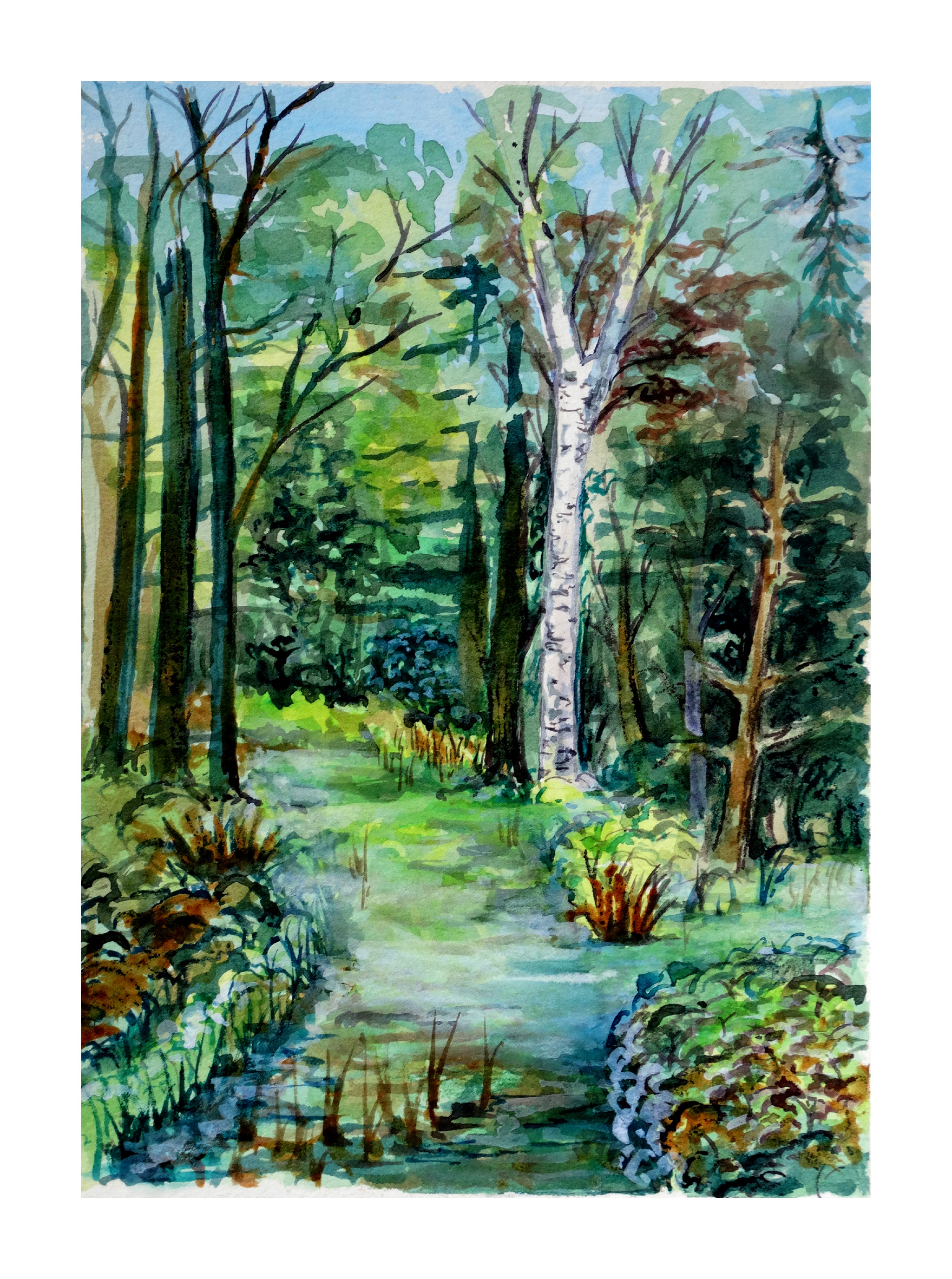
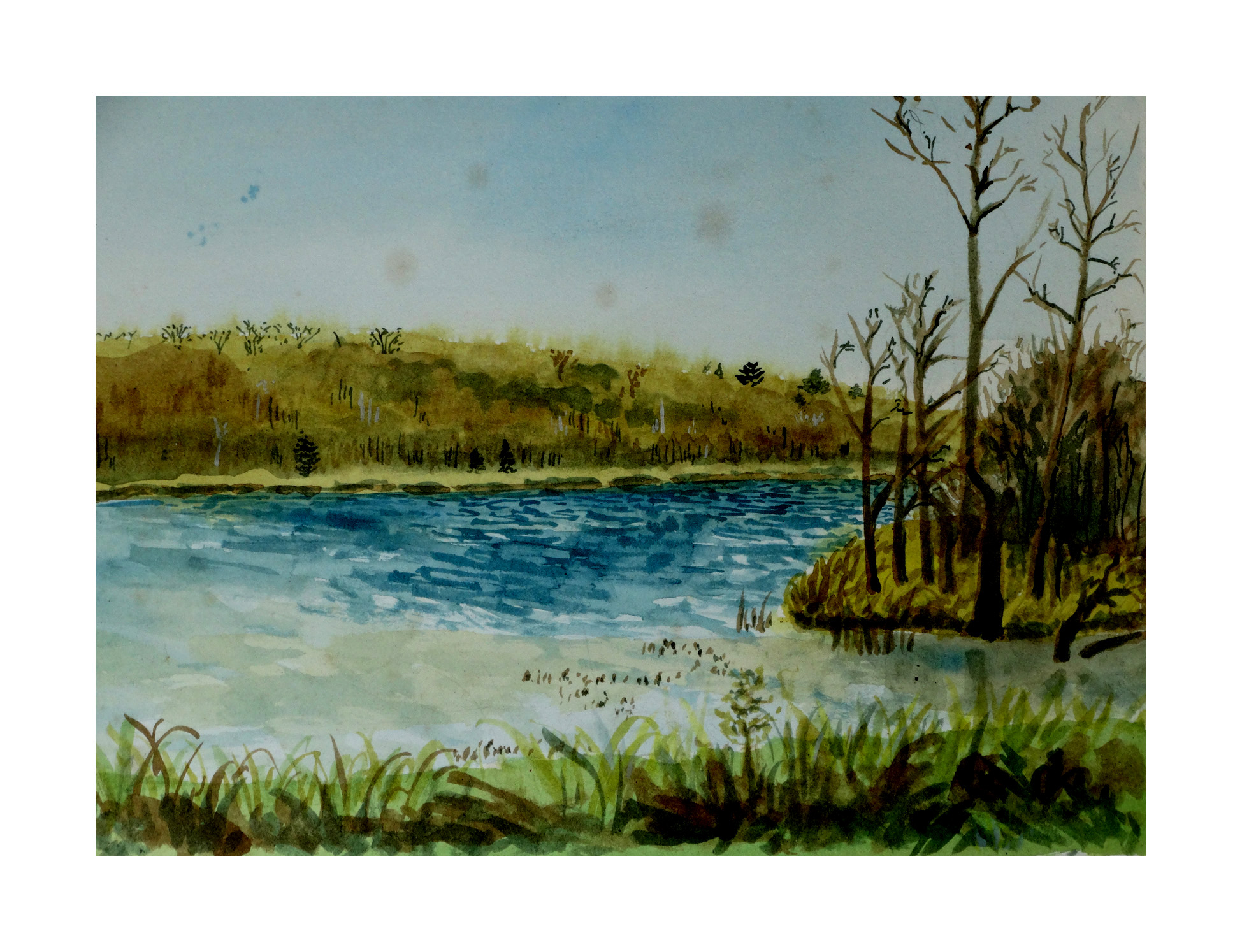
Although it’s been a couple of minutes since I wrote that last sentence I’m still looking across the same lake in so far as I haven’t moved from the spot I was at when I wrote the last sentence. It’s a beautiful scene; the sun sparkling off of the water, the variety of greens in the trees on the far bank, the multi-colored rock outcroppings reaching down into the dark water. It could be a painting.

Of course I know it couldn’t really be a painting because then what I’d be looking at would be some sort of pigment spread on canvas or paper or something rather than the real water and rocks and trees I’m seeing.

That’s not to say if what I was looking at was a painting that the painting wouldn’t be real. It is real in my imagination in so far as I can imagine this scene as a painting.
So I guess there’s no reason to think that the painting I’m imagining of the scene that I’m looking at is any less real than the water, trees and rocks.

landscape7


Celebrating the Solstice

I love this time of year. As the solstice approaches and the days grow longer the weather is usually warm and nature is in her verdant fullest. Thanks to the strong presence of the sun.

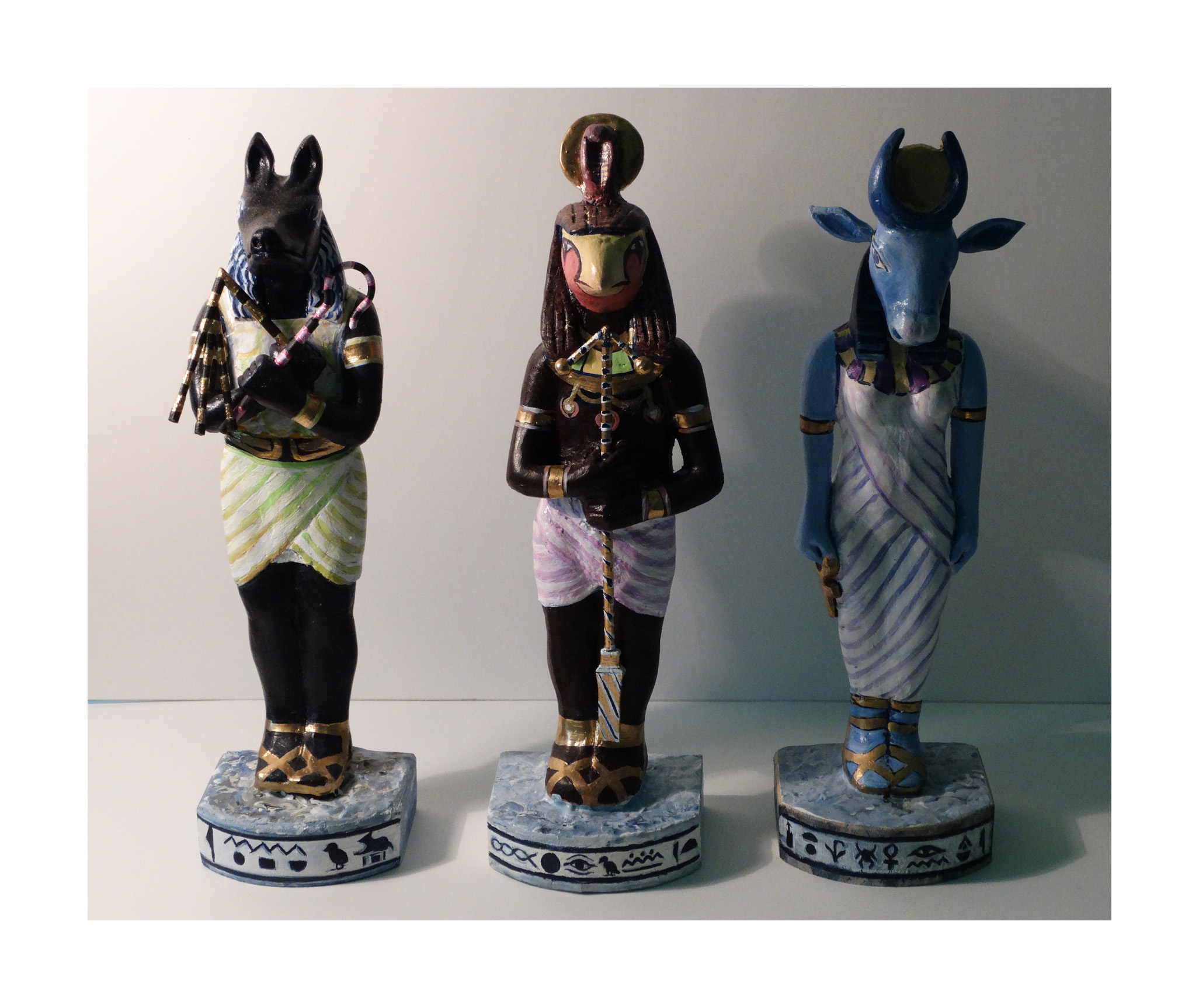
The ancient Egyptians honored the sun, whom they thought of as Aman, on the summer solstice. Apparently in Egypt this time of year the Nile begins to rise and flood it’s banks replenishing the soil; an incredibly significant occurrence for a desert culture.  The Egyptian solstice celebration involved re-enactment of the battle between Horus, the son of Isis and Osiris and his uncle Set. Set, having recently killed his brother Osiris was cast as the bad guy. Horus ends up winning the battle and becoming king of the land but Set isn’t annihilated so continues to hang around being evil and causing havoc.

I find it interesting that so many of the Egyptian gods have animal attributes. For instance, Osiris is associated with the bull symbolizing virility and strength, Isis’ fertility is symbolized in association with the cow, Horus, the falcon symbolizes royalty and strength. And that’s just to name three. There was cat, baboon, Ibis, jackal and many other animals honored as well.  Sometimes the gods were thought to have reincarnated into their animal attributes leading the Egyptians to revere animals in a way we, being so thoroughly anthropomorphic, probably can never understand.

I also found it interesting that Osiris, after being reconstructed and brought back to life by Isis was thought to be annually resurrected with the rise of the Nile and it’s life-giving replenishing of the soil. I guess for an agronomist culture the idea of resurrection of life doesn’t take too much imagination.

It seems to me unfortunate that any religious tradition would claim exclusive rights to such a concept.

egyptgods2

The Great Revivals

Brother Abraham, the Semitic cleric and Biblical scholar, was telling me the other day about the great Revival Movements of the late 19th and early 20th centuries. He said the movements began as a reaction to the scientistic attitudes brought about by Enlightenment thinking which the faithful found to be atheistic and involved a return to the fundamental beliefs of Christian doctrine and an irrefutable belief in the inerrancy of the Bible.

The revival meetings, Abraham told me, were heavy on emotional content with lots of singing and praising and pretty light on intellectual substance which, I guess, was a real crowd pleaser because the revival meetings became quite popular with a lot of people finding God and looking forward to the next event.

The good brother said that these fundamentalist Christians were for the most part dispensational premillennialists, which means, among other things, that God will make good on his promise to establish Jewish dominion over the world, which, Abraham said, will certainly be good for him and that he’s looking forward to it.

As I think about what these meetings might have been like, I think I could have enjoyed the energy and reverie, the coming together of like-minded people in a celebratory gathering. As long as no one asked me whose fault it was that apple got picked.

revival2