Dignity

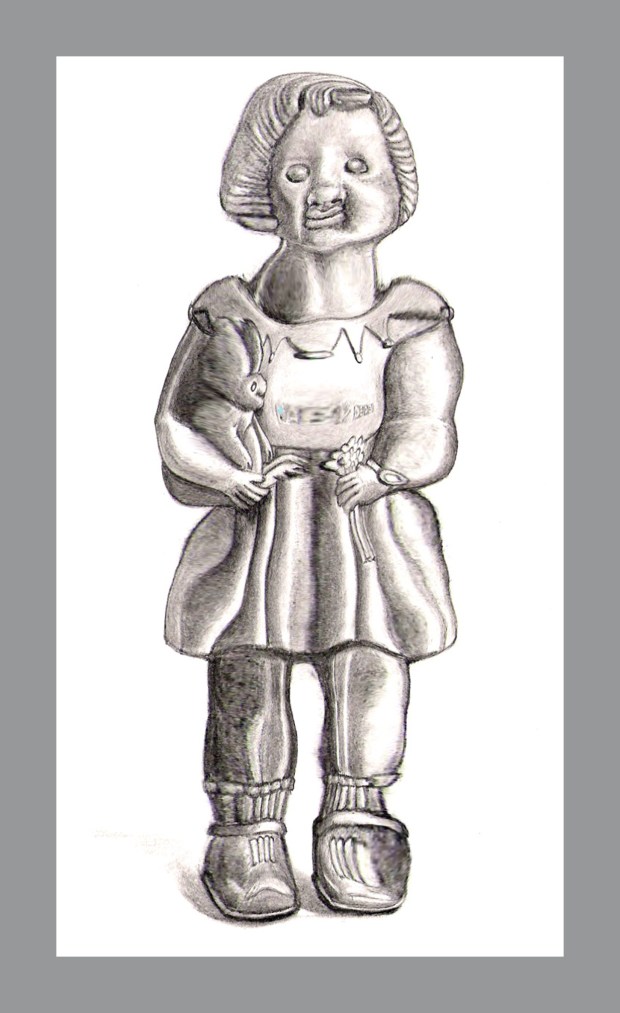
I was reading a while ago about the idea that all anyone really wants from life, in terms of one’s existence within a social perspective, is dignity: the knowledge that one is recognized as being of value as a person, not just a member of humankind but someone of intrinsic worth.

I wonder, as we look out upon the people, we see on the street going about their daily tasks: bus riders returning from work, clerks, administrators, colleagues, if we take the time to see them as what they are, if we recognize our common humanity, afford them dignity.

We all are, after all, strugglers, strivers, driven to seek a modicum of success that will provide a sense of security for us and our families. It’s good, I think, to realize sometimes everyone’s in need. Cooperation, compassion, and empathy are things we can all provide and receive.

Love

There’s something about the word ‘love’ that makes me cringe. Not the word so much as the idea, how it’s used and what it’s intended to mean. It seems, these days, to be overused and without thoughtfulness.

Well, there are different ways to think about it. Erotic love begins with mutual adoration, the two sensing the one of union. Things can turn; conceivably one lover might enter the thralls of so deep a passion, an emotional realm so overwhelming, rational thought will cease, cause unexplainable fluctuations of feeling that may even lead to deep hatred.

When applied to familial affection, extreme emotional fluctuation would appear to be the rule. Children and parents fighting, at each other tooth and nail one instance then enjoying a pleasant togetherness in front of the TV set the next.

Then, there’s the idea of agape; love of God and mankind. It seems to me likely anyone attempting such love will inevitably fall short which, I guess, will reinforce the sinfulness they know they can never escape, which on the positive side will eliminate the sin of pride.

Better, I think, to leave the term alone, not use it, and keep one’s emotions under control.

Blessed by the Holy Father

Knowing the Ineffable

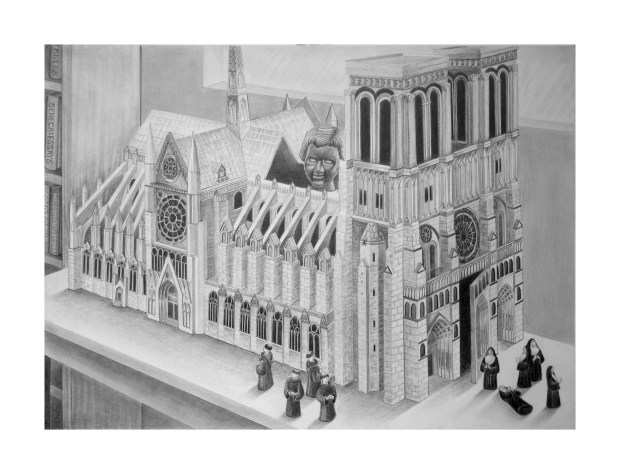
I’ve been reading about the religious concept ’Via Negativa’, the idea that the only way to really know God is to obliterate any association one might imagine about a supreme being with tangible realities like personhood, embodiment, even singularity, that to truly grasp the enormity of the concept of an ineffable Other is to eliminate the limitations imposed by naming or envisioning being.

I guess the idea is to sense the presence of the un-nameable, non-entity in one’s surrounding environment and personal interactions every waking moment is to achieve true spiritual enlightenment.

I must say such an idea is intriguing and not totally unfamiliar sensing as I do, well, maybe not in every waking moment, but occasionally, something more in my surroundings and personal relationships than mere physical or psychic reality would suggest.

It’s good, I think, to have alternate ways to contemplate a personal spirituality beyond the limitations of conventional religion.

The Presence of God

I suspect most everyone raised in the western cultural tradition imagines, when God is mentioned, a bearded white guy in robes, he maybe hippie-ish and long-haired as well, Jesus being in mind.

Seems so trivial though, doesn’t it? Having to imagine such an image of a supreme intelligence, an over-seeing presence responsible for our very existence, to whom our brief life on this earth is responsible. A benign existence that offered itself in human form in order to better relate to its created beings.

Even a finite human intelligence must wrestle with such a trivial image if it is to be taken seriously. The problem, I guess, is in the difficulty of thinking in the abstract, of conjuring a presence that’s beyond words, language being an inadequate conveyer.

I have no answer to such a conundrum.

Dangerous Times

I’ve been thinking about the George Orwell novel 1984, how the totalitarian regime in the book implemented catch phrases to secure the minds of the populace. ‘War is Peace’ is used to establish a permanent enemy, a scapegoat, that can be blamed for any and all ills that befall the citizenry. ‘Freedom is Slavery’ discourages individualism tribalism in order to keep everyone bound to the collective. ‘Ignorance is Strength’ encourages the subservient populace to forego intellectual reflection, follow the dictates of those in power, not think about things to hard and they will realize contented peace. The message is, I guess, that given such ideas along with sufficient deterrents a totalitarian regime turns people into sheep without them realizing it.

Sounds familiar, doesn’t it; we owe it to ourselves to step up, encourage opposition, reaffirm our freedoms and checks on excessive power. The democratic media voices critical commentary daily; let’s make sure we support it.

Transcendence or Distraction?

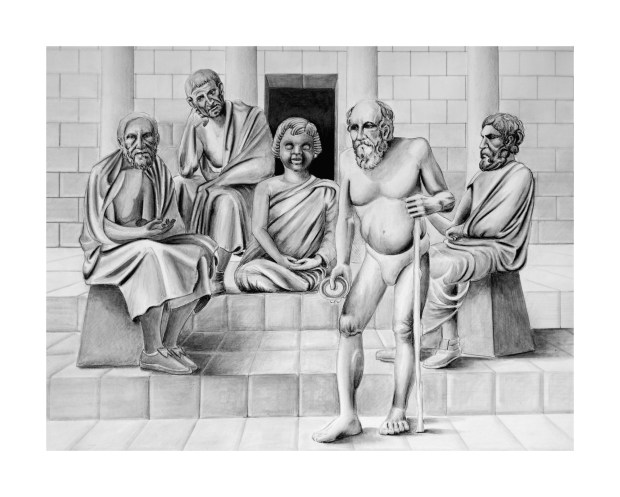
It occurs to me the single thing common to all humanity is the desire to deflect, in some way, mundane reality; to find meaning beyond routine daily existence. Aldous Huxley calls such an accomplishment transcendence. Whether it be of a spiritual nature or other special interests, hobbies, travel or whatever the desire to transcend is primary motivator.

Is such pursuit transcendence or simply distraction? If the latter, what are we distracting ourselves from? Could it be the existential fear of having to find our true values: the fear of living an authentic life?

Or maybe we realize we don’t need to get all philosophical about doing what we enjoy, for whatever the reason may be. Maybe making up and playing a board game may be sufficient irony in response to such questions.

Story Lines

As people became more sedentary during the Neolithic era tribal groups united forming larger populations. These disparate groups, to form a functioning society needed to share a common sense of the way things are, a shared belief system. They needed a storyline that all could grasp, accept and believe in order to accept a hierarchical structure to deal with property ownership and exchange of goods.

A workable storyline would need to include reference to the supernatural. Human uncertainty requires connection to an entity that can be appealed to when crops fail, drought occurs, or outsiders threaten the groups existence.

As societal stability evolves, multiple story lines will develop, one flexible and open to new developments, another rigid, protective and resistant to change. Hopefully stable institutions will be in place at that point to accommodate such diversity of thought.

A Fall From Grace

A stable upbringing will usually set most of us on a path to becoming someone worthy of self-respect. Through responsible participation in the mechanisms that contribute to a functional society we will find ourselves woven into the social fabric of our communities, thereby garnering the respect of our peers who share our moral values. Our sense of self-worth will grow into the assumption of political power, of being a man among men.

If, though, pride-in-self becomes excessive one may slide with ease into vanity, a character flaw demanding constant reinforcing kudos. As the need for recognition grows obsession develops, becomes dangerous, finally producing a loss of identity, a non-person results, immoral, prone to unjustified retribution against imagined nemeses. An inglorious fall from grace.

Eternal Recurrence

I’ve been reading about the fairly difficult existence that the philosopher Friedrich Nietzsche endured over his life time. Given his self-imposed isolation and the debilitating health issues that he endured: fairly constant migraines and nausea, it’s small wonder many of his thoughts were less than uplifting.
But, the physical and mental infirmities led him, I suppose, to one of his most notable ideas.

Eternal recurrence, stated simply, is to “live this life again in all its aspects, every pain and every joy, every thought and sigh and everything unspeakably small and great in the same succession and sequence over and over for ever and ever”, which must have been a pretty horrible idea for Nietzsche given his health and loneliness issues.

So, I’ve been thinking, maybe there’s something to be learned here, you know, make friends, go to the doctor, do good things; if life is indeed cyclical than maybe recurrence wouldn’t be so bad. There still would be periods of boredom to deal with though, I suppose.

Witch Hunts: The Problem of Inter-subjective Knowledge

The idea of the existence of witches is age-old but became particularly oppressive in 15th and 16th century Europe when imaginative tales of satanic behaviors became so ingrained in people’s minds it created a pseudo-reality that led neighbors to accuse neighbor of subversive behaviors, witchcraft, based on little more than petty jealousies. The accused were often tortured to confess and then burned or drowned on little more than hearsay evidence. Fear, fed by the church, was rampant, accusations plentiful, stories of satanic tortures and murders of children spread through the populous daily. Thousands were accused and put to death based on information that carried no factual evidence.

As the stories spread, igniting the imagination, they became seen as fact, even doubters were drawn in until the reality of the stories were known to be true beyond doubt.

I wonder how often the information we glean on-line inspires descent down the rabbit hole into equally absurd beliefs.