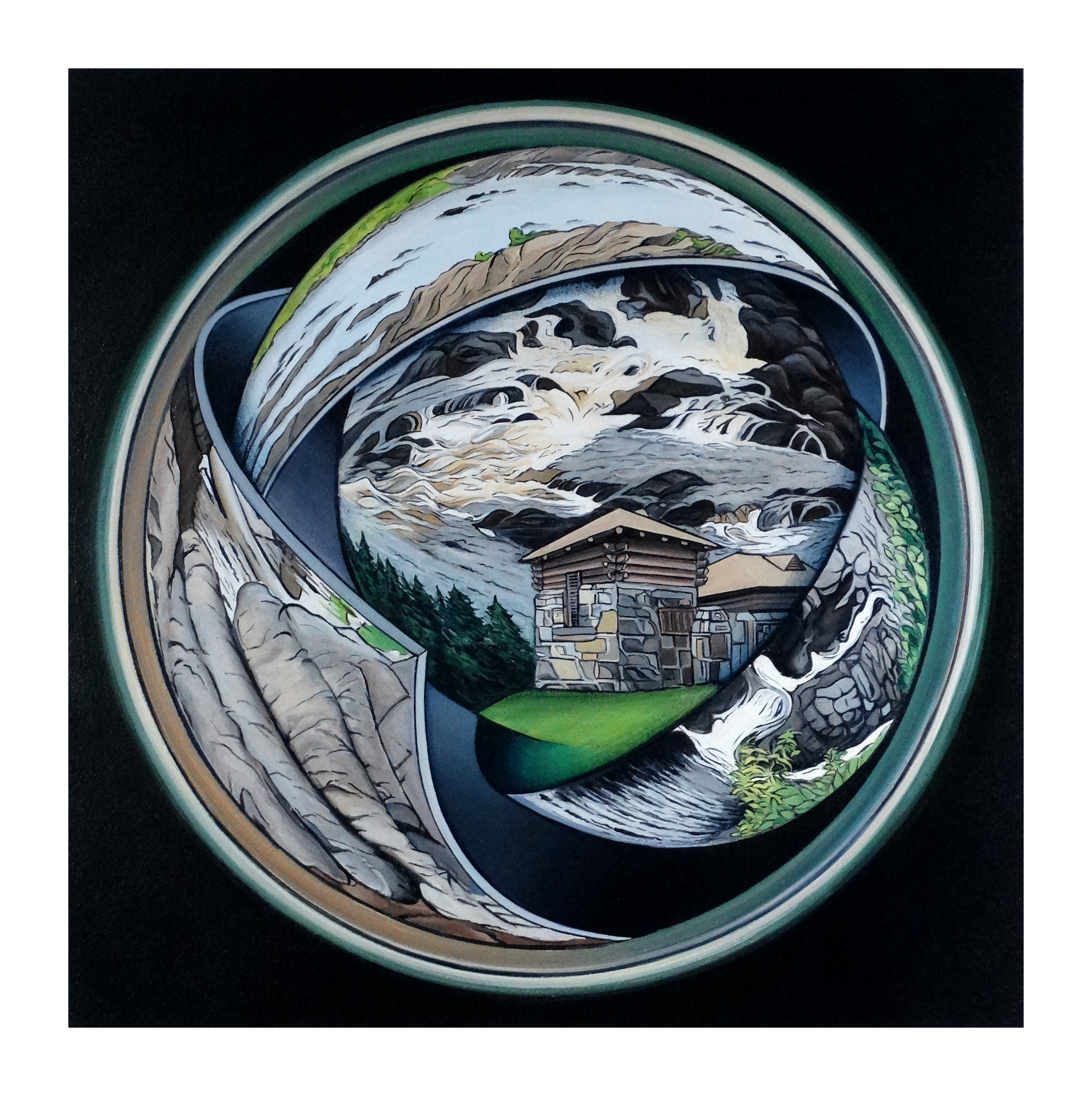
Wisdom

I’ve been wondering lately how exactly one achieves wisdom. After reading credible commentary on the actual lives of some of western civilization’s most notable philosophers it appears that, more often than not, the great minds of history have fallen well short of achieving the high ideals they advocate in their writings. When it came to basic living and social functioning many of our philosophical heroes struggled; were pretty inept to be perfectly honest. They often capitulated to oppositional forces out of fear of retribution from an intolerant church or tyrannical politics. They tended to fail in attempts to establish lasting relationships and they regularly came up short of the moral imperatives they so often championed.

It makes me wonder how seriously I should take Socrates admonishment that ‘the unexamined life is not worth living’ or the Delphic injunction to ‘know thyself’. Should I even wonder what I can know or what ultimately I ought to do? Can I hope for more than what I have reasonably before me?

The alternative, though, is daunting: proceeding without direction, acting exclusively from self-interest or pursuing survival as an end-in-itself. I guess great ideas and thoughts lift us above the mundane, offer possibility and hopefully help us maintain a healthy sense of altruistic support for our fellow man.

I guess I’ll keep reading.

Saving Planet A

I’ve discovered recently the thoughts of an innovative thinker, Kim Stanley Robinson, who has some quite amazing ideas about how we might potentially nurse our threatened world back to health or at least slow its deterioration.

Could it be possible to blast particulates into the earth’s atmosphere, simulating a volcanic explosion, to filter the heat of the sun with the very positive result of lowering temperatures? How about spraying sea water onto the polar ice caps on a massive scale to recapture the melting seas? Technologically and economically challenging ideas I suppose but at what point will such extreme measures be necessary to save the world?

Then there’s the concept of ‘quantitative easing’, a method of monetary manipulation that’s already been employed to stave off financial crises by ‘producing’ large amounts of capital. Perhaps with the proper monetary incentives farmers could be induced to engage in carbon trapping technologies and to replant acreage in bio-diverse forest lands. With additional capital solar and wind farms could become a primary factor in electricity production. Everyone, given the proper incentives could move toward clean energy transportation.

Being that there’s little doubt that impending environmental disaster is imminent, perhaps innovative thinkers like Kim Stanley Robinson should be taken seriously.


Leisure Capitalism

I’ve been reading, lately, about this idea, sort of a thought experiment I guess, offered by an innovative thinker that addresses concerns about the health of our planet. The idea, leisure capitalism, proposes reducing the hours workers work by as much as half. The twenty hour work week would reduce considerably the toxic emissions we are presently spewing into the atmosphere and relieve pressure on our contaminated waterways and depleted forests. These things will be accomplished by reducing work commutes, industrial run-off and large-scale harvesting of South American rain forest.

The wealth of the developed world could easily compensate workers with a living wage and, one would think leisure capitalism would be an idea enthusiastically embraced by the majority of people who could then pursue recreational interests, the nature of which might responsibly be directed toward healthy non-polluting activities.

While the western world is scaling down production developing countries could be encouraged to increase production, raising the standard of living for many in poverty to reasonable levels enjoyed by most of us, after which production can be reduced and people everywhere can find meaning in recreational pursuits.

Seems to me like a great idea for those of us who find pleasure and meaning in activities not providing a paycheck, but I suspect there will be plenty of folks not willing to forego wealth accumulation, status relationships and economic power. The folks, who, I suspect, find it expedient to deny climate change wouldn’t look favorably toward doubling (tripling?) worker wages in the interests of bringing our earth back to full health.

Well, in my mind, the idea of leisure capitalism is optimistic and uplifting even though probably unrealizable. Still, let’s hope innovative thinkers will always be with us.

The Beauty of the Mysterious

I’ve been reading that sometimes everyday events can trigger subliminal memories lying deep within the unconscious mind that have nothing to do with lived experience. Psychologists suggest the indeterminate source of these ‘memories’ may be a collective accumulation of insights we share with all who have come before us. How exactly we acquire these insights I find to be pretty mysterious.
The idea, though, seemed somewhat reasonable to me but then I read that inanimate objects may cooperate with these subliminal messages in the arrangement of symbolic patterns; a prime example of which is the grandfather clock that suddenly stops ticking upon the death of its ancient owner. Apparently there are numerous documented incidents of similar occurrences, which suggest we may have mental capacities beyond the physical neurological operations of the mind.

Well, it all appeared to me kind of questionably new-agie, but then, when I considered the idea that over evolutionary time survival has dictated the acquisition of certain intuitive knowledge associated with the natural environment that took on super-natural significance as our ancestors dreamt of the dead, come alive, and witnessed powerful life-forces within nature. The thought made the man and his clock a bit more palatable. And the whole idea of a collective unconscious fits in pretty nicely with the psychic inclinations our primitive, eons-old brains have yet to evolve beyond.

As reasoned and logical as I might wish reality to be, I’ve got to accept, and revel really, in the beauty of the mysterious.

Why Western Europeans Dominated the Rest of the World for Awhile

So, as I understand it, a long time ago, way back, as humankind emerged from their hunter/gatherer roots, civilization developed in the Fertile Crescent (it being a place particularly conducive to plant and animal domestication) while much of the rest of the world,( save China and a bit later Mesoamerica), remained tribal people for millennia.

Before too long these newly sedentary farmers created complex societies that produced artisan craftsman and a written language. Unfortunately for those urbanizing folks they didn’t have a good grasp on the importance of environmental stewardship: deforestation and soil degradation took its toll. The civilizations of the Fertile Crescent fell into decline.

But, over the millennia, technologies developed by these folks traveled with relative ease and speed into soil rich Western Europe, where, before long, (relatively speaking), the Spanish, Portuguese, French, English and Dutch became the powers that dominated and exploited the rest of the world.

And so, it’s pretty clear geography and circumstance is responsible to a considerable extent for the historical dominance of the Western Europeans. One would think such knowledge would undermine the racist tendencies of our primitive minds. I fear that’s not the case.

Dissociation

I’ve been reading that Karl Jung, back in the day, suggested, in his investigations of the human psyche, that we are all on the verge, only a step away from, dissociation which means, I guess, that we are liable in times of stress to revert to our earlier primitive natures and become aggressive, confrontational and hostile. A being, so unlike our modern selves re- emerges from deep within our unconscious and we find ourselves fighting for survival in a tribal sort of reality: you get the picture; we take on the persona of a club-bearing, animal-hide clad, primordial screamer.

I kind of get this as I think of my own change of personality as competitive engagements become heated. A sort of insidious aggression, a tooth and nail fight, a winner take all thirst for blood of the vanquished. It’s us versus them, good against evil, long-live the righteous.

But then, later, energy sapped, returned to my safe, nurturing reality, the sensitive, new-age guy I truly am, attuned to my feminine nature, resurfaces, bobs back up and the whole idea of a crazed, primitive me reduces to but a bad dream.

I do have to wonder, sometimes which identity is truly the real me.

Being in the Flow

I’ve been reading and thinking about what it means to be in ‘the flow’. The flow is, I guess, the state of existence when the sense of self slides to the back of one’s consciousness, when the mind and body are occupied completely with being in the fluid present, doing without second thought.

I think being in the flow should mean one can move smoothly through daily tasks in a timely and creative fashion, side-stepping gracefully the occasional barbs of conflict, toward the meaningful progress of living a richer and more fulfilled life in a moral and ethical manner. I assume that, when one is in the flow, existence is beautiful, but, of course, no one will ever always be there and some of us may never find it at all but for brief glimpses.

Finding the flow, I guess, requires patience and preparation, being attentive and developing skill-sets that increase the likelihood, that, when the opportunity arises, one will be ready to, you know, slip into a mutual symbiosis of support and provision with the world around us.

Easing into the flow does seem to me to be a worthwhile pursuit. I’ll try to prepare myself to be ready for the opportunity should it present itself.

The Story of Civilization, Part Two

I’ve been recently learning from a very well researched tome that the reasons for the discrepancy in the development of civilizations, over time, around the world, was, contrary to popular opinion, the result of factors that had little or nothing to do with human capabilities.

The so-called cradle of civilization, the fertile crescent in the near east which was the location of the earliest known significant civil progress had the benefits of a variety of domestic-able food plants and large animals which provided the means to create sedentary communities able to diversify energies toward technological developments: a considerable head-start on the rest of the world.

So called backward peoples like the Australian Aborigines remained hunter/ gatherers into modern times because, to a great extent, the lands they occupy don’t accommodate farming and the indigenous fauna isn’t domestic-able. The knowledge these people have acquired, though, makes it possible for them to thrive in an exceedingly harsh environment.

It would appear that humankind has survived to this point in time through a common intelligence and adaptability. Now, if we can all just recognize our mutual worth perhaps we can survive a bit longer.


The Story of Civilization, Part One

I’ve been reading that after the Big Bang, as life emerged, along with the amoebic beginnings of plants and animals, viruses began their evolutionary development. Then, much later on, as animals became domesticated by the first farmers, cows, pigs and such became hosts to booming viral colonies which had realized living animal cells were a great promoter of the viral life-style. (The animals, of course, being less than discriminating consumers of water, were readily available for viral habitation). Soon, these early viruses found their way to human hosts. The early farmers being unwary, often invited their domesticated animals into their abodes, which, it’s pretty obvious, wasn’t so good for mankind.

In fact, early epidemics of measles, plague, small pox, influenza and such wiped out large populations, the survivors having the genetic wherewithal to  pass on immunity to their progeny. So, to jump ahead a few millennia, the early farmers became explorers, sailing the globe seeking peoples to conquer and exploit, a task made considerably easier as they passed on the aforementioned deadly diseases to folks without immunity.

This whole scenario rather points out the geographic advantages (animals to domesticate and such) of the earliest farmers, who, on the positive side passed on their immunities to most of us. Still, it would seem to be sensible to keep a reasonable distance from the family dog: he/she may not kill you but knowing what the animal is inclined to eat and drink, disease is in the offing.  And, I don’t know about you but I’m getting a flu shot.

Our Primitive Brains

I’ve been reading that a significant part of the reason for our contemporary intellectual disconnectedness is due to our primitive brains: that our brains evolved to deal with empirical issues like finding food and avoiding predators and social skills like recognizing malevolence and benevolence and working with others for mutual benefit.

The problem seems to be that our pragmatic brain isn’t yet equipped to deal with the abstract knowledge science is providing these days leading to a denial by more than a few folks of the legitimacy of discoveries we could be benefitting from regarding ecological health, stem-cell cures and the nature and fragility of the universe.

Our primitive intuitive natures lead us to global warming denial, destructive fossil fuel extraction and heavy-footprint product production. A recent president went so far as to refer to ‘fuzzy science’ in condemnation of findings unfavorable to economic growth.

So, our intuitive selves tend to lead us toward the supernatural as explanation for the ills and inconveniences we would all like to overcome, and are to blame for the political motivation to slow down important innovation. Scientific discoveries shouldn’t require the faith of a believer. We all need to do a better job grasping the truth offered by our most innovative thinkers.