Emotional Intelligence

I just read this article on line which listed nine things that indicate emotional intelligence. It makes me think I may not be too emotionally bright.

One of the things an emotionally intelligent person should have according to the list is a large emotional vocabulary. I find it annoying that anyone would equate emotion with intelligence; the arrogance of the author in such an assumption I find quite irritating. When I think of it, I become almost livid with outrage at such a presumption. What’s this idiocy with the ubiquity of making lists, anyway?

But, clearly the writer of the article only meant to be helpful. When I think about it I feel a bit ashamed and regretful at my unexpressed outburst. I am humbled and moved toward a sense of penitence even though I didn’t actually express my anger. Guilt over my potential outburst makes me quite anxious that I’ll be thought of as hot-headed. I suspect there are those in the playroom that see me as a perturbed individual as it is. I find the whole issue discouraging. It makes me melancholy to the point of tears.

Luckily, I have friends who find me delightful and raise my self-esteem. They make my life, on the whole, quite a happy one, blissful really.

But, as I say, I’m really not an emotional doll, to any significant extent, so I’m inclined to ignore the whole idea of emotional intelligence. I am, though, a bit suspicious of list makers.

why3

Evolutionary Truth

I guess it’s pretty well known, evolutionary theory being what it is, that humankind is closely related to the Chimpanzee. In addition to physical likeness the species share complex cultural structures, emotional being, technologies of tool use and that’s not to mention nearly identical genomes.

Anyway, I was reading the Natural News the other day and came across an article that suggested our Simian cousins prove to be smarter than the average high school student. According to the article ape intelligence is a bundling of skills related to learning, tool usage, understanding of quantities and ability to reach conclusions based on evidence and reasoning, whereas high school students largely run their lives based on drama, jealousy, sex and emotional reactions to simple stimuli such as corporate logos on basketball shoes.

Further, the article states that, while Chimpanzees are acutely aware of their surroundings, humankind tends to diminish their awareness through alcohol and drug use which says something about which species has the greater capacity for survival. It kind of makes me wonder which species deserves the label troglodyte.

I’m thinking that maybe I should view Planet of the Apes again and perhaps take it more seriously.

evolutionary truth

Gender Fluidity

I saw in the news recently one of the current teenage icons is describing herself as gender fluid. I guess what this means is she leans toward a more masculine persona some days and a more feminine one on other days. I suppose the upside of such a concept is that it provides many more options as to romantic involvements not to mention grooming and wardrobe possibilities.

From a biological standpoint I think it’s been pretty clear for a long time that no one is 100% male or female; that everyone shares genetic aspects of both and display both feminine and masculine behaviors, but ‘gender fluidity’ seems to take the idea a bit further.

It’s not like the concept is brand new. Androgyny can be found in quite a number of mythological and historical accounts. Among the Buryat people of Siberia androgynous individuals have gravitated toward and been quite successful at shamanistic enterprises. The Egyptian, Hatshepsut, wore a false beard when at court. The ancient Greeks were known to have favored beautiful young boys. Consider the androgynous likes of the goddess Athena or Joan of Arc. The artist Marcel Duchampe had a female alter-ego Rrose Selavy. The list is pretty much never ending. Androgyny appears to be a statement of personal freedom for quite a number of people.

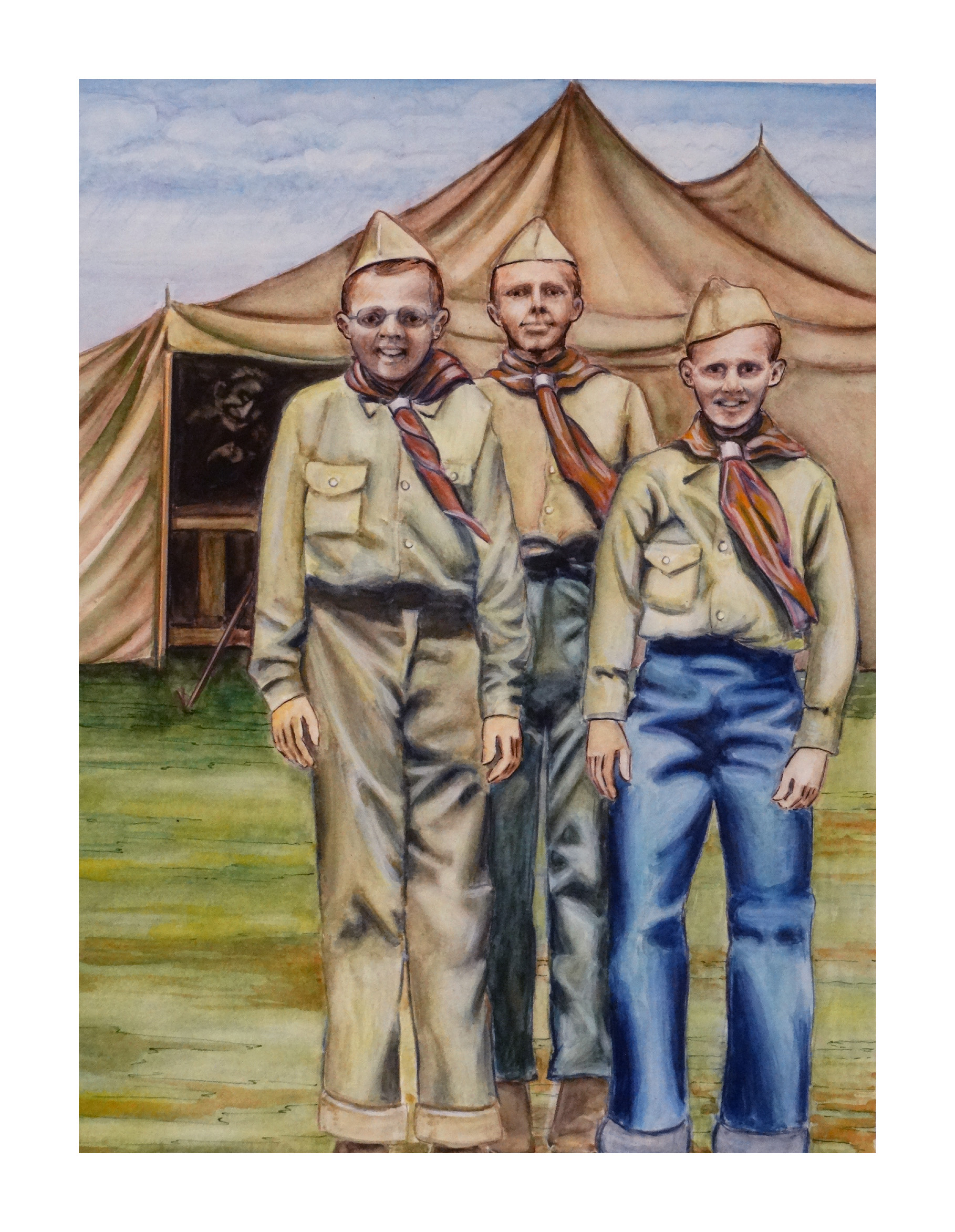
Even so, I’m pretty sure certain institutions must view fluidity of gender with considerable disdain. Conservative churches and other groups like to keep things black and white, mostly, so the grays of malishness or femalishness won’t be acceptable. The Boy Scouts, who haven’t exactly exhibited preparedness regarding the issue, have recently acquiesced to social pressures and assumed a more gender flexible stance, much to the chagrin of many of their church and civic sponsors.

The whole issue, I must confess, leaves me pretty mystified. Dolls, such as me, may have been given certain visual signifiers which place us in one sexual category or the other but I can assure you sexual attraction or identity is simply not part of our makeup. To me the answer to this controversy is pretty obvious; when it comes to judging or attributing value to people, think asexually.

scout camp3

Lost in the Wilderness (Traveling Day)

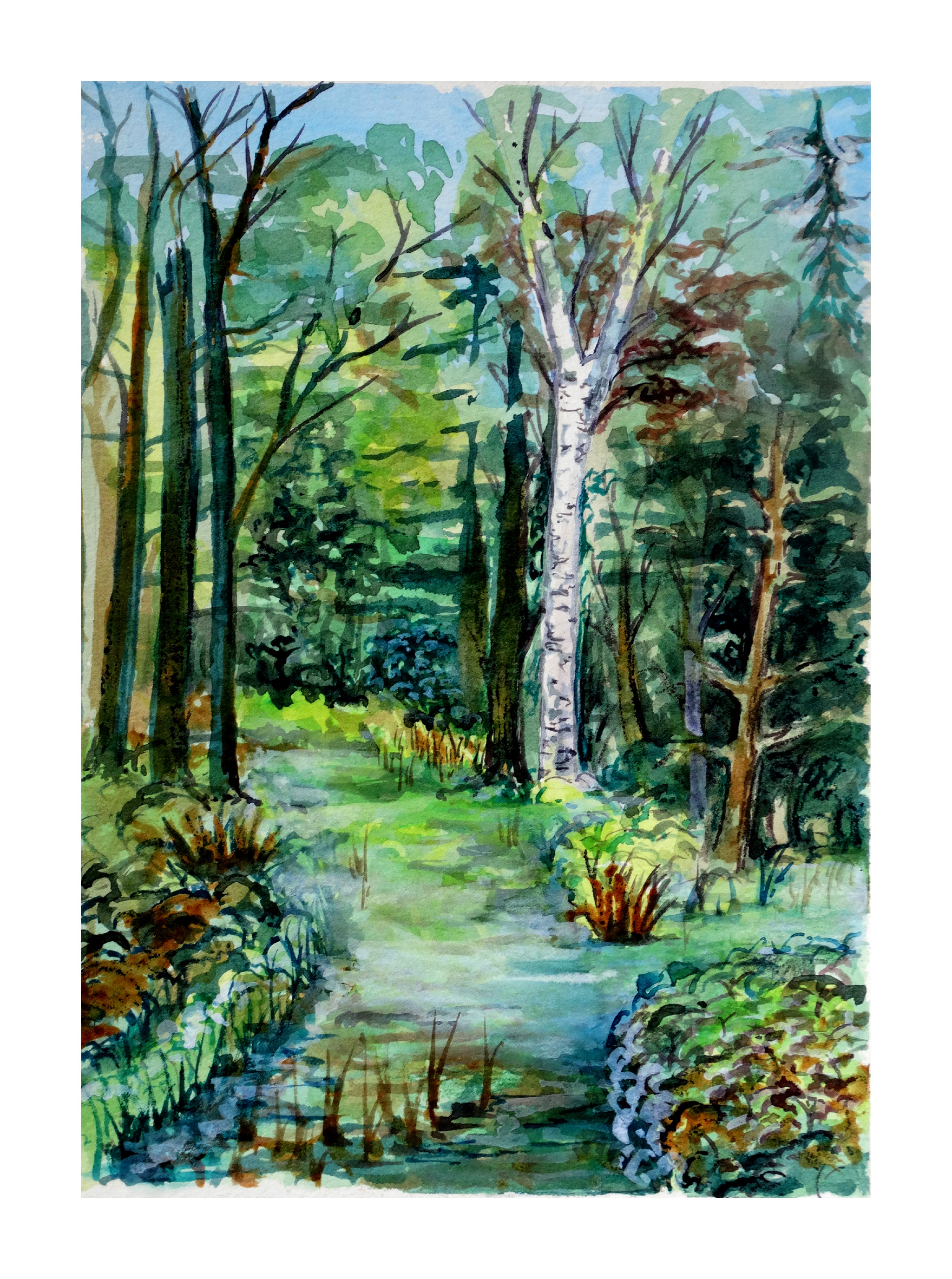
It’s been raining for three hours and I’m lost again; or should I say still lost. Every once in a while I get this idea that I may know where I am in relation to my map.  And, of course, if where I am in reality is this corresponding spot on the map then maybe I’m not lost. It’s just that I’m not sure and there’s no one around to ask for directions, which, of course, stands to reason.

I haven’t seen anyone for quite some time, which does have its definite upside. There are no distractions to the purity of my being-here; no psychic interference or need to perform. Not that there’s anything wrong with friendly exchanges with total strangers but even those are intrusions of a sort.

I think being lost in the wilderness, as long as fear isn’t too much of a factor provides the means to eliminate identity, ego, that pesky Self that tends to get in the way of attaining a deeper consciousness and developing a profound peace within.

landscape9

Lost in the Wilderness (Animal Rights)

Being in the wilderness has me thinking about animal rights. The animals here are all so friendly and self-reliant. They come by my camp and pay their respects but don’t beg; they’re not looking for a handout. They appear to feel pretty safe around their anthropomorphic visitors.

They’re happy, I think, in part because they’re free to pursue their romantic relationships, form bonds of friendship, and, for the most part, live a full life to a ripe old age. Which, of course, is very unlike domesticated food animals who may in the best of circumstances be given the opportunity to live happy lives, albeit short ones, in green pastures, but may find themselves on factory farms where their short lives can only be pretty miserable, which makes me think about the ethics of eating meat.

According to Jane Goodall, animals are much more sensitive than we ever imagined. I take it Simians were some of her best friends so I guess she’s not anthropomorphizing the issue. Perhaps from an ethical standpoint we should all be vegetarians at least.

There is a rationalization for meat eating, though, that I find reasonable. The conjecture that, when pre-historic man harnessed fire, cooked food, heavy in protein ignited an intellectual growth that raised humankind, for better or worse, to the imaginative, inventive being she is today. I suppose this allows one to surmise that continued meat eating, done responsibly and in moderation is condonable.

But, as I sit here enjoying my animal friends I’m not inclined to see any of them as potential dinner.

landscape8

Lost in the Wilderness

I was reading about Jacques Lacan the other day. He was a Freudian psychoanalyst that structured the human psyche into three registers: the Imaginary, which has to do with our image of ourselves, ego development, I guess; the Symbolic which has to do with our existence as related to social structures, laws, institutions, mores, rituals and such; and the Real which, he says, is realized in infancy but lost with the development of language and almost impossible to realize thereafter. What I think he means is that the limitations of language to fully grasp the complexities of our experiences interferes with any possibility of deeper understanding. A deeper Reality, Kant’s thing-in-itself, I guess, is lost.

And speaking of lost, I am; in the wilderness again. I find myself somewhere out here in a place that doesn’t seem to correspond to my map, which, I suppose, places me in a situation without a referent; sort of like being without language.

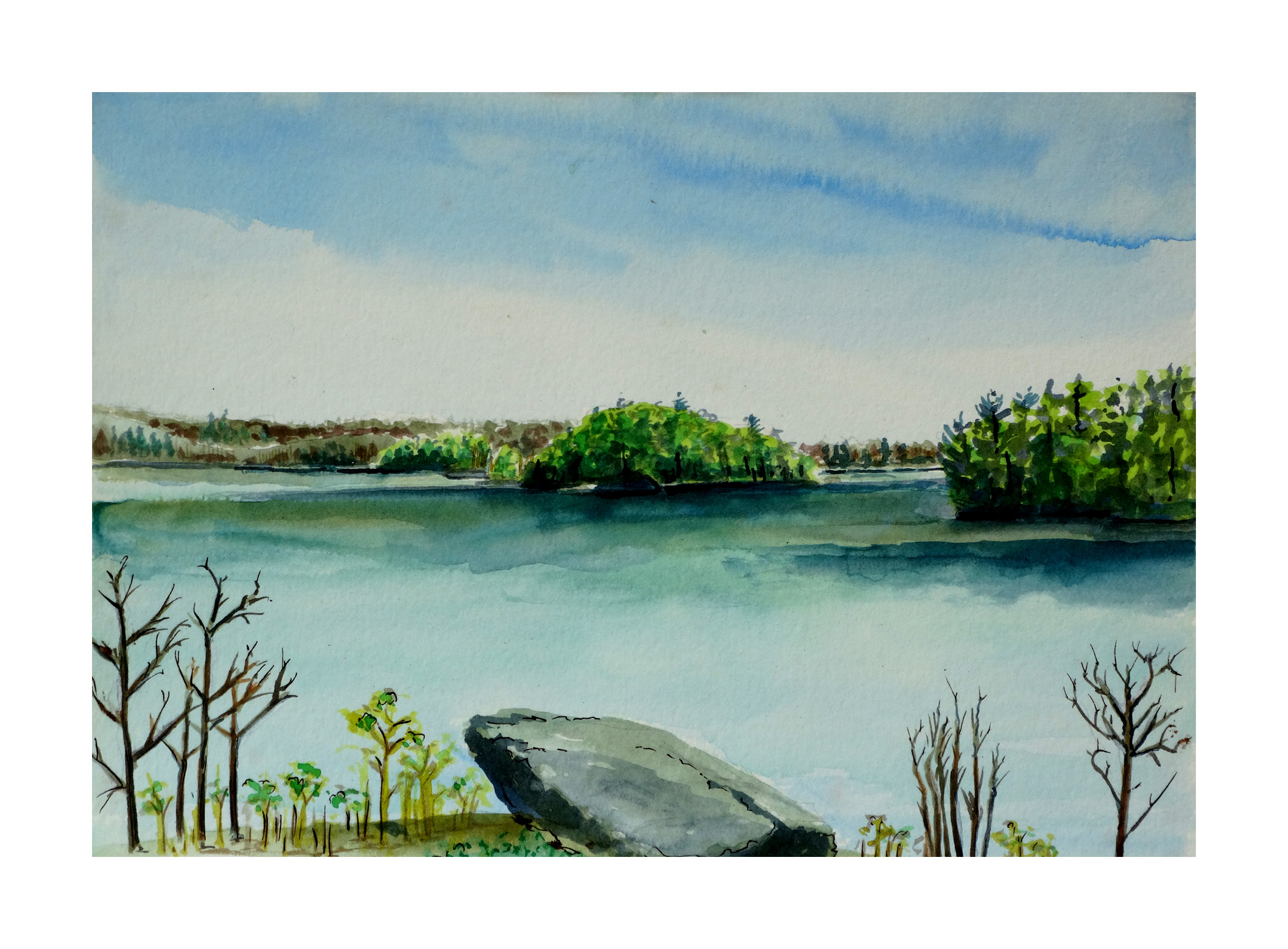
I suppose I should be afraid, being as I am truly lost, but there’s something magical about looking about and not knowing what’s beyond the next island. Everything, rock, water, forest have come into acute focus. Sight, sound, odors are enhanced. And I think I can probably retrace my steps (or paddle strokes as it were) to find my way back. But if I do I expect I may lose this wonderful enhanced awareness I now have.

So, I’m staying put for the time being; I’m in a better place. At least as long as the weather holds.

landscape10

Living the Profane Life

After spending so much time lately contemplating spiritual paths I’ve gotten to thinking about what it might mean to live a profane life.

I guess, essentially, it would mean following one’s animal nature first and foremost; side-stepping the cultural and societal mores that have been imposed since childhood and reverting to primal inclinations. Be instinctual. If it feels good do it, I suppose.

Such a philosophic view would free one from karmic considerations as well as guilt of any sort; fears of retribution from a disapproving god or eternal damnation wouldn’t be a problem either.  But, I imagine there would be downsides to such a point of view. One’s actions would most certainly be viewed as vulgar, irreverent, even blasphemous by most; alienation would probably be in the cards; one would become a pariah as it were. All of which one could live with, I expect, if you were ok with isolation from the rest of mankind; living entirely by yourself; peeking out occasionally to obtain basic needs.

Well, I’m afraid I’m a bit too compliant to assume such a contrary stance, being pretty vulnerable to the opinions of others. I think I’ll leave the profane life to the self-made men of popular culture in the realization that the concept is pretty much just a romantic fantasy anyway.

Root People

Root People


Mother Nature/Animal Nature

I’m worried about Mother Earth. It’s not like I need air to breathe or food to eat or water to drink like those sentient beings of flesh and blood but our Mother as a living, breathing organism needs to be cared for; she is after all responsible for everyone’s existence.

Mother is amazingly resilient overcoming as she has the pressures of an exploding human population but I’m worried she may be losing the battle. She is fighting back as best she can, imposing foundation leveling earthquakes followed by inundating tidal waves and air befouling volcanic eruptions.

The big question is will humankind heed the warnings and learn to work with our Mother in mutually supportive ways.

I was telling all this to my friend Mini-Max. He not too subtly suggested I was being a bit of a hippy, liberal, tree-hugging eco-freak. His position is that our Mother is here to nurture us, we must take what we need to thrive and Mother will have to roll with the punches.

Besides, he said, our Mother has a rather sinister side that manifests itself in our animal natures. Humankind’s very existence is and always has been dependent on some other sentient’s extinction which is a clear indicator of our own vulnerability and need to aggressively pursue our survival.

Thinking about it later, I realized my inorganic make-up did probably give me a fairly unique perspective on the situation and I suppose Mini-Max is right in pointing out the inter-connectedness of it all. Perhaps mankind will destroy itself or be consumed by a stronger cleverer life-form-maybe Mother herself. Then perhaps dolls will inherit the earth.

Biosphere 2

Apocalypse

I see in the news there’s a group, evidently motivated by religious convictions, intent on bringing about the Apocalypse. According to John of Patmos in the book of Revelations the Apocalypse will begin with the appearance of the four horses: the anti-Christ, war, famine and plague and go downhill from there. I guess this is what these folks who call themselves People of the Book have in mind.

I must say this is hard for me to understand. But, I guess there is always civil unrest simmering beneath the surface that is brought to a boil sometimes by the sense of helplessness and vulnerability that occurs when governments collapse or are overthrown. Then societal structures break down, people retreat into the relative safety of tribe or sect, walls are figuratively erected, sentries posted. And, then, when that goes on long enough, desire for peace and stability becomes so strong the door is opened to strong, dictatorial powers that impose order with a heavy hand, which is fine for a while until a sense of security is realized and folks begin to dwell on the personal freedoms they’ve given up. This then leads to civil unrest and the cycle begins again until a complete loss of faith in humankind gives way to absolute religious convictions and a group, like the People of the Book, decides enough is enough.

Wow. I’m glad I got that figured out. Well, if the Apocalypse should be accomplished it will be lonely around here without humankind; such a curious and quixotic species.

Krishna and the Walking Dead3

How to Live

I’ve been thinking lately about the various ways different peoples at different times have thought about living life.

There are, of course, those who lean toward religion, who believe following the dictates of their particular faith and avoiding sinful ways will lead to the preferred after-life results. Then, there are those level headed logicians who advocate maintaining an even keel, all things in moderation and embracing fate as fairly inevitable. Amor Fati they call it: Love of Fate, which I guess means wishing for things to happen exactly the way they do. I suppose for the more pessimistic among these folks, what one fears most will probably happen so you might as well get used to the idea. These moderate Stoic thinkers advocate practicing a thought experiment: imagine this is the last day of your life, that this instant is your last one and then ask yourself this question: Am I living a good life?

Well, all this is well and good I suppose but I would think certain situations would make practicing these philosophic poses difficult at the very least. For instance, if you were a peasant living in France in the 16th century your very survival might depend on your religious affiliation.  Declaring yourself Catholic or protestant at any given time might be pretty dangerous and forget altogether about claiming agnosticism.  Or, if you were an infantryman during World War II you probably would have a hard time thinking about anything other than whether or not you were going to get shot or blown up. Your demons, in both cases, would be very real and not easily dismissed by belief in a promised after-life or pacified by thought experiments.

Well, not being in any sort of threatening or seriously uncertain situation myself (other than possibly being left out in the rain) I guess I can contemplate ‘Best Living’ if I so choose which, I guess, is, in itself, a pretty satisfying way to live.

Horrors of War

Horrors of War