The Tribulation

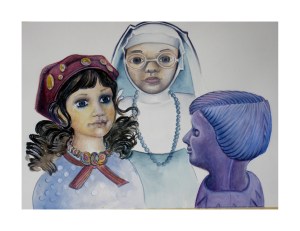
Sister Chloe was telling me the other day that she thinks given the pain, suffering and general turmoil so evident world-wide; given the catastrophic storms, the genocidal tribal conflicts, the unrest precipitated by lust for power and material gain that the Tribulation is at hand.

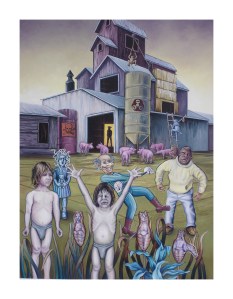
The Tribulation, she explained to me, is that period of time before the Rapture (or during or after depending on one’s reading of the book of Revelations) of extreme discomfort, suffering, mass psychoses and neuroses and the poisoning of our earthly environment leading to, among other things, congenital mutations (and probably anything else one could imagine as being really, really bad).  She made it pretty clear it would not be a good time to be around, and provided the rapture did indeed occur before the Tribulation, better to be raptured than left behind.

The idea of being Raptured I found a bit hard to take seriously.  Although I did see on the news the other day, plans to offer space flights to the moon in the not too distant future.  Maybe the comforts of a modern space station and the freedom to bound about in the relatively light gravitation could seem a sort of Rapture.

Well, back to reality, I think about the beautiful places, good people and beneficent actions that do exist and are happening every day: the relief efforts, the enormous energy aimed at resolving sectarian differences and violence all driven by our inherent understanding that, in the final analysis we all need each other.

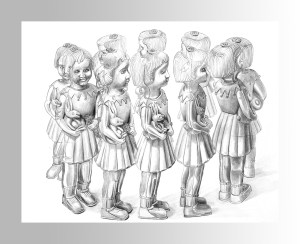
I do think, though, I might inquire into possible interest of a would-be space traveler in the companionship of a friendly doll.

thetribulation3

At the Marae

Do you think that there’s any chance there may truly be a unifying essence or ground of being that is shared by all mankind?  You know, something buried deep within our psyches that we’ve somehow lost track of these days when divisiveness seems so prevalent.

I was thinking back recently to a time a few years ago when I was among the Maori people in Aotearoa (the long white cloud) which is the name the Maori have for the islands of New Zealand.  Before these folks were inundated with western materialism and capitalistic pursuits (not to mention Christianity) they basked in the natural beauty and mana (what they call spiritual power) around them.

The mana the people inherited from their revered ancestors extended to Tangaroa (the sea) and Tane (the forest) and all of nature in a beautiful Cosmic Unity.  As long as tapu was respected everything went along pretty well.

Tapu is spiritual power like mana that everyone has and some objects and places have but some people and places have more tapu then others.  Everyone understands that when strong tapu is encountered it is important to act with deference so as to keep you spiritually strong and not upset the delicate cosmic balance.

While in Aotearoa I was allowed to visit a Marae, which is a sacred meeting place were tapu is particularly strong.  Upon entering tribute was paid to the ancestral spirits in recognition of the origins of the mana or life force shared by everyone in the iwi (all the people).

So, after thinking about it, I’m just wondering, if we’ve lost track of the mana around and within all of us and the tapu of our neighbors and acquaintances, maybe we should be searching for a sacred place where we can all come together and find our common ground.

atthemarai3

Thoughts on Global Warming

I’ve been reading about climate change lately.  I’ve been trying to make sense of the number discrepancies and the diametrically opposing views about a subject that seems as if it should be pretty straight forward.

Some people are convinced the carbon dioxide emissions being spewed from autos and power plants worldwide is collecting in the atmosphere and causing, among other things, the ice caps to melt.  Others are convinced global temperature fluctuations are just a normal cyclical occurrence.

Both sides site their opposing statistics and their scientific experts but, it seems to me, for a lot of people the issue boils down to an emotional, us versus them scenario with an almost religious fervor.  Sometimes the issue seems reduced to name calling and ad hominem attacks just like it used to be on the playground in elementary school.

Skeptics think of proponents as tree-hugging alarmists just looking for another world threatening crisis; proponents think of skeptics as anti-intellectual luddites with their heads buried in the sand.

Well, whether or not human-caused global warming is as dire as some claim it seems to me we could all do a little more to reduce our carbon footprints and ease the pressure on Mother Earth.

effectsofglobalwarming2

Numinous and Ineffable

Have you ever thought about or had the desire to escape the mundane and sometimes harsh realities of everyday existence?  I don’t mean simply taking a road trip to Disneyworld but to actually transcend existence, leave the physical world behind and enter the realm of the numinous and ineffable.

Of course one problem might be that even if one could figure out how to get there this extra-physical place might not be all that pleasant, it being numinous and ineffable and all, but I was thinking, if I could go there it certainly would help put things into perspective.  I could view problems that seem to be so important and urgent in the here and now in a detached manner that, it seems to me, might be beneficial to my well-being as well as to finding solutions to those problems.

I was reading that certain shamans can make such a journey; they enter into an ecstatic state and actually leave their bodies to journey with their spirit helpers to the land of the dead where they can find answers to important questions that only the dead can answer.

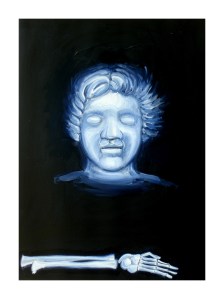
Apparently in order to get to this point a shaman has to undergo some fairly extreme procedures.  Among the Buryat people of Siberia the future shaman must die and have his flesh scraped from his bones and his organs removed and then be reconstructed and reanimated by the spirit forces in order to gain the power to make his passage to the numinous and ineffable land of the dead.

I’m just not sure, as much as I’d like to see what the numinous and ineffable looks like, that I’m prepared to accept such a sacrifice even though my bodily transformation would probably have more to do with melted plastic than bone scraping.

I guess, for me, the numinous and ineffable will have to remain numinous and ineffable.

shaman3

Spectral Visions

I’ve always been a huge fan of Edvard Munch.  The psychological weight he was able to express in his paintings is just amazing to me.  But, I guess when you think about his life it’s not too surprising his artwork is loaded with existential angst.

First of all, his mother died when he was five and his favorite sister when he was fourteen.  His mother’s death so upset his father that he developed extreme religious anxieties; he would tell Edvard and his sisters stories about the eternal punishments awaiting them in Hell.  On top of that, Edvard was often ill causing him to miss a lot of school meaning he got to spend even more time with his father.

By the time he reached manhood he was spending a lot of time drinking and fighting and generally being unhappy.  Then, he was shot in a struggle with the only woman he ever loved (other than his mother and sisters).

After that he suffered a nervous breakdown, nobody liked his paintings and things were generally pretty terrible, but he continued making art; recording the painfulness of his life and eventually people came around to understand the beauty of his work; how effectively his images capture man’s existential dilemma.

Things got better.  Norway built a museum to house his works.  They even put his image on a bank note.

It all sounds familiar doesn’t it: another story of a misunderstood genius whose strength of vision carries mankind to new insights that help people to better understand who they are?

I guess it’s a story with a happy ending even though there was a lot of suffering involved.

spectralvisions3

On the Life and Death of Satan

I was reading recently about how the idea of Satan came about.

In the early middle ages St. Augustine determined that, as a result of Adam’s original sin and seeing as how we’re all descendants of Adam, evil exists in everyone.  This meant that when bad things happened everyone had only themselves to blame since they all had a bit of badness in them.  People bought into this pretty well because finding a scapegoat when badness happened wasn’t difficult.

Then, after a while, people began to take exception to St. Augustine’s concept thinking they really weren’t all that bad; actually they felt pretty good about themselves.  So they got to thinking it wasn’t them but something or someone outside themselves that made them be bad.  They anthropomorphized badness into a somewhat ambiguous horned satyr that they saw as perpetrating evil just because he wasn’t a very nice creature.  He was an idea most everyone could fear and dislike.

Later, in modern times, now that people don’t so much believe in supernatural entities anymore, Satan has begun to fade away.  So now, when bad things happen some people have gone back to finding a scapegoat, others have looked to St. Augustine and blame our inherent sinfulness and still others have dismissed the concept of evil altogether and rationalize badness as being relative to peoples and times.

When I think about how I stand on this I guess I lean towards relativism, but it takes some pretty hefty rationalization to accommodate some of the atrocities one hears about these days.

taking up cooking3

Life Stories

Friends and I were sitting around the other day chatting over afternoon tea. Sister Chloe got into talking about the providential nature of her life: How God had seen fit to bless her with strong, supportive parents who had taught her right from wrong, follow the Golden Rule, do no harm and help others when possible and to follow the path that God had laid out for her.  She acknowledged God’s ways were sometimes mysterious and were not always easy to understand, like when her brother was left on the driveway behind the family car and subsequently ended up looking like Flat Stanley.  She questioned how God could let that happen but said she believes he must have had his reasons as he does for everything.

Well, Lala then proceeded to offer that she saw her life in quite different terms.  Fortune, she said, had been kind to her.  Following a particularly potent incantation her father had won the favors of a Toys-R-Us manager and ended up being featured in a toy exhibit which enabled him to secure a fine home for the family.  Even though the family had had their share of bad occurrences, mother having been purchased by a quite rowdy child and very likely ended up moldering in a damp basement her stuffing infested with centipedes and spiders,  cosmic justice had, for the most part, shined upon her and she hoped the stars would continue to do so.  She showed us an amulet she was wearing that came from her ancient ancestors.  She felt sure this would continue to protect her through the travails of life.

Then it was my turn.  I told them that my father was fond of telling us when difficulties arose that there was no reason to fear unpleasantness or worry about things because what would be would be and we had the freedom to make choices in our lives that would lead us, in all probability, provided they were wise choices, to a content and happy life.  I told them this advice had worked out pretty well, that I’ve always done well in school, able to overlook the prejudices of my human classmates and even the potentially devastating event of my aunt being lost in a family move (I think the dog carried her off and buried her somewhere) was met by us all with stoic acceptance.  I said that I was content in my ability to choose and felt comfortable letting each day unfold as it will.

Sister Chloe asked me how I can go about without faith in the existence of a benevolent overseer.  Lala asked Chloe how she could possibly believe her ‘Superman in the sky’ could care about the events in her life.  I asked how either of them could attribute future occurrences to the Supernatural.

As I poured our second cup of tea we all agreed it was time to change the subject.  We decided to talk about the weather.

life stories3

Age of Aquarius

My friend Astrid and I were planning to get together recently when she called to say she couldn’t leave the house.

Astrid is a strong believer in the efficacy of the Astral Plane as an indicator of future events.  She had just found out Saturn was entering her seventh house signaling Saturday, our planned meeting day, an inauspicious time to socialize.  Better, she said, not to tempt fate.

I thought about this for a while.  It all sounded pretty new-agie to me, but I decided to give Astrid the benefit of the doubt and found my birth chart on-line.

As you might imagine determining the exact time and date of my extrusion wasn’t easy.  The year was printed on the bottom of my left shoe; I consulted my keeper as to purchase date, estimated delivery time and took into account the slight flaw on my shoulder as an indicator of a rush job probably done shortly before the end of workday.

Anyway, my chart indicated among other things the moon was in Aquarius just passing into my eighth house.  What this suggested was my head was full of original ideas but that I would have the tendency to be selfish and blunt.

Being the skeptic I am I called Pearl.  We went out and had quite a good time.  I thought I was quite a pleasant companion until Pearl told me she hadn’t noticed the smear on my shoulder before.  I responded by telling her she wasn’t exactly Miss America herself.

Pearl just shrugged off the comment but it definitely got me thinking:  I wonder what will happen when the moon is in the seventh house and Jupiter aligns with Mars?  Will peace guide the planets and love steer the stars?

biospheretwo3

Religion as Art

I was reading a while ago about the Ban-Yatra, a Hindu pilgrimage which is performed in the Braj region of northern India.  Unlike many pilgrimages the ban-Yatra isn’t focused on reaching a sacred locale or the place of Holy Relics but rather is about uncovering the sacred in the profane as the pilgrimage progresses.

Braj is believed to be the birthplace and playground of Krishna.  Many of the stories of Hindu literature mention places and land forms here as sites where Krishna performed his miracles, cavorted with his cowherd friends and engaged in love-play with the Gopi’s and his beloved Radha. The pilgrimage involves circumambulating Braj, visiting shrines and temples and partaking in various rituals.

Unlike some eastern religious philosophies the worship of Krishna isn’t about renunciation of this world-denial of desire, but quite the opposite: realizing desire in the beauty of nature and celebrating the love of Krishna as being non-different from it. In order to do this the pilgrim cultivates bhava, an emotional and imaginative energy that allows him or her to see beyond the mere commonplace and experience the presence of Krishna in the natural surroundings.

One scholar suggests that in achieving bhava the pilgrim becomes like a poet creating meaning in the landscape as he or she passes through it.

Wow!  What a great observation. The artist certainly creates alternative worlds through imaginative emotive means; a significant parallel to the creative religious practice of the Ban-Yatra pilgrim. Maybe the difference between the two lies in just how literally one believes in the existence of this other world and its inhabitants. The artist, I suspect, is less likely than the pilgrim to embrace his/her imaginings as factually existent.

It seems to me religious practice in general could profit from a bit more creative play and a bit less dogmatic belief.

Krishna and the Walking Dead3

Sacred Images

While reading about Byzantine Icons the other day I was amazed to learn that the painter, before he is able to paint one of these Holy Images, has to transcend earthly existence and enter the heavenly realm.  Apparently such a trip will instill the painter with the knowledge necessary to render a truly sacred image.

The resulting object is, only then, understood to be a Holy Relic and a living icon.  The holy personage thus rendered is seen as emanating the light of truth.  As I viewed some of these objects many did seem to have an inner glow.

Well, I had a friend do a painting of me in the style of the icon painters.  I don’t think his work was preceded by any voyage to the Great Beyond so I suppose the resulting icon is disqualified from the realm of ‘living relic.’

As I look at the finished product I can’t quite tell if my image expresses benevolence or self-importance-maybe a bit of each.  I suppose that might very well be consistent with the attitudes of the early church patriarchs who achieved sainthood. The painting does seem to emanate a sort of inner glow.  That may be because my plastic body is a bit translucent.

I showed the painting to the Barbies and they agreed unanimously it did nothing for me whatsoever.

byzantine icon3