As people became more sedentary during the Neolithic era tribal groups united forming larger populations. These disparate groups, to form a functioning society needed to share a common sense of the way things are, a shared belief system. They needed a storyline that all could grasp, accept and believe in order to accept a hierarchical structure to deal with property ownership and exchange of goods.
A workable storyline would need to include reference to the supernatural. Human uncertainty requires connection to an entity that can be appealed to when crops fail, drought occurs, or outsiders threaten the groups existence.
As societal stability evolves, multiple story lines will develop, one flexible and open to new developments, another rigid, protective and resistant to change. Hopefully stable institutions will be in place at that point to accommodate such diversity of thought.
In 1935 Sinclair Lewis wrote a novel: It Can’t Happen Here, detailing the horrors of a totalitarian dictatorship. In the novel the ‘corpo’ government takes control, restrictions on personal freedoms emerge and the press becomes the voice of the state, dissidents are rounded up and imprisoned or executed and minorities become scapegoats. Young men are conscripted into the quasi-militaristic “Minute Men’ whose task is to seek out and arrest anyone suspected of subversive activities. As people began to realize their loss of freedoms mass demonstrations formed and were brutally put down by the oppressive regime
In America today we see militaristic ICE agents assaulting immigrants deporting them without legal recourse to interminable prison time in Venezuela. We see attempts to suppress free speech in the racist intentions to cancel Diversity Equity and Inclusion programs in colleges and universities. We see ICE agents removing books from public libraries which can only be seen as an attack on education.
This totalitarian wave we’re experiencing is intended to overwhelm us; resistance is necessary; silence is acquiescence.
I’m wondering lately what part morality plays in our social behaviors these days, how morally ambivalent we’ve become in our acceptance of the less that morally stellar actions of some of our public figures. The ‘designer’ morality many of us assume these days lacks the omniscient overseer Christian believers have: an entity able to impose punishment or reward for behaviors well spelled out and without compromise.
However, we draw our moral guidelines it seems pretty clear that lack of any moral truths has dangerous implications for personal well-being and for our relationships with our fellow man. Amorality turns into immorality that leads to evil intent, the inclination to replace social benevolence with Will-to-Power.
I guess it’s pretty clear that we are all innately susceptible to wicked behaviors. That, while we maintain a respectable public persona within us burns a shadow-self, a dormant entity that when motivated surfaces to exhibit behaviors that can only be described as evil.
There are various reasons why an evil shadow-self might reveal itself: fear of the Other among them. An obsessive jealousy might ignite one’s Darkside as well as vain responses to threatened identity. Instigators might arouse the shadow-selves in whole populations by demonizing a scapegoat as happened with the witch burnings during the Middle Ages and antisemitism in the 1930’s and 40’s.
When the eruption of the shadow-self occurs, our moral imperatives will likely be overwhelmed allowing our innate wicked behaviors to flood in.
A stable upbringing will usually set most of us on a path to becoming someone worthy of self-respect. Through responsible participation in the mechanisms that contribute to a functional society we will find ourselves woven into the social fabric of our communities, thereby garnering the respect of our peers who share our moral values. Our sense of self-worth will grow into the assumption of political power, of being a man among men.
If, though, pride-in-self becomes excessive one may slide with ease into vanity, a character flaw demanding constant reinforcing kudos. As the need for recognition grows obsession develops, becomes dangerous, finally producing a loss of identity, a non-person results, immoral, prone to unjustified retribution against imagined nemeses. An inglorious fall from grace.
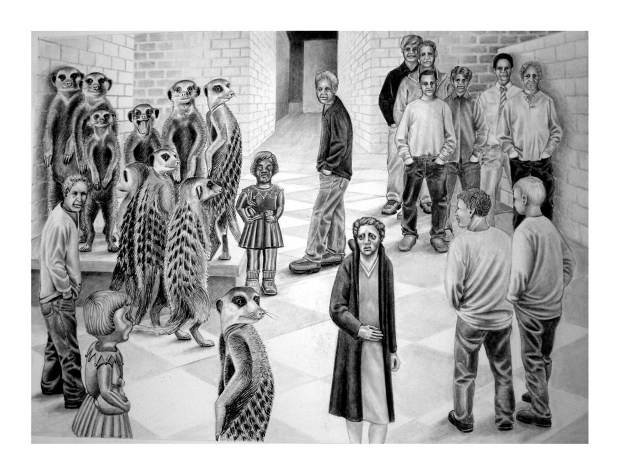
I’ve been thinking lately about the multitudes of good and sincere people in the world who have arrived at dramatically conflicting views as to the nature of reality.
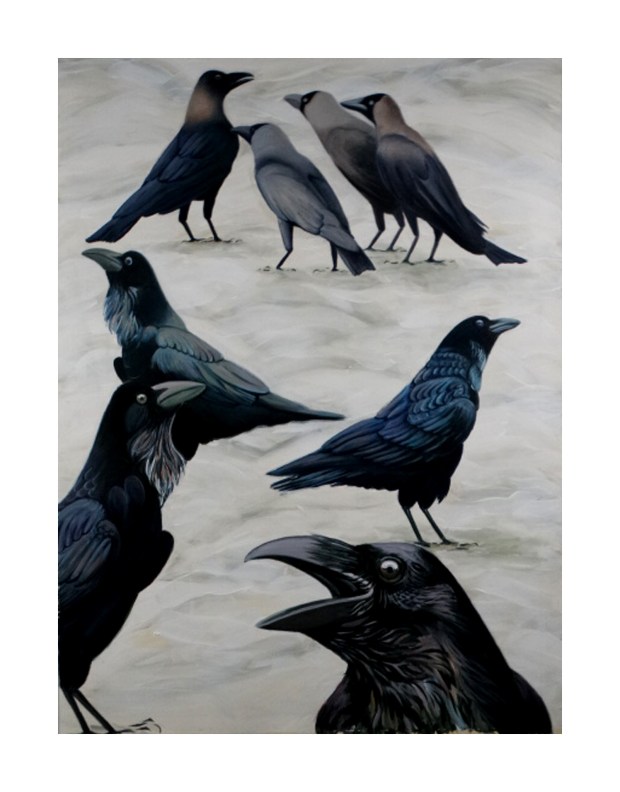
Most all of us rely on what we consider to be unimpeachable support sources for our views and usually a contingent of like-minded others that reinforce our beliefs. The evangelical Christian, the Qanon conspiracy buff and the liberal mainstreamer will tend to approach daily occurrences with sets of premises and then conclusions that are quite different. Such conflicting perspectives are the stuff of the social divisiveness manifesting itself these days; the dilemma of free thought in a free society free from coercive oversight, I guess.
I have no answers other than responding with patient tolerance in the knowledge that most everyone deserves respectful acknowledgement of their usually carefully considered views. The hope is that we can all spot disinformation when it presents itself. Hopefully, we can think past the response of the recently interviewed lady asked why she embraces her position on a current controversial idea. ‘I know it’s not true’, she said, ‘but it’s consistent with my beliefs.
I’ve been thinking about how visual art is consumed. I’m inclined to believe most people, viewing representational artwork relate favorably or unfavorably as the content reflects their interests: outdoor lovers and landscapes, hunters and wildlife, etc. Then, there are the aesthetes who revel in the beauty of color and composition or disdain the lack thereof. They seek rhythm, form and pictorial depth rather than meaningful subject matter.
The Effete Aesthete takes the visual art experience a step further. She seeks aesthetic nuance, contextual reference or artist intent as basis for value judgement, even though such meaning depends on secondhand interpretation provided by a critic or curator thereby eliminating the need for an honest interpretation of her own. Such action would seem to be a sterile and overrefined approach to visual art viewing.
I’ve been thinking lately about the multitudes of good and sincere people in the world who have arrived at dramatically conflicting views as to the nature of reality.
Most all of us rely on what we consider to be unimpeachable support sources for our views and usually a contingent of like-minded others that reinforce our beliefs. The evangelical Christian, the Qanon conspiracy buff and the liberal mainstreamer will tend to approach daily occurrences with sets of premises and then conclusions that are quite different. Such conflicting perspectives are the stuff of the social divisiveness manifesting itself these days; the dilemma of free thought in a free society free from coercive oversight, I guess.
I have no answers other than responding with patient tolerance in the knowledge that most everyone deserves respectful acknowledgement of their usually carefully considered views. The hope is that we can all spot disinformation when it presents itself. Hopefully, we can think past the response of the recently interviewed lady asked why she embraces her position on a current controversial idea. ‘I know it’s not true’, she said, ‘but it’s consistent with my beliefs.’
The idea of the existence of witches is age-old but became particularly oppressive in 15th and 16th century Europe when imaginative tales of satanic behaviors became so ingrained in people’s minds it created a pseudo-reality that led neighbors to accuse neighbor of subversive behaviors, witchcraft, based on little more than petty jealousies. The accused were often tortured to confess and then burned or drowned on little more than hearsay evidence. Fear, fed by the church, was rampant, accusations plentiful, stories of satanic tortures and murders of children spread through the populous daily. Thousands were accused and put to death based on information that carried no factual evidence.
As the stories spread, igniting the imagination, they became seen as fact, even doubters were drawn in until the reality of the stories were known to be true beyond doubt.
I wonder how often the information we glean on-line inspires descent down the rabbit hole into equally absurd beliefs.
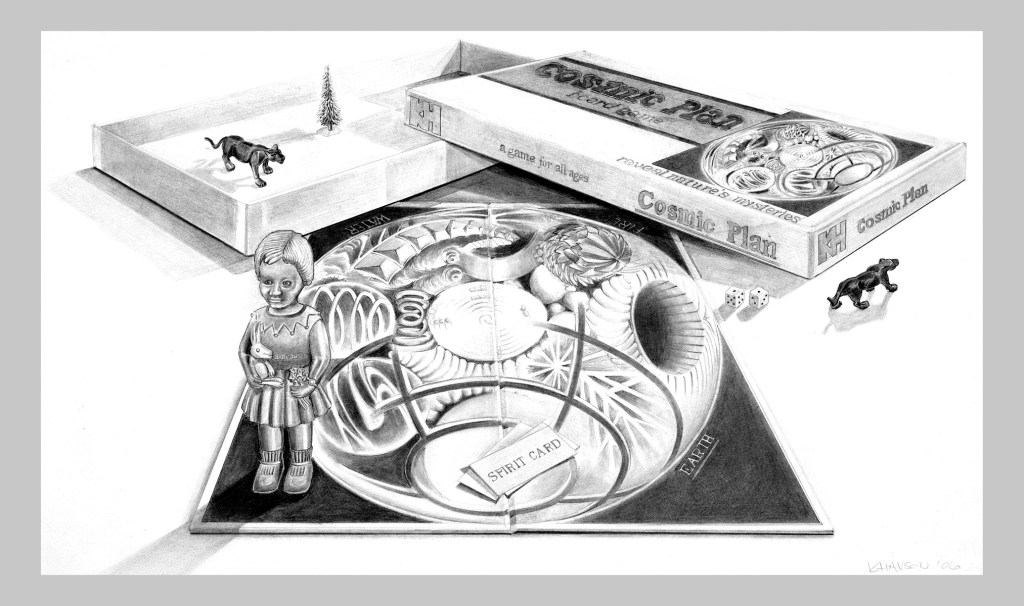
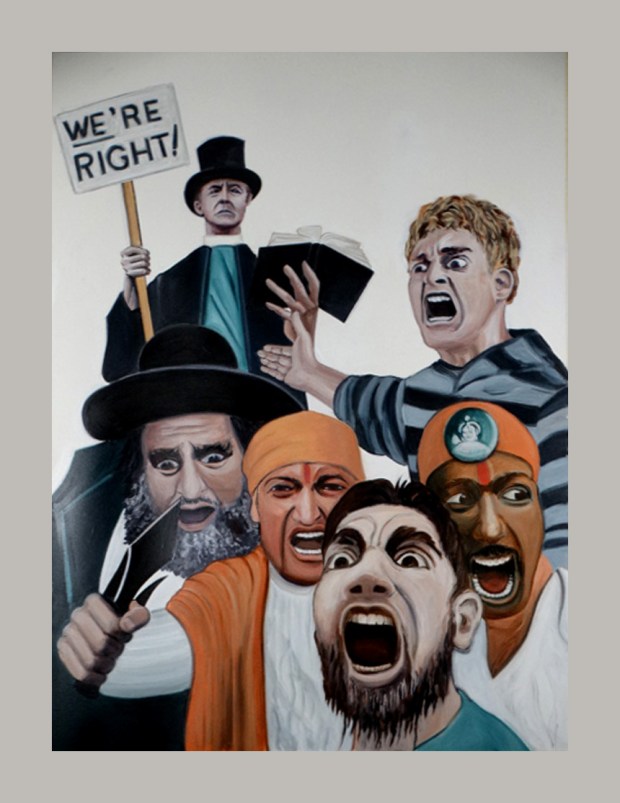
I’ve been wondering lately what sort of life events, what kind of social influences one would have to experience to lead him or her to embrace the stringent discipline of fundamentalist religion. Apart from an innate proclivity toward a rigid, reactionary conservatism (can there be such an inclination?), what, I wonder, propels some people toward angry condemnation of any and all perspectives differing from their own?
In fairness, most everyone seeks answers to the big questions: the nature of existence, life’s inherent meaning, but only some of us (a small minority one hopes) determine their answers to be an infallible, absolute truth that leads them to rail against the slightest suggestion that there might be other good answers.
Some of these true believers have come to the conclusion that the life they had lived before finding the Truth was so despicable that a psychic renewal was required: a re-birth into a total acceptance of, commitment to, their recognized god. In order to maintain their new persona and recently acquired cosmic world view, an Opposition, an inherent Evil identified as constant reminder that one’s beliefs are constantly under siege, that life is a battle between the forces of God and Evil. Tension and conflict then become an everyday experience and concern.
There are, of course, degrees of fundamentalist fervor. Not everyone who embraces conservative religious beliefs are overtly hostile to those they might consider infidel or apostate. Still, the idea of immanent cosmic conflict isn’t buried too deeply below the surface.
These are disconcerting thoughts to my mind, but, I guess, in the end, it’s all about being certain where the truth lies: for these folks it’s not within the empirical but rather the cosmic realm. For some the rewards of a promised afterlife tempers the outrage and sustains their vision of the soon to be realized cosmic light.