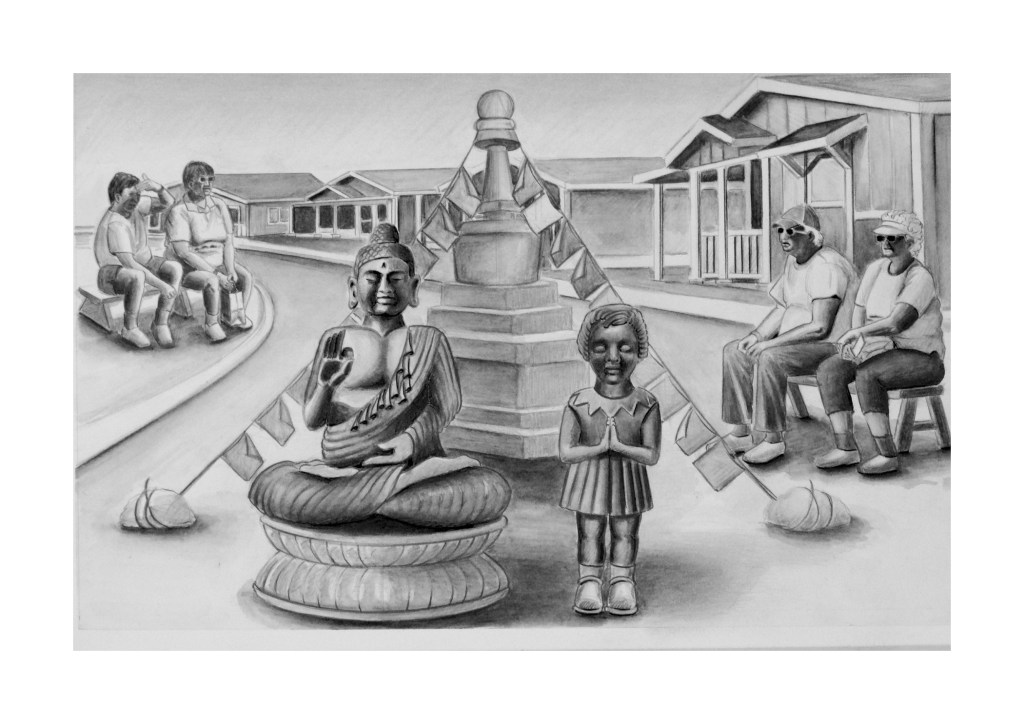
A beautiful late spring day, sun shining, light breeze blowing, conjures images of youthful optimism, of the immanent occurrence of wonderful happenings likely in the near future.
Now, the number and quality of possible outcomes, many not necessarily good, have me wondering about what’s been lost. No doubt my earlier optimism was swayed by a generously youthful naivete, and world events, these days, are dire, oppressive if one pays too much attention.
Still, the opening into the transcendent ought to be there, shrunk maybe, narrower, more constricted but the window, grimy as it may be, ought to admit a bit of light.
It’s pretty easy to get caught up in the proliferation of bad news I’m constantly bombarded with these days. I’m made aware, daily, of impending disasters awaiting me around nearly every corner. Attacks are perpetrated and battles are waged on multiple fronts by various actors, in various ways, stressing the limits of my abilities to realize some semblance of peace. The psychic discomfort I experience from following the news makes it difficult to maintain any sort of optimistic outlook, any sense of an ultimate ‘happily ever after’ scenario ever becoming possible in this life. If only I could glimpse even pinpricks of light passing through the shroud of impending gloom I might be able to catch a breath, slow my heart rate down a bit.
Of course, I’m thinking these things as I sit here sipping hot chocolate while reclining in the living room of my home where I will soon take to bed to catch my regular 8 hours and rise in the morning to read of another day’s multiple disasters.
I’m not sure how to think about such contradiction.
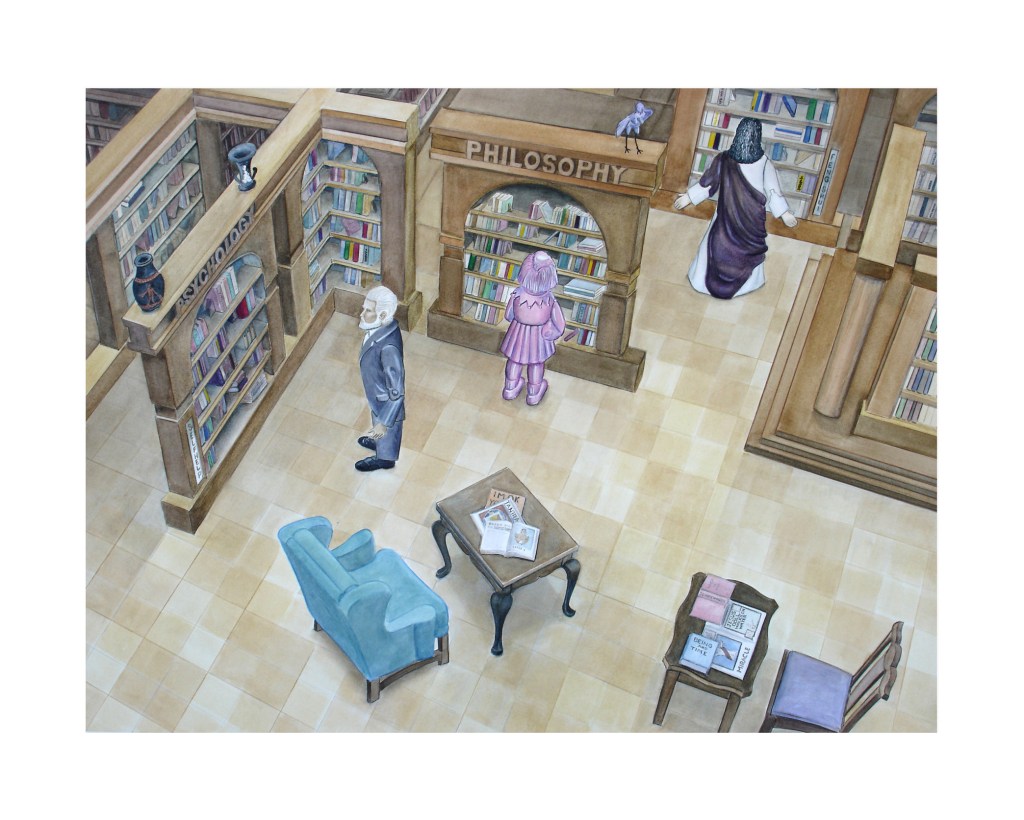
I’ve been reading aphorisms by the Romanian philosopher Emil Cioran. E. C. was an extreme misanthrope of such pessimistic belief it led his distraught mother, unable to understand his negativity to tell him she wished he’d never been born, that had she known what he’d become she’d have aborted him.
As I seek something enlightening (or at least redeemable) in his writings I find him relating that, while life is a misery, chronically painful, that suffering is universal and never ending and that most people are too pathetic to do anything about it, sustainable existence may lie in hope and the distractions engaging in arts activities might offer. But for the talentless, the disaster which is reality will be overwhelming. E. C. thinks better to give one’s life to heroic acts since there really is nothing to live for. The talentless hero can at least have a sort of remembrance.
As for me, I’m not sure how fair it is to reduce the heroism of, say, a combat troop who falls on a grenade to save his comrades to lack of talent. Still, it’s hard to imagine that an inner life of some sort wouldn’t keep one from diving for cover in such circumstances.
I’ve been reading, recently, about the experiments with the drug mescalin Aldous Huxley performed in the 1950’s. He determined that the drug will ‘open the door’ of one’s perceptions, allow one to pass through the wall of harsh reality and for most everyone with proper introduction and guidance, will produce expanding insights, an increasing ability to see more deeply and observe the world ego-free. Being able to embrace the ‘isness’ of our visible world, the stuff of experience that has by survival instinct been reduced to labeled objects, would make everything we see more significant as the drug inhibits self-consciousness.
There are caveats. A sound, stable mind grounded and free of anxiety is essential. AH points out the drug may induce schizophrenic response, scare the user into interpreting his surroundings as cosmic malevolence, begin viewing experiences as conspiratorial, as a plot to destroy him.
Which has me thinking about the alternative realities so prevalent in the public sphere these days. How so many of us have caved to conspiratorial narratives, have fallen into the dark world of the ‘deep state’ even without experiencing the negative effects of a mind-altering drug.
Even so, it seems to me cracking open some of those ‘doors’, gain at least a glimpse beyond our limiting realities would gain us a worthwhile perspective. Maybe, if one really tried one could will the expansion without the drug.
There’s a lot of discussion these days about whether or not humankind is putting excessive pressure on our earth’s finite resources. Population growth, new technologies for extracting fossil fuels, depletion of forest lands, loss of clean fresh water sources, garbage in the oceans, over fishing, the list goes on and on.
I was reading an interesting commentary on what would happen to our world if humankind was suddenly to disappear, how quickly it would rebound, become healthy again. Such a scenario, human extinction that is, is not all that unthinkable in view of international tensions these days.
Such thinking made the book, The World Without us, by Alan Weisman, compelling reading. Mr. Weisman suggests that, in his believable future world, infrastructures would begin to fail, the New York subway tunnels would flood almost immediately and within a few hundred years our most solidly built brick, mortar and concrete structures would crumble. Native vegetation would push up through asphalt roadways hastening nature’s reclamation of the earth. Coral reefs and sea life would rebound as the resilient oceans healed themselves.
Even 500 years later the earth, it seems to me, would be a much more attractive place to be; except, of course, I wouldn’t be here; unless I could somehow live in the future. But, I guess that’s a whole other issue.
I’ve been trying to understand the fluctuations in the world order these days with populist movements arising around the world ushering in strongman politicians, spinning narratives of restorative nostalgia, remembrance of times past when everything was better than it now is despite the relative affluence most of us realize.
There are always, I suppose, folks of ambition but mediocre talent who don’t achieve desired advancement, who might seek a less competitive structure than the socio-economic system that promotes the best and most able and insures the system functions as effectively as possible. And then there are those of modest ambition who may fear disenfranchisement and the disfavor of the strongman who climb on the bandwagon.
The problem is that the strongman, assuming free reign, may begin to make up his own rules, begin suppressing opposition, placing restrictions on access to information until there’s only one narrative. And, with only one narrative truth can be stretched, people demonized, scapegoats created to be blamed when things go awry.
Better I think to have a sometimes messy and chaotic pluralism where everyone has a say even if considerable energy may be required in public debate.
After reading a definitive, in-depth account of the conflicting narratives between the various parties involved in the American Revolution it occurs to me how amazing it is that any sort of resolution was ever reached, deeply flawed as it was.
Liberty and justice for all was far from the truth of what occurred during and after the war. Moneyed interests controlled the economy to the detriment of the small landowners, Native American populations were pressured off tribal lands, Black Americans were returned to forced servitude. Widespread unrest prompted the founding fathers to push for a restrictive democracy, granting increasing power to the federal government. Congressional checks and balances negated sought after control by special interest groups.
200 years later I guess a certain equity has obtained. Many, assured as they are of equal treatment under the law have freedom to speak their views and can realize a reasonably stable existence even though ‘liberty and justice for all’ is far from a reality.
TV ads these days have made me aware the country’s demographic is changing. Savvy advertisers are using more people of color and those living alternative lifestyles to sell their products. It only makes sense of course; old white guys are dying by the droves due not only to covid but to natural life span.
One doesn’t have to look too hard to see the desperate war of resistance the aging white population is waging. The political realm is rife with frenzied folks upset about the changing status quo, opposing the surge of youthful, socially and racially pluralistic energy, which is slowly, steadily driving the conventional beliefs of a previously white cultural dominance into extinction.
There are aspects of the new tolerance for fluid gender identity and sexual lifestyles that are difficult for me, given the social structures I have grown up with, to integrate. I firmly believe, though, change must happen. I sense in the young a positive life force asserting itself; one necessary to overcome the difficulties maintaining life as we know it will require.
I’ve been reading in the news lately political pundits and others in the know are suggesting, warning in some cases, that we are in danger of experiencing another civil war. The crux of the concern seems to be that with large numbers of us polarized as to what we perceive to be true, supported as we are by our chosen information sources, contradictory one side to the other, finding common ground seems unlikely. We find ourselves living in alternate realities and the more firmly we embrace our beliefs the more we fear the other. It’s common these days to see opponents demonized and violence perpetrated.
But, on the positive side there have recently been those on the political fringes calling for state secession. One can imagine a red state/blue state divide although I suppose there’d have to be some voluntary resettlement in order to consolidate realities. Once everyone was on their chosen side of the new international border it would seem peace would be obtainable. Narratives would evolve reflecting relative realities. There will of course be differing perspectives: a democracy on one side, totalitarianism on the other; one state operating according to logic and reason the other embracing the dictates of authority; basic trust in the peace and goodness of humanity on the one hand, paranoia driven preparation for armed conflict on the other. Family get-togethers will be difficult for those on opposite; sides of the fence and given the opposing opinions of the efficacy of science I guess another pandemic will not be good for the red staters.
Imagining a red/blue divide could produce a modicum of peace is hopeful, I suppose, but what is more likely, the mistrust inherent in such a philosophical chasm will feed the human need to demonize each other further.
It’s hard not to imagine mankind’s self-destruction.
I’ve been reading that cognitive biases interfere with nearly everyone’s decision making. There are quite a number of ways that clear thinking is undermined by personal prejudices, intuitive imaginings, simplistic assumptions, unrelated beliefs or refusal to accept information inconsistent with previously accepted knowledge.
The idea of cognitive biases explains, it seems to me, how those of us sharing a fairly common reality can arrive at such diverse opinions about the political, religious and social issues we find ourselves facing daily. There’s a considerable discrepancy as to what constitutes fact. Sometimes our sources gain such credibility we allow their ‘truth’ beyond questioning; makes me think of the Groucho Marx line: “Who are you going to believe, me or your own eyes?”
I guess in many cases biases aren’t a serious problem but there are issues needed to be faced these days that mustn’t be denied, cast off as fake news. And to be fair, there are indications many are beginning to look toward the future: carbon sequestration projects, carbon credits for CO2 reductions, a move toward recognizing citizenship for future generations all point to a growing awareness of the importance of maintaining the health of the earth. History and human nature do suggest it takes a blatantly obvious impending doom or maybe even actual devastation for humankind to come together and act. It appears we may be closing in on such an event.