An Unsettling Scenario

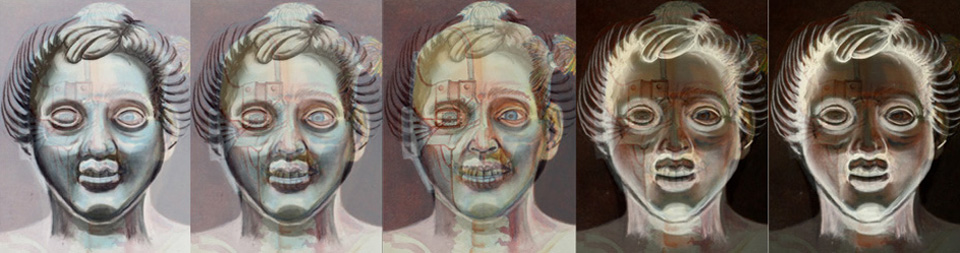
I’ve been reading how the infiltration of artificial intelligence entities, robots, into the public sphere has the potential, as AI becomes increasingly sophisticated, to undermine the free and open exchange of ideas necessary to a democratic society.
Algorithms, as anyone who consumes social media knows, feed the reader more of the same. The potential for these entities to harbor hidden agendas, to move the consumer into conspiratorial beliefs is a real concern. The complex nature of the information produced through the computer system, based as they are on a multitude of factors, makes deciphering the how and why of the digital results beyond the comprehension of most human agents leading many to simplistic beliefs in deep state conspiracies like Qanon.
Hopefully mechanisms will be put in place and sufficient political will will be exercised to regulate the increasingly sophisticated cyber beings.

Science and the Humanities

I’ve been reading, lately, about the distrust science elicits these days from diverse segments of the populace. Apparently, the condemnation isn’t coming only from the religious right who might, I suppose, have a problem with the dismissal of dogmatic beliefs toward which empirical investigation tends to lead, but also from certain intellectuals who see science as reductive explanation for the complexities of our world.

I must admit this second concern resonates with me a bit, being inclined as I am to wonder in awe at the mysteries of nature. My readings have awakened me to the realization that through aesthetic contemplation I can gain a deeper, richer experience of the natural world I find so compelling. The mysteries of consciousness, addressed with such magic by the Surrealists, becomes even more intriguing when considered in the light of neuroscientific studies on the human brain. Art can be appreciated in greater depth when considered in context, provided through historical and archaeological investigation and the psychology of aesthetic response is considered.

I’ll keep this in mind, well, at least be peripherally aware of the contribution science might play in my daily aesthetic experiences even though I find it hard to put language to the ephemeral.


Populism

Political populism appears to be in the ascendance these days.  The idea the ‘power’ is in the ‘people’, the ‘people’ being those rightfully in control, dismisses the opposing views of the minority.  Opposition is unacceptable, lost elections must be the result of fraud, theft; criticism the purview of ‘intellectual elites’.   

Populism simplifies, views differences in terms of power, who’s in charge, distrusts the complexities of democratic structures that require ongoing dialog to self-correct when necessary.  The ‘power of the people’ will be placed in the hands of a strongman who will suppress, unde4rmine institutions in order to impose the ‘will of the people’.   

The attraction of such a position must have something to do with a sense of social impotency, a lack of faith in a democratic society.  The danger is the establishment of totalitarian control. 

Unlimited Possibilities

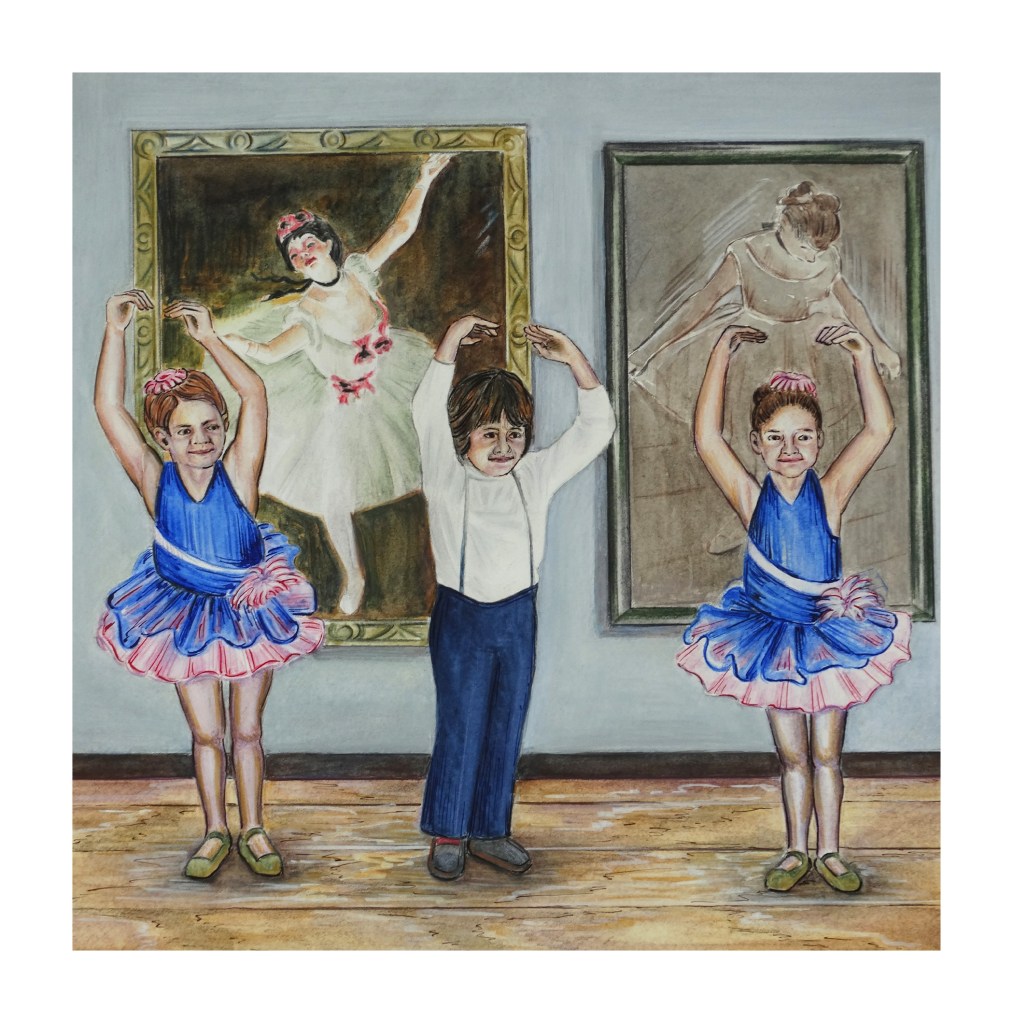
I’ve been thinking lately about the youthful exuberance, that, these days, when encountered, tends to send me in search of the nearest exit but as I contemplate such behavior, I have to admire the beauty of youthfulness, their sense of an unfettered, unlimited future.

Even as early elementary friendships metastasize into the social pressures of junior high most children anticipate a positive future, at the very least a light at the end of the tunnel. No matter how unreasonable their intentions about how to get to that enlightened future many will be able to hold that vision into old age.

Most will need some help getting there, though

.

Pseudo-Realities

I’ve been reading about the sophisticated Virtual Reality apparatuses available these days, effective enough, sometimes, for the participant to lose perspective, sometimes needing assistance to extricate herself from the pseudo-reality.

As exhilarating as these experiences may be, I have to wonder whether a druglike ‘fix’ may take hold of the compulsive user to such extent reality is lost amid pseudo-worlds. But, as I think about it, with the multitude of narratives defining these days what is real and true maybe finding a compatible VR ought to be considered.

An Impractical Dreamer

I’ve been reading, lately, about the common man, the 99% of the population that make up the social milieu and wondering what exactly common men have in common. I’m guessing these folks (well, us folks) are mostly of middle-of-the-road social and economic status, probably have limited educational accomplishment, likely adhere to some sort of religious beliefs and most certainly rely on a social network of other individuals of more-or less like mind. We’re the everyday working stiffs who execute our often-uninteresting daily toils in the hope there lies ahead a future of personal economic progress which will provide and secure leisurely retirement.
The uncommon man on the other hand is the intellectual or man of action who drives the public narrative. Maintaining his superior status in a democratic society requires he keep a finger on the pulse of the populace. When the common man begins to lose his sense of hope in a favorable future the uncommon man, in order to maintain his status, must placate the masses by providing a positive vision that a favorable future lies in wait. To maintain societal stability, keep the masses striving for more and better, the uncommon man paints a picture of prosperity near at hand, the good life awaiting those who sustain the necessary drive to be successful.
The philosopher Eric Hoffer thought an uneasy, socially and economically threatened populace of common men who, perhaps, had lost the dream of upward mobility have the potential to produce mass movements that have in the past and will likely in the future dramatically affect the course of history.
Given the state of our world, these days, it seems to me, what we need to do is seek out an uncommon man of superior artistic ability.

Favorite Things

I’ve been thinking about John Coltraine’s riff on ‘Favorite Things’: sixteen minutes of musical invention that captures the complexity of human emotion.

That’s what struck me the first time I heard it, but it occurs to me now that the way I am moved, the way the complexity of sound communicates a depth of meaning beyond words that I find so astounding, must in some way define the human condition.

No doubt, my life experience is nowhere near what JC lived, his alcoholism and growing up as he did in the 40’s and 50’s as a black man is so far removed from my white small-town existence, yet he communicates my sense of human experience so effectively I must bow to his genius.

Experiencing the Other

How can we be limited to what we grasp through our senses?

I have a desire to reach beyond simple reality. The laws of nature can’t be enough to explain the beauty and complexity of the sensual world. Yet, as I think this, I know my intellect demands rationality. What must I do to accept the existence of both the sensual and super-sensual?

Many thinkers much brighter than me have, as Kierkegaard put it ‘leapt into the absurd’, grasped religious faith. Did the weight of physical existence lead them to sense a supreme deity, the underlying truth of existence? Whatever drew them to a belief in the super-sensible mustn’t have been a simple matter, an out may have been demanded. Blaise Pascal’s rational:’ I believe in the existence of God; if I am right in this belief I will be rewarded in the end. If I’m wrong it will be of no consequence’, reveals the uncertainty all believers (and most sensible non-believers) will always face.

The richness of possibility suggests the best answer.

The Sacred and The Profane

The Nature of Romantic Love

I’ve been thinking lately about the nature of romantic interest. It’s pretty clear to me that the idea of ‘being in love’ has an awful lot to do with sexual attraction. The idea of ‘love at first sight’ suggests an hormonal impulse that feeds a normal heterosexual need to pair up, an action dominated by passionate desire that has little to do with intellectual of emotional compatibility.

The need for companionship in a spouse is slow to build and, as sexual desire wains, often a relationship ends before such is realized.

An unfair assessment of trivial youth? At my age I think I’m entitled.

Going Viral

I’ve been thinking lately about our social natures, how compelling it is to share and have others appreciate what we think and do, producing, as we do, memes, an endless parade of memes on social media in the hopes of receiving attention.

Our interest must be to attract an audience, to perform before (thousands?) more than just our immediate acquaintances in order to solidify acceptance within the cultural realm.

I guess if one limits time to such endeavors it can’t hurt to boost self-confidence, assuming, of course, sufficient ‘likes’ appear.