Karma


Hindu believers see existence as never ending; people are born into being, live their lives and die only to be reborn, hopefully into a better situation than they left.  Although, if they aren’t lucky or haven’t accumulated enough good karma they might end up as a lesser animal or even inanimate like a rock (or a doll).

The skeptic in me thinks they might very well have gotten this idea by watching plant and animal life cycle through the seasons year after year but who am I to question an age-old belief embraced by so many people.

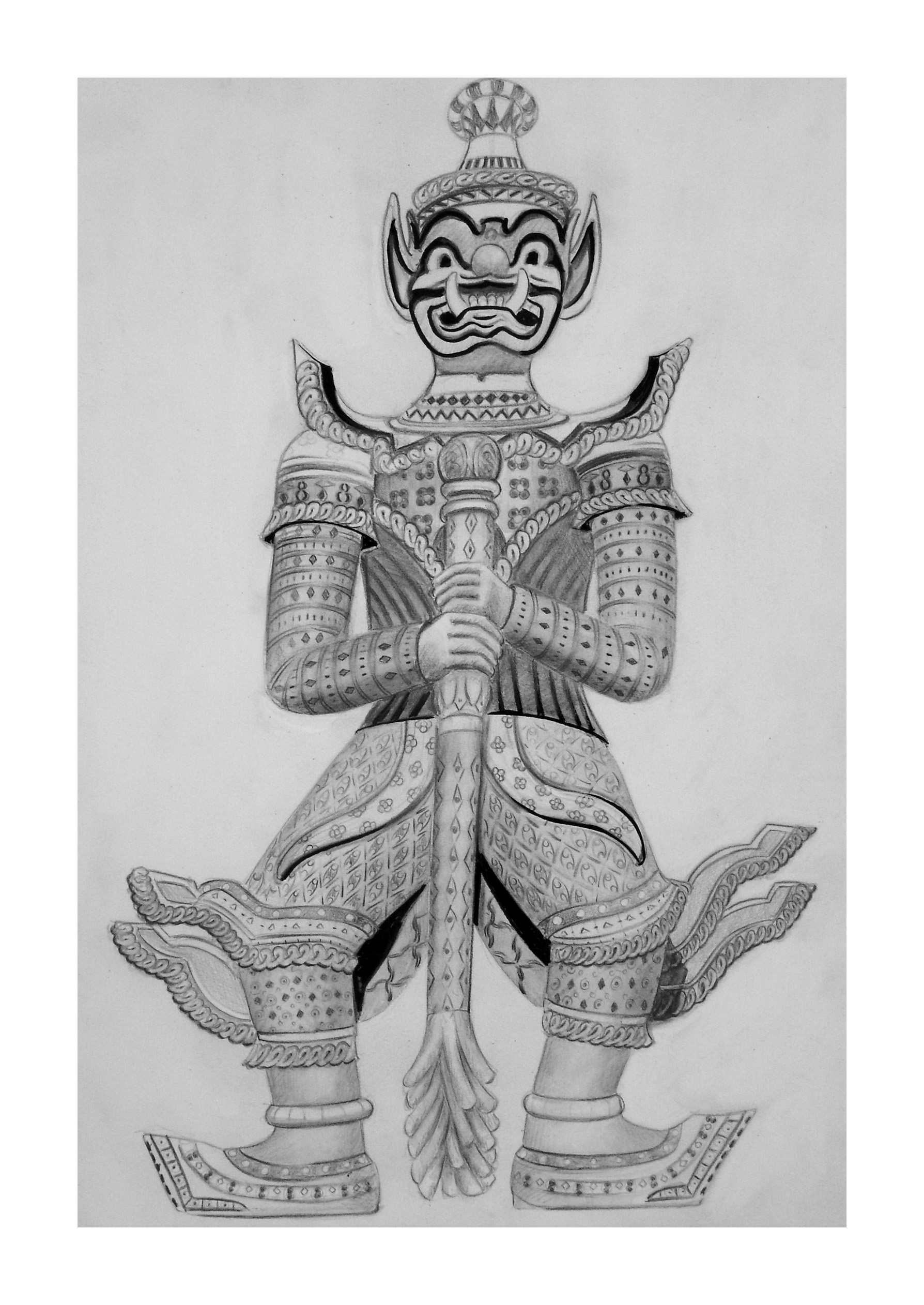
So, when I look at some of the Hindu gods I have to wonder what kind of karma they accrued in their previous lives.  Take Ganesha: human body, elephant head and lots of arms.  The story goes he was born of Shiva and Parvati both of whom had lots of arms so that attribute may have been hereditary, but it certainly doesn’t explain the elephant head.

If we assume Ganesha accumulated, in previous lives, sufficient good karma to become a god then maybe an elephant head is superior to a human head; maybe Ganesha is further along the karmic path than anyone else.

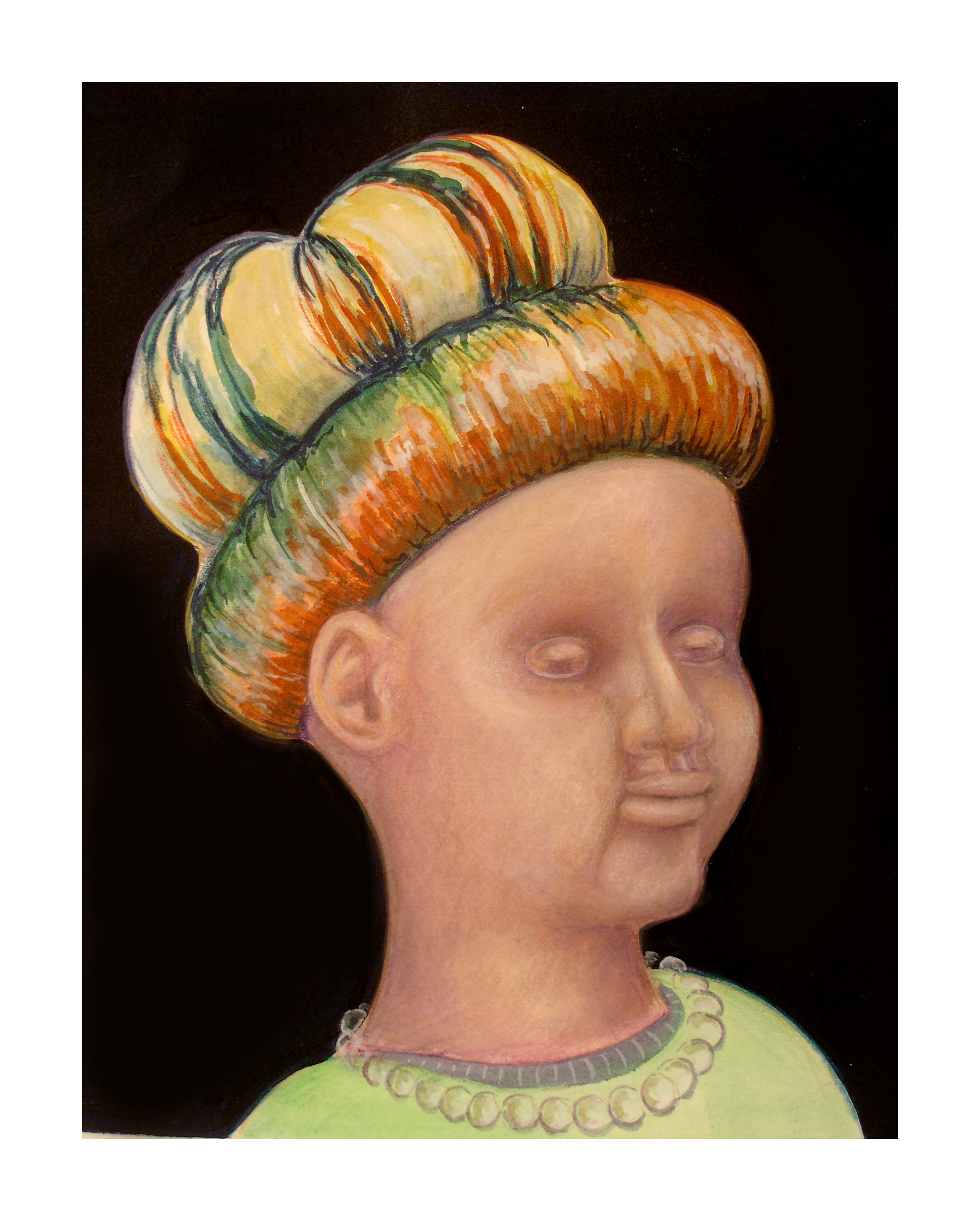
I’m not sure how to think about my own karmic destiny.  Considering the present quality of my construction my previous life must not have been all that wonderful.  Maybe if I’m exceptional this life I’ll come back as …………….a Barbie?

An Audience with lord Ganesha 3

What I know about Soren Kierkegaard

Kierkegaard’s dilemma was that despite his love for Regine he believed himself to be incapable of becoming a good husband, so to spare her he breaks off the engagement, telling her he was never truly serious about their relationship in the first place.

He wrote a lot about anxiety.  He says when we become anxious we are overtaken with fear and trembling as if we were on the edge of a precipice and were afraid of falling.  Then he says we should jump; take the leap into faith, embrace God for whom all things are possible.

He also tells us that either we shelter ourselves in the illusory belief that the individuals, doctrines and institutions we rely on for self-fulfillment are sufficient (bad) or we dismiss our worldly distractions, realize our declining physical bodies and face the existential horrors of life (good).

Whew!

I think he thought about things too much.  He should have just gone out and had a good time once in a while.

soren kierkegaard3


Fishers of Men

I’ve been wondering lately about what happened to the indigenous tribal groups that used to be so prevalent in the desert southwest.  Apparently, in the 16th century Spanish explorers along with Christian missionaries sailed westward to claim lands in the new world.  When they came across native populations the missionaries immediately set about trying to convert them believing they had the true path to salvation even though the indigenous people didn’t particularly feel the need to be saved since their own religions , which they had been practicing for thousands of years, worked pretty well.

There was one tribal group in northern Mexico, the Tarahumara people, who listened to the missionaries’ stories, then thought about it and changed things around so that God was married to the Virgin Mary and the Devil was God’s brother.

Well, I guess this didn’t sit too well with the missionaries because then they told the Tarahamara’s that if they didn’t believe in the true God and help build a mission they would surely go to Hell.  So the people went along and built a chapel so the missionaries could hold religious events but they still secretly consulted the local Shaman when they had serious questions to put before the ancestral spirits.

The missionaries, however, were unrelenting.  Before long they had the people working 9 to 5 in the mission gardens and were re-educating the children in the mission schools.

As sad as this story is I guess there is a bright side.  The gaming industry has been a God send for many native peoples.  I suppose you could call it Montezuma’s revenge.

fishers of men 3

Age of Aquarius

My friend Astrid and I were planning to get together recently when she called to say she couldn’t leave the house.

Astrid is a strong believer in the efficacy of the Astral Plane as an indicator of future events.  She had just found out Saturn was entering her seventh house signaling Saturday, our planned meeting day, an inauspicious time to socialize.  Better, she said, not to tempt fate.

I thought about this for a while.  It all sounded pretty new-agie to me, but I decided to give Astrid the benefit of the doubt and found my birth chart on-line.

As you might imagine determining the exact time and date of my extrusion wasn’t easy.  The year was printed on the bottom of my left shoe; I consulted my keeper as to purchase date, estimated delivery time and took into account the slight flaw on my shoulder as an indicator of a rush job probably done shortly before the end of workday.

Anyway, my chart indicated among other things the moon was in Aquarius just passing into my eighth house.  What this suggested was my head was full of original ideas but that I would have the tendency to be selfish and blunt.

Being the skeptic I am I called Pearl.  We went out and had quite a good time.  I thought I was quite a pleasant companion until Pearl told me she hadn’t noticed the smear on my shoulder before.  I responded by telling her she wasn’t exactly Miss America herself.

Pearl just shrugged off the comment but it definitely got me thinking:  I wonder what will happen when the moon is in the seventh house and Jupiter aligns with Mars?  Will peace guide the planets and love steer the stars?

biospheretwo3

Religion as Art

I was reading a while ago about the Ban-Yatra, a Hindu pilgrimage which is performed in the Braj region of northern India.  Unlike many pilgrimages the ban-Yatra isn’t focused on reaching a sacred locale or the place of Holy Relics but rather is about uncovering the sacred in the profane as the pilgrimage progresses.

Braj is believed to be the birthplace and playground of Krishna.  Many of the stories of Hindu literature mention places and land forms here as sites where Krishna performed his miracles, cavorted with his cowherd friends and engaged in love-play with the Gopi’s and his beloved Radha. The pilgrimage involves circumambulating Braj, visiting shrines and temples and partaking in various rituals.

Unlike some eastern religious philosophies the worship of Krishna isn’t about renunciation of this world-denial of desire, but quite the opposite: realizing desire in the beauty of nature and celebrating the love of Krishna as being non-different from it. In order to do this the pilgrim cultivates bhava, an emotional and imaginative energy that allows him or her to see beyond the mere commonplace and experience the presence of Krishna in the natural surroundings.

One scholar suggests that in achieving bhava the pilgrim becomes like a poet creating meaning in the landscape as he or she passes through it.

Wow!  What a great observation. The artist certainly creates alternative worlds through imaginative emotive means; a significant parallel to the creative religious practice of the Ban-Yatra pilgrim. Maybe the difference between the two lies in just how literally one believes in the existence of this other world and its inhabitants. The artist, I suspect, is less likely than the pilgrim to embrace his/her imaginings as factually existent.

It seems to me religious practice in general could profit from a bit more creative play and a bit less dogmatic belief.

Krishna and the Walking Dead3

The Joys of Doubt

I had a visit from Pastor Ted recently.  We have quite a congenial relationship so long as we avoid speaking of religion or politics, which is why my ire was elevated a bit when he mentioned he read in one of my posts, that I referred to myself as a skeptical seeker.  That must mean, he surmised, that I was open and susceptible to salvation; a viable candidate for recruitment to his army of the saved.

I truly hate to be drawn into a discussion of this sort since it’s become clear that neither of us has any idea what the other understands to be true in the realm of the spiritual.  I tried to explain once again that for me doubt is the most uplifting of intellectual positions I can imagine; that doubt is the only philosophical option that allows complete freedom of investigation; that doubt is a most joyous state.

Alas, I fear Pastor Ted is so convinced his beliefs are the absolute truth and that anyone who is willing can commit to his beliefs, that he is unable to accept any alternative.

Pastor Ted is an honestly good person and a good friend but I guess, as Dorothy Parker so aptly put it, you can’t teach an old dogma new tricks.

covering the bases 3

Sacred Images

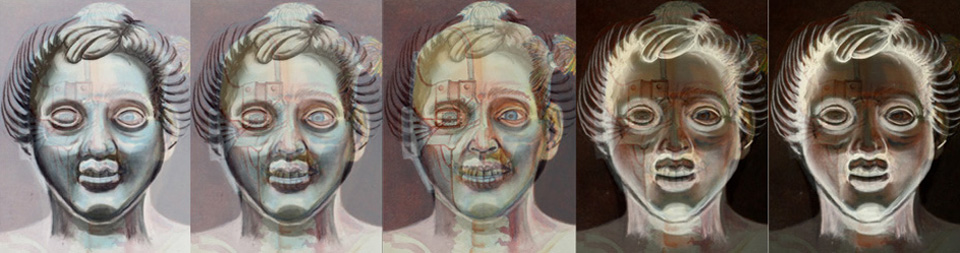
While reading about Byzantine Icons the other day I was amazed to learn that the painter, before he is able to paint one of these Holy Images, has to transcend earthly existence and enter the heavenly realm.  Apparently such a trip will instill the painter with the knowledge necessary to render a truly sacred image.

The resulting object is, only then, understood to be a Holy Relic and a living icon.  The holy personage thus rendered is seen as emanating the light of truth.  As I viewed some of these objects many did seem to have an inner glow.

Well, I had a friend do a painting of me in the style of the icon painters.  I don’t think his work was preceded by any voyage to the Great Beyond so I suppose the resulting icon is disqualified from the realm of ‘living relic.’

As I look at the finished product I can’t quite tell if my image expresses benevolence or self-importance-maybe a bit of each.  I suppose that might very well be consistent with the attitudes of the early church patriarchs who achieved sainthood. The painting does seem to emanate a sort of inner glow.  That may be because my plastic body is a bit translucent.

I showed the painting to the Barbies and they agreed unanimously it did nothing for me whatsoever.

byzantine icon3

Intelligent Design

LeonardD the artist doll just completed a series of artwork using only objects and materials he was able to find around the house.  He came by the other day to tell me about the work.  He said that he felt confident he could make art out of anything.  Well, I thought that was pretty interesting, so to challenge him I asked what art he could create if he were locked in a windowless room with nothing in it.  He said that he believed he could come up with something.

We talked about it awhile and decided that the artwork would need to be a tangible object that he could bring out with him when he left the room; we ruled out performance or conceptual art like John Cage’s 4’ 33” (a pianist sits at a piano in front of an audience for four minutes and thirty-three seconds without touching the keys) and the zen idea used by various artists in which blank white walls inspire a meditative immersion.

My friend said that to make something tangible from nothing sounded like something only God could do but decided to give it a try nonetheless.

I locked him in one of the empty rooms in my doll house.  He was in there quite some time.  When he emerged he held in his hand a small object of indescribable material that glowed as if lit from within.  The object clearly exhibited the creative intelligence I know my friend to have.

I was blown away.  LeonardD was uncharacteristically reticent about what occurred in the room, where the material came from and how he produced what he did.  After he left and I thought about it for a while there was only one conclusion I could draw: my friend is God.

intelligent design 3

Papal Infallibility

I think it’s unlikely anyone would attribute infallibility to another human being without believing that individual to be in close collaboration with some supernatural entity.  According to the Vatican papal decisions ‘are justly held irreformable, for they are pronounced with the assistance of the Holy Spirit’ (who, according to Martin Luther is no skeptic) and that ‘God protects the pope from error when he speaks about faith and morality.’

So, I guess when Pope Francis said that non-believers, if they were good, moral people, would be welcomed into heaven they (the non-believers) can fully expect to be there.  The only catch is, being non-believers, they probably don’t think there’s an after-life to be welcomed in to.

It seems to me one is better off remaining open minded about such things.  I’m inclined to take Pascal’s Wager: Bet on the existence of God; if he doesn’t exist you lose nothing, if he does and you bet against him you may be in big trouble.  But then, as I think about it maybe Thomas Jefferson had it right:  Question God’s existence; if there be one he must admire the homage of reason, if non-existent  the exercise thereof will have been worthwhile.

Goodness

In the novel Anna Karenina, Leo Tolstoy has the character Levin say: ‘If goodness has a cause it is no longer goodness; if it has consequences, or rewards it is not goodness either.’  Since Leo based the character Levin on himself he must have thought there was truth to such an idea.

If  I accept Levin’s statement as true then following the Golden Rule is not an example of practicing goodness because then I’m being good in the hopes other people will be good to me.

I guess Adam and Eve were inherently good, always obeying God until the serpent introduced them to the fruits of the Tree of Knowledge, the one thing forbidden by God who evidently wanted to keep Adam and Eve from knowing too much.

So, I suppose the moral of the story must be that the only way to be truly good is to be oblivious.

adam eve serpent3