Cultural Autism

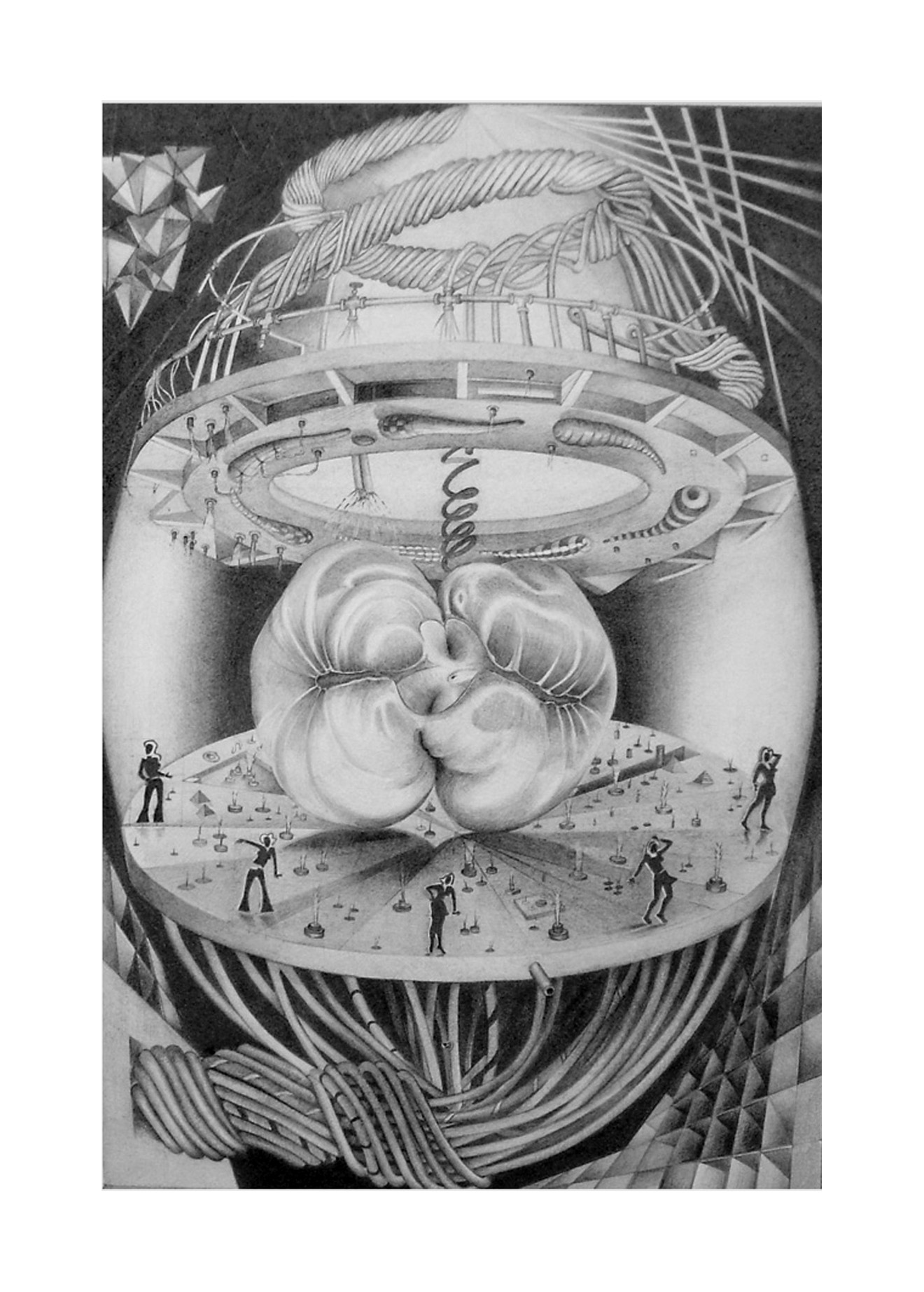
I was thinking the other day about the significance of the temple guardian figures one finds at the entrances of eastern religious shrines and temples.  The guardian, I understand, is the symbolic protector of the sanctity of the sacred space; he stands as defender against essence or evil threatening contamination or dilution of the truth within.

For many, the temple (or church or other social or economic institution) embodies a culture with which they deeply identify.  So I got to wondering what would happen if that culture was compromised.  What would happen if our sacred cultural space(s) were invaded by a malevolence that convinced us the tenets we’ve always held to be irrefutable were in fact not only refutable but quite false; without merit of any sort?

Since so much of who we are, how we identify ourselves to ourselves and others is tied to these now discarded cultural tenets do we become ‘culturally autistic’-blank stare meeting blank stare as we pass on the street unable to relate in any way to our neighbors beyond basic physical functioning?

I’m really not too worried about this happening to us dolls as we’re pretty tightly united by our vulnerabilities.  Here in the playroom, we have managed to maintain our basic values even with a fairly steady influx of new and diverse members.  The rules we set for ourselves focus on maintaining a mutual respect for each other’s self-worth as well as a collective sense of strong group participation that leaves no one out.

So, I think we have pretty good control of the sanctity of our playroom space and I guess we probably don’t need a symbolic guardian figure although there has been some discussion about forming political parties.  Is two too many?

temple guardian3

The Post-Modern Man

I-Ron, the post-modern man, was telling me the other day he never misses church on Sundays even though he doesn’t believe in God.  He said he enjoys the company of the faithful while knowing he will probably never and, anyway, had no interest in experiencing the faith himself. Then, he said that, come to think about it, he didn’t really believe in anything particularly other than those immediate impressions that allowed him to go about his daily activities.

So, when he found out one of the members of his congregation had taken his own life recently and how unsatisfactory that action was in the eyes of the congregation and the church, all he could think of was the scene from Dante’s Inferno where the suicides are imprisoned in trees and are constantly pestered by the nasty Harpies landing on them, breaking off limbs and causing much pain and distress.

Although he felt a bit guilty about not feeling any remorse and pretending concern, I-Ron could only see the story as colorful and not the least bit disturbing.

Well, even though I do lean toward a moral relativity myself I had to feel a bit sorry for I-Ron; how can one really enjoy life without having strong moral feeling of any sort?  I wondered to what level of Hell Dante might assign I-Ron.

suicideand harpies

Dr. Freud and the Superego

Dr. Freud said if you have a strong superego it will help you subdue those baser instincts and depraved inclinations (which he called the id) and keep you on the straight and narrow.

I guess my superego must be pretty good because I’ve pretty much avoided participating in any of the seven deadly sins very much.  As I think about it, I’m pretty modest, my desires are nearly non-existent, I don’t eat very much, am generally pretty good natured and I really try to keep my room clean.

So I guess maybe I might be thought of, in all modesty, as a good role model for the younger dolls, you know, someone to look up to.  They might even find me admirable even saintly, after I’m gone; someone they can place on a pedestal as the paradigm of virtue.  And then maybe they’ll build a temple for me where I can be forever held in the highest esteem-even worshiped.  Maybe the Church will canonize me and actually make me a saint.

Boy, what a thought!  I wonder what Dr. Freud would say.  I hope he wouldn’t think I’m suffering delusions of grandeur.

temple of babydeidei

The Tribulation

Sister Chloe was telling me the other day that she thinks given the pain, suffering and general turmoil so evident world-wide; given the catastrophic storms, the genocidal tribal conflicts, the unrest precipitated by lust for power and material gain that the Tribulation is at hand.

The Tribulation, she explained to me, is that period of time before the Rapture (or during or after depending on one’s reading of the book of Revelations) of extreme discomfort, suffering, mass psychoses and neuroses and the poisoning of our earthly environment leading to, among other things, congenital mutations (and probably anything else one could imagine as being really, really bad).  She made it pretty clear it would not be a good time to be around, and provided the rapture did indeed occur before the Tribulation, better to be raptured than left behind.

The idea of being Raptured I found a bit hard to take seriously.  Although I did see on the news the other day, plans to offer space flights to the moon in the not too distant future.  Maybe the comforts of a modern space station and the freedom to bound about in the relatively light gravitation could seem a sort of Rapture.

Well, back to reality, I think about the beautiful places, good people and beneficent actions that do exist and are happening every day: the relief efforts, the enormous energy aimed at resolving sectarian differences and violence all driven by our inherent understanding that, in the final analysis we all need each other.

I do think, though, I might inquire into possible interest of a would-be space traveler in the companionship of a friendly doll.

thetribulation3

At the Marae

Do you think that there’s any chance there may truly be a unifying essence or ground of being that is shared by all mankind?  You know, something buried deep within our psyches that we’ve somehow lost track of these days when divisiveness seems so prevalent.

I was thinking back recently to a time a few years ago when I was among the Maori people in Aotearoa (the long white cloud) which is the name the Maori have for the islands of New Zealand.  Before these folks were inundated with western materialism and capitalistic pursuits (not to mention Christianity) they basked in the natural beauty and mana (what they call spiritual power) around them.

The mana the people inherited from their revered ancestors extended to Tangaroa (the sea) and Tane (the forest) and all of nature in a beautiful Cosmic Unity.  As long as tapu was respected everything went along pretty well.

Tapu is spiritual power like mana that everyone has and some objects and places have but some people and places have more tapu then others.  Everyone understands that when strong tapu is encountered it is important to act with deference so as to keep you spiritually strong and not upset the delicate cosmic balance.

While in Aotearoa I was allowed to visit a Marae, which is a sacred meeting place were tapu is particularly strong.  Upon entering tribute was paid to the ancestral spirits in recognition of the origins of the mana or life force shared by everyone in the iwi (all the people).

So, after thinking about it, I’m just wondering, if we’ve lost track of the mana around and within all of us and the tapu of our neighbors and acquaintances, maybe we should be searching for a sacred place where we can all come together and find our common ground.

atthemarai3

Dreams

I had a dream the other night in which I became human; or rather I multiplied into five human children plus my normal plastic self.  We were all standing in front of Notre Dame Cathedral.  St. Francis was there.  The human DeiDeis seemed sort of mesmerized-focused intently on their surroundings as if they were anticipating an imminent occurrence or contemplating some sort of action.

When I awoke the next morning I couldn’t stop thinking about the incongruities in the dream.  I wondered what Dr. Freud would say but then I figured it would probably have something to do with sex and considering the presence of St. Francis and young naked girls I thought it best to just leave that alone.

Then I remembered reading about Carl Jung’s idea that deeply embedded within our psyches are primordial forms or archetypes common and meaningful to all self-conscious beings.  Certain situations like the Hero’s quest or the fall from grace, dichotomies like good vs. evil and light vs. darkness, and character types like the evil figure, the scapegoat and the outcast are just a few of these common archetypes Carl believed we all share; and he thought that sometimes these forms crop up during sleep when our unconscious is in charge.

I had to wonder if there could be archetypal meanings in my dream.

Being generally pretty upbeat about things my first thought was the dream must be about rebirth or renewal.  In this sense the saint might be the archetypal magician or Christ figure who transforms me: the many mes representing naked innocence seeking and discovering goodness and truth.

But then as I thought about it further the pragmatic me took hold; my ambivalence regarding structured religion suggested a darker aspect; maybe the dream was about evil overcoming good.  The saint becomes the archetypal devil casting a spell and creating six of me (six being the archetypal number of evil) to carry out the vile edicts of a corrupt church.

Well, the investigation was all very fascinating and I do think Carl’s got something with his notion of collective subliminal meanings, but  I’m going to be pretty careful who I talk to about my dreams and their meanings.

dreams of freedom3

Beyond the Grave

I see by the calendar Dia de Muertos, the Day of the Dead, is approaching.  Death isn’t something dolls, particularly plastic ones, think about very much but at this time of the year, with nature racing toward dormancy, the topic tends to come to mind.

In medieval times death was on everyone’s mind daily.  The Black Plague invited Death to be a regular visitor if not a live-in house guest.  She became so well-known she starred in a regularly performed play called the Danse Macabre.  In the play the Black Angel would appear and along with her spirit helpers the psychopomps  invite victims to accompany them beyond the grave; the beyond being, I guess, a promised land of paradise.

Throughout history (and even earlier than that I bet) people have sensed an existence beyond the grave:  The ancient Egyptians conceived of a Ka or immaterial double that would live on after the demise of the physical body so the deceased would be able to keep doing the same fun things they had always done when alive.

The philosopher Arthur Schopenhauer was inclined to believe that, upon death, an individual’s will or essence of being would be reunited with it’s Cosmic origins: a sort of collective world soul (Plato called it the anima mundi) from which all life originates and subsequently returns; it’s a pretty cool idea of togetherness even though one wouldn’t really be aware of it because one’s memory and ego would cease to exist.

The Hindu people understand the universe to be eternal and that rebirth will continue to happen until enlightenment of the soul propels a leap into the infinite, which, I guess must be a bit like Arthur’s cosmic origins only they call it the Atman.

Contemporary Trans-humanists anticipate a situation in which one’s brain activity is downloaded to a computer and since the brain is where one’s being resides one can expect to live on forever provided someone is around to keep the batteries charged.

I’m sure I’m like everyone else in hoping the Black Angel stays away for a while but when it does come time for me to leave the realm of the physical, wherever  I end up, I hope I will have left behind a reasonably positive image for my friends to remember me by.

dayofthedead3

On the Life and Death of Satan

I was reading recently about how the idea of Satan came about.

In the early middle ages St. Augustine determined that, as a result of Adam’s original sin and seeing as how we’re all descendants of Adam, evil exists in everyone.  This meant that when bad things happened everyone had only themselves to blame since they all had a bit of badness in them.  People bought into this pretty well because finding a scapegoat when badness happened wasn’t difficult.

Then, after a while, people began to take exception to St. Augustine’s concept thinking they really weren’t all that bad; actually they felt pretty good about themselves.  So they got to thinking it wasn’t them but something or someone outside themselves that made them be bad.  They anthropomorphized badness into a somewhat ambiguous horned satyr that they saw as perpetrating evil just because he wasn’t a very nice creature.  He was an idea most everyone could fear and dislike.

Later, in modern times, now that people don’t so much believe in supernatural entities anymore, Satan has begun to fade away.  So now, when bad things happen some people have gone back to finding a scapegoat, others have looked to St. Augustine and blame our inherent sinfulness and still others have dismissed the concept of evil altogether and rationalize badness as being relative to peoples and times.

When I think about how I stand on this I guess I lean towards relativism, but it takes some pretty hefty rationalization to accommodate some of the atrocities one hears about these days.

taking up cooking3

Accomplishment

I spent a couple of hours cleaning my Notre Dame playhouse the other day.  It was quite a mess; hadn’t been organized for some time.  I straightened the pews, relighted the votive candles, moved the priest from the sacristy to the confessional, replenished the Holy Water and separated the Brothers and Sisters (for some reason they always seem to end up together).  I did all the things necessary to put a cathedral in good order.

When I finished I considered what I’d done and thought it was quite an accomplishment-maybe not on the scale of actually building Notre Dame-but still it was something.

Wasn’t it?

Okay, so what does it mean to accomplish something?  Does accomplishment occur if no one knows about it?  And, as soon as someone finds out does judgment occur?  And, then, if the accomplishment is deemed worthy do accolades follow?  I doubt the Buddha meant, when he said to his disciples: ‘accomplishment is transient; strive unremittingly’, that they should pursue an ego boost.

The Stoics were pretty sure finding yourself in favor (which is certainly what would happen if people thought you did something good) wasn’t a good thing; once favored the only direction to go is down.

Well no one will probably know about my cathedral dollhouse cleaning anyway; it’s stuck back in a corner of the den.  People rarely come by now that little Bobby entered the seminary.

So I guess I needn’t fear recognition for my accomplishment.  But, I suppose I could take a few photos just to remember how nice it looks once it gets messy again.  But, then, someone might see the photos and nominate me for the Good Playhouse Keeping Award.  Then I’d be expected to keep it clean all the time and if I didn’t people would think I was a messy doll.

Boy, those old guys sure knew what they were talking about.

notre dame playhouse3

Life Stories

Friends and I were sitting around the other day chatting over afternoon tea. Sister Chloe got into talking about the providential nature of her life: How God had seen fit to bless her with strong, supportive parents who had taught her right from wrong, follow the Golden Rule, do no harm and help others when possible and to follow the path that God had laid out for her.  She acknowledged God’s ways were sometimes mysterious and were not always easy to understand, like when her brother was left on the driveway behind the family car and subsequently ended up looking like Flat Stanley.  She questioned how God could let that happen but said she believes he must have had his reasons as he does for everything.

Well, Lala then proceeded to offer that she saw her life in quite different terms.  Fortune, she said, had been kind to her.  Following a particularly potent incantation her father had won the favors of a Toys-R-Us manager and ended up being featured in a toy exhibit which enabled him to secure a fine home for the family.  Even though the family had had their share of bad occurrences, mother having been purchased by a quite rowdy child and very likely ended up moldering in a damp basement her stuffing infested with centipedes and spiders,  cosmic justice had, for the most part, shined upon her and she hoped the stars would continue to do so.  She showed us an amulet she was wearing that came from her ancient ancestors.  She felt sure this would continue to protect her through the travails of life.

Then it was my turn.  I told them that my father was fond of telling us when difficulties arose that there was no reason to fear unpleasantness or worry about things because what would be would be and we had the freedom to make choices in our lives that would lead us, in all probability, provided they were wise choices, to a content and happy life.  I told them this advice had worked out pretty well, that I’ve always done well in school, able to overlook the prejudices of my human classmates and even the potentially devastating event of my aunt being lost in a family move (I think the dog carried her off and buried her somewhere) was met by us all with stoic acceptance.  I said that I was content in my ability to choose and felt comfortable letting each day unfold as it will.

Sister Chloe asked me how I can go about without faith in the existence of a benevolent overseer.  Lala asked Chloe how she could possibly believe her ‘Superman in the sky’ could care about the events in her life.  I asked how either of them could attribute future occurrences to the Supernatural.

As I poured our second cup of tea we all agreed it was time to change the subject.  We decided to talk about the weather.

life stories3