Scandanavian Angst

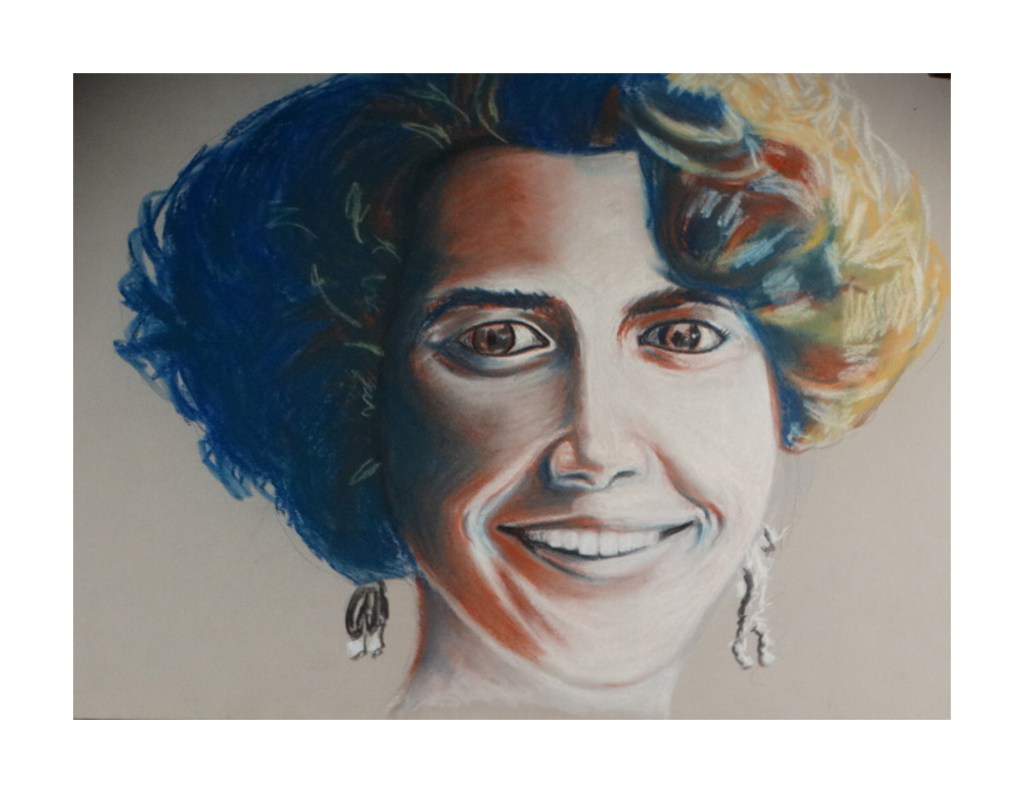
I’ve been reading about a time before electricity and central heating when Scandanavian people existed much closer to their natural environment, when enduring the harshness of cold, ice and snow could be mind-bending. I guess living in the northern climes during long winter months provided reason enough to explain the psychological darkness, existential angst that invaded the minds of inhabitants.

The indigenous Sami, nomadic reindeer herders, their sole economic existence dependent on the health of their herds, were required to constantly move through the harsh winters as lichen fields were depleted and new grazing areas found. It’s no wonders the culture of the area produced narratives with few happy endings, stories of protagonists arriving finally at the realization of existential aloneness.

Edvard Munch: The Dead Mother and the child
Technological Dangers

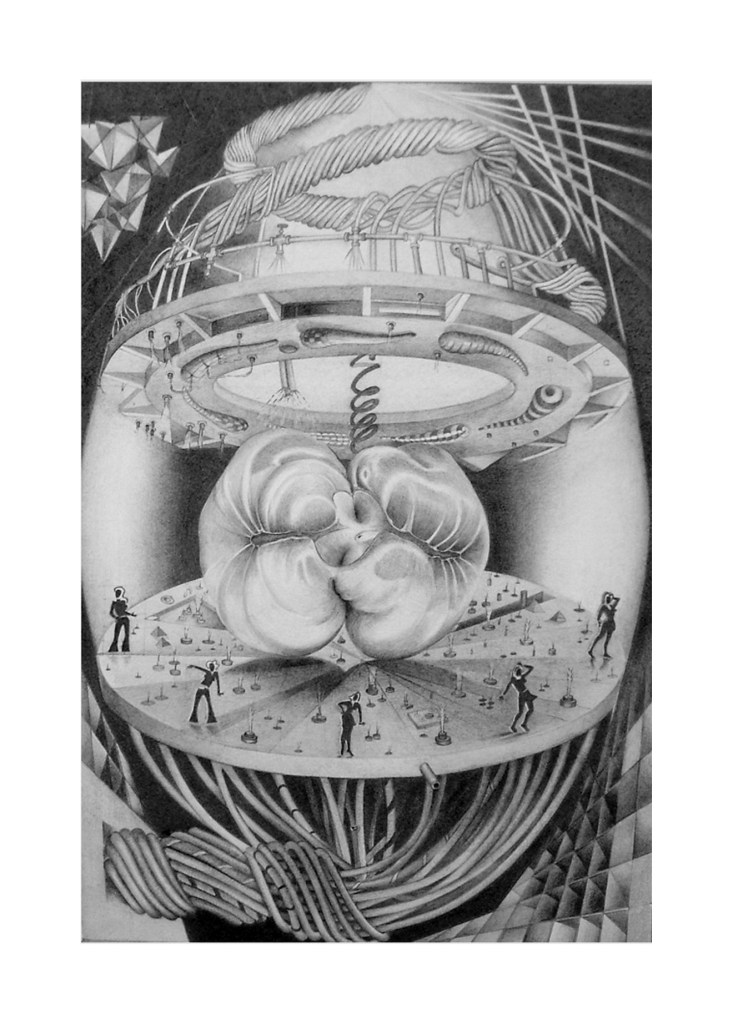
I’ve been thinking lately about the technology I, like most everyone else, carry around with me in my pocket every day, wondering whether the use of this incredibly useful device might impose opioid-like addiction that some of us may not be able to control. As the small machine, through algorithmic manipulations learns who each of us is it selfishly feeds our needs and desires modifying our realities through sensationalized clickbait and presenting us with the news it knows we want. Demanding more and more of our time and attention the small device controls our ability to function on a daily basis: access to bank accounts, keeping appointments, staying in touch with others and performing necessary tasks depend on its benevolence.

The scifi notion of a controlling artificial intelligence may already be here residing in our pockets and purses.

Playing Nice with Others

I’ve become aware, lately, that my verbal offerings, comments and responses, while visiting with others in small gatherings of family and friends, elicit responses I had no intention of eliciting; it appears that what I say is often interpreted in vastly different ways than intended. And this, even though I’m careful these days to withhold or at least moderate strong personal opinions.

When I was younger, I held small regard for countering someone’s opinion, relished, in fact, the opposition. But I don’t feel that way anymore. I hold back these days. But now It would appear that sometimes concessions are expected, admission of guilt, a desire for me to reveal my inadequacies, personal weaknesses: concessions I’m not willing to give. The whole idea of such a scenario I find extremely winceable, beyond my capacity to the point of exasperation.

If one is to maintain a sense of pride in achievement, a sense of worth, restraint must be exercised, emotions withheld; an acceptance of the potential volatility of personal relationships, a willingness to let go.
It all becomes exitential in the end, I guess.

With Lego People

Conspiracy Theory

I’ve been reading lately about humankind’s inclination to embrace conspiracy theory. When on finds oneself facing what appears to be insurmountable problems it is not uncommon to imagine the existence of a conspiratorial force interfering with and blocking one from resolving problems.

Usually, such ideas of conspiracy are short lived, disappear when difficulties subside, but, in extreme cases, when living in incomprehensible uncertainty, the human imagination may take hold, enhance the powers of malevolent entities, and allow imagined evils to grow, create false realities and extend beyond individual problems to suppose secretive governmental power structures and even cast doubt on the understood nature of the physical universe.

Proponents of conspiracy theories exploit the psychological power of belief and reinforce power over disciples by cherry-picking misleading Biblical texts or in some cases creating ‘sacred texts’ of their own. The truly committed may establish schools to insure their children are believers as well.

I worry the beliefs the flat earthers, election deniers and government conspiracy nuts impose on their children will produce skewed realities, individuals unable to grasp and address the existential issues becoming more real every day.

Chatbots

I’ve been reading about a new on-line application for students to resource that will complete written assignments for them. Given subject and context, ChatGPT will not only produce an essay or term paper of desired length but will write it in a manner consistent with the sort of language and syntax expected of a student of average intelligence. The technology is apparently leading some instructors and schools to re-think their curricula, which, I guess, means substituting oral responses or in-class spur of the moment essays for more conventional written work.

Just wondering what a chatbot might do with my brief musings, what the AI, given a few samples of past posts would deem consistent, whether it would find it necessary to throw in a misspelling or two, maybe a sentence fragment; a few unnecessary semi-colons.

Well, I don’t think I’ll go there; what would I do with all the spare time?

The Look of Love

I read in the paper the other day that Burt Bacharach died. News items sprinkled with his biggest hits reminded me, and I’m sure many others who grew up in the ’60’s, of our post-high school days. Listening to Burt’s music has me remembering the naivete we shared, the romantic perspectives we embraced. Remembering some of the lyrics now, though, is a real eye-opener. Consider: ‘on the day that you were born the angels got together and decided to create a dream come true, so they sprinkled moon dust in your hair of gold and star light in your eyes of blue.’ Deeply romantic, I guess, but now it makes me wince.

Even considering Viet Nam and the Kennedy assassination we were of a simpler nature then, a bit less jaded, it seems to me. The tunes do bring back fond memories of convertible cruising on summer nights and minimal responsibilities, and I guess listening to Burt’s music may have had some positive effects on our developing psyches.

Deteriorating Language

I’m finding that my language is deteriorating since I left the workforce. ‘ing’s’ have become ‘in’s’ or worse, ’em’s’, requested acknowledgements have devolved into ‘init’s’, assents into ‘yabetcha’s’. It’s a sad state of affairs.

Now though, on the upside, having been reading a bio of the consummate short story writer Flannery O’Connor I find that when she applied for appointment to the prestigious Iowa Writers’ Workshop as a young woman in the 1940’s her interviewer asked her to please write her responses to his questions because he couldn’t understand her speech, modified as it was due to her secluded southern upbringing.

At the time, she was, of course, without the benefit of exposure to a strong, accent free media voice that everyone, nowadays, hears on a daily basis. Which leaves me without excuse; my deteriorating language use must be attributed to laziness. The thing is no one seems to mind. I suspect that my slovenly language use lowers expectations, my murder of enunciations and shorthand phrases are accepted, fit into what I sense is a collective disregard for proper enunciation.

This is not an uplifting perspective, I know, but I have nothing to prove, no one to impress and really mean no ill-will. I’ll stick with my written musings as my primary means of communication, though, at least partly out of embarrassment.

New Technology

I’ve been reading about a new technology: a computer chip inserted into one’s pointer finger along with a screen capable of projection implanted into the palm of one’s hand. A truly personal computer available to everyone.

Well, SciFi you know, but an intriguing idea. What a great innovation it would be. We’ll no longer have to keep track of I. D.’s or credit cards. It’ll be a communal data base, essentially a hive mind, a collective intelligence making everyone smarter and more informed.

But, I suppose, on the downside, one becomes an identifiable cog subject to not only AI algorithmic manipulation but in danger of persecution if malevolent entities gain control of the hive, which then may devolve into uncritical conformity.

I guess new innovations will almost always come with a downside.

Disinformation, Rumor and Gossip

I’ve been reading lately about the perpetuation of disinformation that social media has allowed to spread quickly and widely these days. Sometimes, deliberately conjured false narratives based on non-existent facts and perpetrated by bad actors are sought out for various reasons from entertainment to reinforcement of intuited beliefs of deep state conspiracy.

It occurs to me the inclination for many of us to spread gossip is ingrained behavior. Intentions are not necessarily malevolent, but, even so, rumors that may start harmlessly: interpretations of neighborly idiosyncrasies, maybe, have always had the potential to devolve into dangerous fictions that may cause great harm: thousands of ‘witches’ were burned or hung across Europe in the 16th century, rumor and innuendo have led to the demonization of minority communities today and on-line threats of rape and murder directed toward victims of disinformation are commonplace.

Whether those guilty of spreading disinformation are fear driven or just mean-spirited it’s hard to take a liberal stance on speech freedoms while aware of the potential harms rumor, gossip and disinformation can cause.

Mortification of the Flesh

As I anticipate the oncoming winter, the discomfort of cold winds and ice-covered streets, the extended darkness of shorter days and the ugliness of dirt covered snowdrifts, it’s clear to me a certain amount of suffering is soon to be expected.

To set the tone, I’ve been reading about the medieval practice of mortification of the flesh, a not uncommon behavior of the extremely pious seeking union with God. Such behavior was all about suffering, as it might involve ascetic denial, living in seclusion, vows of silence and might grow to include flagellation and other self-imposed harms to one’s physical body.

It should be noted that those who engaged in such activities needed to maintain purity of motive: to accept physical pain in order to grow closer to and become more deserving of God’s benevolence. Pridefulness or exhibitionism must not be in the equation.

So, as I anticipate the suffering I will have to endure in the coming winter, I must avoid poking fun at the snowbirds who flee to the south, remain committed to my stoic resolve and hope to be rewarded by a celestial embrace in April or May.