End of Life Issues

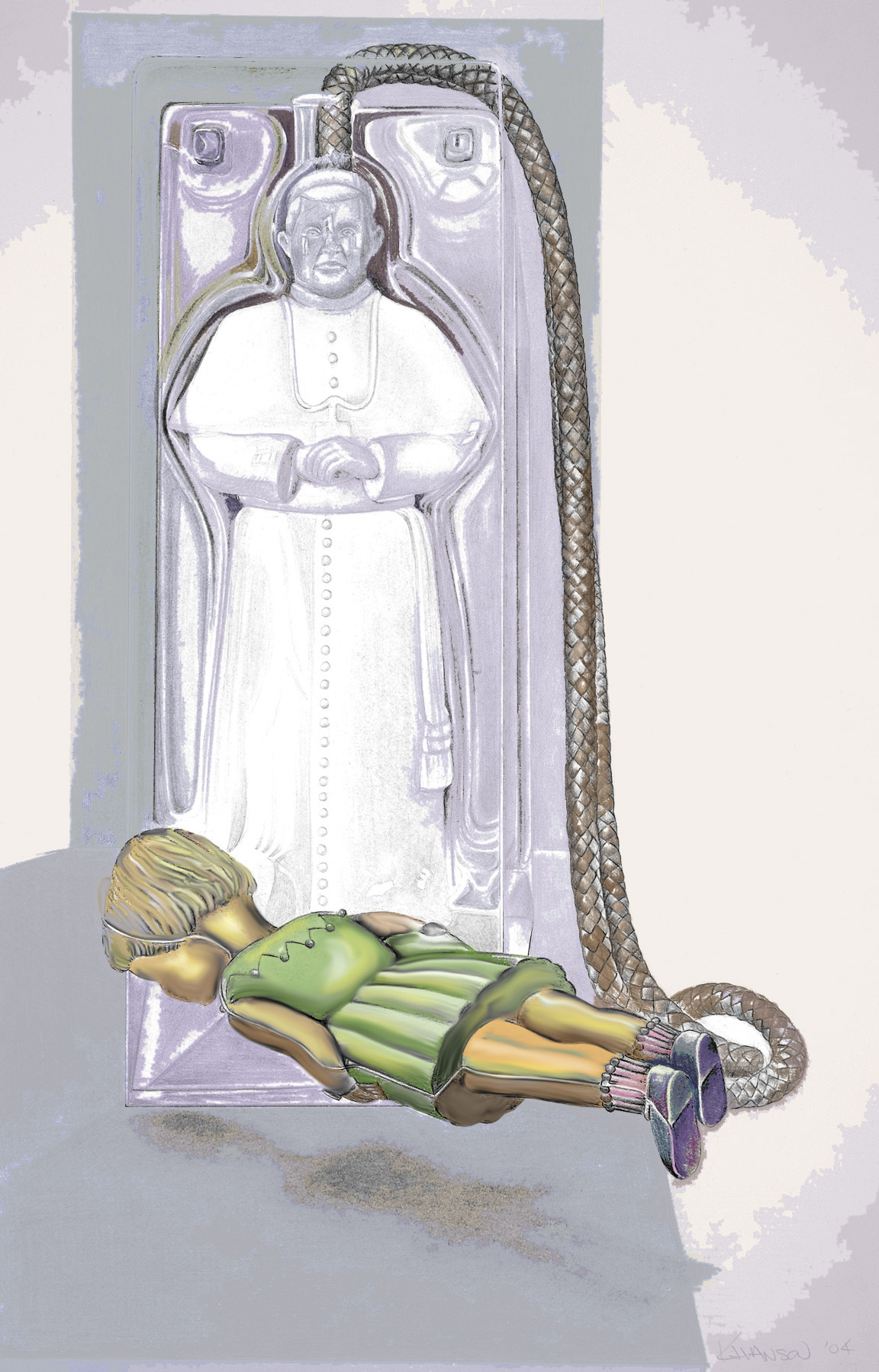
I had a horrible experience the other day. The children left me in the drive way and I got rolled over by the family SUV. Thoroughly crushed but still in one piece my caretakers were able to separate me at the seams, push me back into shape and super glue me back together. I feel pretty good now. Other than slightly blurred vision and vague sense of stickiness I’m as good as new (well, you know, relatively speaking).

Anyway, the experience has me thinking about end of life issues. Things like writing a living will, who will get my doll house and maybe, most importantly who will be in charge of my ultimate demise. Will I be put on life-support, assigned to hospice care, be kept alive at all costs until the last breath leaves my body or will I be given the privilege of deciding when and by what means my end will come.

It seems to me I should be allowed the right to die with dignity, cognizant, conscious, able to wish my loved ones the best rather than leaving them to watch me slowly fade away over hours, or days or weeks.  I guess the problem comes down to the belief of some in the sacredness of life. Suicide, considered escape (unless one is waging jihad), is sinful in the eyes of the faithful and somehow this concept has become entrenched in the law of the land. The old disconnect between basic human concerns and the perceived desires of the supernatural rears it’s ugly head once again.

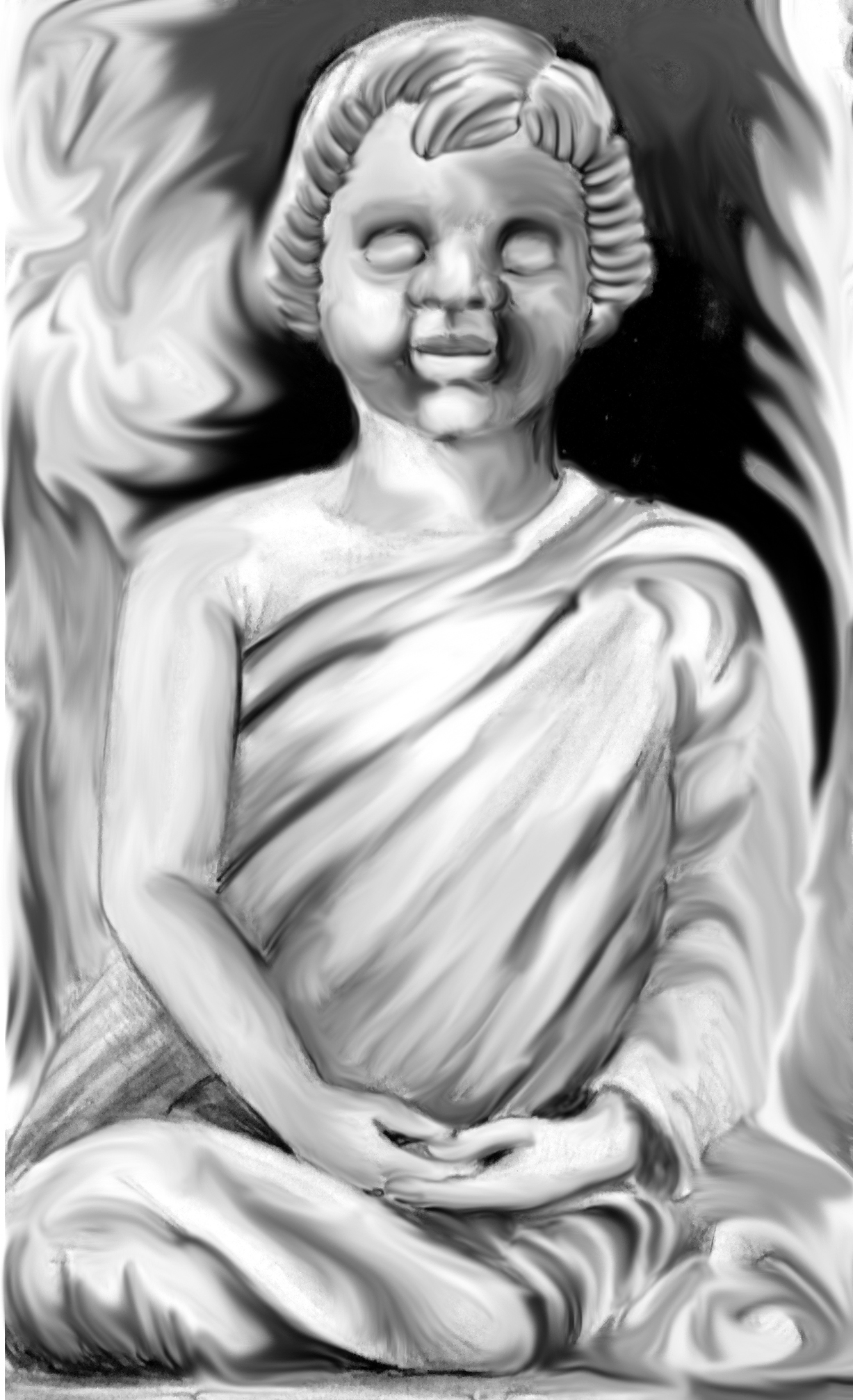
I’m not letting any of this get in my way. When my time nears I’ll be ready, my ticket to the plastic works purchased in advance, the vat of molten plastic awaiting my perfect swan dive into the great oneness.

distorteddeideicolor


Tribes

I read the other day that experts such as E. O. Wilson, a pre-eminent sociobiologist, believe tribalism may well lead to the downfall of humankind.
That is, the tribal impulse, hard-wired into the human psyche over the millennia, while providing a certain security and sense of well-being, creates at the same time animosities toward other tribal groups which all too often can develop into very dangerous situations.

Further, Dr. Wilson reports, tribal inclusion often requires adherence to certain dogmatic beliefs and doctrinal affiliations, sometimes secular but more often of a religious nature, that defy rationality making cooperation and mutual understanding between tribes very difficult.

These ideas got me thinking about the story by William Golding, Lord of the Flies, in which children, finding themselves alone on a deserted island, revert, in a sense, to the values and sensibilities of their pre-historic past when warrior groups ruled. They conjure demons and create enemies among themselves. Their insecurities and fear lead to a tribal mentality among many of the children. Only a few of them are able to fight the impulse to demonize and hate the other.

Well, it doesn’t require a whole lot of knowledge of current affairs to recognize similar mentalities throughout the world. All I can hope for is that a reasonable percentage of humankind fights its tribal impulse and realizes its deep interconnectedness with the world as a whole so that I can continue my contemplations in peace. I know this may sound selfish but I’d be a bit lonely without any human presence whatsoever.

tribe3

Free Thought

I’ve thought, now, for a long time, being the skeptic I am, my thinking is relatively free of doctrinal or dogmatic influences. So, I found it interesting reading about the origins of a group of individuals calling themselves freethinkers. This organization was and still is, I guess, based on certain tenets generally in opposition to the kind of dogmatic, authoritarian beliefs generally associated with religions. They believe (or should I say operate upon the notion) truth can only be obtained through rational inquiry and speculation; any sort of supernatural phenomena is discounted out of hand.

These freethinkers, as a group, apparently share a fairly common mindset which makes, in my mind, calling themselves Freethinkers rather oxymoronic. I have to wonder, after all, whether any set of organizational tenets might not imply doctrinal restrictions. In the Freethinkers’ case the elimination of the possibility of expanding one’s views beyond the rational, logical and empirical.

I guess it’s only human nature for people to seek out others who think like they do; it’s nice to have social support, after all. Maybe this group just needs to come up with a different name, perhaps they could name themselves after one of the great freethinkers of the past, someone like Giordano Bruno or Michel de Montaigne, both great 16th century minds at odds with the doctrinal and dogmatic beliefs of the day.

But, I suppose the moderns might look askance at the fact that both of these men maintained a vibrant sense of a noumenal reality which, in the day, was usually attributed to supernatural entities.  And I suppose such a name as, say, Montaigneist might be pretty obscure in terms of attracting new members.  Maybe, though, de-emphasizing the ‘groupness’ of the organization might not be such a bad thing.

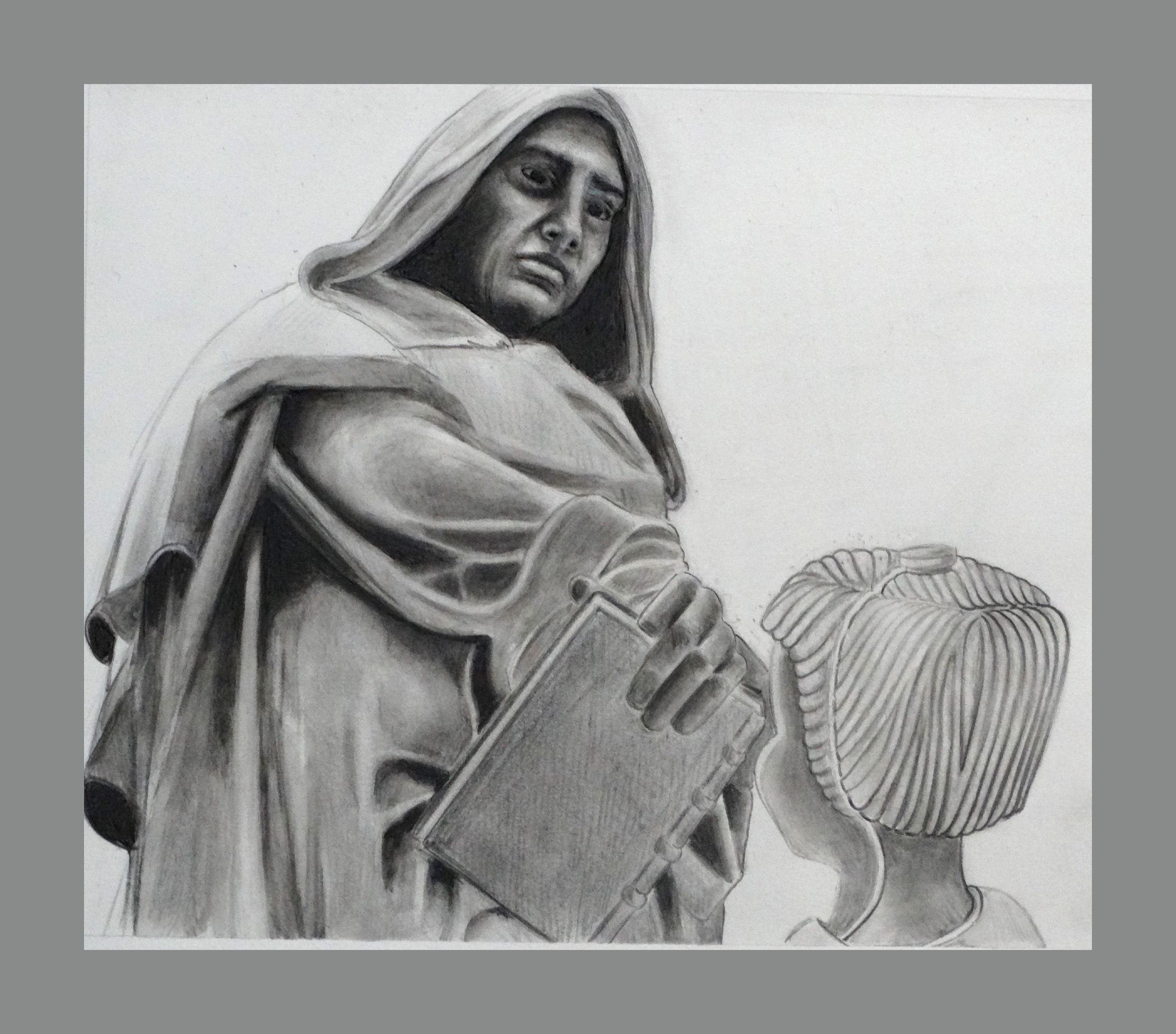
With Giordano Bruno

With Giordano Bruno


Holy Family

As I continue to view the pictures in the old family albums, I contemplate the confidence the figures seem to exude. I wonder about the philosophical basis upon which these people operated. I have a feeling at least some of the optimism their appearance seems to imply is the result of the economic boom brought on by all that war production. Capitalism’s finest hour provided the likelihood of material gains for all. The idea of ‘getting ahead’ must have seemed pretty realistic.

These folks were members of the ‘greatest generation’: the post-World War II nation that probably saw itself as saving the world from unspeakable evil. There must have been a sense that God was on their side, a belief carried right through to the present day to justify a tendency to micro-manage world order (something, it’s becoming pretty clear we’re not very good at).

Which is not to say these aren’t inherently good people ready and willing to do for others in need and wishing ill on no one (although one must surmise a certain racist undercurrent existed evidenced by the segregation in the armed forces not to mention the blind eye turned toward the impending holocaust).

I guess it’s pretty easy to look critically at these people in retrospect and if I turn the same critical eye to me and my fellows I suppose much could be found to be wanting. And, I guess all we can hope for in the future is to learn from the past which, when I think about it is probably pretty unlikely.

holyfamily2


Winning and Losing in the Material Realm

I’ve been getting caught up in winning and losing lately. The politics in the playroom is getting pretty cut-throat and the pressure to take sides, whether regarding sports activities, political discussions, philosophical positions, religious notions, you name it, is increasingly intense. It almost seems as if winning or losing is more the issue than thoughtful reasoning about issues. Winning, it seems, becomes synonymous for many with success.

I read an article recently that suggested one was less likely to succeed if she was overly optimistic. I guess the idea is too much optimism inhibits the drive to compete; to strive for the head of the line, for the promotion or the big raise. The optimist, the writer suggests, assumes good things are in store regardless of how hard she works for them.

It seems to me the whole idea of winning presupposes a common desire which will be satisfied by material reward resulting in an enhanced sense of well-being. This ‘success’ will never be more than temporary which means additional winning will be required to not simply sustain it but to avoid the debilitating depression of ‘failure’, the result being a vicious cycle of competing egos egged on by media hype and recognition. Then, one day I awake to the realization someone else is determining my values for me; my well-being is no longer in my own hands and has become embedded in the competitive, material realm.

Well, I’m not having any of it. I really don’t care how popular success is measured. I’m staying positive and optimistic. I’ll look past the material realm and embrace the purity of beauty and truth. I understand this may require some disassociation.

dance class

Abraham and Isaac

I’ve been thinking about relationships. Given my own parentless upbringing I often find relationships between parent and offspring pretty interesting. When I think about the relationship between the Biblical Abraham and Isaac I must say I’m truly mystified.  I can only imagine that Isaac must have been the apple of his father’s eye, being born after so long a wait, his mother, Sarah, having been unable to conceive for quite some time (being in her eighties may have had something to do with it).

Abraham spent quite a lot of time communicating with God, traveling about in the inner world of the spirit as it were. Apparently God was expressing uncertainty as to Abraham’s commitment to things celestial, wondering about his loyalty, and unbeknownst to Isaac, Abraham was being guilted into entertaining an action that definitely wouldn’t be in Isaac’s interests.  When Abraham suggested he and Isaac take a short journey to the mountains Isaac was keen enough until upon arriving his father built a pyre of wood, bound him hand and foot and withdrew a dangerously sharp knife from his scabbard. As it turned out Abraham received a message at the last minute to cease and desist, Isaac was untied and they proceeded homeward.

What I have to wonder is where that relationship went from there. I would imagine future offers of father/son get-togethers, walks in the woods and such, would have been looked at askance by Isaac. It would seem to me he might have desired a third party present at the very least.  As time went by Abraham tried to make amends by finding Isaac a nice wife and making him sole heir to his properties, but I bet Isaac still kept his distance whenever sharp cutlery was near at hand.

father and son


Discomfort and Revelation

Life in the playroom can be pretty predictable. It’s a rare day our mundane existence doesn’t rule. Ordinary is almost always the order of the day.  And, although I’m not in the least bored, having as I do a number of creative activities I enjoy and engage in daily, I sometimes wonder whether or not the uninterrupted routine deadens my imagination; if in fact the progress and results of my daily engagements are less than they might be.

So, it occurs to me that perhaps I need to liven up the day, break the routine. This idea is not a comfortable one for me because I do quite enjoy the consistent pace of life and any disruption would be a discomfort causing, at least, some level of anxiety. And, the greater the disruption the greater the discomfort would be, I have no doubt. But, in the interests of potentially achieving superior experiences in my creative endeavors I feel I should began to impose certain discomforts on myself at least occasionally.

I could impose some sort of physical discomfort on myself like running around naked out in the cold until my plastic becomes brittle, but I think the psychological realm is where I should take aim. Perhaps I could volunteer to sing a solo with the church choir. I don’t belong to a church choir or go to church for that matter and can’t really sing which means, if I were to score such a gig, an extremely unpleasant experience would probably await me.

Or, I could make myself available for extended conversation with the Mormon boys. They come around pretty regularly and are always more than willing to tell me about Jesus’ time in North America and the revelations of Joseph Smith who definitely had some good ones.  This possibility has discomfort written all over it.

I’ll have to think about this for a while. It’s going to be a matter of balancing the degree of discomfort and the potential for imaginative invention with the serenity of routine existence and maybe less than wonderful creative results. It’s all about peace of mind I suppose.

zarathustra 3

God and Conspiracy Theory

I’ve been wondering how often the accepted explanation of events is correct. Examining the facts sometimes leads me to think that, often times, there may be a conspiracy of cover-up in play; or that those believed responsible are scapegoats for the truly culpable. Can it be that we the public are being manipulated into accepting a false reality? If so, I have to wonder whose doing the manipulating; how deep and broad does the conspiracy go?

Some people think there’s a New World Order in play; a secretive power elite manipulating events to suit their purposes which sounds to me a bit like God but maybe without too much benevolence involved.

The thing about believing or even entertaining the idea of conspiracy (at least on such a large scale) against a widely accepted explanation is, that if I were to mention this conspiracy idea I would immediately be looked at askance by most. And to belabor the idea with facts and figures will only endear me to a like-minded minority-most will discount my claims and probably find most of any other ideas I might offer in the future immediately invalid or at least deeply questionable (unless the ideas fall within the boundaries of their well-established reality).

Similarly, if I were to admit intimate knowledge of God, that God speaks to me regularly and directs my actions, I would very likely be discredited among most people. I believe this to be true despite the fact people like Joseph Smith convinced huge numbers of people of his Godly revelations.

So, I guess if I’m transparent about my intimate knowledge of God or my belief in a New World Order I can pretty much kiss my credibility good-by. The upside of this situation, I suppose, might be my potential ability to bring unwanted discussions to an abrupt finish.

masked skull

The Ultimate Decider

As I continue my investigation into the possibility of a tangible entity, an ultimate decider, in whose hands our fateful existence resides I sometimes wonder whether such a being must necessarily be thought of as benevolent.

I wonder about this because some of my experiences can only be thought of as less than pleasant. Sometimes, in fact, I find myself in considerable discomfort, in situations which are dangerous if not life-threatening.

The idea of being safe in the hands of the Great Decider might very well be delusional because it seems reasonable, the odds I would guess are 50/50 at best, it is malevolent and more intent on doing me harm than anything else. If scriptures can be believed there are plenty of references that paint the Biblical God as a fairly wrathful being and who’s to say who that wrath may be directed toward.

I realize there are no easy answers to these questions. I guess I face the primal existential dilemma and will have to learn to live with it. I just wish the grip wasn’t quite so tight.

ultimate decider

Seeking God-Master Carpenter

The rich mythology of the Northwest Pacific coast cultures identifies a number of characters that seem likely to have god-like potential. One of these, among the Haida, is Master Carpenter who taught the people how to carve and paint the meaningful imagery that appears on the clan houses.

The story goes that before the people knew very much about art Master Carpenter appeared in a halo of light. He told the Haida to go inside their houses and no matter what they might hear during the night, not to rise from their beds. Even though much pounding and scraping and other noises were heard the people did as they were told. In the morning they found their houses decorated with magnificent carved corner poles and the walls painted with beautiful clan totem designs. Then Master Carpenter told the people he would return each day to teach them the arts of carving and painting.

So, I’m wondering if the Haida people saw Master Carpenter as God. You’ve got the halo and the unreal amount of art produced in a very short time which is pretty potent if not omnipotent. It seems to pretty clearly place him into the realm of the supernatural at least.

I would think that, for the carvers and painters, he should carry a lot of weight-someone to appeal to for inspiration, thank for well-received work and blame for poor performance. I’m just not sure, after he did his initial teaching, how much he continues to hang around.

There’s no doubt he could be useful but I’m not sure he belongs on the short list.

mastercarpenter