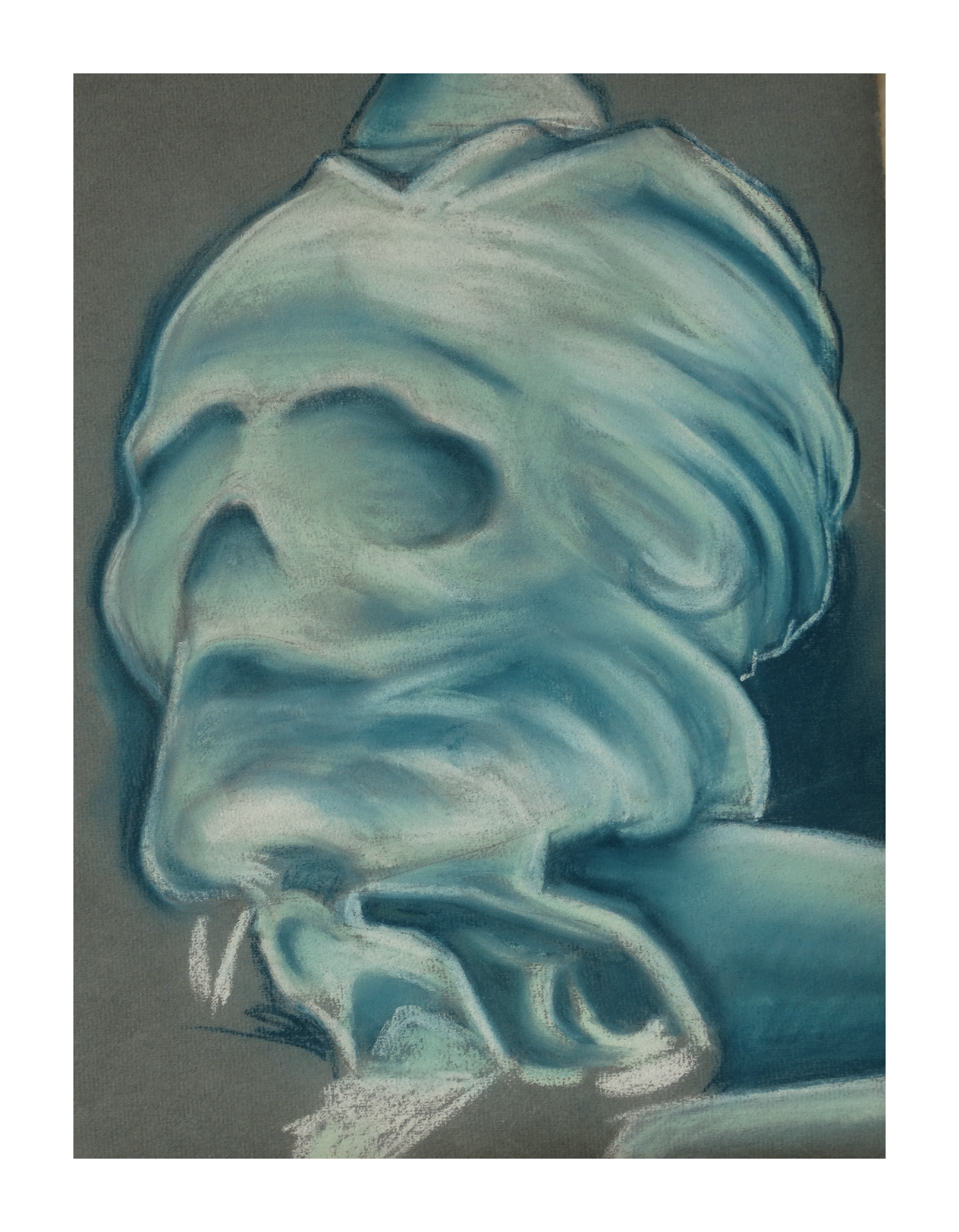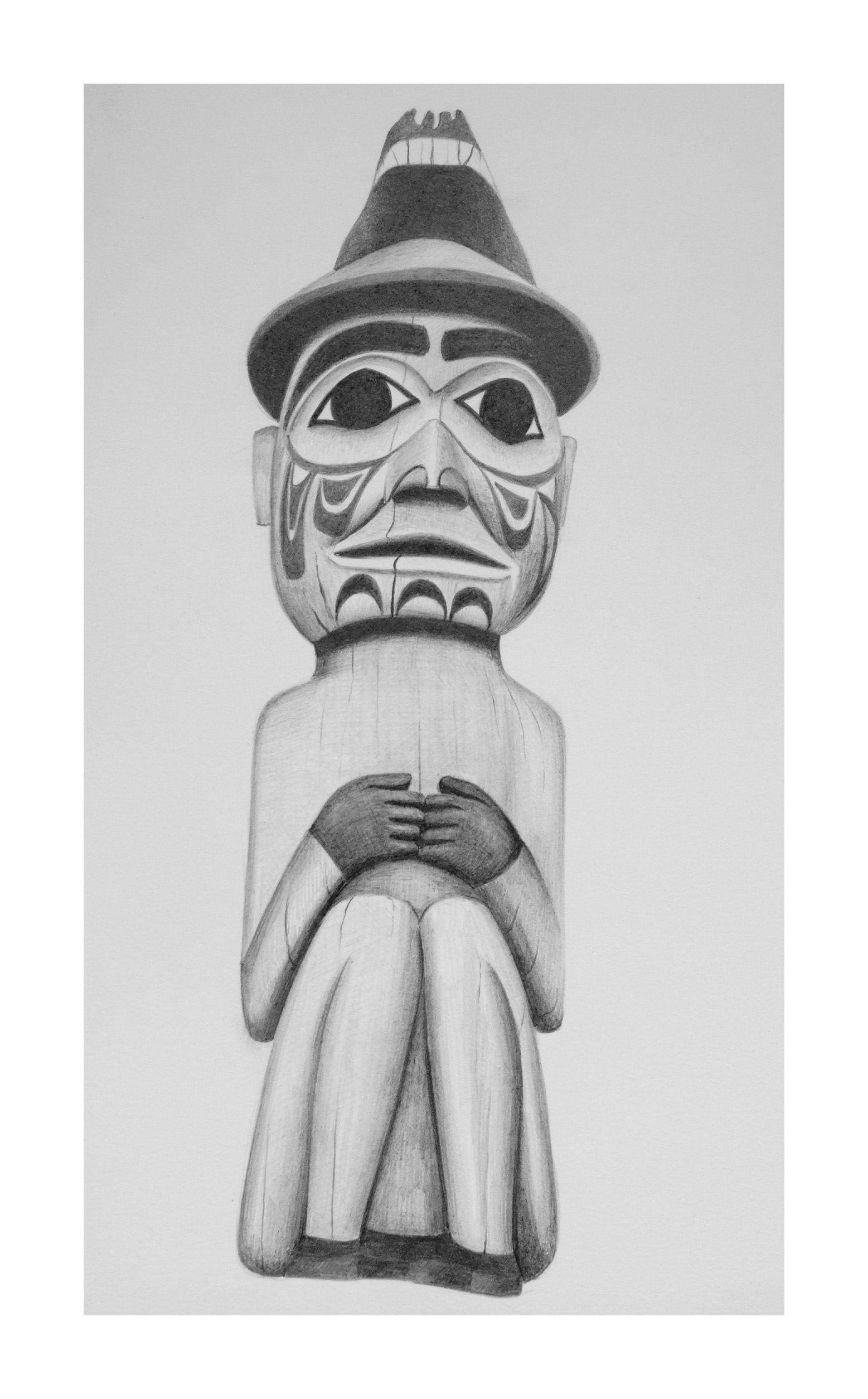
Seeking God-Greek Philosophers

In the interests of my ongoing pursuit I’ve been considering some of the Greek philosophers who appear to have made some in-roads into the nature of God, or, god-likeness anyway.

Diogenes the Cynic maintained virtue as the true path to happiness. Living in poverty, reviling social constructs and the accumulation of wealth he assumed dog-likeness, living in the present without anxiety, a simple life of virtue depending on the kindness of others for his survival. The purity of his motives seem pretty god-like to me. Can dog-likeness be akin to God-likeness?

Chrysippus was a stoic philosopher who believed that, while one’s fate was pretty much set in stone if one controlled his soul crushing passions and adjusted his will to intersect with what was going to happen anyway, peace and tranquility were a real possibility. He also believed in the equality of all men (but, unfortunately, I’m not sure he meant women to be included in that generality). Still, he was certainly an honorable and virtuous man who deserves inclusion in any consideration of god-likeness.

Epicurus, founder of the Epicureans, expounded this very reasonable way of life based on moderation of desires and the seeking of a state of static pleasures which amounted to minimizing pain, anxiety and suffering. Among other things he believed the gods held little sway regarding the goings-on in the world and that the only true knowledge one could acquire came through the senses.

One of Epicurus’ chief disciples, Lucretius wrote a poem in which he goes to considerable lengths describing how the world formed within the infinite universe which had to do with the movements of tiny particles from which all things, wind, water, fire , earth and all that inhabit the world are composed. All things including the gods and men’s souls, Epicurus put forth, must expect a terminal existence, have a limited shelf-life, is subject to mortal demise over time.  Well, this did not sit well with the temple-goers. Despite the fact Epicurus was clearly an honorable person; celibate and a vegetarian to boot and clearly not a hedonist, his name became synonymous with heretic; he was persona non grata amongst the believers. He may not be God but if he was around today I’d definitely invite him to the ashram.

All three of these men point the way toward god-like qualities but omniscience is probably not among their attributes. I guess I can rule out omnipotency and omnipresence as well. Maybe perfection is an unreasonable assumption.

greek philosophers

Seeking God

I’m on a quest. I intend to find God. Well, I hope to anyway. Maybe it’ll only be a glimpse if anything. I know one of the problems with this seeking is how to recognize God once he’s, well maybe I should say it’s, in the vicinity. I’m pretty sure all this anthropomorphizing that has occurred vis a vis God’s appearance can’t be right; it’s just too far-fetched to expect God to have a physical form at all given his/her/it’s penchant for omni-presence, omni-power and all those other omnis. Although I guess if it wanted to assume a physical form it certainly could.

Anyway, I was reading about these Indian mystics who spend years in intense meditation, living in austerity, intent on achieving connection with the unnameable essence within all things and from which all things emanate. And, amazingly, some of them do find what they’re looking for. Their experiences differ but usually have in common a direct consciousness of the ground of being; a sense of becoming one with the absolute; an enlightened sense of a unified cosmos bound together by love.

Well, it’s pretty clear one doesn’t reach such a level of understanding overnight. This God-seeking is a serious endeavor not to be taken lightly if one expects results. I’m going for it; I’ll spend more time in contemplation; discipline myself to reach beyond; set aside timeout from daily routine.

I’ll let you know what happens.

ecstatic vision 3

Kinship

I was reading recently about the Tlingit people of the northwest Pacific coast. They have an incredibly rich mythology illustrated and enhanced by the beautifully crafted art they create.

Much of their mythology focuses on the close relationship of the people with their animal kin. At one time, it’s believed, all life was one until Raven released the sun. Then, in the light, the people scattered: some to the woods where they assumed four legs and heightened senses of smell and sight, some to the air where they became the birds and some to the sea becoming fish.

And still, the kinship remains a sacred connection with all sentient life, which is not to say these people are all vegetarians.

But, I don’t think they should be thought of as cannibals either. I think the animal in his self-sacrifice is offering himself for the good of the clan. And, I think the people recognize this.

Anyway, a lot of stories are told through the exquisitely carved poles these people continue to produce about the inter-relationships between clansmen and animals. In some cases, like the story of Kat and his bear wife unions are formed and progeny produced reinforcing the notion of kinship considerably.

I think the concept is a good one. Respect for all life forms and the knowledge of our mutual dependence upon one another bodes well for our extended existence.

clanhouse


Where am I (now)?

I learned recently that modern science views the notion of ‘now’ as nothing more than an illusion. Due to the lag time our sensory apparatus requires to acknowledge occurrences around us along with the finite speed of light means that what we are experiencing at any given moment has already happened. So, if the past is no longer and the future is yet to be and there is no ‘now’ then where, exactly, do I exist? If where I am, I only was I must have to anticipate where I really am.

I must say I find this a bit unsettling as I’ve been operating for some time under the assumption that ‘Eternity is Now’ given the nonexistence of past and future. So if ‘now ‘ is ‘past’ then I’m inclined to discount the idea of eternity.

But, cosmologists make matters even more confusing suggesting we may exist within an eternal multi-verse within which the ‘Big Bang’ that created our universe happened and who’s to say, they hypothesize, this big Bang thing hasn’t happened all sorts of times.

Apparently the ideas is there are passage ways, ‘worm holes’, between these various universes that if we weren’t limited by our vision and movements due to the finite speed of light we might be able to find.

So, between not being here ‘now’ and being a minute speck within one of countless universes I’m thinking I may have to start again from the beginning and agree with that great thinker Rene Descartes that at least I know I’m thinking.

Portal

Portal

Contemplation

I read the other day about a study that found that most people have a really hard time sitting alone with their thoughts.

The story related how researchers had asked volunteers to sit alone in a room for fifteen minutes. The room contained nothing but a table and chair and a machine that would produce mild electrical shocks if one chose to use it. Apparently a fairly large percentage of the research subjects chose to administer shocks to themselves rather than sit alone with their thoughts for even fifteen minutes.

Letting one’s mind wander to past occurrences or future possibilities seems to me pretty natural so I guess I don’t understand what the problem was. Focusing on the eternity of now, I must admit, isn’t always easy but my mind is pretty good at wandering.

In fact, I was just thinking about the movie, Altered States, in which the protagonist, played by William Hurt, submerses himself in a sensory deprivation chamber, which is essentially a tank of warm water in a totally darkened cubicle, for hours on end, day after day. His idea was that by doing this he could get in touch with his primal inner self. And I guess he does because he ends up developing simian characteristics.

So, I’m wondering if the reason most people are unable or unwilling to be alone with their thoughts is that they fear glimpsing their innate animal natures.

If this is the case it sure explains our inclination to constantly be distracting ourselves.

contemplation

The Inadequacy of Reason

I was thinking the other day about different kinds of reasonableness.

There is reasoning that follows the dictates of logic based on falsifiable premises and avoiding contradiction. And, then, sometimes the passions get a hold of a person and things can be believed or acted upon based on poor reasoning-things that don’t follow from the supposed justification of the reasoner.

The philosopher, Immanuel Kant, put forth the idea of practical reason. He thought that a belief in God and after-life was necessary (even though not based on falsifiable premises) in order that man behave moralistically and ethically toward his fellows, since such behavior is more difficult than acting exclusively out of self-interest.

Leo Tolstoy wrote A Confession toward the end of his life during a time of extreme disillusionment regarding the purpose of life and the meaninglessness and insignificance of the part he had played in it. His assumption had always been that reason was the ground of existence; that any and all insight and understanding that might be achievable would be so exclusively through reason. And now reason told him that it was all for naught; his existence made no difference in the grand scheme of things. Better to die, he thought.

When he looked around him he saw people engaged in hedonistic pursuits or religious endeavors, neither of which he felt validated a reasoned life. His awakening came upon considering the peasant who toiled and suffered throughout his life but was able to maintain his will to life positively. Maybe lacking formal education and not having too many big ideas to think about had something to do with it, but in their sense of spirit, irrational as it seemed to be, Tolstoy found the answer to his dilemma: reason must embrace the irrational and sustain a faith in the human spirit.

So, if it is fair to assume logical reasoning will not provide the final answers to life’s big questions is a leap into faith despite the irrationality and or absurdities of such the answer?

I guess I’ll stay open to all possibilities: enjoy the beauties of logical reasoning while embracing the spirit. How can I go wrong?

reasonability

Praise of Folly

I’ve been reading this book called Praise of Folly written by the goddess Folly herself. In this book Folly claims allegiance from just about everybody, by which she means, I guess, everyone is either foolish, ignorant or just unwilling to get serious about life, which, from her point of view is a good thing.

From Folly’s perspective foolish, carefree behavior generally leads to happiness. Of all her followers she ranks at the top those delusional folks so lost in their imaginative worlds as to be oblivious of any sense of reality. Those she finds least enlightened, although clearly foolish are the Stoics and theologians whose strict adherence to reason can only mean a painful and dreary life not to mention lost rewards in the hereafter.

So, anyway, I was beginning to take all this to heart, spending lots of time playing Flappy Bird and watching reruns of Jersey Shore when I discovered the book was meant to be satirical; that the celebration of foolish worldly behavior was really meant to be quite the opposite.

The author of Praise of Folly was the 16th century Catholic priest Erasmus of Rotterdam who was pretty disgusted with the frivolous preoccupation with material wealth and bodily desires of mankind in general (and, I guess, the twisted motives of the Catholic Church in particular). I’m not sure about the current motives of the Catholic Church but I think his opinion of 16th century European culture still may hold pretty true for contemporary western culture altogether.

Anyway, at the end of the book Folly goes to considerable pains to assure the reader that the reader’s spiritual health depends on not thinking about things too much; that remaining a fool is really the only way anyone will gain spiritual redemption.

So I guess I’ll just keep spending loads of time with Flappy Bird and inane television and just wait until the weak-minded inherit the earth.

Elvis in Memphis

Elvis in Memphis

Inner-Glow

I’ve been experiencing this strong sense of inner spirit recently. It’s a feeling of strength within, a sense of groundedness and a confidence that I’ll be able to not only cope with but decisively defeat any adversity that may come my way. I find quite a wonderful peacefulness in this.

But, along with this sense of inner strength comes the nagging thought that my ego may be a bit out of control, having been taught from a very early age the virtues of humility. This realization leads me to consider my own short comings which include but are not limited to average intelligence, unapproachable countenance and various biases and intolerances. This in turn brings me back to the anxiety that has been a predominant aspect of my nature as long as I can remember. Someone said, Martin Heidegger I think, that anxiety is the fundamental mood of existence. Boy, sometimes I can really relate to that.

So, I’m wondering if I’m better off in the possibly delusional world of inner strength or in the anxiety ridden reality of humble me.

I think I’ll bask in the inner glow as long as I can. Here’s to positive thinking.

deidei innerlight

Something or Nothing

I find myself spending a lot of time lately in the black void of the covered toy chest and despite the faint Sounds of Music coming from somewhere in the playroom the situation has got me thinking about the notion of complete nothingness.

People have thought, for a long time, about why there is something rather than nothing. Some have found the question a small problem easily answered by an existent creator God, rationalizing that the order in nature demands a creative intelligence. But, these folks are hard pressed to explain who created the creator.

Over the centuries this intellectual conundrum found temporary ontological solution in the notion of a Self-created Infinitely Perfect Being whose perfection demands existence. But, this, of course, begs the question of how something can come from nothing; an idea that can be thought about in mathematical abstractions but is a lot harder to figure in terms of matter and substance.

In the context of time the eternal is pretty impossible to think through and unless we are willing to abandon the search for a reasonable answer in favor of blind faith the dilemma will probably always remain an enigma………….unless we entertain the solipsistic notion that there is indeed nothing; no material reality at all; only consciousness, which seems initially to work pretty well until I encounter another consciousness. From there it’s only a short mental hop to the collective unconscious and the archetypes that make up our illusory universe.
So, here I lie, in total blackness, contemplating a question I can probably never know the answer to, not knowing whether there is something rather than nothing and unable to get that annoying tune out of my head………………which brings us back to Do, a deer,……………….. or maybe I’m just not an asset to the Abby.

nothingness2

Free Will

I was thinking the other day about the nature of free will-whether it was truly a viable concept given the determinist position that everything we do we do because it’s in our nature to do it and we really have no free choice in the matter.

So, I was thinking that in order to exercise free will I’d have to do just the opposite of what I was inclined to do; so that when making a decision, if it made total sense to do A-that A would be the best choice for my well-being-would be preferable to choice B in every way-that I would instead choose B in order to exercise said freewill even though it would result in a bad outcome for me.

I suppose the determinist would respond that the likelihood was I harbored masochistic tendencies and therefore perfectly natural and predictable that I would choose B.
So, given my said masochistic tendencies I instead choose A, I suppose the determinist would then respond that it is only natural to preserve one’s well-being and therefore no freewill will have been exercised in that case either.

So, what if I embraced the absurd-if I imagined a preternatural essence hovering about me-something that I interact with on a daily basis-a sort of magical companion? That would certainly take the wind out of the determinist’s sails wouldn’t it?

I guess, in the end, the freewill thing might depend on how carefully I listen to my invisible friend.

freefall2