Fear of the Unknown

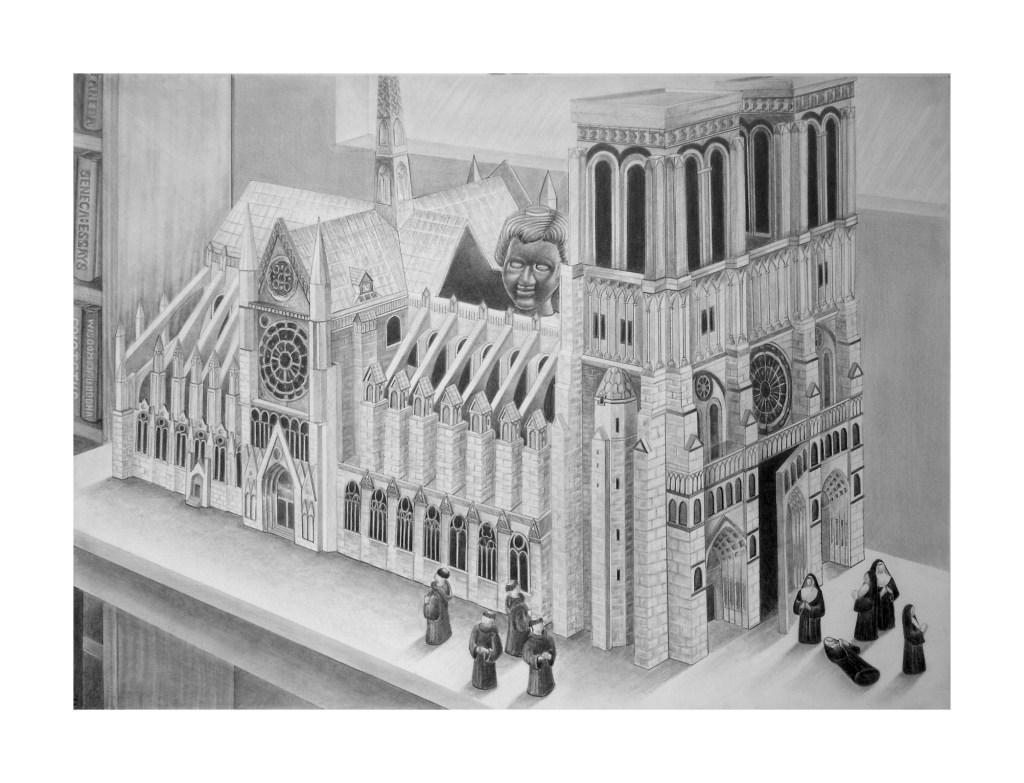
I’ve been viewing maps recently that were produced during the Middle Ages. It has become clear to me that the early cartographers needed to rely on a certain amount of imagination to create a geographic depiction of the world. The church at the time took pains to build a Biblically favorable geography that had little to do with reality.

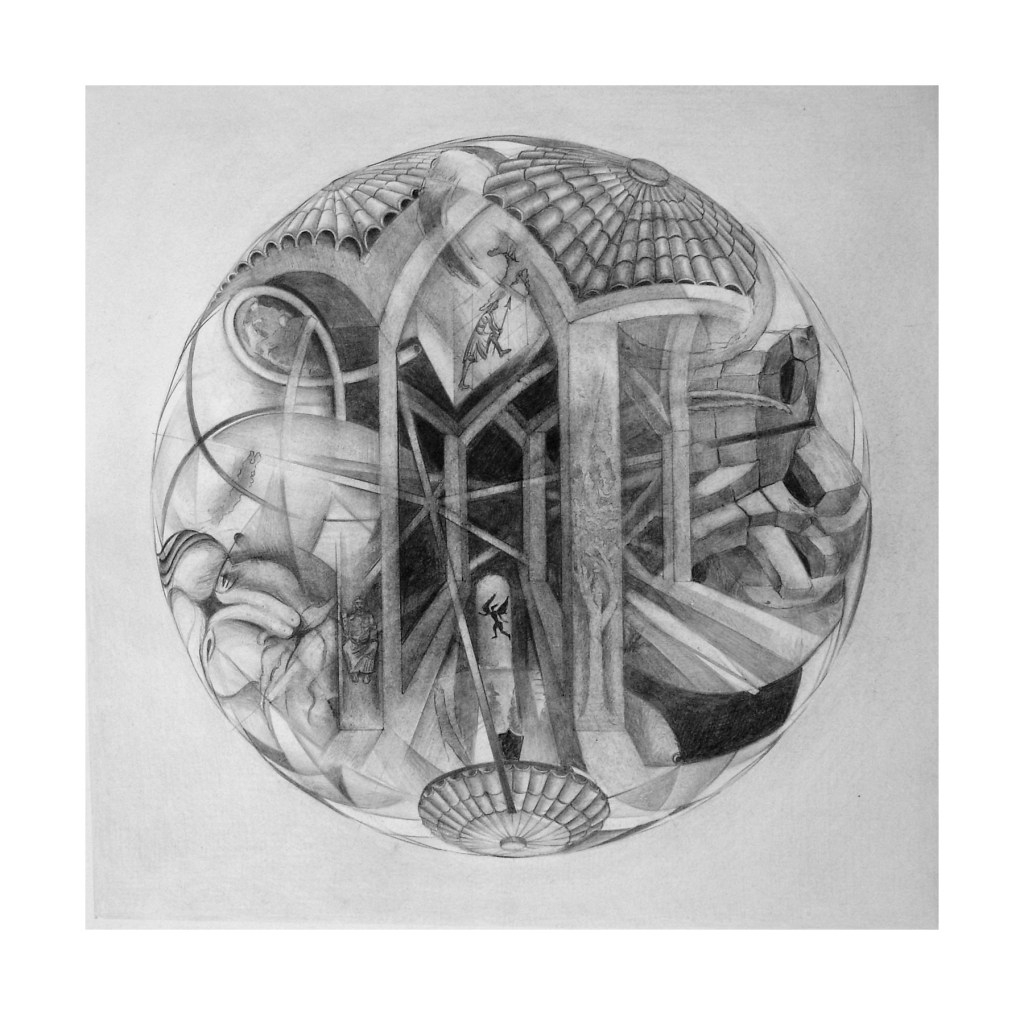
I’m wondering how a medieval intellect, a contemplative sort, sitting on the beach looking westward out across the Atlantic Ocean might have imagined what lay beyond. Many sailors of the time feared sailing too far west lest they fall off the edge of the world. Nightmares of an awaiting Hell so nearby must have terrified the medieval mind.

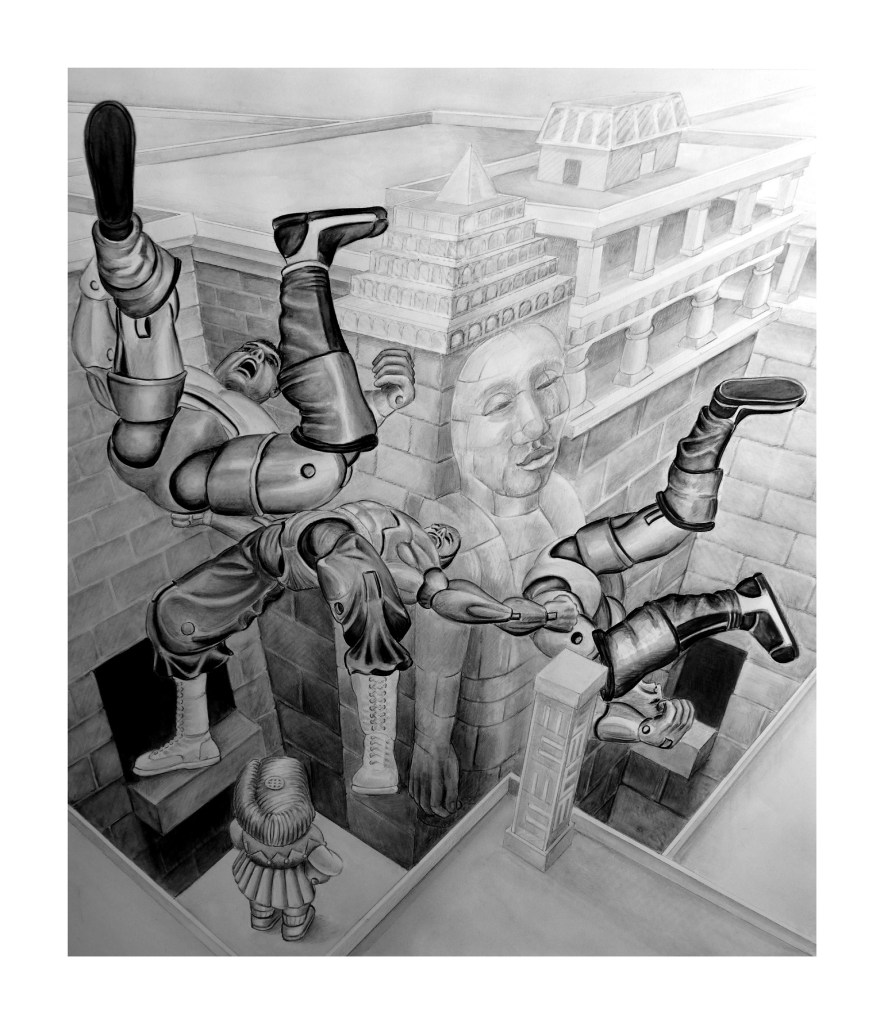
These days the contemplative sort might be looking upwards, outwards, imagining the earth being sucked into a black hole or being overwhelmed by dark matter and being no less terrified than his medieval forbearer. Fear of the unknown is the constant I guess for all of humankind.

A Dark Age

I’ve been reading about the intellectual world in Western Europe as it existed in the early centuries of the second millennium.

With the fall of Roman Civilization 600 years earlier, scholarship had declined, knowledge of the past had been reduced to monastic reproductions of Latin texts providing the church the opportunity to re-imagine the historical narrative to its own advantage, limiting it to a closed Christian perspective and its reliance on the ‘Word of God’ to explain the complexities of the natural world.

This constrictive culture led the few scholars of the time, whose concern for self-preservation amid accusations of heresy, to temper any announcements of research findings setting back intellectual development for centuries.

The eventual breaking free of such a restrictive situation can only be attributed to the indomitable human spirit, even though it did take a long time.

Patron Saint of the Internet

I’ve been reading that in the year 2000 Pope John Paul II proposed that St. Isidore be declared patron saint of the internet. In the 7th century Isidore wrote a book that was widely reproduced and read. At the time the book, Etymologies, was nearly as popular as the Bible. In Etymologies Isidore determined derivations of words from Greek to the vernacular but what made up the bulk of the twenty volumes was his compilation of what he considered to be the entirety of human knowledge.

Much of the contents of Isadore’s tome has been determined to be imaginative conjecture and has been dismissed by scholars as the perpetuation of myth and the conveyance of misinformation. Reason enough, I suppose, that he should be associated with the internet.

Keystone Species

I’ve been reading that biologists have determined that certain predators are key to preserving diversity in various eco systems: starfish, for example, serve the function by consuming mussels that would otherwise destroy the diversity in tide pools and fresh water largemouth bass are a keystone species in freshwater streams controlling the populations of minnows that would otherwise over-graze plant life. In the waters off western Alaska sea otters control the populations of sea urchins that can devastate kelp forests.

The lesson to be learned, I guess, is that keystone species are necessary to control populations of system threatening species in order to maintain healthy diverse eco-systems. I wonder whether a keystone species might exist somewhere that could control the species most responsible for threatening the health of the earth.

Miracles

I’ve been reading that Christian conviction, the truth of the doctrine, lies in the fore-told Christ and the miracles he performed, miracles being occasions of instantaneous healing or bringing to life the deceased, things that defy nature or rational expectation.

Our apologist warns us, though, that miracles ‘are not of such a nature that it can be said that they are absolutely convincing’, that miraculous events may or may not be miracles. If miracles are the foundation of doctrinal truth that separates Christian belief from heresies it would appear maintaining faith is no simple matter. Finding the truth will require relinquishing self-love and malice of heart.

If religious faith is more than the social support of the congregation it appears maintaining it will require some work.

Christian Apologetics

I’ve been reading, lately, Penzees, written by the 17th century philosopher Blaise Pascal. The work goes into great detail defending and advocating belief in Christianity. Rationale for such belief centers on the idea man is morally flawed and sinful making existence psychologically painful. Why else, the apologist argues, do we avoid the reality of the here and now through pre-occupation with the past or anticipation of the future, or by other constant diversions that keep us from facing the inevitable: the realization of a finite existence that will end in extinction.

The solution to this dilemma, we are directed, is in admitting our shortcomings, relinquishing our pride and our fear of the enormity of existence. If we do this, we can create a space, a place for God.

The philosopher offers strong argument. We all, if we think about it, live with our uncertainties and fears. Belief in a benevolent God will surely bring peace of mind to those able to embrace it. There are caveats, I suppose. One may find, upon commitment that remaining in ‘good faith’ may be somewhat more involved than a simple declaration of belief.

Premonitions of Doom

I’ve been lately experiencing premonitions of doom. I reason it’s the time of year: an extended run of cold gray days, nature receding into dormancy. But maybe not. Maybe negative life-changing events, beyond my control, are on the horizon. I can imagine all sorts of horrible scenarios involving violence or accident. Pure evil may even enter in.

My life has been reasonably free of negative occurrences; I can’t remember experiencing serious personal disaster. Family passings have been expected, serious health issues haven’t materialized. Maybe I’m due.

I guess such feelings are why some people embrace religion.

First Nature

I’ve been thinking lately about the idea of one’s ‘first nature’, that time of youthfulness when the ‘new’ occurs daily, a time of pure experience, deeply felt, uplifting and thrilling in one instance disheartening and dispiriting the next, a time when one’s true self is revealed.

A time lost when only a few years later a ‘chain of events’ defines who one becomes: imposed responsibilities, social demands and the realization of a personal identity restrict imagination and limit possibilities. The infinite is made finite.

An existential loss unrealized until years later when, if fortunate, one is exposed to insightful youth who rekindle the fire, the magic of one’s ‘first nature’. A reason, I suppose, to interact with the young; a way to remember who one truly was.

Technological Dangers

I’ve been thinking lately about the technology I, like most everyone else, carry around with me in my pocket every day, wondering whether the use of this incredibly useful device might impose opioid-like addiction that some of us may not be able to control. As the small machine, through algorithmic manipulations learns who each of us is it selfishly feeds our needs and desires modifying our realities through sensationalized clickbait and presenting us with the news it knows we want. Demanding more and more of our time and attention the small device controls our ability to function on a daily basis: access to bank accounts, keeping appointments, staying in touch with others and performing necessary tasks depend on its benevolence.

The scifi notion of a controlling artificial intelligence may already be here residing in our pockets and purses.

Voice Message from God

I’ve been getting quite a few ‘voice messages from God’ notifications on my phone lately. So far, I’ve resisted opening any of them. I can only assume such messages are ‘click bait’, attempts to draw me into something I’ll find irresistible, some super low-price offer on something I’ll be unable to pass up.

But what if it is a message from God: A warning of some sort that he (she) in his (her) benevolence wants me to be aware of for my own good, knowledge to ensure my well-being or provide safety to family or friends?

Still, I have to assume an omni-powerful deity would have a better means of communicating that through a 42 second message on my phone.