Truth

There’s been a lot of news, lately, about the dissemination of ‘fake news’. Almost daily, it seems, there are reports of ersatz information being spread around, some of which is pretty incredible. Sometimes it’s reported, people will even take actions in response to these ‘fake news’ stories, which, I guess, must mean they can sometimes be pretty believable.

But now I learn that a pretty large percentage of the population distrusts news sources altogether, which makes me wonder, if the news sources are of dubious believability how do we determine what’s fake? And, if we can’t tell what’s fake how can we know what’s true? I guess truth becomes a matter of belief, which works pretty well, I suppose, when it comes to religious issues but maybe not so much when it involves hard facts.

As far as I’m concerned I’ve got this kind of intuitive scenario in my mind that I sort of fit new information in to, selecting and discarding as it suits my world view. My understanding of things may not always be entirely accurate but my method does give me temporary peace of mind.

santa shrine 3


Will-less Peace

I’ve been thinking about the will lately, you know, that primal existential drive from which all of our desires, hungers, urges along with the accompanying passions originate. The Will is the very life-force that defines who we are beyond our physical existences in space and time; we are our will. Unfortunately, my will has been imposing extremely negative emotions on me lately: disgust and abstract hatred mostly. I think it may have something to do with current political occurrences.

So, I think it would be good, sometimes, to be able to transcend the insidious demands of my will. I do, of course, appreciate the occasional euphoric satisfaction, but what I get mostly are anxieties and disappointments. And, the way to do that (transcend the will, that is), I’m confidently reassured by that great thinker Arthur Schopenhauer, is to seek beauty. Not the kind of visual attractiveness that only feeds self-interests, but pure ideal beauty, or if that can’t be done then perhaps descent into the overwhelming awe of the sublime will suffice.

At any rate, I’m focusing on reaching beyond my willful self-interests by seeking the purity of the beautiful, visual or aural, perhaps both. I’ll keep the will at arm’s length, at least for a while; I’ll bask in the truth of the Ideal, the beauty within that transcends the physical here and now. It seems to me, as I think about it, that this is what religions should be about.

meditationdevice18


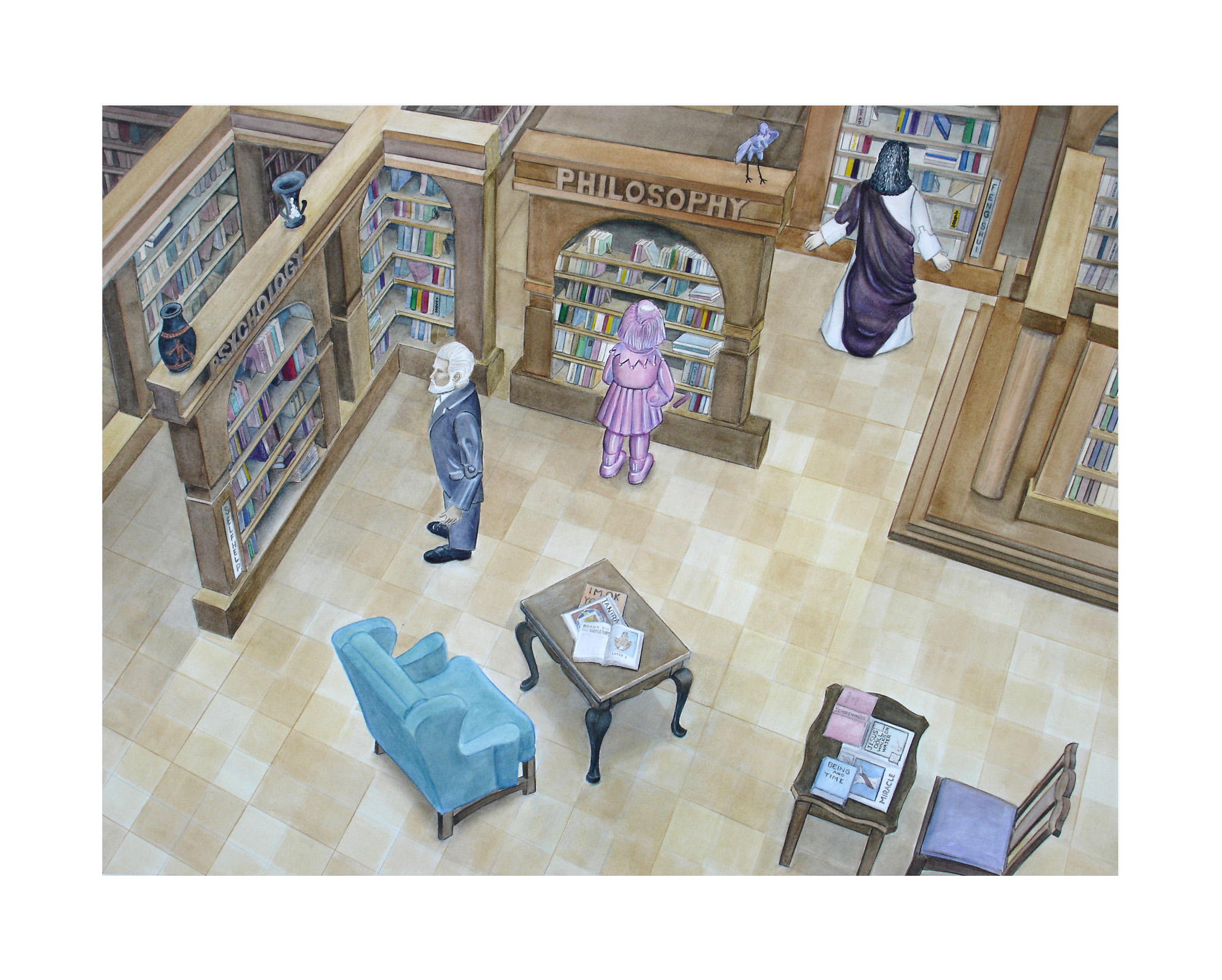
Philosophy for All

I came across a commentary, recently, suggesting it might not be such a good idea to introduce thoughts philosophical to young people. I guess the thinking was that young minds were not developed enough to handle deep thought, which made me wonder what the commentator thought philosophy is. Philosophy, it seems to me, is, to a great extent, about reflection: thoughts about relative moral values, how best to deal with difficult situations, maybe thoughts about what might underlie our daily existence.

While children may be less inclined toward thoughtfulness, they are certainly intellectually savvy, dealing, as they do, with the rough and tumble world of the playground. What they do have is a general openness to alternatives, particularly when it comes to human relations. Provided a forum for reflection, I suspect most will reach an attitude of tolerance for the other.

So, in my opinion, given these terribly divisive times, I think philosophical thinking should be encouraged in the schools. I have this feeling that, given the opportunity, children could reach out to our hardened unswayable opinionated psyches and teach us all philosophical perspectives on tolerance and mutual respect.

greek philosophers

There is no Perpetual Motion

I’ve been reading, lately, about the second law of thermodynamics. I guess physicists have figured out that the transfer of energy will invariably result in a net loss (you know, carbon emissions and such); entropy will invariably increase over time until heat distribution reaches equilibrium and the last star blinks out, which will occur, according to sound estimates, sometime in the distant future. That is, the universe will remain functional and in existence for a very, very long time. Physicists are pretty sure about this and who am I to question learned scientific minds.

No matter how dark things may look at present, even if the world we know and love loses its capacity to sustain life (through every fault of our own), there will, I truly believe, be stars somewhere out there supporting planets where life will be sustainable. Stephen Hawking is pretty sure that, to his reckoning, we probably should be looking for such places in the interests of species survival.

I feel optimistic about such thinking: on a planet in a galaxy far away perhaps politics will be less offensive.

biosphere7

Unity of Opposites

It’s come to my attention recently that the 19th century German philosopher G. W. F. Hegel offered a theory of historical progression that seems somehow appropriate to our contemporary times. The general rule that history will follow, Hegel thought, is that any thesis will face its contradiction, after which a synthesis of the two will occur.

Now, I’m no scholar mind you, but I can’t help thinking about this in relation to our current political upheaval. For some time now it has seemed to me humankind was making significant humanistic strides toward pluralistic understanding and acceptance. Appreciation for cultural variety, tolerance for the other and compassion toward the less fortunate not to mention a sound scientific understanding of the threats to our natural environment seemed to be reaching consensus levels.

But suddenly the very antithesis of these ideals has reared its ugly head. We have found ourselves face to face with our most base instincts; hatred and fear of the Other, isolationist divisiveness, blatant disregard for unpopular scientific research and an anti-intellectual disinclination toward thoughtful dialogue.

So, Hegel would have us believe this dichotomous situation will work itself out, some sort of middle ground will stabilize things, compromises will be arrived at.  I must admit I’m having a hard time visualizing what that peaceful compromise might look like.

The Good

I’ve been wondering, lately, what it might mean to realize the Good. I’m thinking of a Good separate from self-interest, an over-riding abstract Good that might be found within our everyday worldly experiences. A Good beyond the ugliness that comes to us so regularly, that we are all too often made aware of, that the media is so quick to introduce and dwell on.

Anyway, I’ve been thinking about it, looking around and I think I’m getting glimpses of it (the Good that is). I’m sensing people performing truly altruistic acts, no ulterior motives involved. I’m encountering what seems to me to be truly benevolent unsolicited encounters with total strangers. I see a thriving natural world with healthy eco-systems and vital animal populations. There is definitely good to be found if one looks for it.

A Good such as this, I suspect, must be God.  Or, perhaps I’m being overly optimistic.

meditationdevice16

Easier Answers

According to the 19th century psychologist William James, man creates the world he inhabits. The path one takes, says Mr. James, may focus on ugliness or beauty, a man may choose to concentrate and relate to the Good or the Bad. The idea here is that faith is required: an acknowledgment of that which is beyond the empirical, outside the domain of scientific certitude: the realm of God and immortality.

Which seems to imply the need for perspective: that the natural world isn’t all there is, suggesting those in the ‘natural world only’ camp will have a much harder (impossible?) time maintaining an optimistic view of things, of remaining positive, of retaining and maintaining a high moral outlook.

On a personal level, to my mind, there is no doubt considerable energy is required, as our daily travails weigh upon us, to stay upbeat all of the time; even most of the time. Still, if it’s perspective it takes to stay on one’s preferred path I wonder if the only play is the metaphysical one. Mr. James suggests unless one is oblivious, we’ve already made our choice: skepticism in moral matters is an ally of immorality; who is not for is against, he says.

Answers to the big questions must have appeared much clearer back then.

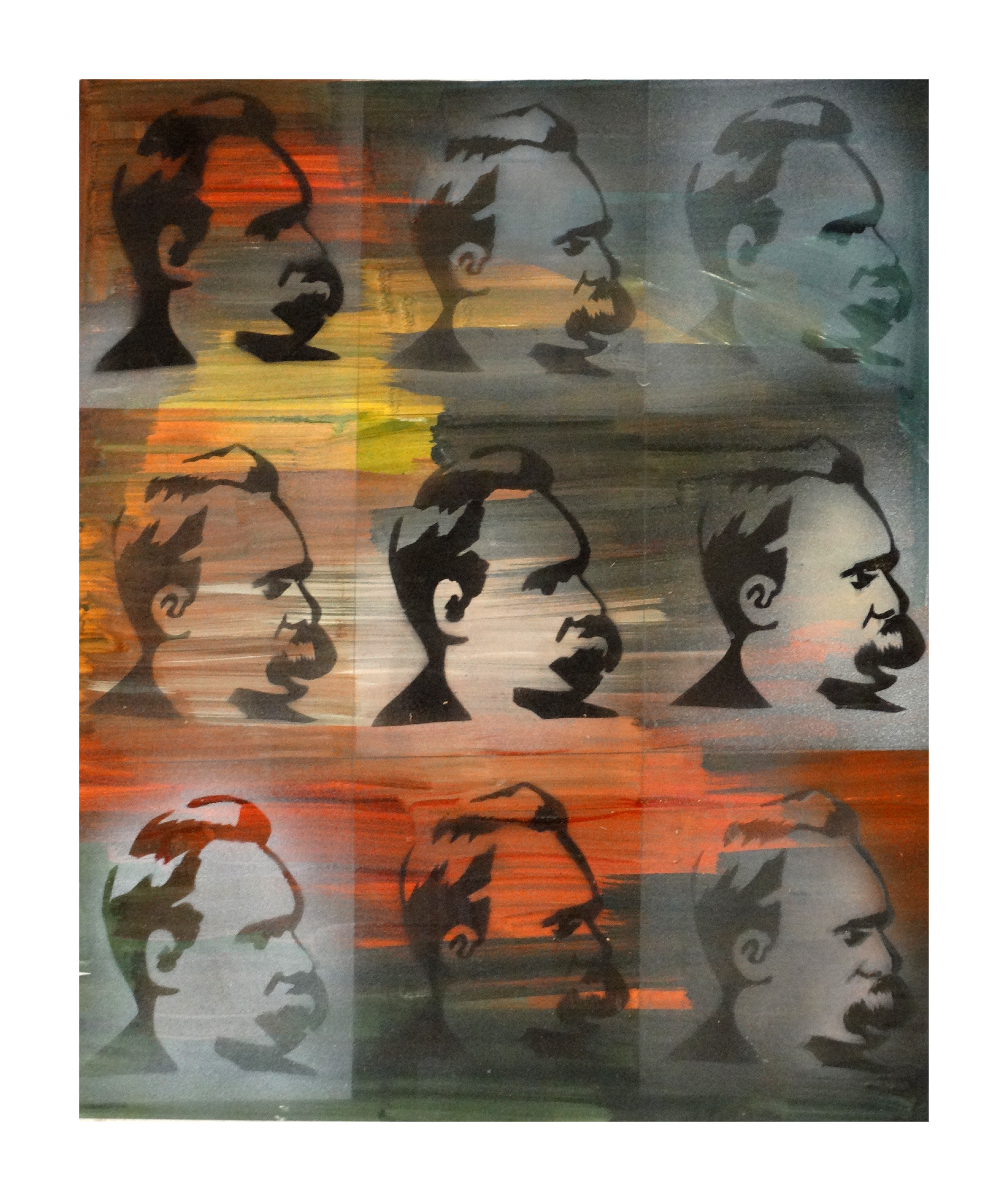
Evolutionary Ethics and the Contemptible

There’s thinking these days that Biological evolution, natural selection, will result in ever increasingly capable survivors, generation after generation, better suited to exploit and thrive within their changing environment than were their ancestors in theirs. From the perspective of increasing prosperity alone, there appears little need, biologically, to embrace any sort of ethical stance. Cooperation between these increasingly fit beings will likely occur only in so far as personal interest is concerned. So, I’m wondering, is our evolutionary destiny to be increasingly inundated with assholes?

Yet, altruism does exist. Clearly humankind does embrace certain ethical standards. Generosity toward others certainly occurs; empathy is a true emotional response for many. There are those among us who make for a kinder, gentler society where cooperation means lifting everyone to a state of reasonable well-being. I have to wonder, in the next millennium, assuming humankind is still around, where the emphasis will lay; I have a feeling Friedrich Nietzsche would have had thoughts on this.

nietzsche3

Moral Entitlement

I’ve been reading, lately, about the idea of moral entitlement: how some people assume privileges others are denied. Or, to put it another way: some individuals and groups feel themselves morally entitled to take advantage of those they consider lesser or inferior.

I have no doubt such situations have existed, probably, for as long as man has walked the earth. A sense of superiority on the part of some accompanied by the complementary assumption of inferiority by others is pretty well embedded in our psyches. This idea has perpetuated social class and sectarian divisions that continues to account for dissonance and conflict.

One can argue the moral illegitimacy of such stratification, I suppose, but what I find more curious and annoying is the ego driven individuals who assume unjustified advantage. I suspect such people and/or groups will realize the idealistic beliefs that have led to their divorce from mankind must be tempered in the interests of everyone’s basic social needs. One can hope so, anyway.

Natural Selection

I’ve been thinking, lately, how natural selection manifests itself in myriad ways among plants and animals: adaptation to changing environmental conditions ensures survival of species. And, individuals with superior survival skills pass on their genes to ensure superior off-spring better capable of surviving and thriving in harsh natural environments.

It seems in some ways unfortunate similar evolutionary progress doesn’t happen among humans where mating practices appear to be pretty thoughtless with regard to what sort of off-spring might be produced, you know, in terms of the capabilities needed to deal with life. The less-able results of indiscriminate coupling are, of course, cared for by the more able and humane where as in the animal kingdom such unfortunate progeny would certainly parish.

Still, it seems to me compassion should rule the day. I do think virtuous behavior toward the less fortunate should be expected of thinking beings, but, being thinking beings, mankind might do well to think before passing on seed.

my-demons