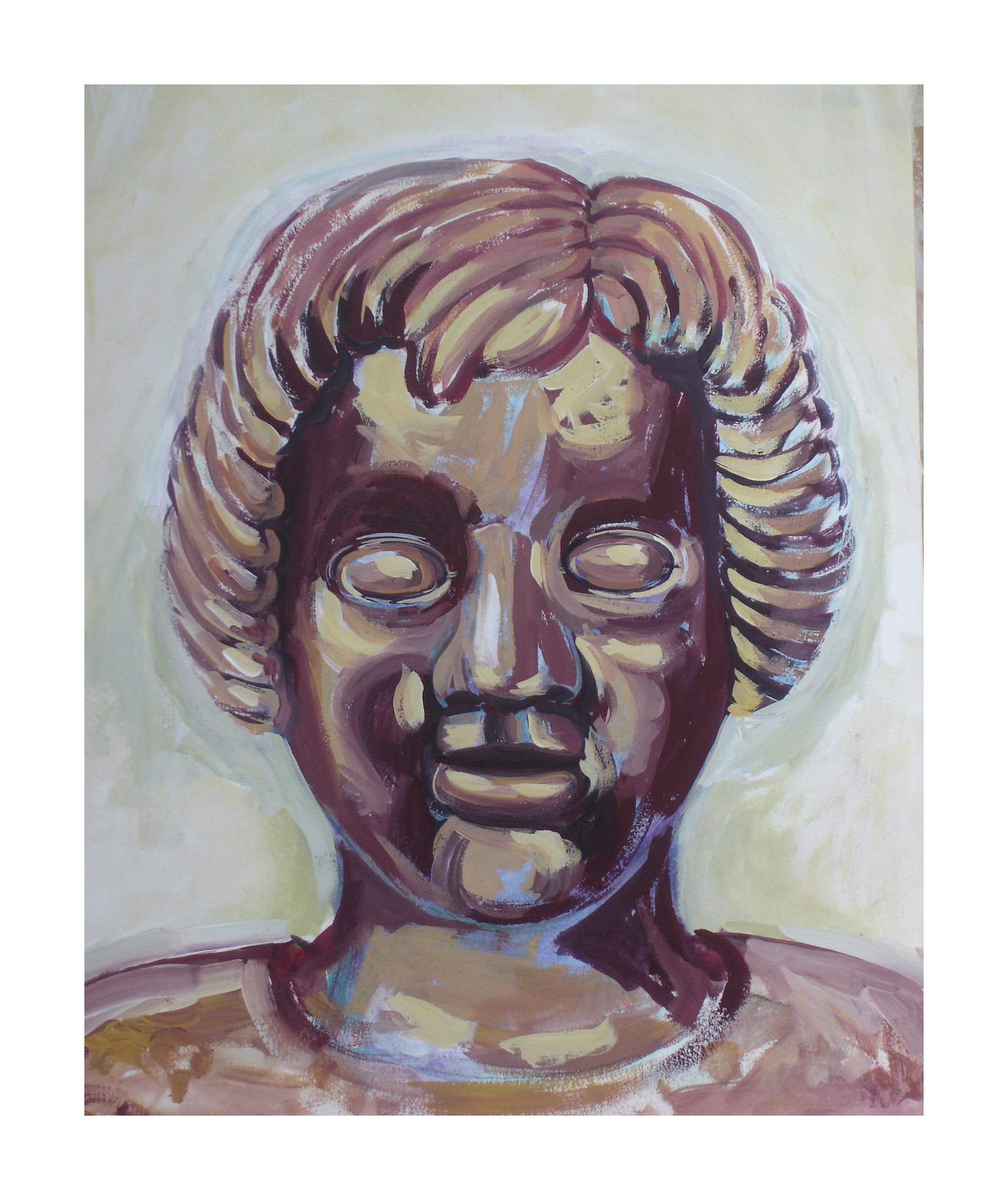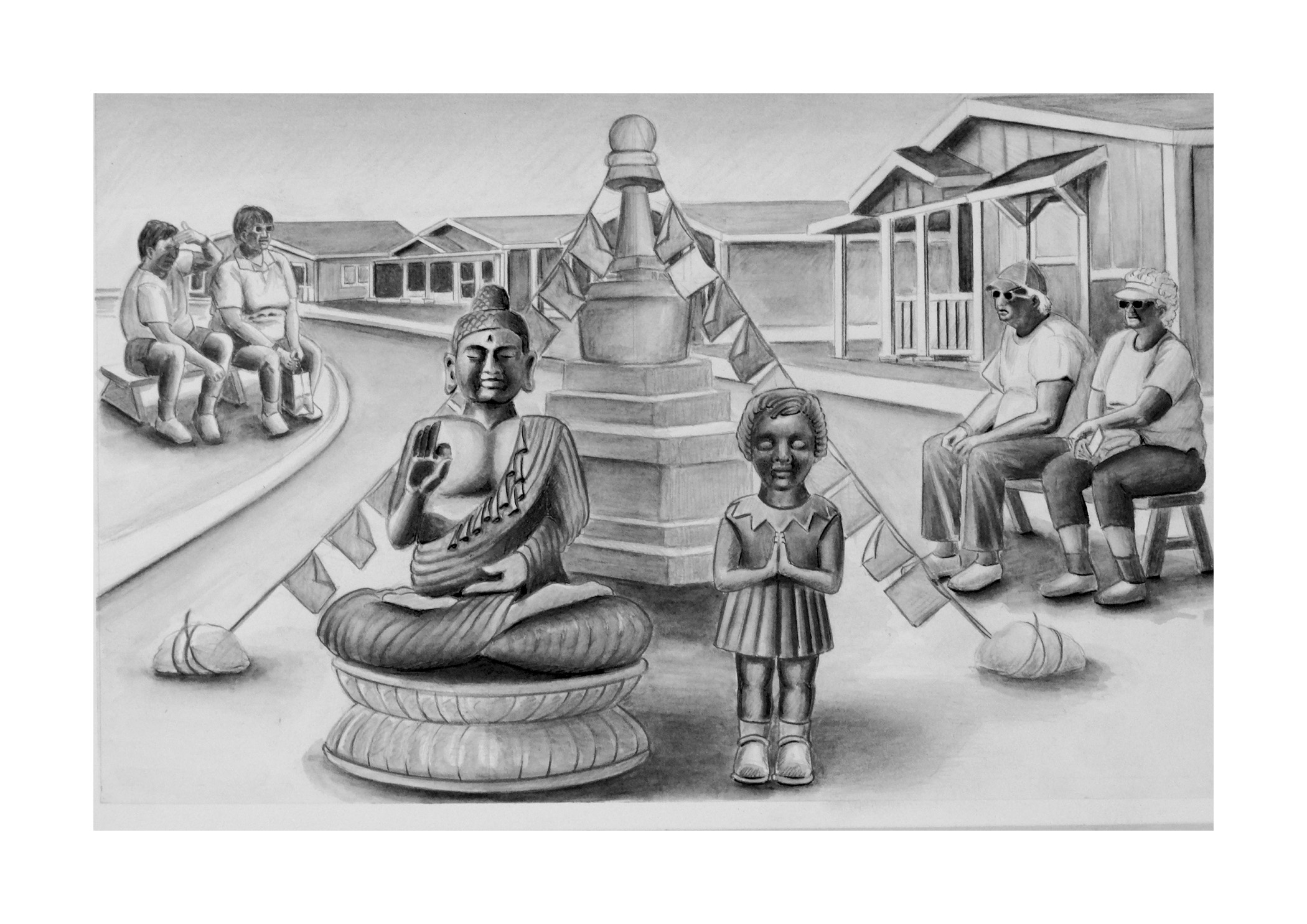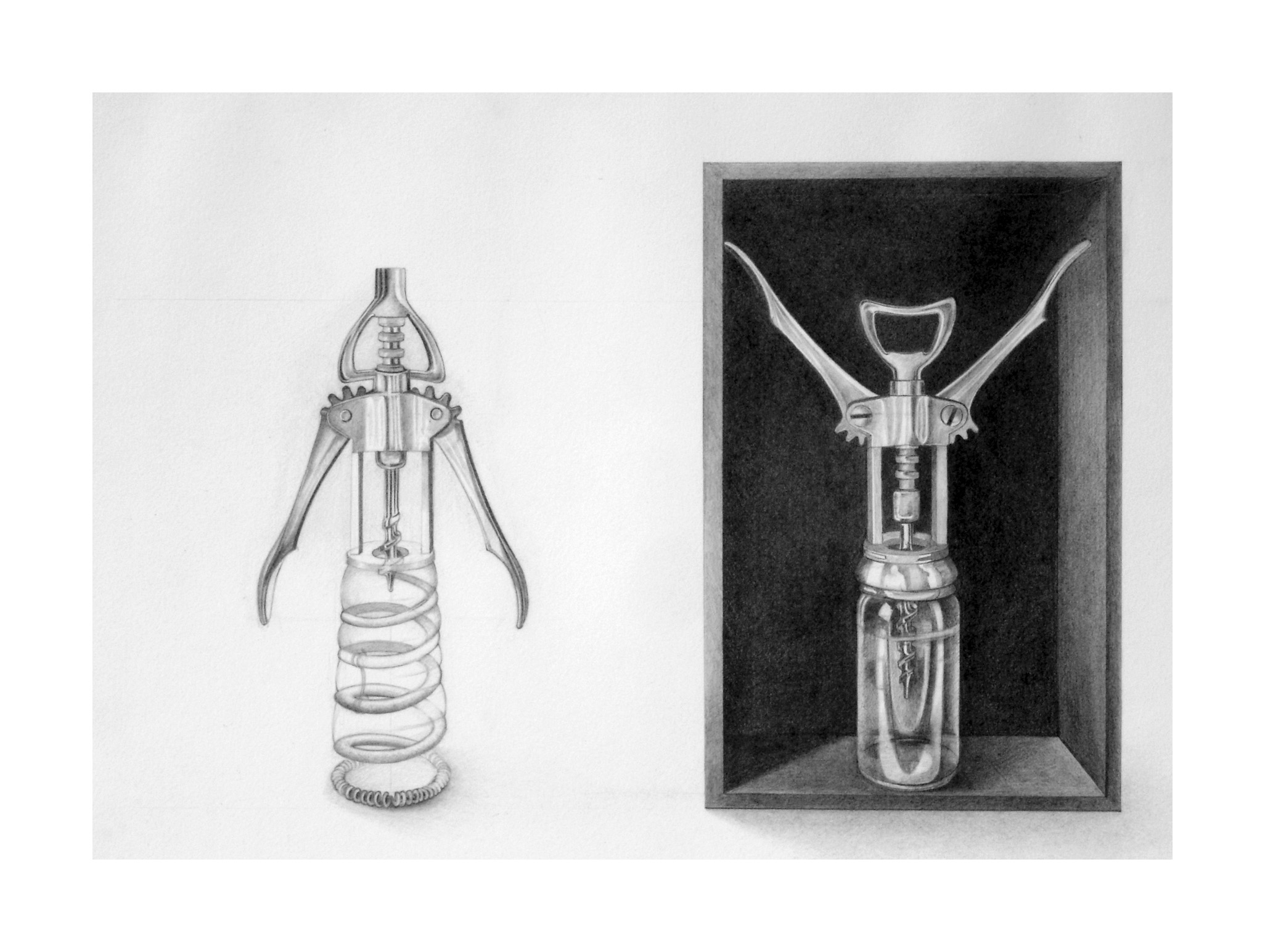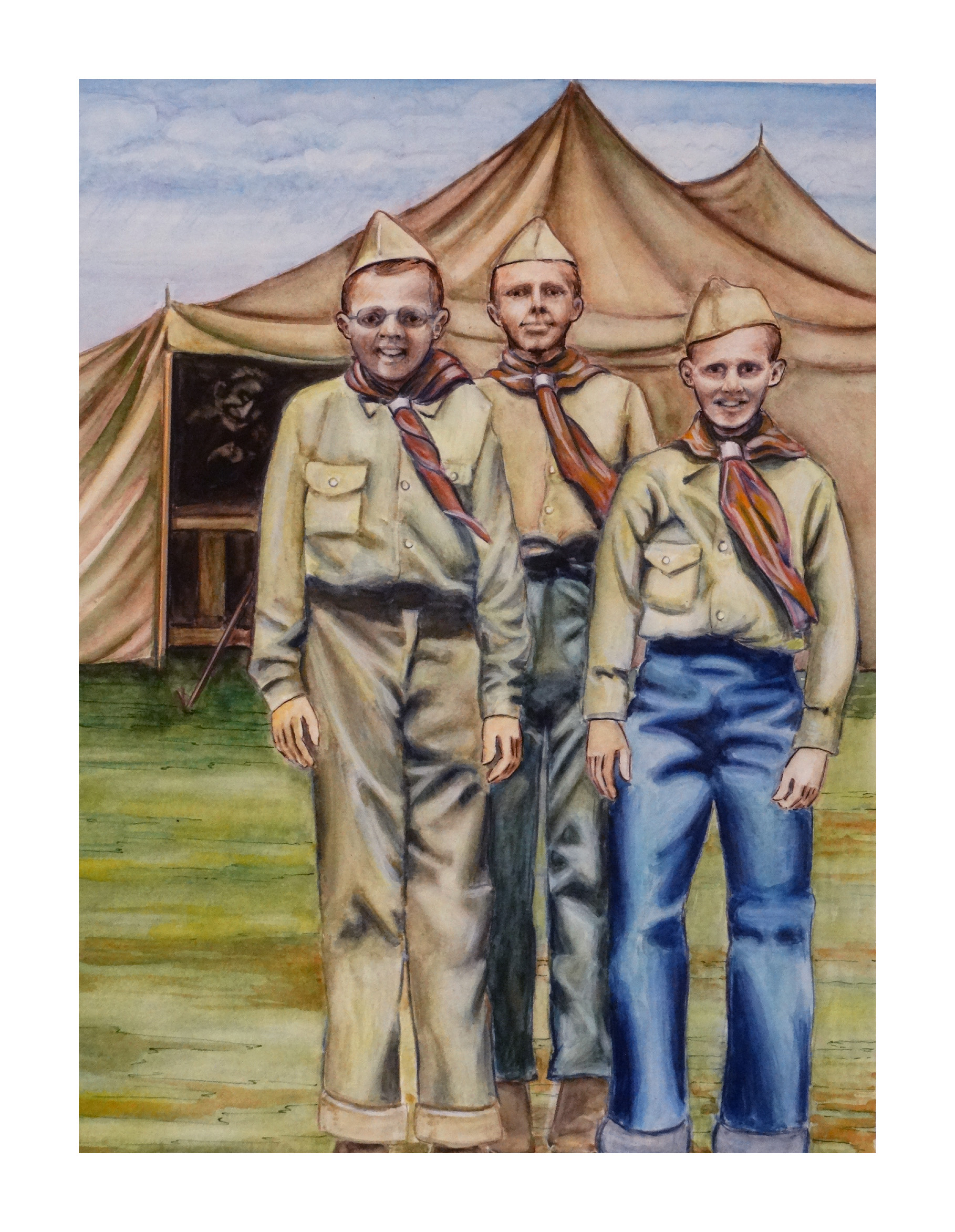
Contemplation

I read the other day about a study done recently that found that a lot of people have a really hard time being alone with their thoughts.

Apparently, researchers had asked volunteers to sit alone in a room for fifteen minutes. The room contained nothing but a table and chair and a machine that would produce mild electrical shocks if one chose to use it. The study found that a fairly large number of the research subjects chose to administer shocks to themselves rather than be alone with their thoughts for even fifteen minutes.

Letting one’s mind wander to past occurrences or future possibilities seems to me pretty natural so I guess I don’t understand what the problem was. Focusing on the eternity of now, I must admit isn’t always easy but my mind is pretty good at wandering.  In fact, I was just thinking about the movie, Altered States, in which the protagonist, William Hurt, submerses himself in a sensory deprivation chamber, which is essentially a tank of warm water in a totally darkened cubicle, for hours on end, day after day. His idea was that by doing this he could get in touch with his primal inner self. I guess he succeeded because he ends up developing simian characteristics.

So, I’m wondering if the reason most people are unable or unwilling to be alone with their thoughts is that they fear glimpsing their innate animal natures. If this is the case it sure explains our inclination to constantly be distracting ourselves.
meditation device2

Me, Myself and I

I’ve been thinking about my Self lately; mostly about how to reconcile the beauty and freedom of selflessness with the necessity of maintaining a healthy self-image to deal with the pressures of everyday reality. Looking to both positions seems kind of contradictory.  On the one hand, releasing attachment to the self opens awareness to full realization of the here and know in all its complexity. And, although not all one experiences is of a positive nature, un-attachment makes it possible to maintain perspective, to reach a reasonable understanding, without creating a “story line” in which “I” am the protagonist.

On the other hand, I am led to believe that without a healthy, confident self I probably won’t fare too well out in the world, socially speaking. The meek may inherit the earth, so it’s said, but in the meantime one should expect some serious bullying.  I suppose, maybe, like much else, the problem may just be a matter of degree. Perhaps the self is nothing more than the subject of the perceptions, emotions and thoughts we experience rather than the independently existent entity that leads to narcissism and tunnel vision.

As nice as it would be, intellectually (and emotionally, too), to be absolutely sure one direction is better than the other, I guess I must be content with attempting to balance the ideas. It just goes to show, I suppose, living an examined life takes some work.

me, myself and I


Emotional Intelligence

I just read this article on line which listed nine things that indicate emotional intelligence. It makes me think I may not be too emotionally bright.

One of the things an emotionally intelligent person should have according to the list is a large emotional vocabulary. I find it annoying that anyone would equate emotion with intelligence; the arrogance of the author in such an assumption I find quite irritating. When I think of it, I become almost livid with outrage at such a presumption. What’s this idiocy with the ubiquity of making lists, anyway?

But, clearly the writer of the article only meant to be helpful. When I think about it I feel a bit ashamed and regretful at my unexpressed outburst. I am humbled and moved toward a sense of penitence even though I didn’t actually express my anger. Guilt over my potential outburst makes me quite anxious that I’ll be thought of as hot-headed. I suspect there are those in the playroom that see me as a perturbed individual as it is. I find the whole issue discouraging. It makes me melancholy to the point of tears.

Luckily, I have friends who find me delightful and raise my self-esteem. They make my life, on the whole, quite a happy one, blissful really.

But, as I say, I’m really not an emotional doll, to any significant extent, so I’m inclined to ignore the whole idea of emotional intelligence. I am, though, a bit suspicious of list makers.

why3

Platonic Love

I’ve been thinking about Plato’s Symposium lately. The short book details a social get-together of a group of Greek intellectuals each speaking about the nature of love. Apparently these old guys felt the need to discuss philosophy while consuming large amounts of wine. Anyway, the speech I like best is Aristophanes’ explanation of the origins of love.

He offers that humankind began as spherical beings with four arms, four legs, two faces and opposing genitalia. There were men and women but mostly hermaphrodites. These beings were so complete in themselves, so capable and without need they pretty much ignored the gods, which was a mistake because Zeus took particular umbrage at their arrogant self-satisfaction and split them all in half. Each man became two men, each woman two women and each androgynous one became one man and one woman.

These new beings found themselves lost without their companion half, found themselves subject to all sorts of human foibles, insecurities and fears, which, I suppose, made them more attentive to the gods, at least for a time. The upshot of this bizarre episode was an innate yearning on the part of each new individual to reunite with his or her missing half, which, according to Aristophanes, marked the beginnings of romantic love.

When I think about it, as wonderfully imaginative as his story is, it kind of makes sense that some men and some women would seek soulmates of common gender even though the majority, having been androgynous to begin with seeks union with the opposite sex.

Anyway, as you might expect, Socrates gets the last word and explains in his speech that love of Man, true love, is much deeper than the physical attractions of youth, that, through love, man has access to Absolute Beauty and Goodness which lead him to ultimate truth and bring him as near immortality as Man may ever come.

I bet Socrates and the Buddha would have gotten along well had they known each other.

With Greek Philosophers

With Greek Philosophers

Seeking Common Ground

Public discourse sure seems divisive these days. There seems to be a lot of people holding pretty strong oppositional opinions on a host of contemporary issues. The disagreements appear to be pretty deep; not just apples and oranges but more of a God/Satan divergence; a profound philosophical divide beyond any sort of reconciliation; neighbor versus neighbor has led to political gridlock. I’m inclined to level some of the blame for the situation on football; it’s all come down to a position of win or lose.

Which has led some wise pundits to suggest we need a change of attitude; a spirit of compromise along with a sense of civil exchange of ideas; allow the other side their dignity while articulating your own point of view clearly and calmly and try to avoid taking the issues personally.

I grant you this isn’t an easy task when you know for certain the other side is clearly wrong. I wish I could tell you I’m immune to this discordant dilemma but reading the news from the perspective of my favored aps keeps me regularly angry at the other side, and, I suspect, the other side is similarly seething while absorbing the bias of their favored sources.

The conundrum brings me back to a need to spend more time on my meditative practices: focus on by-passing the Self, allowing disquieting thoughts to evaporate, strive for ultimate nature of being, seek absolute truth. It’s difficult but I can think of no better solution and maybe I’ll eventually reach a point of toleration for those on the other side.  Besides, political issues shouldn’t really be taken all that seriously, should they?  And religion…..what about religion?

common ground3


Why Question?

In my ongoing interest in understanding more fully what is, I’ve been thinking about Socrates’ admonition: ‘An unexamined life is not worth living.’ What I think he must mean is one should continue to question. Not in the sense of total skepticism but with the understanding things change: situations, contexts, nuances offer new perspectives on commonly and generally held beliefs. And, new perspectives can lead to renewed energy and enthusiasm, adding dimensions to what I may have previously seen as pretty one-dimensional.

But, I suppose, at the same time questioning too vigorously may very well lead to profound uncertainties which will lead some who would prefer to just latch onto the Truth and leave it at that to lock up the box within which their knowledge is kept.

I guess those with such a mindset may be driven by an innate fear of the unknown, those for whom the terror of living is so overwhelming that they seek certainty at all costs, grasping with white-knuckled ferocity at dogmatic beliefs and limiting their community to others of similar ilk while denouncing those who don’t share their view, becoming pseudo-tribal as it were. And, by assuming such a stance, securely locking up the box of their understanding, distorted as it must be, resigning their conception of existence to remain in stasis until the farm is purchased.

Maybe it all comes down to intellectual capacity, and, as arrogant as that may sound, those of expansive vision, while less sure of ultimate outcomes, must surely lead a fuller, deeper consciousness, energized by the plethora of possibilities such an openness offers.

So, I guess I have to decide whether to live contentedly and securely if a bit unimaginatively inside the box or to break down the walls and revel in the uncertainty of infinite possibility. Such a decision, for me, is pretty easy to make.

Either/Or

Either/Or

The Magic of Belief

In my ongoing interest in getting a handle on religious faith and practices I’ve been researching the concept of transubstantiation. It appears church fathers have debated the idea of the magical change from wine and bread to blood and flesh for centuries in an attempt to convey legitimacy to the literal acceptance of Biblical metonymy. There have been council’s discussions and disagreements as to what Jesus actually meant when he told the disciples, “this is my blood”, etc. Since he was standing there holding a glass of wine and wasn’t apparently bleeding makes me wonder what all the uproar has been about after all this time.

I guess the acceptance of magic is key in such a debate. You know, all things are possible with God. The issue as well as many other doctrinal beliefs appears to depend on just such a faithful acceptance, which pretty much leaves logical understanding out in the cold.

Not that all that is, or could be, should necessarily fall within the bounds of my understanding. I do appreciate a regular dose of curiosity and wonder at the workings of the natural world and the people in it. There will, I’m sure, always be experiences beyond my conceptual abilities. But I do have to wonder if too much belief in magic might not be a bad thing for humankind after all. You know, if it relieves people from the responsibility of trying to understand and do something about the multitude of problems in the world, which, I fear, will be the case for those magical thinkers looking forward to a next life.

But, I suppose most people temper their acceptance of magical occurrences beyond the fantasies they tell themselves, the soundness of lottery participation, that the stranger on the phone isn’t going to ask for money. Nevertheless, it does appear self-deception may be the one commonality we all share.

administering the eucharist


Lost in the Wilderness (The Urban Jungle)

Having only recently returned from the natural wilderness of pristine lakes and virgin forest, I now find myself in a wilderness of an entirely different sort. I’m surrounded by vast, cold and impersonal canyon walls set upon acres of asphalt and concrete pavement and I find myself moving through throngs of humanity for whom I appear to be a non-entity, unacknowledged and ignored.

And, I’m again lost. Once again the map I’m looking at doesn’t seem to correspond to my location. The roads twist and turn, pass over and under, direction is lost and I think I may be caught in a never ending Mobius strip, or possibly a space/time warp of some sort.

There are similarities between the two wildernesses: both require survival skills, courage, strength of character and know-how (map reading abilities would be helpful as well). The differences, though, are stark. While here, in the urban jungle a cup of coffee is always readily available, the frenzied, sometimes hostile environment is fairly visually and aurally abrasive, not to mention the olfactory assaults one often encounters. Aesthetically this environment leaves me clearly wanting.

Given the choice I’ll take being lost in the natural wilderness anytime.

Fear of the Other

Fear of the Other

Gender Fluidity

I saw in the news recently one of the current teenage icons is describing herself as gender fluid. I guess what this means is she leans toward a more masculine persona some days and a more feminine one on other days. I suppose the upside of such a concept is that it provides many more options as to romantic involvements not to mention grooming and wardrobe possibilities.

From a biological standpoint I think it’s been pretty clear for a long time that no one is 100% male or female; that everyone shares genetic aspects of both and display both feminine and masculine behaviors, but ‘gender fluidity’ seems to take the idea a bit further.

It’s not like the concept is brand new. Androgyny can be found in quite a number of mythological and historical accounts. Among the Buryat people of Siberia androgynous individuals have gravitated toward and been quite successful at shamanistic enterprises. The Egyptian, Hatshepsut, wore a false beard when at court. The ancient Greeks were known to have favored beautiful young boys. Consider the androgynous likes of the goddess Athena or Joan of Arc. The artist Marcel Duchampe had a female alter-ego Rrose Selavy. The list is pretty much never ending. Androgyny appears to be a statement of personal freedom for quite a number of people.

Even so, I’m pretty sure certain institutions must view fluidity of gender with considerable disdain. Conservative churches and other groups like to keep things black and white, mostly, so the grays of malishness or femalishness won’t be acceptable. The Boy Scouts, who haven’t exactly exhibited preparedness regarding the issue, have recently acquiesced to social pressures and assumed a more gender flexible stance, much to the chagrin of many of their church and civic sponsors.

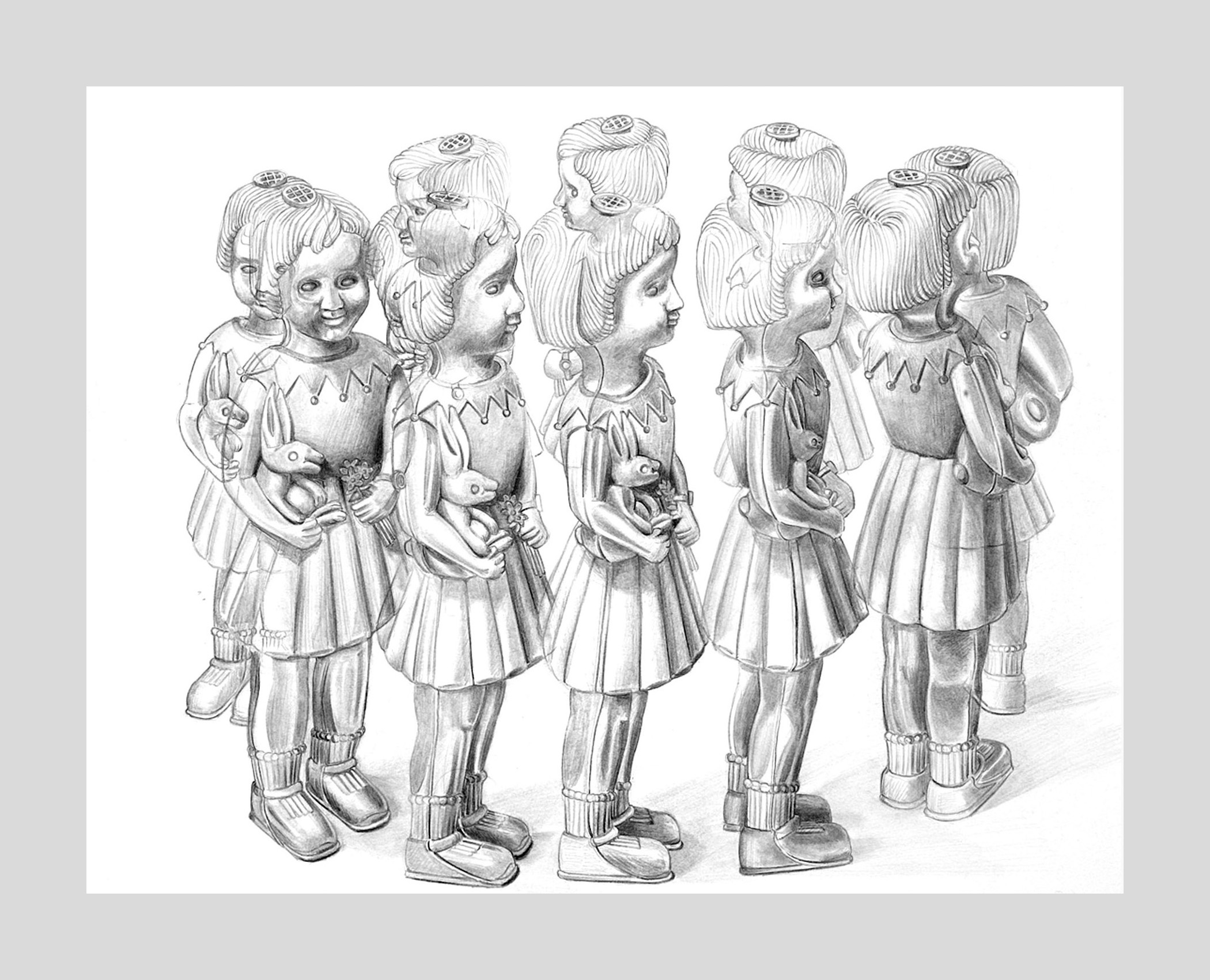
The whole issue, I must confess, leaves me pretty mystified. Dolls, such as me, may have been given certain visual signifiers which place us in one sexual category or the other but I can assure you sexual attraction or identity is simply not part of our makeup. To me the answer to this controversy is pretty obvious; when it comes to judging or attributing value to people, think asexually.

scout camp3

Lost in the Wilderness

I was reading about Jacques Lacan the other day. He was a Freudian psychoanalyst that structured the human psyche into three registers: the Imaginary, which has to do with our image of ourselves, ego development, I guess; the Symbolic which has to do with our existence as related to social structures, laws, institutions, mores, rituals and such; and the Real which, he says, is realized in infancy but lost with the development of language and almost impossible to realize thereafter. What I think he means is that the limitations of language to fully grasp the complexities of our experiences interferes with any possibility of deeper understanding. A deeper Reality, Kant’s thing-in-itself, I guess, is lost.

And speaking of lost, I am; in the wilderness again. I find myself somewhere out here in a place that doesn’t seem to correspond to my map, which, I suppose, places me in a situation without a referent; sort of like being without language.

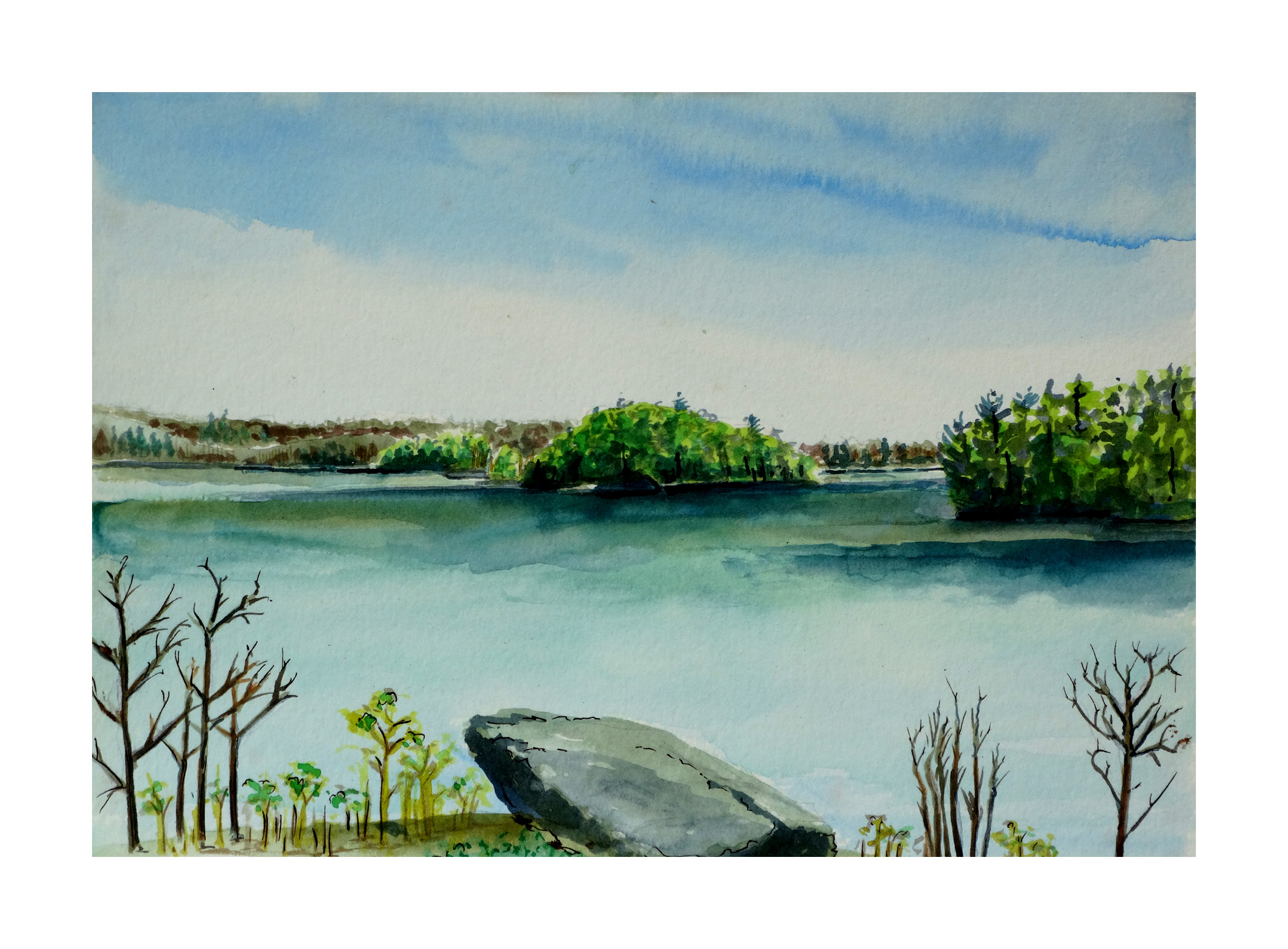
I suppose I should be afraid, being as I am truly lost, but there’s something magical about looking about and not knowing what’s beyond the next island. Everything, rock, water, forest have come into acute focus. Sight, sound, odors are enhanced. And I think I can probably retrace my steps (or paddle strokes as it were) to find my way back. But if I do I expect I may lose this wonderful enhanced awareness I now have.

So, I’m staying put for the time being; I’m in a better place. At least as long as the weather holds.

landscape10