Gender Identity

I’ve recently become aware of the significance these days of the idea that one’s gender may not be written in stone, exactly. A considerable percentage of millennials, for instance, view gender in terms of a spectrum: that is the male/female composition of most all individuals is probably less than 100% either way; which should, I guess, open the door to an enlightened perspective of gender issues that have been thought about, if at all, in pretty simplistic terms for a very long time.

Unfortunately, deep within the darker reaches of our cultural milieu there exists a mindset unwilling or unable to accept the beauty of free gender expression. Maybe antiquated religious notions or, perhaps, personal confusion over where exactly they, themselves, fall within the gender spectrum has these tortured souls in vehement opposition to any sort of non-traditional gender identity.

All we can do, I suppose, is hope for an awakening. In the mean time we really do need to champion diversity. What could be better, after all, than a population that is able to sustain pride in who they are.

Consumer Appetites

There was a time, not so very long ago, when the powers that be exercised what we all thought to be altruistic tendencies in the selection and dissemination of public information. We folks got to hear and read what was thought to be most important to make us informed and responsible citizens. And, while censorial editing isn’t exactly consistent with first amendment freedoms, most allowed that the narrative presented was basically accurate and, at any rate, in the public’s best interests.

And then but so things began to change: market share became an issue, advertising dollars; profit motive began to compete with program content. Sophisticated analysis of the target consumer determined a bit more ‘colorful’ (as in lurid and debased) programming was needed to draw and keep more viewer/readers. In addition, it was learned that stories eliciting anger and outrage tended to be a lot more compelling than ‘feel-good’ sorts of things; conspiracy theories were also found to be useful in maintaining viewer loyalty.

Well, the next thing you know, we have competing narratives out there designed to appeal to particular constituencies, reinforced daily, convincing folks of the truth of their chosen perspective and the blatant inaccuracy of any other.

As philosophically divided as we are, I guess it would be in everyone’s interests to look inward to our common humanity and seek out, once in a while, the values we share.

A Machiavellian Epoch

The political climate these days has got me reading about the 16th century Italian Nicolo Machiavelli. Living, as he did, in tumultuous times and never ending political intrigues which saw him rise to prominence and then fall out of favor with the ruling elites and, being the libertine he was, it’s pretty clear why he maintained a pessimistic assessment of his fellow men.

Machiavelli has earned his reputation as the paradigm of hard-fisted (under-handed?) political maneuvering due, to a great extent, to his book The Prince. In the book Nicolo determines that the Prince, whether secular or religious must learn to do evil and develop the art of deceit. Testosteronal virtu, necessary to tame O Fortuna is an absolute must for anyone wishing to sustain power, he writes. A Prince must exhibit cruelty, kill a few of his people, maybe, in order to instill fear among the populace.

Interestingly, around the same time the Prince was written, Martin Luther, in a pretty disagreeable frame of mind due to hemorrhoidal issues, brought about the beginnings of centuries of religious conflict, breaking as he did from the Catholic Church (not that that body was in anyway an innocent victim).  So, it seems to me, 16th Century Italian power struggles resulting in a blatant disregard for the well-being of the people, although perhaps being a bit more violent than today, still seems pretty familiar.

I suppose an evolving humanity plodding along by fits and starts into the future is about all we can really expect. Still, hope is in my nature; I always look forward to tomorrow.


Alternative Realities

I’ve been hearing, lately, about the proliferation of witches in late 17th century New England. Apparently, there were quite a number of people identified as such. A penetrating gaze into the eyes of a young girl suffering adolescent angst could result in an accusation of witchery. Men, women and children were found to be guilty and imprisoned. Two dogs were determined to be witches and executed. Widespread frenzy turned son against parent, husband against wife, child against family pet. Witches were seen flying about on broomsticks, gathering in covens, casting evil spells. The guilty were brought before Judge William Stoughton, who, supported by the likes of Cotton Mather, tried and executed the guilty.

Anyway, this got me thinking about current alternative realities which seem to be proliferating these days. It seems all it takes is for a localized majority or a community of like-minds, egged on by media venues that know a good thing when they see it, to distill the complexities of modern life into a palatable elixir. Upon consumption everything becomes crystal clear. Black and white eliminates those difficult shades of gray, good and evil become clearly defined and it becomes very evident there is no room for compromise.

Well, apparently what happened in Salem was that some astute individual saw the witch hunts as disrupting business as usual; it was bad for the economy and in very short order the issue was dropped. After all is said and done pragmatism rules, I guess.

A Private Life

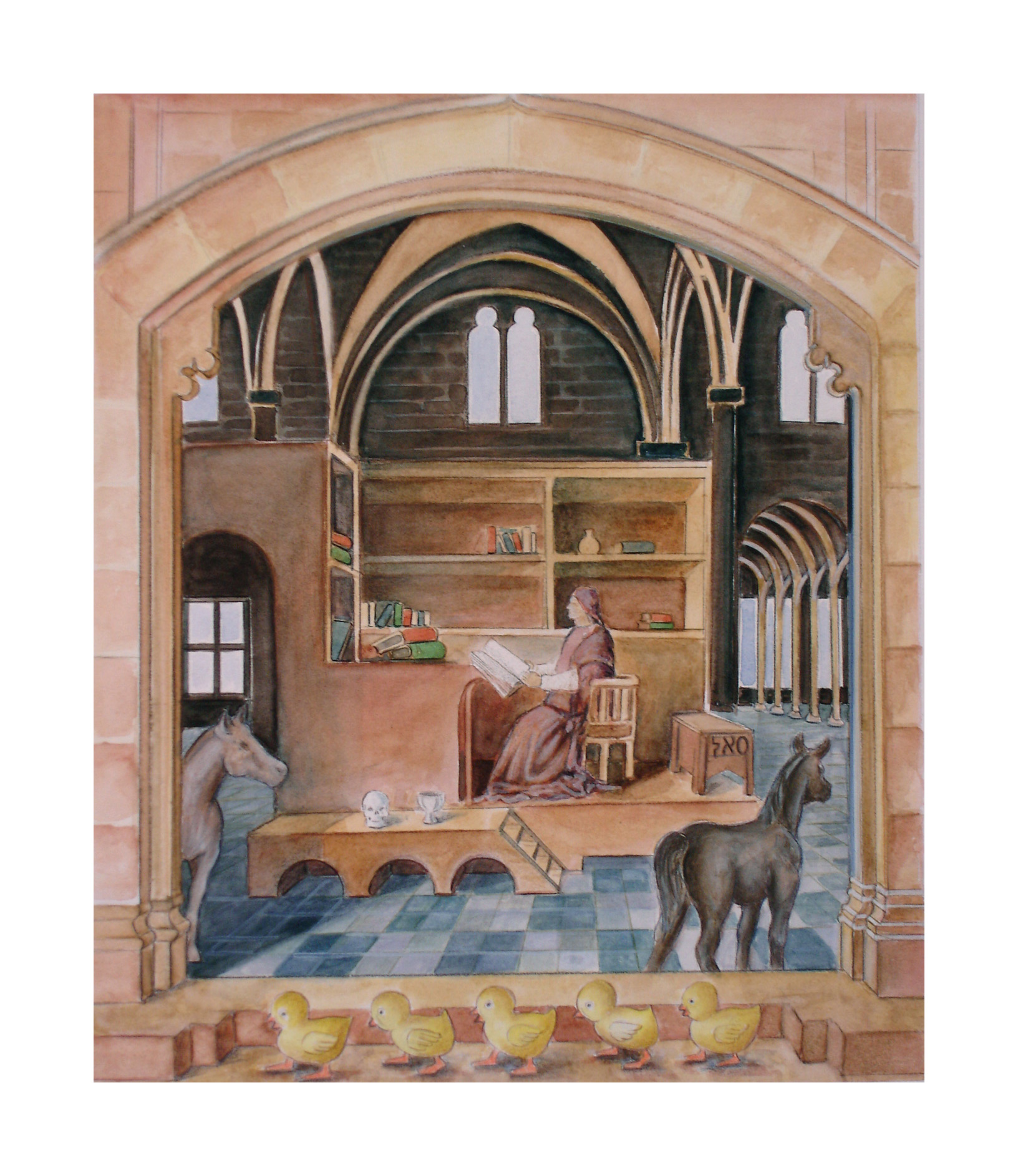
I’ve been thinking, lately, about how much time I spend thinking. I find contemplation to be a very important part of my daily regimen, to the extent that social interaction is non-existent some days; a lot of days, really.

Of course much of my thinking is about people, wondering about how some folks arrive at the opinions they hold, how groups of like-minds take on a public identity which lifts individuals out of their private worlds and offers a public character which seems to be what a lot of people crave. On a personal level, social networking is pretty easy, social media being what it is, and, I guess, having a large group of ‘friends’ tends to fend off perceived loneliness even if it is delusional (any sort of personal closeness, that is).

If social striving and seeking public identity gets out of hand, if popularity is too high a priority, danger lurks. When you think of individuals in the spot-light these days it’s unlikely anyone’s public persona provides much more than a caricature; which certainly can’t be what anyone wants. Better to spend more time thinking.

brotherabraham

The Agri-culture

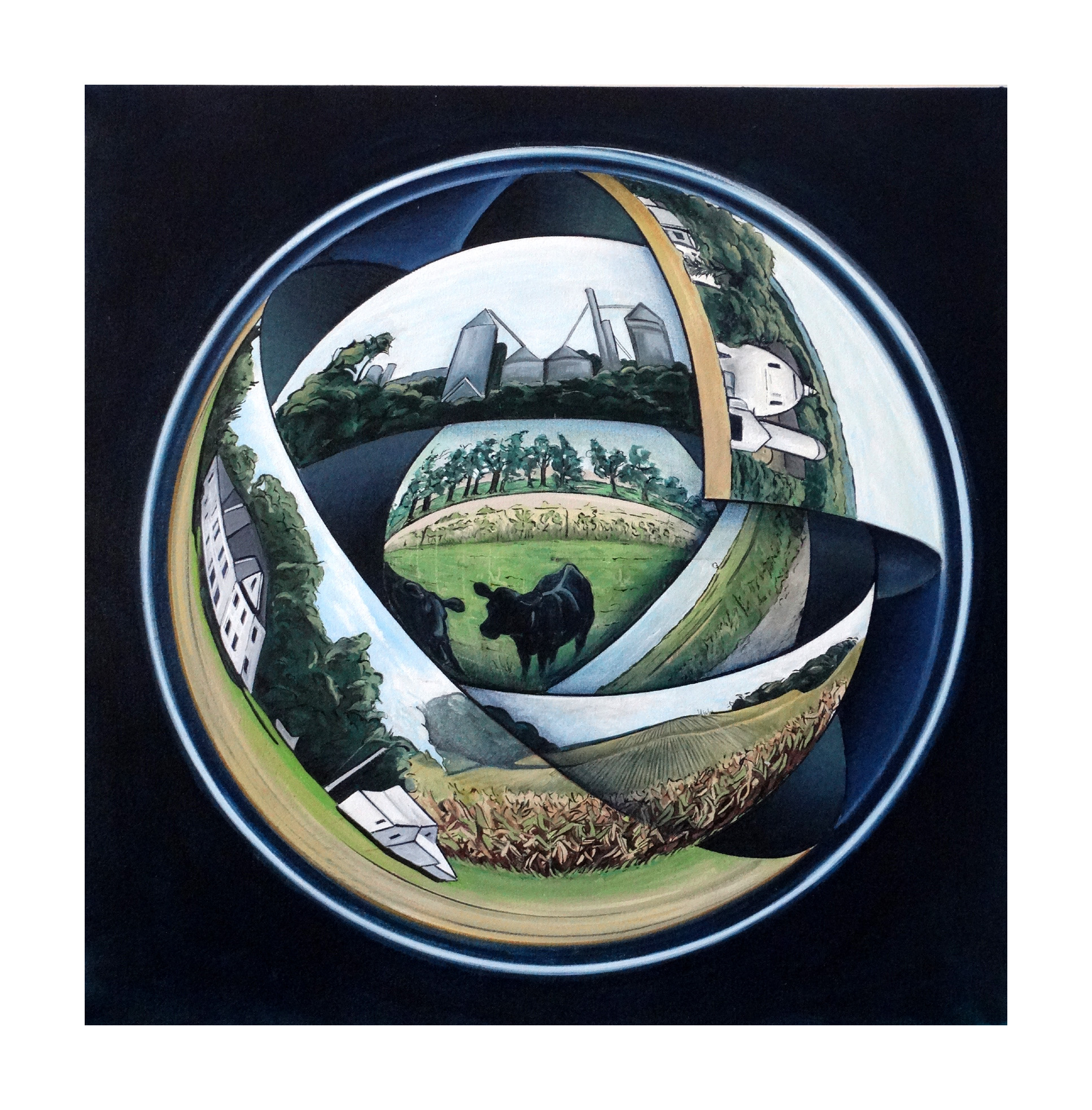
As I understand it civilization advanced, as the human mind developed, from nomadic hunter gatherers to an understanding of domestication of plants and animal life; which led to a fairly sedentary existence and population growth. Clan organization gave way to diverse populations that learned to work together for mutual benefit; up to a point. Class structure developed and with it the inherent violence of workers and overseers, haves and have-nots.

Which I guess, is kind of where we’re at right now, although what ‘having and needing’ means has changed no doubt. Beyond our basic needs of food, clothing and shelter we have found significantly more is required for our well-being; our mobility and entertainment needs require considerable resources. I wonder, sometimes, if happiness might be better served up living closer to basis subsistence, growing and raising what is needed; supporting and receiving support from my neighbors.
It seems pretty appealing, this agricultural life-style, in a Thomas Hardy pastoral sort of way. But, of course it’s just a romantic delusion isn’t it.

I think we might do well to continue subsidizing the farmers.

meditationdevice19

A True Reality

I’ve been wondering about the idea of objective universal truth, whether there can be such a thing. I guess it stands to reason that within mathematics and logic it certainly exists. And when it comes to science, inductive reasoning establishes certain truths that pretty much must be considered objective.

But, universal ethical truths are a bit difficult to get a handle on. I suppose if we accept the innate value of nature and all people, fair treatment for everyone and everything should be accepted as a universal moral truth, although, cultural differences might make ‘fairness’ a somewhat relative idea.

And when it comes to aesthetic judgments universals are even more elusive.

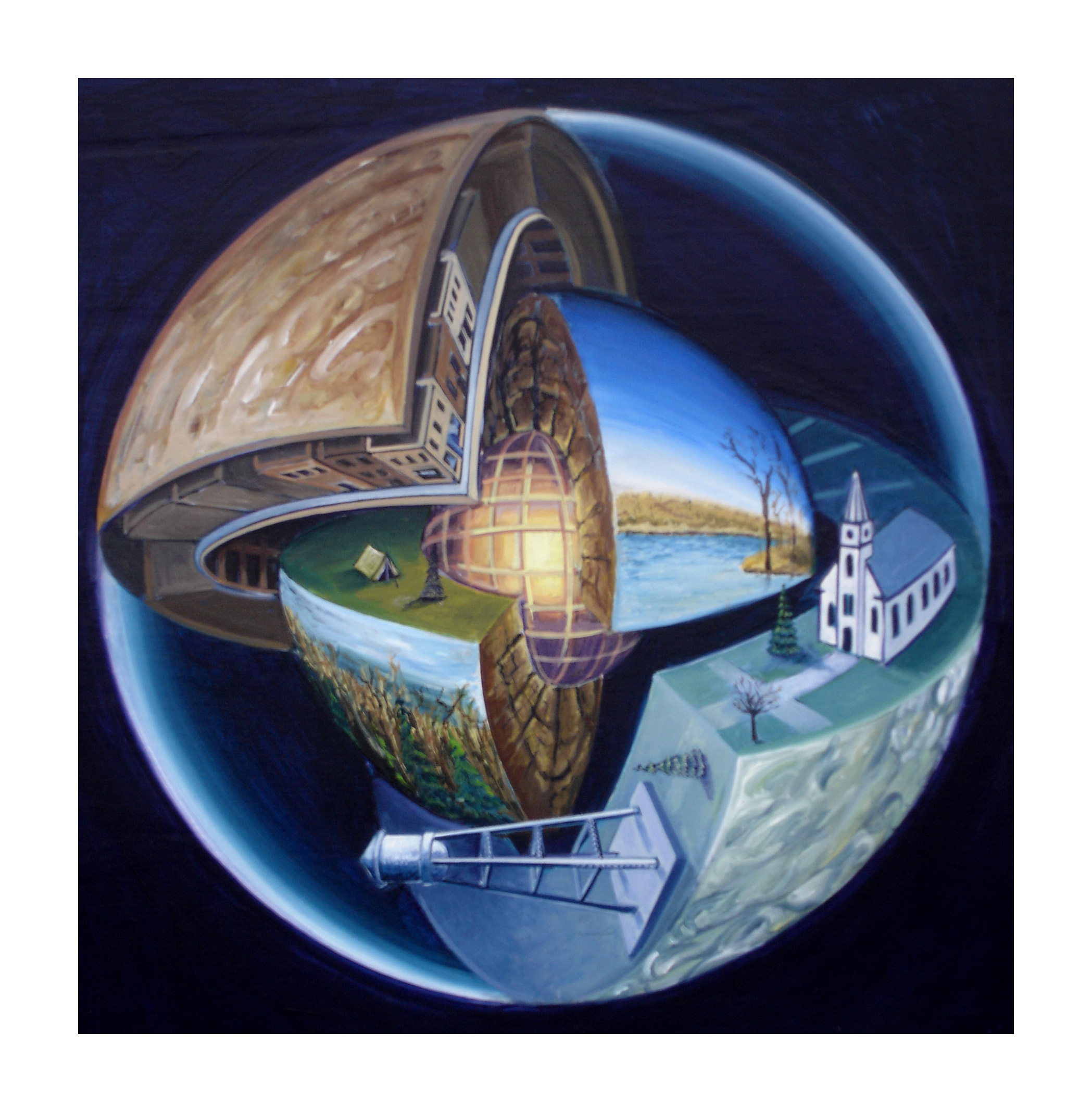
I guess it’s just an inherent characteristic of human nature to pursue undeniable truths; some innate connection between mind and world; a beyond doubt, true reality. Such an inclination must be where religion comes from.

worldview

Personal Identity

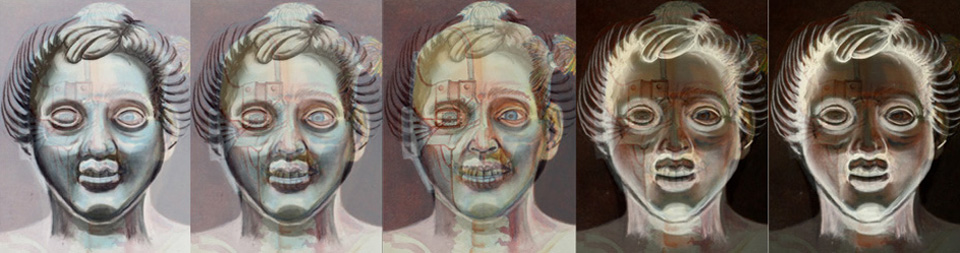
I’ve been thinking, lately, about what characterizes one’s existence, about what constitutes personal identity. I guess it’s pretty clear that who I am now is not, in a variety of ways, who I must have been newly born in terms of cellular make-up or cognitive capabilities, which makes me wonder when, exactly, did I happen. And, even within memory my experiences have changed me in many ways physically and psychologically. If I’m not now who I was, who, I wonder, will I become? Think about those folks aboard the Starship Enterprise who enter the transporter room as Captain Picard or whoever and have their molecular structures disassembled. Can they really be who they were after reassembly?

I’ve been reading an intriguing sci-fi series by Richard K. Morgan who introduces the concept of ‘cortical stack’, which is a structure atop the spinal column, at the base of the brain containing one’s entire being: memory, personality, essentially whole identity. The idea is that if the body is damaged or destroyed the cortical stack can be transferred into an awaiting body or ‘sleeve’ so that an individual can resume existence in a new and viable physical skin, and as long as the cortical stack isn’t destroyed one can live forever. The idea, I suppose, is not dissimilar to the age old concept of immortal soul that will live on after physical extinction.

I guess I have to accept right now what I appear to myself to be, but I do relish the idea of becoming, which is certainly what will happen, whether or not an existence beyond the physical/psychological is in the offing.

lossofinnocense3

Rays of Hope

I’ve been thinking how moral proprieties as expressed in popular culture have changed over the generations. Depending on one’s philosophical perspective decadence or enlightenment might be a fairly accurate one-word description, I guess. There have, of course, always been pockets of depraved immorality as well as societies of puritanical absolutes, but what has been found to be acceptable to the cultural mainstream has certainly been changing.

From the standpoint of artistic expression, eliminating taboos regarding visual representation and language usage has certainly been a positive when used to offer insights into the contemporary conundrum, to better express the complexities of daily existence.

But, unfortunately, there appears to be plenty of self-promoters out there who see advantages to be exploited; who use social media to avoid any sort of censorial control. The result being a kind of ugly downward spiral away from thoughtful beneficence and toward anything perceived as attention grabbing, shock value being particularly sought after.

I have to admit I have no solutions in mind to overcome this unfortunate situation other than to continue to live in my increasingly judgmental intuitive world, rejecting or admitting input as I see fit. I will optimistically watch for the occasional rays of enlightenment I know are out there.

dance class

My Intuitive World

Given the uncertainty of the accuracy of any news items these days I continue to exercise my right to accept or disregard what I hear and read according to my intuitive discretion. In my intuitive world, events and reported occurrences, for the most part, pass by, conveyor-like, in a stream that I view from the sidelines. This information elicits from me various responses from mild to vehement, extreme dis-like to guarded optimism.

I wonder sometimes if I should try to take a more active position, assume some sort of public stand, voice my opposition or approval. Except, since I don’t know what to believe, what would be the point?

OK, OK, enough of the negativity, intuitively I know what’s best. In my world I can respond with confidence to my immediate surroundings: the weather, one-on-one interactions with others and so forth; a bit, I suppose, like putting one’s head in the sand, or attaching blinders to block my peripheral vision or wearing ear plugs 24/7. But, who knows, maybe sensory deprivation will yield new and useful insights.

evolutionary truth