Abraham and Isaac

I’ve been thinking about relationships. Given my own parentless upbringing I often find relationships between parent and offspring pretty interesting. When I think about the relationship between the Biblical Abraham and Isaac I must say I’m truly mystified.  I can only imagine that Isaac must have been the apple of his father’s eye, being born after so long a wait, his mother, Sarah, having been unable to conceive for quite some time (being in her eighties may have had something to do with it).

Abraham spent quite a lot of time communicating with God, traveling about in the inner world of the spirit as it were. Apparently God was expressing uncertainty as to Abraham’s commitment to things celestial, wondering about his loyalty, and unbeknownst to Isaac, Abraham was being guilted into entertaining an action that definitely wouldn’t be in Isaac’s interests.  When Abraham suggested he and Isaac take a short journey to the mountains Isaac was keen enough until upon arriving his father built a pyre of wood, bound him hand and foot and withdrew a dangerously sharp knife from his scabbard. As it turned out Abraham received a message at the last minute to cease and desist, Isaac was untied and they proceeded homeward.

What I have to wonder is where that relationship went from there. I would imagine future offers of father/son get-togethers, walks in the woods and such, would have been looked at askance by Isaac. It would seem to me he might have desired a third party present at the very least.  As time went by Abraham tried to make amends by finding Isaac a nice wife and making him sole heir to his properties, but I bet Isaac still kept his distance whenever sharp cutlery was near at hand.

father and son


Discomfort and Revelation

Life in the playroom can be pretty predictable. It’s a rare day our mundane existence doesn’t rule. Ordinary is almost always the order of the day.  And, although I’m not in the least bored, having as I do a number of creative activities I enjoy and engage in daily, I sometimes wonder whether or not the uninterrupted routine deadens my imagination; if in fact the progress and results of my daily engagements are less than they might be.

So, it occurs to me that perhaps I need to liven up the day, break the routine. This idea is not a comfortable one for me because I do quite enjoy the consistent pace of life and any disruption would be a discomfort causing, at least, some level of anxiety. And, the greater the disruption the greater the discomfort would be, I have no doubt. But, in the interests of potentially achieving superior experiences in my creative endeavors I feel I should began to impose certain discomforts on myself at least occasionally.

I could impose some sort of physical discomfort on myself like running around naked out in the cold until my plastic becomes brittle, but I think the psychological realm is where I should take aim. Perhaps I could volunteer to sing a solo with the church choir. I don’t belong to a church choir or go to church for that matter and can’t really sing which means, if I were to score such a gig, an extremely unpleasant experience would probably await me.

Or, I could make myself available for extended conversation with the Mormon boys. They come around pretty regularly and are always more than willing to tell me about Jesus’ time in North America and the revelations of Joseph Smith who definitely had some good ones.  This possibility has discomfort written all over it.

I’ll have to think about this for a while. It’s going to be a matter of balancing the degree of discomfort and the potential for imaginative invention with the serenity of routine existence and maybe less than wonderful creative results. It’s all about peace of mind I suppose.

zarathustra 3

God and Conspiracy Theory

I’ve been wondering how often the accepted explanation of events is correct. Examining the facts sometimes leads me to think that, often times, there may be a conspiracy of cover-up in play; or that those believed responsible are scapegoats for the truly culpable. Can it be that we the public are being manipulated into accepting a false reality? If so, I have to wonder whose doing the manipulating; how deep and broad does the conspiracy go?

Some people think there’s a New World Order in play; a secretive power elite manipulating events to suit their purposes which sounds to me a bit like God but maybe without too much benevolence involved.

The thing about believing or even entertaining the idea of conspiracy (at least on such a large scale) against a widely accepted explanation is, that if I were to mention this conspiracy idea I would immediately be looked at askance by most. And to belabor the idea with facts and figures will only endear me to a like-minded minority-most will discount my claims and probably find most of any other ideas I might offer in the future immediately invalid or at least deeply questionable (unless the ideas fall within the boundaries of their well-established reality).

Similarly, if I were to admit intimate knowledge of God, that God speaks to me regularly and directs my actions, I would very likely be discredited among most people. I believe this to be true despite the fact people like Joseph Smith convinced huge numbers of people of his Godly revelations.

So, I guess if I’m transparent about my intimate knowledge of God or my belief in a New World Order I can pretty much kiss my credibility good-by. The upside of this situation, I suppose, might be my potential ability to bring unwanted discussions to an abrupt finish.

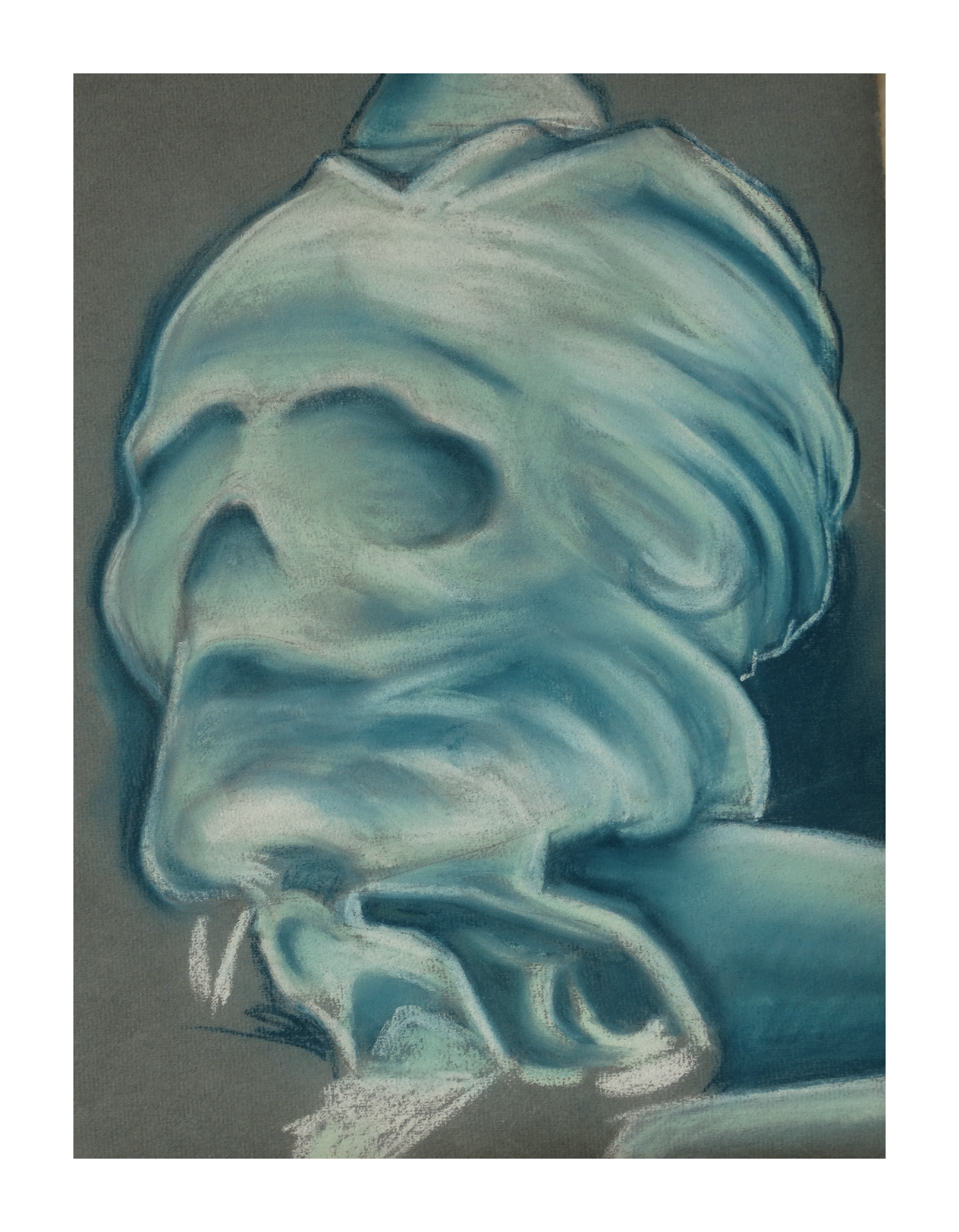
masked skull

The Ultimate Decider

As I continue my investigation into the possibility of a tangible entity, an ultimate decider, in whose hands our fateful existence resides I sometimes wonder whether such a being must necessarily be thought of as benevolent.

I wonder about this because some of my experiences can only be thought of as less than pleasant. Sometimes, in fact, I find myself in considerable discomfort, in situations which are dangerous if not life-threatening.

The idea of being safe in the hands of the Great Decider might very well be delusional because it seems reasonable, the odds I would guess are 50/50 at best, it is malevolent and more intent on doing me harm than anything else. If scriptures can be believed there are plenty of references that paint the Biblical God as a fairly wrathful being and who’s to say who that wrath may be directed toward.

I realize there are no easy answers to these questions. I guess I face the primal existential dilemma and will have to learn to live with it. I just wish the grip wasn’t quite so tight.

ultimate decider

Seeking God-Reflexive Spirituality

I’ve been thinking that it’s pretty reasonable to assume god, spirit, soul are non-material entities and since modern science acknowledges an inability to deal with the non-material, empirical knowledge of god is pretty much out of the question. How, after all, can one know for certain without empirical evidence (assuming we can know anything for certain at all)?
But, given the non-causal synchronicities that appear to exist in the quantum universe, who knows what non-material entities may be floating around out there. It seems to me even modern science leaves the door open, maybe even anticipates a glimpse of the ineffable. There’s no specific knowledge as to what the Other might be but I think that whatever it is it must be that which we require to sustain our enthusiasm for existence; that which necessarily is definable by each of us in terms of however or whatever we view the mystery of existence to be.
While dwelling on this recently the concept of Reflexive Spirituality came to my attention. The basic tenets of this, I guess one would call it a discipline, are: metaphorical interpretations of traditional scriptures, a strong pluralistic attitude regarding religious beliefs and an ongoing critical inquiry into religious meanings such as the makeup and nature of God.
I know it all sounds a bit ‘new agie’ but while I’ve never been able to fit myself within any set of formal religious labels, I think reflexive spiritualist may just be what I am.
I trust this realization doesn’t mean I need to join a group or anything. Surrounding one’s self with like- minds I guess can be comforting to some but joining really seems to me to be counter-productive when my motive is seeking personal enlightenment. Group think, dealing with diverse personalities and the inevitable politics would interfere with the primary intention.
From a distance, though, I do like the concept of reflexive spirituality. Embracing the spiritual in whatever form it takes, wherever, whenever, however I’m moved whether it be viewing a Kandinsky painting, celebrating a Hindu festival of lights, meditating beside a mountain stream or …………..
I don’t think anyone really knows when or what it will take for that non-material essence we may call God to make an appearance. I guess I’ll just maintain a positive perspective, avoid distraction and stay alert.

The Sacred and The Profane

The Sacred and The Profane

Seeking God-The presuppositional Apologist

I got to talking to a presuppositional apologist the other day. He assured me everyone knows God exists whether they realize it or not, God being the source of all our knowledge.
I told him that I was presently seeking God and had a number of good candidates but wasn’t absolutely sure I had found the right one and was really questioning the idea of an entity with all the omni’s in tow.

He said that since I already knew that the one true God (specifically, the Christian God of the Bible) existed I was just obscuring that realization by pretending to seek; I was suppressing the knowledge of God; I was being unrighteous. He said God was behind my ability to reason and think logically, that there was only one true world view and that was the Christian one and said, once again, that I knew all of this was true.

Not being aware that I knew something of which I was unaware, I told him that now, since he’s explained to me that I do know these things that I didn’t know I knew that perhaps there were other things I knew that I didn’t know I knew. And, supposing these things to be outside of the empirical realm, maybe I knew when I felt particularly safe and secure that there were invisible protector beings keeping me safe or that my dreams weren’t just dreams but were a parallel reality visited in my sleep or, maybe, I didn’t know that I knew all along that I am God herself creator and maintainer of my world.

I think the presuppositional apologist thought I was truly an unrighteous individual suppressing the truth that he and I knew it to be and went away believing I was a lost soul. But, I must admit I kind of like the idea of maybe knowing things I don’t know.

billy sunday

Seeking God-Greek Philosophers

In the interests of my ongoing pursuit I’ve been considering some of the Greek philosophers who appear to have made some in-roads into the nature of God, or, god-likeness anyway.

Diogenes the Cynic maintained virtue as the true path to happiness. Living in poverty, reviling social constructs and the accumulation of wealth he assumed dog-likeness, living in the present without anxiety, a simple life of virtue depending on the kindness of others for his survival. The purity of his motives seem pretty god-like to me. Can dog-likeness be akin to God-likeness?

Chrysippus was a stoic philosopher who believed that, while one’s fate was pretty much set in stone if one controlled his soul crushing passions and adjusted his will to intersect with what was going to happen anyway, peace and tranquility were a real possibility. He also believed in the equality of all men (but, unfortunately, I’m not sure he meant women to be included in that generality). Still, he was certainly an honorable and virtuous man who deserves inclusion in any consideration of god-likeness.

Epicurus, founder of the Epicureans, expounded this very reasonable way of life based on moderation of desires and the seeking of a state of static pleasures which amounted to minimizing pain, anxiety and suffering. Among other things he believed the gods held little sway regarding the goings-on in the world and that the only true knowledge one could acquire came through the senses.

One of Epicurus’ chief disciples, Lucretius wrote a poem in which he goes to considerable lengths describing how the world formed within the infinite universe which had to do with the movements of tiny particles from which all things, wind, water, fire , earth and all that inhabit the world are composed. All things including the gods and men’s souls, Epicurus put forth, must expect a terminal existence, have a limited shelf-life, is subject to mortal demise over time.  Well, this did not sit well with the temple-goers. Despite the fact Epicurus was clearly an honorable person; celibate and a vegetarian to boot and clearly not a hedonist, his name became synonymous with heretic; he was persona non grata amongst the believers. He may not be God but if he was around today I’d definitely invite him to the ashram.

All three of these men point the way toward god-like qualities but omniscience is probably not among their attributes. I guess I can rule out omnipotency and omnipresence as well. Maybe perfection is an unreasonable assumption.

greek philosophers

Seeking God

I’m on a quest. I intend to find God. Well, I hope to anyway. Maybe it’ll only be a glimpse if anything. I know one of the problems with this seeking is how to recognize God once he’s, well maybe I should say it’s, in the vicinity. I’m pretty sure all this anthropomorphizing that has occurred vis a vis God’s appearance can’t be right; it’s just too far-fetched to expect God to have a physical form at all given his/her/it’s penchant for omni-presence, omni-power and all those other omnis. Although I guess if it wanted to assume a physical form it certainly could.

Anyway, I was reading about these Indian mystics who spend years in intense meditation, living in austerity, intent on achieving connection with the unnameable essence within all things and from which all things emanate. And, amazingly, some of them do find what they’re looking for. Their experiences differ but usually have in common a direct consciousness of the ground of being; a sense of becoming one with the absolute; an enlightened sense of a unified cosmos bound together by love.

Well, it’s pretty clear one doesn’t reach such a level of understanding overnight. This God-seeking is a serious endeavor not to be taken lightly if one expects results. I’m going for it; I’ll spend more time in contemplation; discipline myself to reach beyond; set aside timeout from daily routine.

I’ll let you know what happens.

ecstatic vision 3

Worldview

I got asked the other day what my worldview was. I was unable to come up with much of an answer. When I thought about the physical universe I couldn’t get past the dilemma modern science seems to be having regarding quantum theories that posit the idea of sub-atomic particles that are nearly unknowable. I mean, really, if the invisible, unknowable is what the universe consists of then what am I to make of reality at all?

It seemed to me the whole idea of a worldview presupposes some sort of underlying order driving the cogs of the universal machine. Like for the religious faithful, who, I think, can come up with a pretty thorough answer fairly quickly.

So, then I got to thinking about the nature of humankind-whether or not there may be some sort of ordered structure controlling the sentient.

I recently saw this movie, Hannah Arendt that dramatizes the philosopher’s acceptance of an offer by The New Yorker magazine, back in the 1960’s, to travel to Jerusalem to view and write about the trial of the notorious Nazi war criminal Adolph Eichmann. As she views the testimony she becomes increasingly convinced that the man was nothing-simply a cog in the totalitarian machine that was Nazi Germany; amoral, lacking in person hood, simply doing what he was ordered to do.

Although an extreme case it seems to me it’s something we all wrestle with. Lacking a mechanism that balances the good of the group, the political, social or religious motives of the institution with the moral and ethical responsibility of the individual, the nature of humankind is as chaotic as the quantum universe.

I can make no more sense of a concept of worldview now than when I was first asked the question.

worldview

Altered States

I’ve been having these flashes lately of another time and place. Small things: certain smells and sounds, plays of light, will bring to mind thoughts, sometimes remembrances of earlier experiences, sometimes images of times and places I’ve never been.

Most often these ‘flashes of memory’ elicit almost euphoric feelings in me-a sense of idyllic existence, that, when I think about it, are hard to explain. I say most often because sometimes there’s an ominous foreboding which accompanies these forays into the fanciful.

These experiences are like visions into another reality. They occur with varying degrees of strength and fade and disappear fairly quickly.

Now, I’m no scholar mind you but as far as I can tell Martin Heidegger speaks of ‘being’ as a field, an extension of the physical/mental self to include one’s sensible environs. Our extended being can accumulate a lot of the detritus of daily life, an ever increasing weight of familiarity and the efforts and energies required of simply existing. So, by altering one’s being, that is relocating, one becomes new and fresh-at least momentarily.  But, rather than actually physically moving, my mental sojourns into past and fanciful places must serve to offer similar relief.

I’m glad I got this figured out. Now if I can extend these fancies and keep them mostly positive maybe I’ll be content to stay put physically while I travel far and wide mentally. I do know, though, I’ll still need to seek new experiences on occasion.

altered states