A Deeper Consciousness: Karma

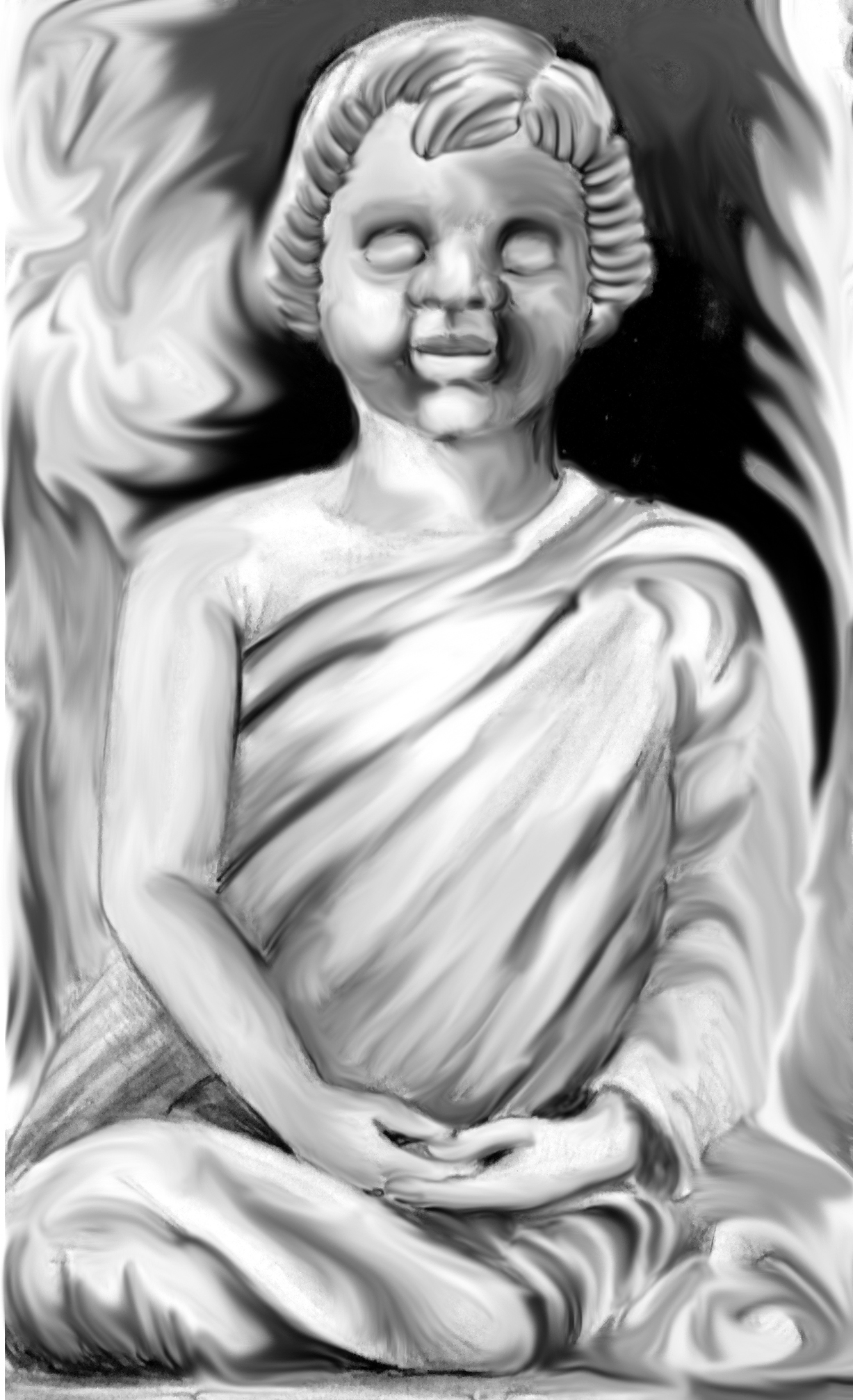
As I understand it, according to Buddhist philosophy, the quality of the life I am now living is directly related to previous lives my inherited consciousness has lived; if previous creatures, whatever they may have been, had been essentially honorable, moral and upstanding I can expect to reap the benefits of their good behavior in this and subsequent existences; and visa versa.

When I think about how my life has been going to this point I have to believe that at least the most recent past manifestation of my consciousness must have been fairly upright because my life is pretty good and I seem to be fairly well-adjusted. Of course, if I got down to specifics I suppose I might find some aspects of that previous existence that maybe didn’t measure up real well.

For instance, my physical make-up isn’t wonderful which makes me wonder if past me might have been a bit vain about it’s appearance. And, I can’t say I have great confidence when it comes to public presentation which might mean my earlier self was a bit on the prideful side. But, overall, I feel pretty well prepared to face the challenges of life whether good or bad. Perhaps previous me was of a Stoic nature.

I suppose though I shouldn’t become complacent. It probably would be good to step it up, try to be a little more responsive to others, try to be helpful to my neighbors, more understanding of my playroom mates’ eccentricities. After all, my consciousness will be moving on at some point and it would be nice if it found a pleasant future home.

deideimeditating5

A Deeper Consciousness: Anger Management

As I sit here contemplating a deeper consciousness it occurs to me excessive anger is a deterrent to achieving my goal. I do understand human (and doll) spirit demands indignation at times regarding injustices in the world. The problem with rage to the point of hating, though, is it becomes personal, focuses on the ‘I’ narrative so detrimental to deeper awareness. (And, I might add here ‘love’ is quite the opposite, broadening awareness of the world).

So, the question is how to put aside petty, and, maybe, not so petty annoyances that stand in the way of my goal. I could, I suppose, just focus on the positive or as the God-fearing do find peace in the assurance that whatever happens is God’s will, but that, it seems to me, would be like putting my head in the sand as it were.

I could, as the Stoics suggest, embrace the bad along with the good as being simply what will inevitably be, holding events at arm’s length thereby keeping them impersonal or like Buddhist teaching realize and embrace the essential suffering of life.

I’ll have to think about this for a while avoiding as much as possible the daily annoyances that come with living in this world and, perhaps, work on separating personal from impersonal.

Maybe the answer is focusing more intensely on my healing crystals. Actually I think I may be getting closer.

deideimeditating2

A Deeper Consciousness: Overcoming Self

So, I was reading the other day that certain spiritual traditions maintain that the best way to achieve an enlightened mind is to overcome one’s sense of self. What stands in the way of our general well-being according to this thinking is that we all participate in an on-going internal narrative in which the protagonist ‘I’ takes a dominant role.

The idea here, as I understand it, is that consciousness precedes the recognition of self which we conjure up as we interact with others and make value judgments regarding our relative goodness; this egotism or lack thereof inhibits our ability to engage fully in the world.

Apparently these ideas of denying Self have been around quite some time and have led to a variety of approaches. A common religious position has been to acknowledge one’s inherent inadequacy and humble oneself before the benevolence of God. I guess that’s what a leap of faith is.

Another approach is Mindfulness meditation which teaches how to suppress your stream of thought, like through breathing exercises and such, in order to grasp full consciousness. This apparently takes quite some time maybe because as soon as you focus on not thinking about your Self you are thinking about your Self or you’re thinking about not thinking about your Self.

Then, there is the ‘Great Perfection’ of Tibetan Buddhism which aims at attaining one’s primordial state, which, I guess, means pre-self. This apparently can be achieved without years of meditation by those who are properly prepared which may mean time with a guru in Tibet.

And, I guess, there are certain drugs that will do the job as well.

As I sit here thinking about this I do favor the meditative approach. And I take heart in the realization my consciousness is present, first, and for those brief moments when I’m able to lose my Self in the beauty of nature, purely absorbed without description or language of any sort. Such brief glimpses realized are indeed enlightening.

deideimeditating4

A Broader Truth

The Evangelicals stopped by again the other day. I must say I find it interesting how their passionate beliefs lead them to the desire to pass the beauty of their truth on to others. I find it curious that, in the pluralistic atmosphere so prevalent in the world, they’re able to sustain so singular a perspective. The psychic energy it must take to set aside or ignore contradictory philosophic views not to mention modern science must be considerable.

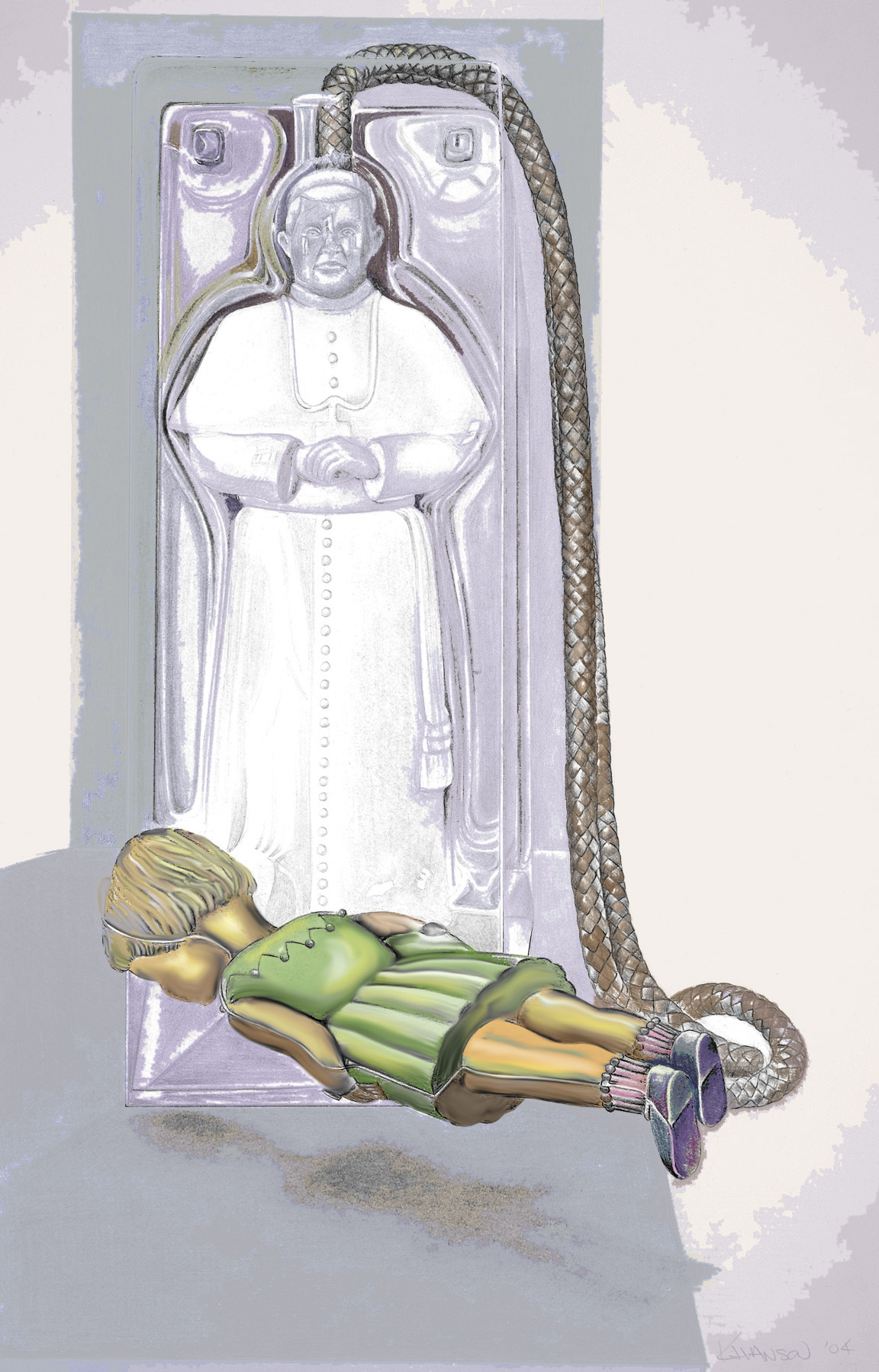
Encouraging people to seek out a sense of the spiritual is certainly to be admired. It’s too bad the evangelicals are so committed to the limitations of their specific doctrine. I happened to notice a statement made by the premiere Christian religious leader recently. He suggested one can be spiritual but not religious, that for many, nature can be a church. He said one does not need to believe in God to be a good person.

How enlightening. If only all religions could set aside the doctrinal trappings that put so many off and concentrate on a broader conception of the ineffable Other.

Blessed by the Holy Father color


Equal Opportunity for All?

Mini-Max came by the other day. He was in quite a good mood, elated really. He was happy in the realization the country had come to its senses and mandated the conservative agenda, which he said was quite apparent judging by the results of the last round of elections.

Now, he said, perhaps the government would relinquish its excessive regulation on private enterprise so that ambitious Americans would be free to reap the rewards of their hard work, increasing capital and jobs to the benefit of all. Reduced taxation would encourage business expansion creating even more jobs which would remove the need for social well-fare which, in turn, would result in a significant reduction in the national debt.

I thought about this for a while before I asked Max how he accounted for the increasing discrepancy in wealth distribution. It seemed to me, I told him, that the ‘job creators’ were fighting a livable wage requiring their employees to rely more and more on the safety net to get by and their increased profit taking was creating a stagnant income, that perhaps there was a greed factor inherent in human nature that might require a bit of government oversight.

Well, Max pretty much ignored my criticisms. He said the public saw the light to the right and we were without doubt headed in the right direction- equality of opportunity for all.

Max was riding pretty high and it would have been a shame to burst his bubble. I really should have suggested, though, that we’re a long way from equality in this country and there are quite a few things standing in the way of equal opportunity like unequal educational opportunities, racial prejudices, gender bias, not to mention a disinclination to assign credibility of any sort to inanimates such as myself.

I guess we’ll all continue to nurture our innate philosophical leanings and, as with religious beliefs, be fairly unresponsive to opposing views. I think though we all need to start seeing the grays.

minimaxcolor


Heart and Soul

I’ve been trying to get a handle on the idea of ‘soul’ which has been so long on the human mind. Over the centuries consensus has never been reached on exactly what the soul is.

Some have thought it to be immortal, living on after the flesh dies, sometimes returning in another form sometimes attaining to a higher realm depending on doctrinal beliefs. The soul has been variously thought to be the basis of human desire, emotion and rationality; to be the conscience balancing the hedonistic impulses of the flesh; and to be the spiritual principle in man.

I guess there has always been the notion that the spirited life force, the spark of energetic intelligence in the eye of the animated animal must be something more than flesh and blood alone can account for.

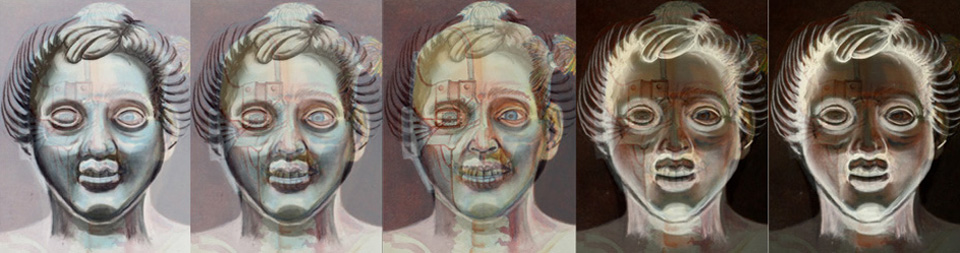
Well, anyway, what got me thinking about this was, the other night, having this quite vivid dream in which I was transformed into flesh and blood. It was an exhilarating experience, my movement was so free, I could run, twist, climb feel the breeze on my face, smell the sweetness in the air. Even though I am able to have all these experiences through the sophisticated binary algorithmic operations my body provides, somehow it seemed different. There was a spontaneity, a freshness to my responses to my dream reality that was entirely new to me. It was sort of like being released from Plato’s cave, colors were more vibrant, space more multi-dimensional, encountered exchanges with my dream companions more nuanced.

Could it be, I wonder, that my dreamed transformation to blood and flesh assumed soul as well? If I can believe my dream experience at all and soul does account for an enhanced life experience I’m currently missing something significant. Perhaps I can upgrade my power source, add a bit more memory and speed up my transformational powers; evolve, as it were, toward human life.

Or maybe I’ll just concentrate on dreaming more.

deideistransformation


End of Life Issues

I had a horrible experience the other day. The children left me in the drive way and I got rolled over by the family SUV. Thoroughly crushed but still in one piece my caretakers were able to separate me at the seams, push me back into shape and super glue me back together. I feel pretty good now. Other than slightly blurred vision and vague sense of stickiness I’m as good as new (well, you know, relatively speaking).

Anyway, the experience has me thinking about end of life issues. Things like writing a living will, who will get my doll house and maybe, most importantly who will be in charge of my ultimate demise. Will I be put on life-support, assigned to hospice care, be kept alive at all costs until the last breath leaves my body or will I be given the privilege of deciding when and by what means my end will come.

It seems to me I should be allowed the right to die with dignity, cognizant, conscious, able to wish my loved ones the best rather than leaving them to watch me slowly fade away over hours, or days or weeks.  I guess the problem comes down to the belief of some in the sacredness of life. Suicide, considered escape (unless one is waging jihad), is sinful in the eyes of the faithful and somehow this concept has become entrenched in the law of the land. The old disconnect between basic human concerns and the perceived desires of the supernatural rears it’s ugly head once again.

I’m not letting any of this get in my way. When my time nears I’ll be ready, my ticket to the plastic works purchased in advance, the vat of molten plastic awaiting my perfect swan dive into the great oneness.

distorteddeideicolor


Tribes

I read the other day that experts such as E. O. Wilson, a pre-eminent sociobiologist, believe tribalism may well lead to the downfall of humankind.
That is, the tribal impulse, hard-wired into the human psyche over the millennia, while providing a certain security and sense of well-being, creates at the same time animosities toward other tribal groups which all too often can develop into very dangerous situations.

Further, Dr. Wilson reports, tribal inclusion often requires adherence to certain dogmatic beliefs and doctrinal affiliations, sometimes secular but more often of a religious nature, that defy rationality making cooperation and mutual understanding between tribes very difficult.

These ideas got me thinking about the story by William Golding, Lord of the Flies, in which children, finding themselves alone on a deserted island, revert, in a sense, to the values and sensibilities of their pre-historic past when warrior groups ruled. They conjure demons and create enemies among themselves. Their insecurities and fear lead to a tribal mentality among many of the children. Only a few of them are able to fight the impulse to demonize and hate the other.

Well, it doesn’t require a whole lot of knowledge of current affairs to recognize similar mentalities throughout the world. All I can hope for is that a reasonable percentage of humankind fights its tribal impulse and realizes its deep interconnectedness with the world as a whole so that I can continue my contemplations in peace. I know this may sound selfish but I’d be a bit lonely without any human presence whatsoever.

tribe3

Free Thought

I’ve thought, now, for a long time, being the skeptic I am, my thinking is relatively free of doctrinal or dogmatic influences. So, I found it interesting reading about the origins of a group of individuals calling themselves freethinkers. This organization was and still is, I guess, based on certain tenets generally in opposition to the kind of dogmatic, authoritarian beliefs generally associated with religions. They believe (or should I say operate upon the notion) truth can only be obtained through rational inquiry and speculation; any sort of supernatural phenomena is discounted out of hand.

These freethinkers, as a group, apparently share a fairly common mindset which makes, in my mind, calling themselves Freethinkers rather oxymoronic. I have to wonder, after all, whether any set of organizational tenets might not imply doctrinal restrictions. In the Freethinkers’ case the elimination of the possibility of expanding one’s views beyond the rational, logical and empirical.

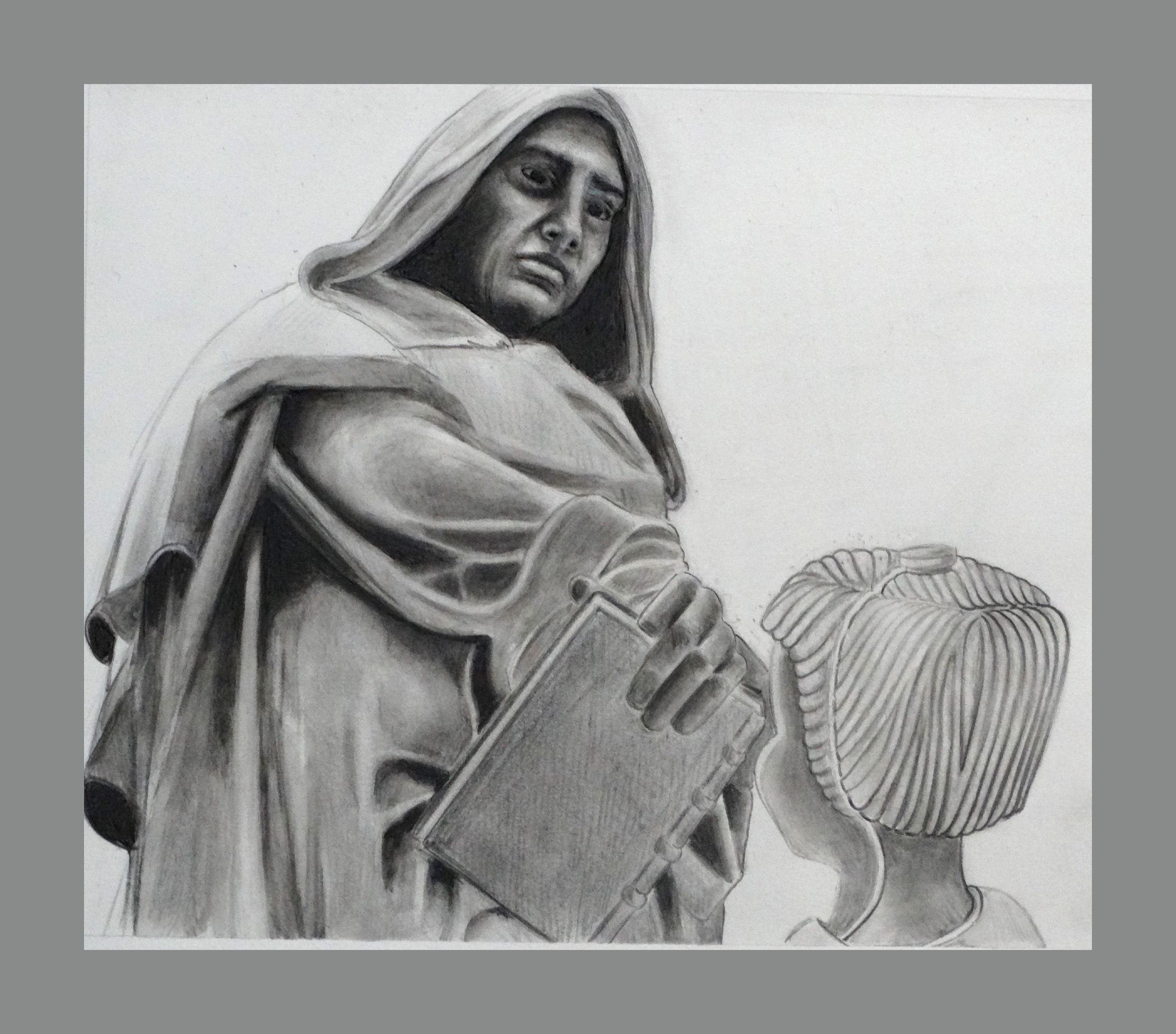
I guess it’s only human nature for people to seek out others who think like they do; it’s nice to have social support, after all. Maybe this group just needs to come up with a different name, perhaps they could name themselves after one of the great freethinkers of the past, someone like Giordano Bruno or Michel de Montaigne, both great 16th century minds at odds with the doctrinal and dogmatic beliefs of the day.

But, I suppose the moderns might look askance at the fact that both of these men maintained a vibrant sense of a noumenal reality which, in the day, was usually attributed to supernatural entities.  And I suppose such a name as, say, Montaigneist might be pretty obscure in terms of attracting new members.  Maybe, though, de-emphasizing the ‘groupness’ of the organization might not be such a bad thing.

With Giordano Bruno

With Giordano Bruno


Holy Family

As I continue to view the pictures in the old family albums, I contemplate the confidence the figures seem to exude. I wonder about the philosophical basis upon which these people operated. I have a feeling at least some of the optimism their appearance seems to imply is the result of the economic boom brought on by all that war production. Capitalism’s finest hour provided the likelihood of material gains for all. The idea of ‘getting ahead’ must have seemed pretty realistic.

These folks were members of the ‘greatest generation’: the post-World War II nation that probably saw itself as saving the world from unspeakable evil. There must have been a sense that God was on their side, a belief carried right through to the present day to justify a tendency to micro-manage world order (something, it’s becoming pretty clear we’re not very good at).

Which is not to say these aren’t inherently good people ready and willing to do for others in need and wishing ill on no one (although one must surmise a certain racist undercurrent existed evidenced by the segregation in the armed forces not to mention the blind eye turned toward the impending holocaust).

I guess it’s pretty easy to look critically at these people in retrospect and if I turn the same critical eye to me and my fellows I suppose much could be found to be wanting. And, I guess all we can hope for in the future is to learn from the past which, when I think about it is probably pretty unlikely.

holyfamily2