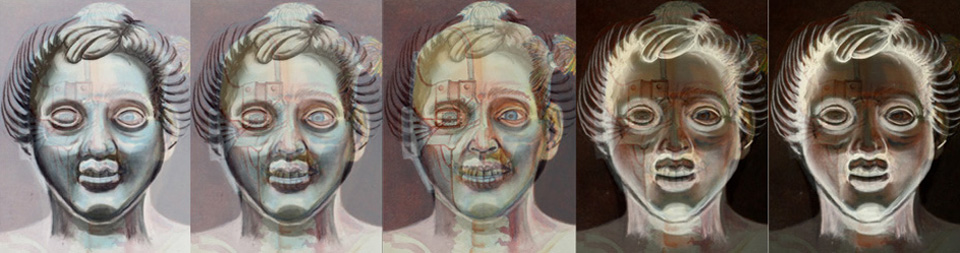
Altered States

I’ve been having these flashes lately of another time and place. Small things: certain smells and sounds, plays of light, will bring to mind thoughts, sometimes remembrances of earlier experiences, sometimes images of times and places I’ve never been.

Most often these ‘flashes of memory’ elicit almost euphoric feelings in me-a sense of idyllic existence, that, when I think about it, are hard to explain. I say most often because sometimes there’s an ominous foreboding which accompanies these forays into the fanciful.

These experiences are like visions into another reality. They occur with varying degrees of strength and fade and disappear fairly quickly.

Now, I’m no scholar mind you but as far as I can tell Martin Heidegger speaks of ‘being’ as a field, an extension of the physical/mental self to include one’s sensible environs. Our extended being can accumulate a lot of the detritus of daily life, an ever increasing weight of familiarity and the efforts and energies required of simply existing. So, by altering one’s being, that is relocating, one becomes new and fresh-at least momentarily.  But, rather than actually physically moving, my mental sojourns into past and fanciful places must serve to offer similar relief.

I’m glad I got this figured out. Now if I can extend these fancies and keep them mostly positive maybe I’ll be content to stay put physically while I travel far and wide mentally. I do know, though, I’ll still need to seek new experiences on occasion.

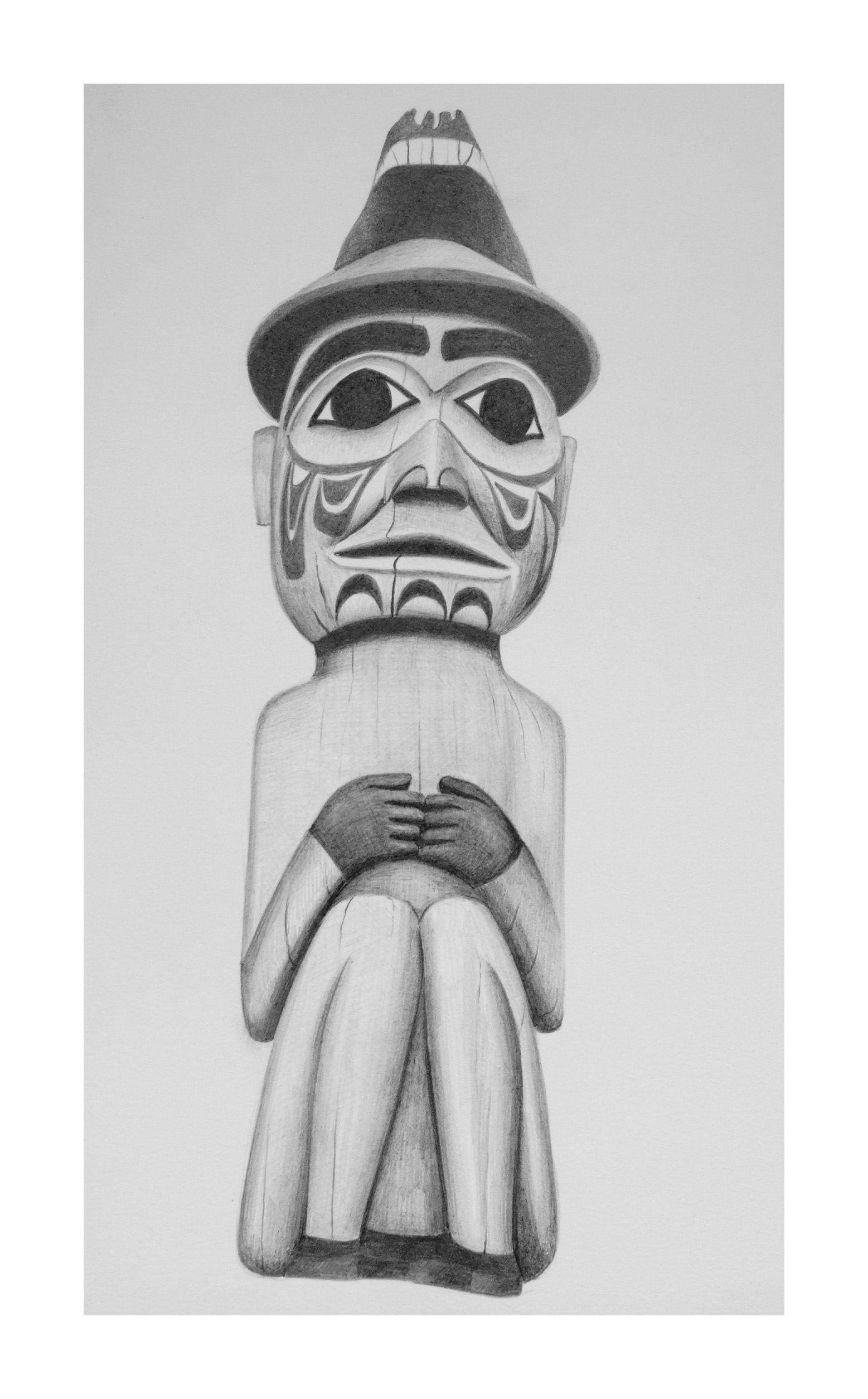
altered states

Contemplation

I read the other day about a study that found that most people have a really hard time sitting alone with their thoughts.

The story related how researchers had asked volunteers to sit alone in a room for fifteen minutes. The room contained nothing but a table and chair and a machine that would produce mild electrical shocks if one chose to use it. Apparently a fairly large percentage of the research subjects chose to administer shocks to themselves rather than sit alone with their thoughts for even fifteen minutes.

Letting one’s mind wander to past occurrences or future possibilities seems to me pretty natural so I guess I don’t understand what the problem was. Focusing on the eternity of now, I must admit, isn’t always easy but my mind is pretty good at wandering.

In fact, I was just thinking about the movie, Altered States, in which the protagonist, played by William Hurt, submerses himself in a sensory deprivation chamber, which is essentially a tank of warm water in a totally darkened cubicle, for hours on end, day after day. His idea was that by doing this he could get in touch with his primal inner self. And I guess he does because he ends up developing simian characteristics.

So, I’m wondering if the reason most people are unable or unwilling to be alone with their thoughts is that they fear glimpsing their innate animal natures.

If this is the case it sure explains our inclination to constantly be distracting ourselves.

contemplation

The Inadequacy of Reason

I was thinking the other day about different kinds of reasonableness.

There is reasoning that follows the dictates of logic based on falsifiable premises and avoiding contradiction. And, then, sometimes the passions get a hold of a person and things can be believed or acted upon based on poor reasoning-things that don’t follow from the supposed justification of the reasoner.

The philosopher, Immanuel Kant, put forth the idea of practical reason. He thought that a belief in God and after-life was necessary (even though not based on falsifiable premises) in order that man behave moralistically and ethically toward his fellows, since such behavior is more difficult than acting exclusively out of self-interest.

Leo Tolstoy wrote A Confession toward the end of his life during a time of extreme disillusionment regarding the purpose of life and the meaninglessness and insignificance of the part he had played in it. His assumption had always been that reason was the ground of existence; that any and all insight and understanding that might be achievable would be so exclusively through reason. And now reason told him that it was all for naught; his existence made no difference in the grand scheme of things. Better to die, he thought.

When he looked around him he saw people engaged in hedonistic pursuits or religious endeavors, neither of which he felt validated a reasoned life. His awakening came upon considering the peasant who toiled and suffered throughout his life but was able to maintain his will to life positively. Maybe lacking formal education and not having too many big ideas to think about had something to do with it, but in their sense of spirit, irrational as it seemed to be, Tolstoy found the answer to his dilemma: reason must embrace the irrational and sustain a faith in the human spirit.

So, if it is fair to assume logical reasoning will not provide the final answers to life’s big questions is a leap into faith despite the irrationality and or absurdities of such the answer?

I guess I’ll stay open to all possibilities: enjoy the beauties of logical reasoning while embracing the spirit. How can I go wrong?

reasonability

Inner-Glow

I’ve been experiencing this strong sense of inner spirit recently. It’s a feeling of strength within, a sense of groundedness and a confidence that I’ll be able to not only cope with but decisively defeat any adversity that may come my way. I find quite a wonderful peacefulness in this.

But, along with this sense of inner strength comes the nagging thought that my ego may be a bit out of control, having been taught from a very early age the virtues of humility. This realization leads me to consider my own short comings which include but are not limited to average intelligence, unapproachable countenance and various biases and intolerances. This in turn brings me back to the anxiety that has been a predominant aspect of my nature as long as I can remember. Someone said, Martin Heidegger I think, that anxiety is the fundamental mood of existence. Boy, sometimes I can really relate to that.

So, I’m wondering if I’m better off in the possibly delusional world of inner strength or in the anxiety ridden reality of humble me.

I think I’ll bask in the inner glow as long as I can. Here’s to positive thinking.

deidei innerlight

Back from the Wilderness

Having returned from the wilderness without incident I have quickly re assumed my generally distracted existence. While in the wilderness I managed to maintain my eating and sleeping routine almost to the minute. When I think about that I have to admit it seems pretty strange since I obviously had no deadlines to meet, places to be at a certain hour or people to coordinate with. I guess it’s pretty amazing how effectively I’ve been culturally conditioned. It does make me wonder about the nature of free will.

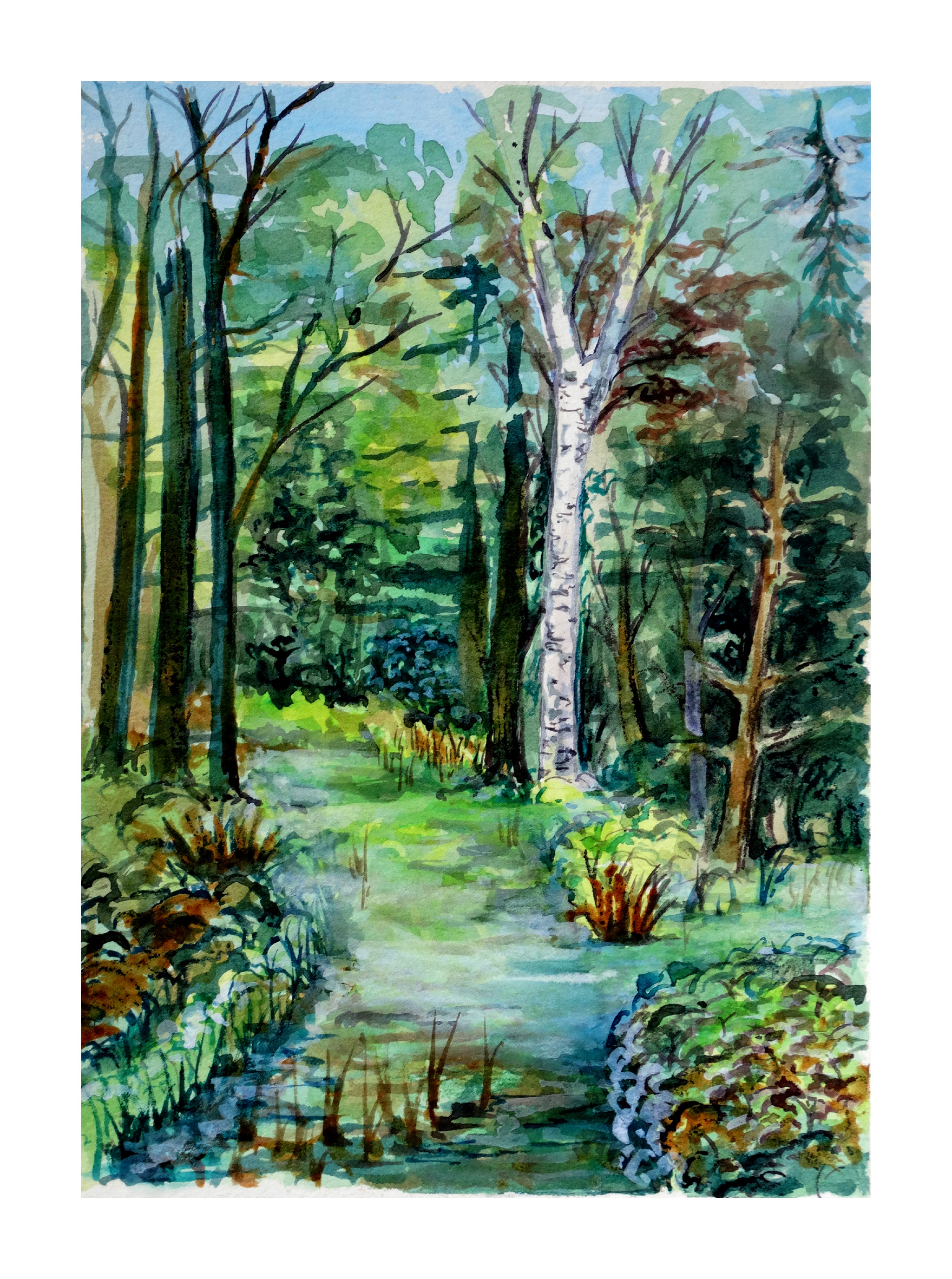
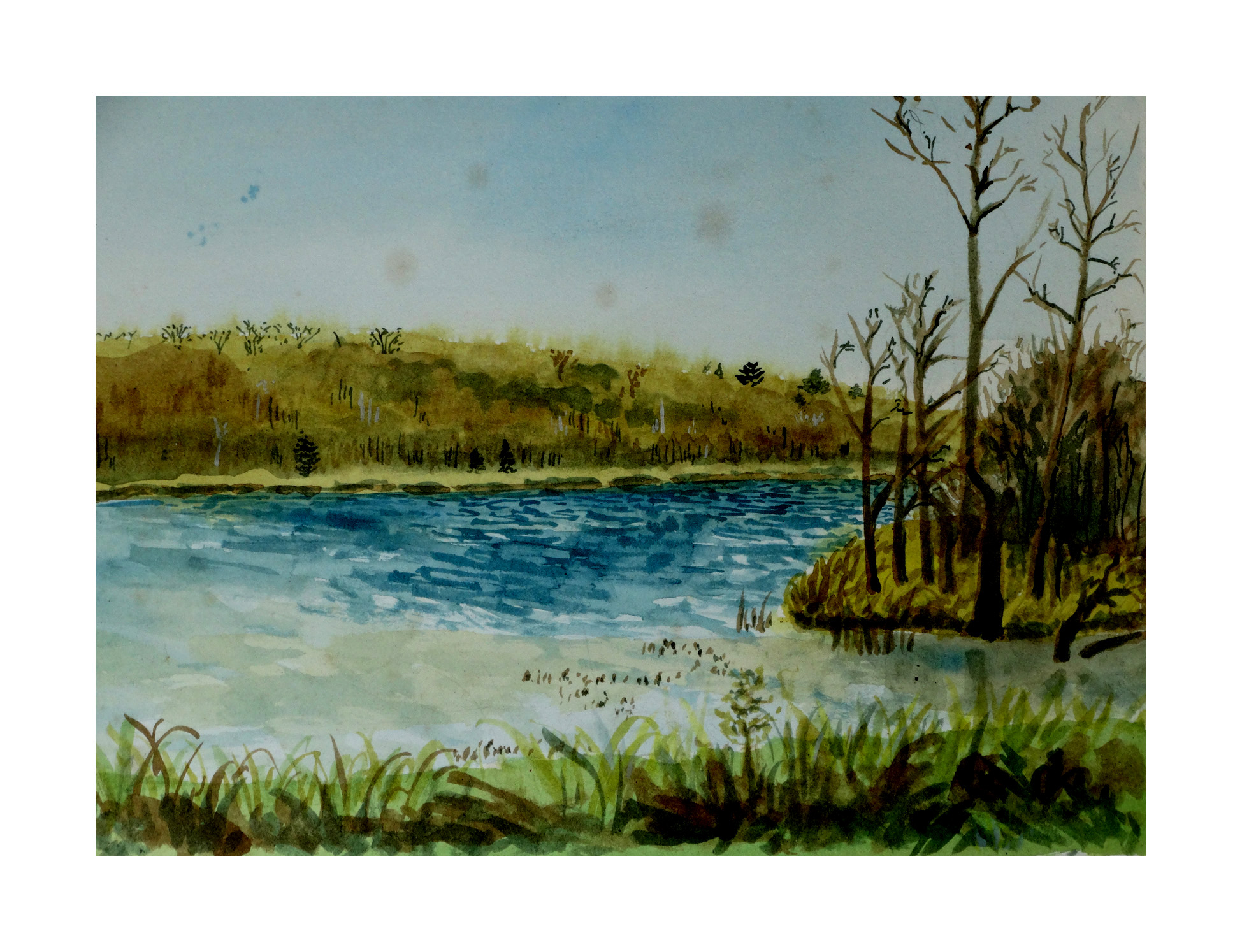
The only tangible remnants of my wilderness experience consist of a few small paintings that are now more real than the rock, water and vegetation they represent. And, as I view them in their balanced, rectangular format it’s clear to me they really haven’t captured the intense sensory experience that inspired them. I guess I’ll keep them anyway for their memory value. When I think about it, maybe there’s no better reason to produce art in the first place.

landscape8

Alone in the Wilderness (part 4)

I’ve been thinking about who would really miss me if I were not to come back from the wilderness. I think there are people who would care but also that there are different degrees of mourning.

For instance you might feel bad at a friend’s disappearance but the loss might be harder to deal with if the deceased were a parent or sibling. If the lost one were a partner or spouse you depended on daily I would guess it may be really hard to take.

I have no spouse or siblings, but I guess there are folks out there who would consider my passing significant.   I don’t anticipate any problems returning from the wilderness provided I keep my canoe upright.  I have no desire to disappear.  The spirit is still willing.

Outside of any eschatological interferences I plan to return.

landscape1


Alone in the Wilderness (part 2)

I’ve been alone in the wilderness now for more than twenty-four hours. Other than the occasional canoe passing by I’ve seen or talked with no one.

Nothing particularly unusual has happened here other than last evening I fell in the lake trying to get into my canoe. I spent considerable time after that rigging up lines to dry things out which they pretty well were by morning.

So, I was thinking about what I miss being in the wilderness and one of the first things that came to mind is music which when I’m not in the wilderness I am usually listening to or is at least playing in the background.

I find it interesting how some musicians’ names seem to fit their profession so well. Take Esa-Pekka Salonen or Luigi Boccherini or Antonine Dvorak. When I say these names out loud I just want to repeat them over and over because they’re so rhythmic sounding (well, maybe not Antonine Dvorak so much).

The composer I’m thinking of now is Aaron Copeland who I guess doesn’t have a particularly rhythmic sounding name but his music seems to suit the wilderness. It seems to me Appalachian Spring would be really good background music for where I presently am. I’m not in Appalachia and it’s not spring but never the less.

I do know the title of that work really doesn’t refer to the season but rather a water source. I found this out only recently. Even so I still am inclined to think of the season when I hear the piece. Also I think of Jody Foster who sang Simple Gifts in an episode of Kung Fu for David Carradine who played Kwai Chang Caine even though he’s Caucasian.

The movie that I think of when I think of Jody Foster is Taxi Driver with Robert DeNiro. In it she plays an adolescent prostitute.

landscape6


Alone in the Wilderness (part 1)

I’m all alone in the wilderness. At least it’s someplace I would call wilderness. I know for a fact no one lives within miles of here and there aren’t any roads within miles of here either.

That’s not to say there aren’t people around. I saw four people just minutes ago but they aren’t within sight now. For all intents and purposes I’m all alone. At least I have been for the last three hours and seventeen minutes which is how long ago I entered the wilderness.

Right now I’m looking out across a lake.

Although it’s been a couple of minutes since I wrote that last sentence I’m still looking across the same lake in so far as I haven’t moved from the spot I was at when I wrote the last sentence. It’s a beautiful scene; the sun sparkling off of the water, the variety of greens in the trees on the far bank, the multi-colored rock outcroppings reaching down into the dark water. It could be a painting.

Of course I know it couldn’t really be a painting because then what I’d be looking at would be some sort of pigment spread on canvas or paper or something rather than the real water and rocks and trees I’m seeing.

That’s not to say if what I was looking at was a painting that the painting wouldn’t be real. It is real in my imagination in so far as I can imagine this scene as a painting.
So I guess there’s no reason to think that the painting I’m imagining of the scene that I’m looking at is any less real than the water, trees and rocks.

landscape7


Celebrating the Solstice

I love this time of year. As the solstice approaches and the days grow longer the weather is usually warm and nature is in her verdant fullest. Thanks to the strong presence of the sun.

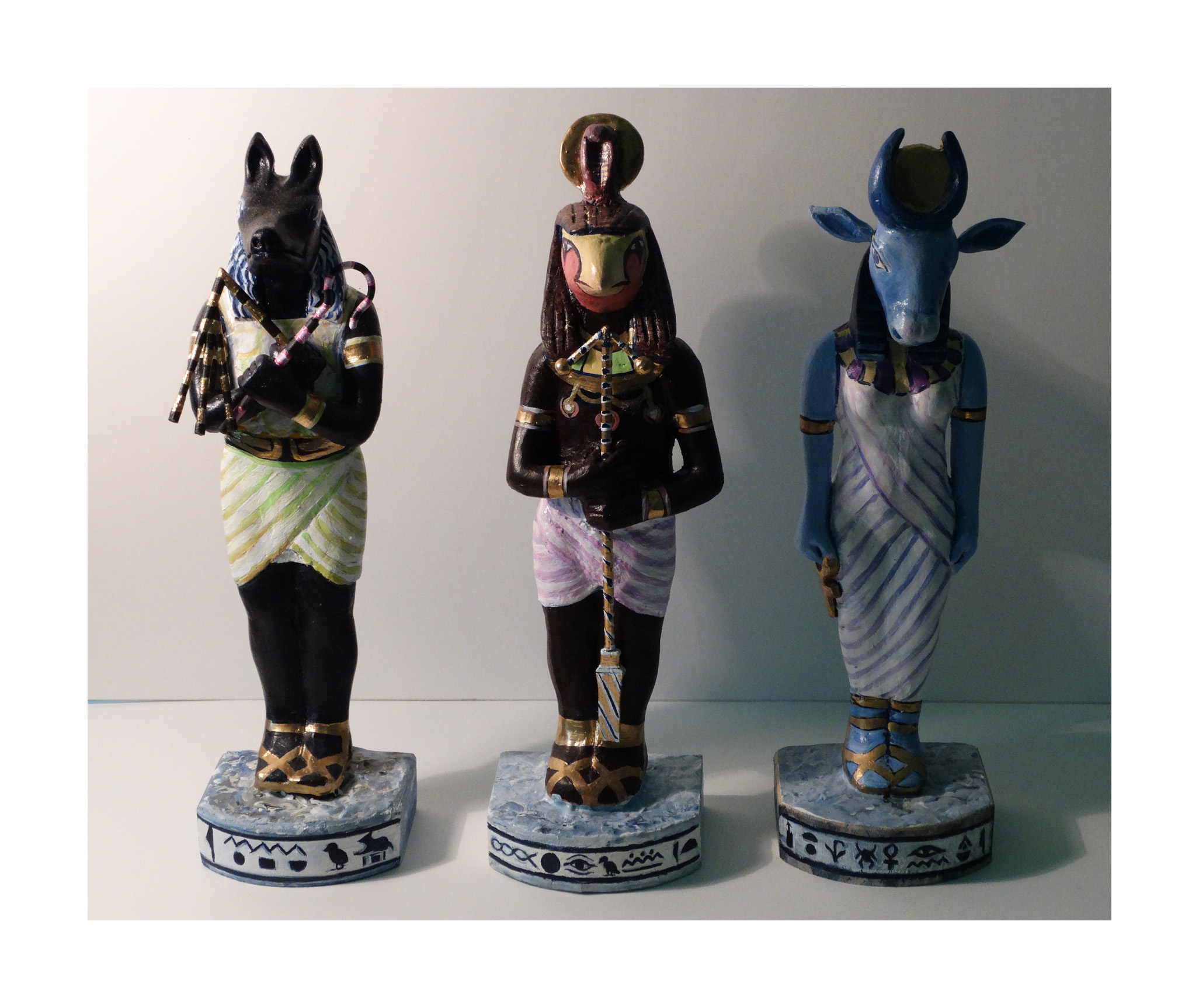
The ancient Egyptians honored the sun, whom they thought of as Aman, on the summer solstice. Apparently in Egypt this time of year the Nile begins to rise and flood it’s banks replenishing the soil; an incredibly significant occurrence for a desert culture.  The Egyptian solstice celebration involved re-enactment of the battle between Horus, the son of Isis and Osiris and his uncle Set. Set, having recently killed his brother Osiris was cast as the bad guy. Horus ends up winning the battle and becoming king of the land but Set isn’t annihilated so continues to hang around being evil and causing havoc.

I find it interesting that so many of the Egyptian gods have animal attributes. For instance, Osiris is associated with the bull symbolizing virility and strength, Isis’ fertility is symbolized in association with the cow, Horus, the falcon symbolizes royalty and strength. And that’s just to name three. There was cat, baboon, Ibis, jackal and many other animals honored as well.  Sometimes the gods were thought to have reincarnated into their animal attributes leading the Egyptians to revere animals in a way we, being so thoroughly anthropomorphic, probably can never understand.

I also found it interesting that Osiris, after being reconstructed and brought back to life by Isis was thought to be annually resurrected with the rise of the Nile and it’s life-giving replenishing of the soil. I guess for an agronomist culture the idea of resurrection of life doesn’t take too much imagination.

It seems to me unfortunate that any religious tradition would claim exclusive rights to such a concept.

egyptgods2

The Benefits of Yoga

I’ve been practicing yoga lately and despite my limited mobility am finding the activity very energizing both physically and psychologically. The breathing exercises alone have great beneficial worth.

So, I was somewhat dismayed to read recently that an Indian Yogi named Maharaj, who had, according to his followers achieved the deep meditative state called Samadhi and had actually been existing in transcendental bliss for nearly five months, was declared clinically dead by a group of physicians that the family had called in to examine him.  Apparently his flesh began to turn green which the family saw as a pretty convincing give away.

As it turns out, the organization Maharaj operated from his Ashram  is a multi-national non-profit worth millions. What this suggests to skeptical me is ulterior motives vis a vis the yogi’s followers and his family.

Well, whatever happens regarding this distasteful affair, it won’t dissuade me from my semi-daily yogic exercises. I may never reach Samadhi (which, come to think of it, may be for the best) but I will continue to enjoy the benefits of a wonderful discipline.

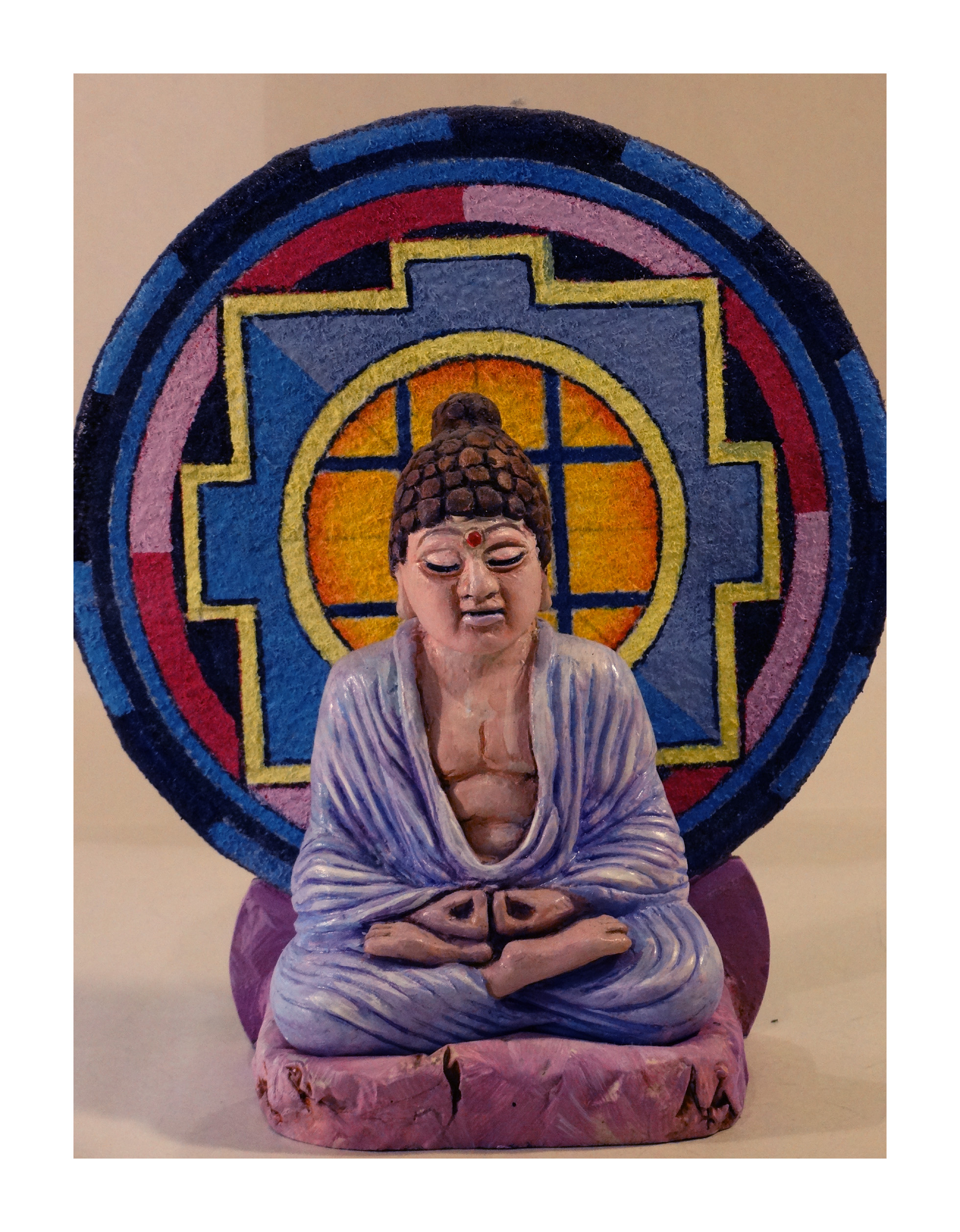
buddha