Alone in the Wilderness (part 4)

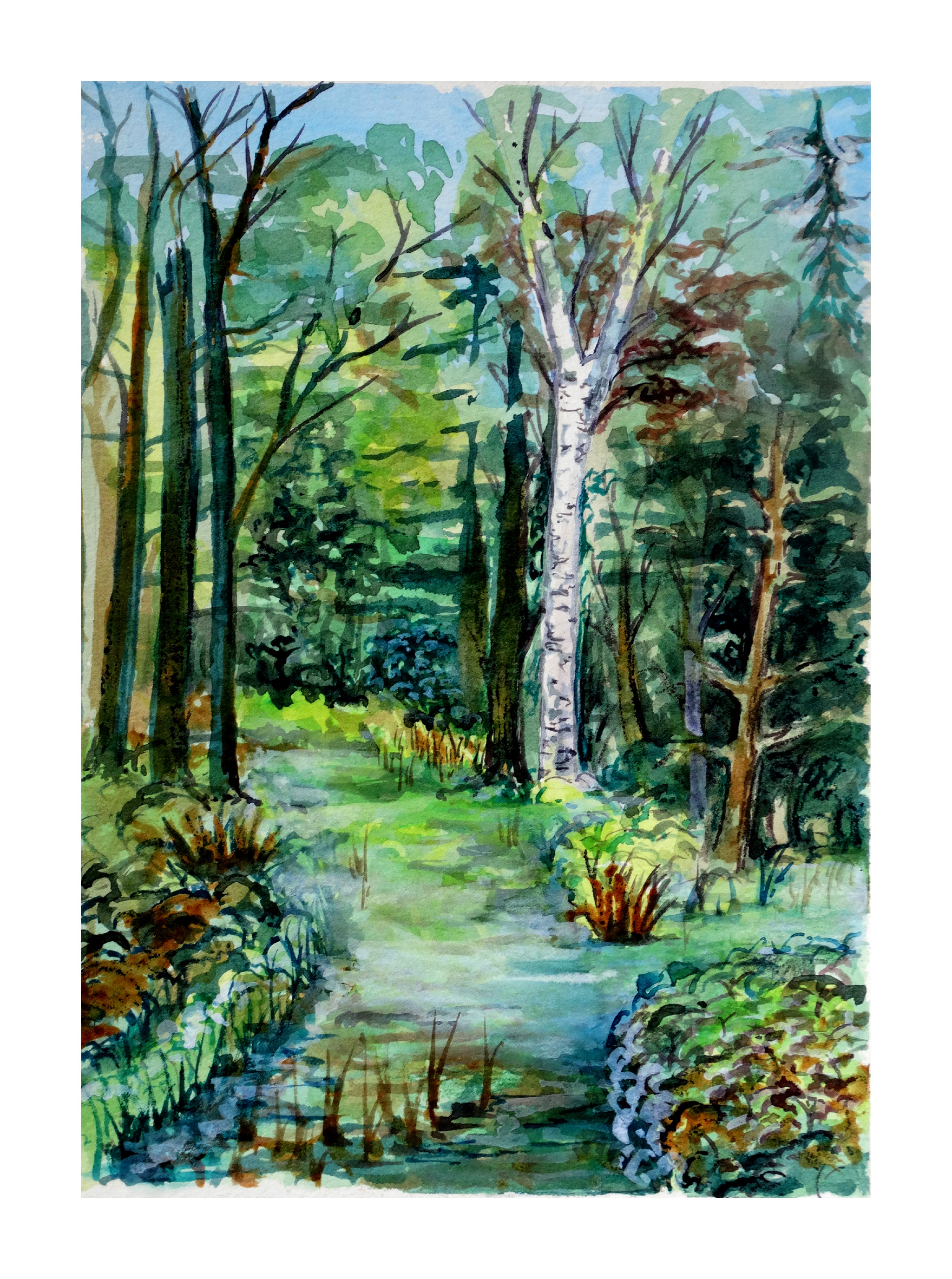
I’ve been thinking about who would really miss me if I were not to come back from the wilderness. I think there are people who would care but also that there are different degrees of mourning.

For instance you might feel bad at a friend’s disappearance but the loss might be harder to deal with if the deceased were a parent or sibling. If the lost one were a partner or spouse you depended on daily I would guess it may be really hard to take.

I have no spouse or siblings, but I guess there are folks out there who would consider my passing significant.   I don’t anticipate any problems returning from the wilderness provided I keep my canoe upright.  I have no desire to disappear.  The spirit is still willing.

Outside of any eschatological interferences I plan to return.

landscape1


Alone in the Wilderness (part 2)

I’ve been alone in the wilderness now for more than twenty-four hours. Other than the occasional canoe passing by I’ve seen or talked with no one.

Nothing particularly unusual has happened here other than last evening I fell in the lake trying to get into my canoe. I spent considerable time after that rigging up lines to dry things out which they pretty well were by morning.

So, I was thinking about what I miss being in the wilderness and one of the first things that came to mind is music which when I’m not in the wilderness I am usually listening to or is at least playing in the background.

I find it interesting how some musicians’ names seem to fit their profession so well. Take Esa-Pekka Salonen or Luigi Boccherini or Antonine Dvorak. When I say these names out loud I just want to repeat them over and over because they’re so rhythmic sounding (well, maybe not Antonine Dvorak so much).

The composer I’m thinking of now is Aaron Copeland who I guess doesn’t have a particularly rhythmic sounding name but his music seems to suit the wilderness. It seems to me Appalachian Spring would be really good background music for where I presently am. I’m not in Appalachia and it’s not spring but never the less.

I do know the title of that work really doesn’t refer to the season but rather a water source. I found this out only recently. Even so I still am inclined to think of the season when I hear the piece. Also I think of Jody Foster who sang Simple Gifts in an episode of Kung Fu for David Carradine who played Kwai Chang Caine even though he’s Caucasian.

The movie that I think of when I think of Jody Foster is Taxi Driver with Robert DeNiro. In it she plays an adolescent prostitute.

landscape6


Alone in the Wilderness (part 1)

I’m all alone in the wilderness. At least it’s someplace I would call wilderness. I know for a fact no one lives within miles of here and there aren’t any roads within miles of here either.

That’s not to say there aren’t people around. I saw four people just minutes ago but they aren’t within sight now. For all intents and purposes I’m all alone. At least I have been for the last three hours and seventeen minutes which is how long ago I entered the wilderness.

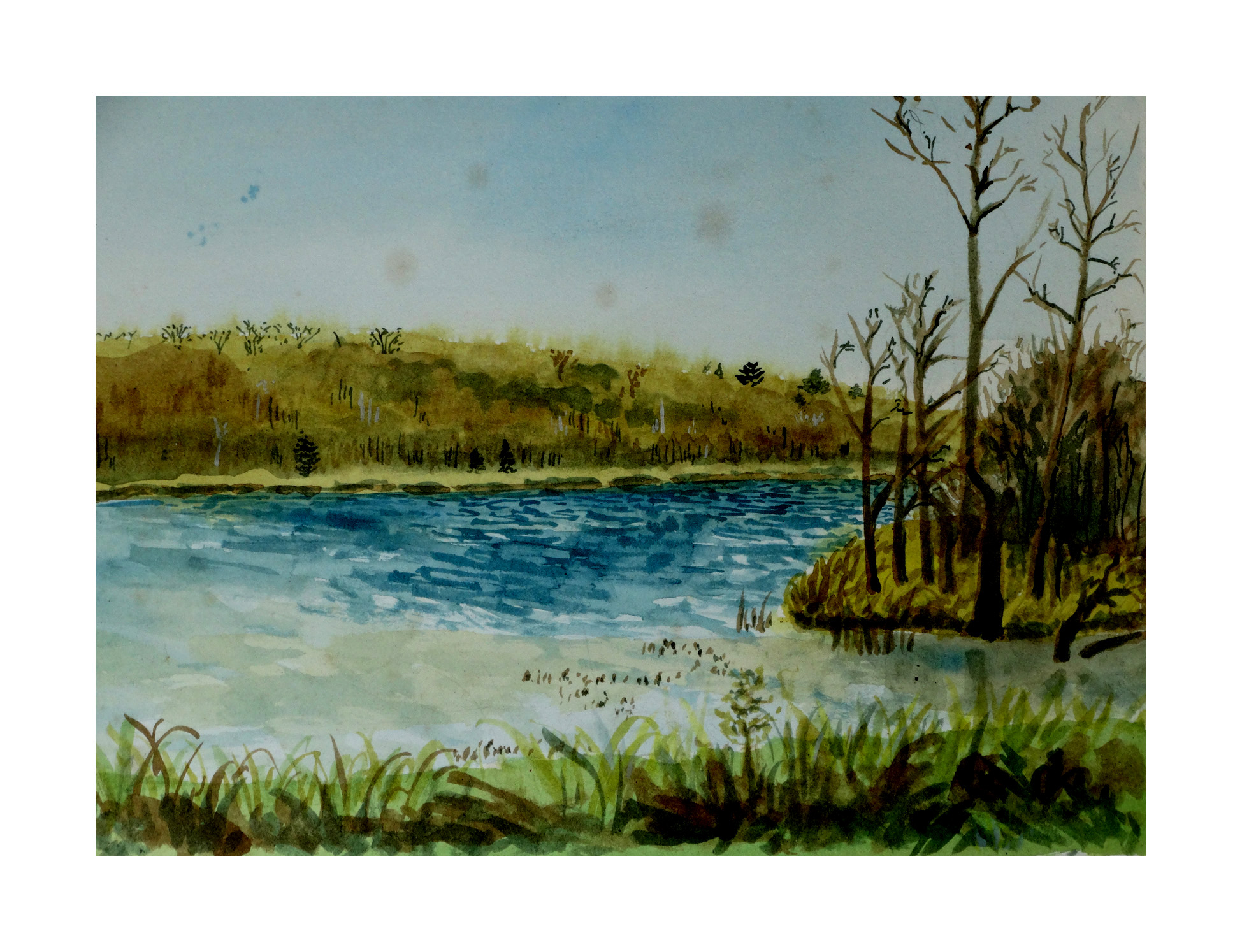
Right now I’m looking out across a lake.

Although it’s been a couple of minutes since I wrote that last sentence I’m still looking across the same lake in so far as I haven’t moved from the spot I was at when I wrote the last sentence. It’s a beautiful scene; the sun sparkling off of the water, the variety of greens in the trees on the far bank, the multi-colored rock outcroppings reaching down into the dark water. It could be a painting.

Of course I know it couldn’t really be a painting because then what I’d be looking at would be some sort of pigment spread on canvas or paper or something rather than the real water and rocks and trees I’m seeing.

That’s not to say if what I was looking at was a painting that the painting wouldn’t be real. It is real in my imagination in so far as I can imagine this scene as a painting.
So I guess there’s no reason to think that the painting I’m imagining of the scene that I’m looking at is any less real than the water, trees and rocks.

landscape7


Celebrating the Solstice

I love this time of year. As the solstice approaches and the days grow longer the weather is usually warm and nature is in her verdant fullest. Thanks to the strong presence of the sun.

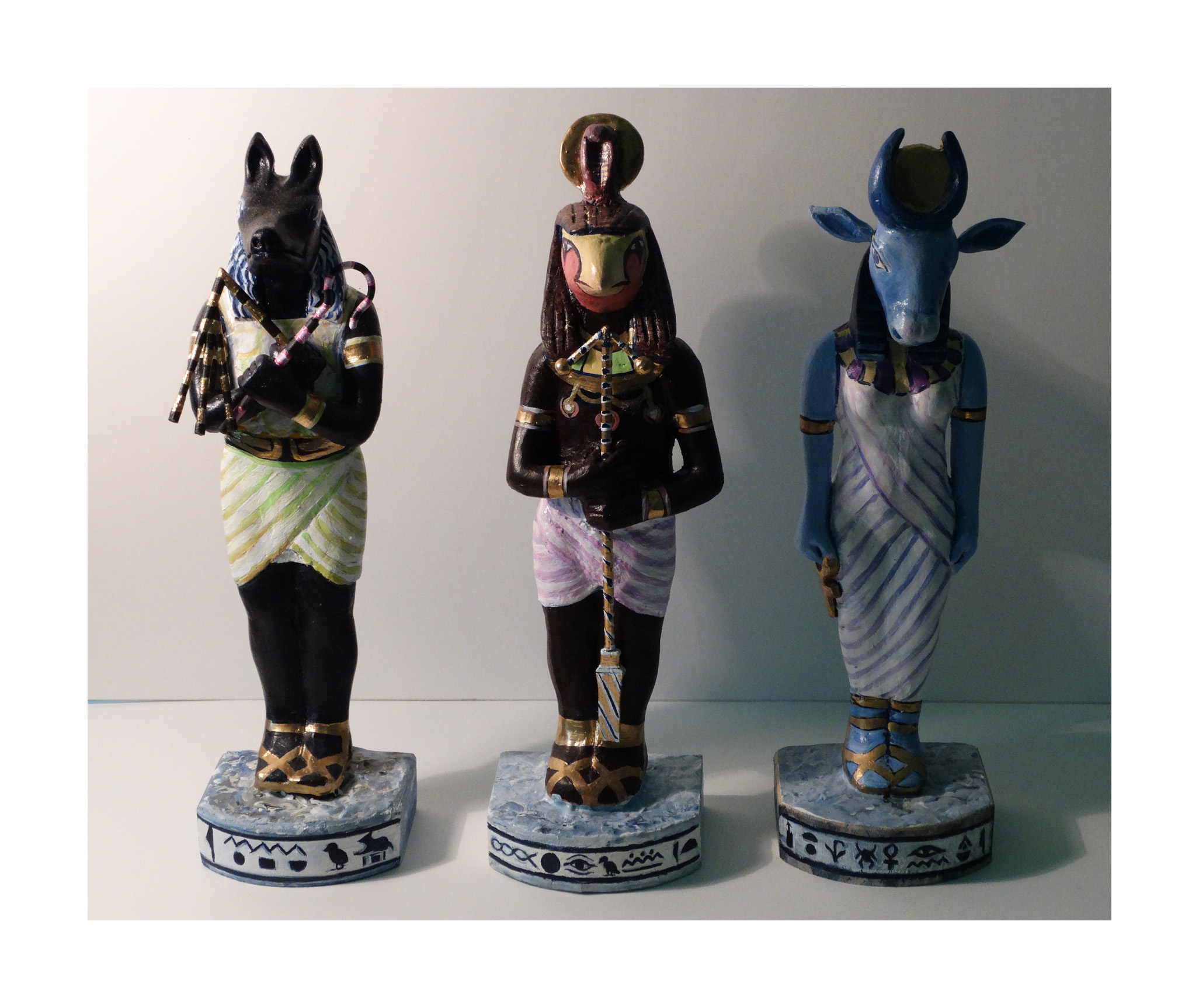
The ancient Egyptians honored the sun, whom they thought of as Aman, on the summer solstice. Apparently in Egypt this time of year the Nile begins to rise and flood it’s banks replenishing the soil; an incredibly significant occurrence for a desert culture.  The Egyptian solstice celebration involved re-enactment of the battle between Horus, the son of Isis and Osiris and his uncle Set. Set, having recently killed his brother Osiris was cast as the bad guy. Horus ends up winning the battle and becoming king of the land but Set isn’t annihilated so continues to hang around being evil and causing havoc.

I find it interesting that so many of the Egyptian gods have animal attributes. For instance, Osiris is associated with the bull symbolizing virility and strength, Isis’ fertility is symbolized in association with the cow, Horus, the falcon symbolizes royalty and strength. And that’s just to name three. There was cat, baboon, Ibis, jackal and many other animals honored as well.  Sometimes the gods were thought to have reincarnated into their animal attributes leading the Egyptians to revere animals in a way we, being so thoroughly anthropomorphic, probably can never understand.

I also found it interesting that Osiris, after being reconstructed and brought back to life by Isis was thought to be annually resurrected with the rise of the Nile and it’s life-giving replenishing of the soil. I guess for an agronomist culture the idea of resurrection of life doesn’t take too much imagination.

It seems to me unfortunate that any religious tradition would claim exclusive rights to such a concept.

egyptgods2

The Benefits of Yoga

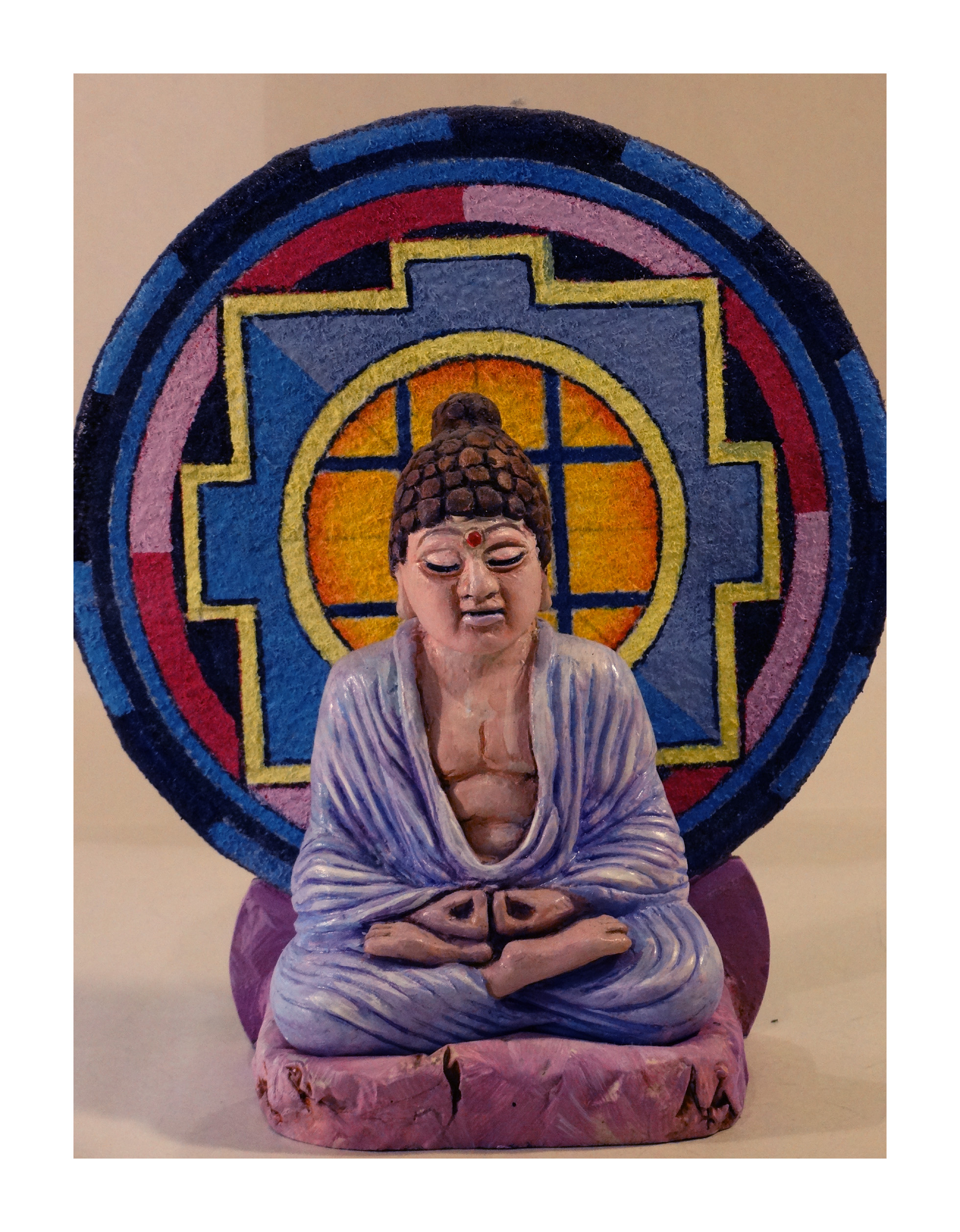
I’ve been practicing yoga lately and despite my limited mobility am finding the activity very energizing both physically and psychologically. The breathing exercises alone have great beneficial worth.

So, I was somewhat dismayed to read recently that an Indian Yogi named Maharaj, who had, according to his followers achieved the deep meditative state called Samadhi and had actually been existing in transcendental bliss for nearly five months, was declared clinically dead by a group of physicians that the family had called in to examine him.  Apparently his flesh began to turn green which the family saw as a pretty convincing give away.

As it turns out, the organization Maharaj operated from his Ashram  is a multi-national non-profit worth millions. What this suggests to skeptical me is ulterior motives vis a vis the yogi’s followers and his family.

Well, whatever happens regarding this distasteful affair, it won’t dissuade me from my semi-daily yogic exercises. I may never reach Samadhi (which, come to think of it, may be for the best) but I will continue to enjoy the benefits of a wonderful discipline.

buddha

Free Will

I was thinking the other day about the nature of free will-whether it was truly a viable concept given the determinist position that everything we do we do because it’s in our nature to do it and we really have no free choice in the matter.

So, I was thinking that in order to exercise free will I’d have to do just the opposite of what I was inclined to do; so that when making a decision, if it made total sense to do A-that A would be the best choice for my well-being-would be preferable to choice B in every way-that I would instead choose B in order to exercise said freewill even though it would result in a bad outcome for me.

I suppose the determinist would respond that the likelihood was I harbored masochistic tendencies and therefore perfectly natural and predictable that I would choose B.
So, given my said masochistic tendencies I instead choose A, I suppose the determinist would then respond that it is only natural to preserve one’s well-being and therefore no freewill will have been exercised in that case either.

So, what if I embraced the absurd-if I imagined a preternatural essence hovering about me-something that I interact with on a daily basis-a sort of magical companion? That would certainly take the wind out of the determinist’s sails wouldn’t it?

I guess, in the end, the freewill thing might depend on how carefully I listen to my invisible friend.

freefall2

The Rapture


Sister Chloe was enlightening me the other day about what to expect when the end times descend upon us.  At some point, she said, the quick and the dead, provided they are/were true believers, will be raptured heavenward to live for eternity in paradise.

I got to wondering what ‘paradise’ might consist of; is the weather always temperate, the days sunny?  Will the food be exceptional?  Is exercise part of the equation even though it can be a bit painful sometimes?

Anyway, I was reading this book, The Leftovers, about these folks who didn’t get raptured so were left to their daily grinds.  Well, the question that immediately arose after the rapture was why them and not us. It seemed that some of those folks raptured didn’t appear to have led all that great of a life in moral terms and some of those left had been fairly devout church goers.  It was a real conundrum which led to the development of an extremist cult aimed at dealing with the leftovers’ apparent rejection.

Sister Chloe seems to think if I follow my conscience and try to always do the right thing I’ll be just fine-will have nothing to worry about when the Rapture happens.  She’s so compassionate; naïve but compassionate.

The Rapture

Migrating South

Granny Applehead has been talking about joining the migration of the elderly to the warmer climes of the south.  She says that, as one’s metabolism slows down with age warmth is a primary need for any sort of comfort to exist.  She yearns for the nice dry walks and roadways and the easy availability of golf carts allowing a mobility that the ice, cold and snow prohibit.

Besides, she says, a retirement community offers the benefits of social interaction with others of one’s own age and, often, sensibility.  Structured days playing mahjong, drinking tea and attending concerts and lectures are pleasant distractions from our ever present aches and pains.  Everything about it points toward enjoying quality time in our autumnal years and prepare us for the day when the warmth of the cremation furnace will return us, dust to dust, to our mother earth from whence we came.

She jokes with her friends that she might instead opt for Plastination so that her children will be able to enjoy her personage gathering dust in the corner of the living room (boy, does that sound familiar).  It seems kind of morbid to me but I guess it’s just her way of making lite of the impending reality; the unknowns of death everyone must face.

granny3

Fertility Rites

Eastra, the doll of the season, was telling me the other day that in ancient times the beginning of spring at or about the time of the vernal equinox was celebrated with fertility rites which were meant to encourage a general fecundity among all living things animal and vegetable.

Many cultures had gods and goddesses honored in these rites; there was Artemis in Greece, Cebele in Phrygia, Diana in Ephesus and Attis the god of ever-reviving vegetation who was believed to have been born of a virgin and who died and was reborn annually.

I was trying to imagine what these rites might have been like. They probably involved a lot of fertilizing of various seeds and things and to get everyone into the mood, to get their energy up, to really get into the re-generation mind set there probably was a bit of strong drink, wild dancing and singing.

I found out Cebele the Phrygian Earth goddess was honored with a procession involving wild, high pitched flute music and drumming, scattered rose petals and clouds of incense followed by priests and priestesses scourging themselves with sharp knives.

But that was mild compared to the cult of Ishtar that may have involved child sacrifice, ritual copulation and virginal girls dancing around large male genitalia.

Whatever the rites involved the celebrants must have thought it worked. Besides the great fun had by all (excepting the sacrificial victim) animals reproduced, babies were born and crops grew. It does seem pretty magical and I guess it was hard for most people to take for granted the resurrection of the dormant (or dead) without providing some sort of penitential assistance even though we all know Mother Earth is a gigantic incubator and really doesn’t need that kind of help.

I think I’ll celebrate Mother’s magic with a nice contemplative walk in the woods.

rite of spring 3

Thoughts on an After-Life

I’ve been reading lately about the various ways different cultures and people think about after-life. Many of the various after-life conceptions identify an inner spirit or soul within each individual that is in some way immortal and will live on in a place determined by their conduct in the life they’ve just left. Some contend the deceased will be reborn taking a living form, animal or human, consistent with their previous moral, ethical existence.

Some researchers have hypothesized what the after-life might be like. One suggests that after death the soul floats into the atmosphere where it lives off of the ultra-violet rays from the sun. Another believes after death the self will find itself in a dream word of memories and mental images. Still another thinks the mind will merge into a collective consciousness the downside being it will relinquish its personality.

But, the idea about what the after-life will be like that I like best is that each person will experience a world of her own, unique to herself and consistent with her earthly existence. If my next world follows my nature then it will be filled with wonder and uncertainty and I will continue to question, to look for the ever elusive answer and to revel in the ever-present Mystery. What could be better than that?

Being-in-the-world