Dignity

I was reading a while ago about the idea that all anyone really wants from life, in terms of one’s existence within a social perspective, is dignity: the knowledge that one is recognized as being of value as a person, not just a member of humankind but someone of intrinsic worth.

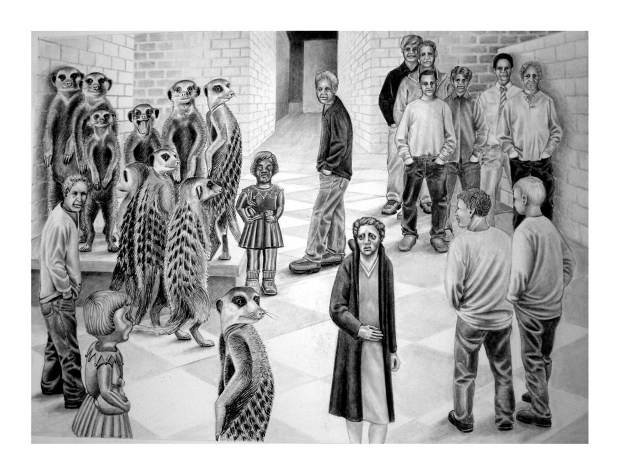
I wonder, as we look out upon the people, we see on the street going about their daily tasks: bus riders returning from work, clerks, administrators, colleagues, if we take the time to see them as what they are, if we recognize our common humanity, afford them dignity.

We all are, after all, strugglers, strivers, driven to seek a modicum of success that will provide a sense of security for us and our families. It’s good, I think, to realize sometimes everyone’s in need. Cooperation, compassion, and empathy are things we can all provide and receive.

Evolutionary Upheaval

I’ve been thinking lately about the monumental impact the discoveries of Charles Darwin had on the religious communities of the early 20th century.

The early Christian conception of mankind as being created by God in his image were found to be in total contradiction to Darwin’s evolutionary theories. His discoveries of the evolutionary changes to finch populations on the Galapagos Islands as their habitat changed were irrefutable. Subsequent connections realized between humankind and simian populations exacerbated the matter. Christian revivalists preaching ‘Hellfire and Damnation’ condemned evolutionary thinking, creating fury among the conservative religious community.

Still an issue, I guess, for some, but morality as a uniquely human trait that spurs love of neighbor and awareness of a presence beyond the physical should ease the matter, although such understanding does require nuanced thinking.

The Disappearance of Truth

What to believe? It appears many of us (more than 50% of the U. S. population some sources estimate) get our news through social media, a source of information through which anyone can post thoughts of their own, ideas that may or may not be consistent with reality.

Expecting, as we do, our daily consumption of news to be based on fact, social media offers instead biases of opinion sometimes meant to deceive or to shock. Motivated by self-interest, unedited, the scroll of ideas repeated over and over will take hold, algorhythms feeding intuitions, reinforcing what the individual consumer believes to be true, bad enough in itself but made many times worse by exacerbating societal divisiveness.

We owe it to ourselves to dig deeper into the news of the day, to seek the facts beyond our intuitive inclinations, as uncomfortable as that may be. Moral truth is out there to be found.

Eternal Optimism

I’ve been reading, lately, about the primary concepts of stoicism. Among them is premeditatio malorum, which means, I guess, to ponder potential ills in order to keep in mind that bad things may occur at any time to prepare one for the eventual worst-case scenarios that life may impose. The idea seems to be that by living under a slightly dark cloud, one isn’t surprised and overwhelmed when bad things occur.

The concept seems counter-intuitive to the naïve paean to eternal optimism: “things could always be worse” which most of us intone pretty much all the time, even through the pain of the oppressive pandemic. The notion reminds me of Voltaire’s satirical ‘Candide’ where the eternal optimist Pangloss maintains we live in the “best of all possible worlds” even as one terrible event after another fall upon our hero.

But, there are other important stoic concepts to keep in mind, like starting each day with a morning meditation, ending each day in reflection, practicing moderation in all things, speaking less and thinking more among them. All of which suggests stoic practice has many benefits even if eternal optimism isn’t among them.

Sexual Behaviors

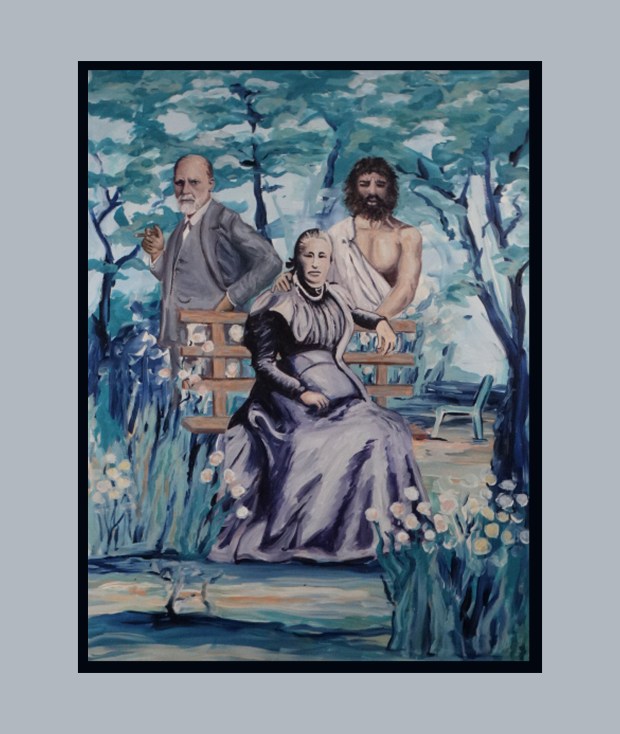
Sigmund Freud determined all human motivations contain a sexual component. The oral, then anal fixations of children and later phallic interests, beginning at a very early age, were focused on satisfying bodily needs. Many psychological problems, neuroses, occur because sexual impulses are repressed. Through psychoanalysis S.F. guided his repressed patients to realize the healthy need for normal active sexual behavior.

Freud, though, cautioned that excessive sexual activity interferes with the development of healthy social relationships, that strong friendships and sound decision making, adulthood essentially, depends on tempering sexual behaviors.

This could explain, I guess, while some of our politicians behave like adolescents.

Dangerous Times

I’ve been thinking about the George Orwell novel 1984, how the totalitarian regime in the book implemented catch phrases to secure the minds of the populace. ‘War is Peace’ is used to establish a permanent enemy, a scapegoat, that can be blamed for any and all ills that befall the citizenry. ‘Freedom is Slavery’ discourages individualism tribalism in order to keep everyone bound to the collective. ‘Ignorance is Strength’ encourages the subservient populace to forego intellectual reflection, follow the dictates of those in power, not think about things to hard and they will realize contented peace. The message is, I guess, that given such ideas along with sufficient deterrents a totalitarian regime turns people into sheep without them realizing it.

Sounds familiar, doesn’t it; we owe it to ourselves to step up, encourage opposition, reaffirm our freedoms and checks on excessive power. The democratic media voices critical commentary daily; let’s make sure we support it.

An Ominous Future?

In 1935 Sinclair Lewis wrote a novel: It Can’t Happen Here, detailing the horrors of a totalitarian dictatorship. In the novel the ‘corpo’ government takes control, restrictions on personal freedoms emerge and the press becomes the voice of the state, dissidents are rounded up and imprisoned or executed and minorities become scapegoats. Young men are conscripted into the quasi-militaristic “Minute Men’ whose task is to seek out and arrest anyone suspected of subversive activities. As people began to realize their loss of freedoms mass demonstrations formed and were brutally put down by the oppressive regime

In America today we see militaristic ICE agents assaulting immigrants deporting them without legal recourse to interminable prison time in Venezuela. We see attempts to suppress free speech in the racist intentions to cancel Diversity Equity and Inclusion programs in colleges and universities. We see ICE agents removing books from public libraries which can only be seen as an attack on education.

This totalitarian wave we’re experiencing is intended to overwhelm us; resistance is necessary; silence is acquiescence.

The Dissolution of Hope

I’ve been thinking about what happens when life imposes obstacles so overwhelming one loses the hope a better life is within the realm of possibility. A darkness settles in with the realization a livable future doesn’t exist. Socially enabling behaviors, neighborly connections, dissipate, alienation results, hostility develops, obsession finds only the enemy.

Does such a one entertain a death wish or strike back and initiate an evil response?

Moral, Amoral Immoral

I’m wondering lately what part morality plays in our social behaviors these days, how morally ambivalent we’ve become in our acceptance of the less that morally stellar actions of some of our public figures. The ‘designer’ morality many of us assume these days lacks the omniscient overseer Christian believers have: an entity able to impose punishment or reward for behaviors well spelled out and without compromise.

However, we draw our moral guidelines it seems pretty clear that lack of any moral truths has dangerous implications for personal well-being and for our relationships with our fellow man. Amorality turns into immorality that leads to evil intent, the inclination to replace social benevolence with Will-to-Power.

A Shadow Self

I guess it’s pretty clear that we are all innately susceptible to wicked behaviors. That, while we maintain a respectable public persona within us burns a shadow-self, a dormant entity that when motivated surfaces to exhibit behaviors that can only be described as evil.

There are various reasons why an evil shadow-self might reveal itself: fear of the Other among them. An obsessive jealousy might ignite one’s Darkside as well as vain responses to threatened identity. Instigators might arouse the shadow-selves in whole populations by demonizing a scapegoat as happened with the witch burnings during the Middle Ages and antisemitism in the 1930’s and 40’s.

When the eruption of the shadow-self occurs, our moral imperatives will likely be overwhelmed allowing our innate wicked behaviors to flood in.