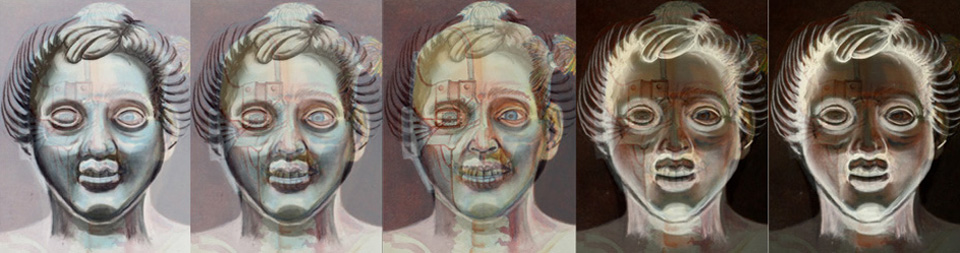
Populism

Political populism appears to be in the ascendance these days.  The idea the ‘power’ is in the ‘people’, the ‘people’ being those rightfully in control, dismisses the opposing views of the minority.  Opposition is unacceptable, lost elections must be the result of fraud, theft; criticism the purview of ‘intellectual elites’.   

Populism simplifies, views differences in terms of power, who’s in charge, distrusts the complexities of democratic structures that require ongoing dialog to self-correct when necessary.  The ‘power of the people’ will be placed in the hands of a strongman who will suppress, unde4rmine institutions in order to impose the ‘will of the people’.   

The attraction of such a position must have something to do with a sense of social impotency, a lack of faith in a democratic society.  The danger is the establishment of totalitarian control. 

Streaming through Soundbites

I’ve been thinking lately about my daily consumption of the news. Anticipating, as I do, the discomfiting nature of what I’m likely to hear I rely on the feeds I get through my phone each morning. I’m realizing my perspective on things is being tainted by the sensational nature of these media soundbites.

As troubling as I find this realization, I will continue my sound bite consumption because I know I will find a more intensive investigation of current events to be more painful than worthwhile.

Moral Truth

I’ve been reading about the conflicting philosophical thinking occurring among the dons of Oxford in the early 20th century. Conventional exegesis centered on issues of morality, how to think about the idea of the ‘Good’ in action and deed, whether there existed an intrinsic moral intuition directing man’s behaviors.

In opposition to such thinking, others maintained issues of morality were beyond the realm of obtainable knowledge, had no truth value, since such knowledge is dependent on the opinion, state of mind, of the individual thinker. The only knowledge obtainable, the logicians determined, will be found in mathematically verifiable constructs, truths within the bounds of scientific investigation. The Ethicists responded that man’s behaviors are much richer, rely on moral constructs and consist of a multiplicity of remembrances and inputs not reducible to mathematical formula.

I guess the atrocities of World War II must have brought the discussion of Good and Evil back to the philosophical table for everyone.

Ahimsa

The eastern religious principle of Ahimsa proposes that one ‘do no harm’: to achieve enlightened insight one must come to the realization that all things human and animal, animate and inanimate have soul-like presence, deserve respectful consideration.

The Jains are a traditional Indian religious sect that take the principle of Ahimsa very seriously. The deeply spiritual among them practice extreme measures to avoid injuring any living thing, plant or animal, will avoid walking at night so as not to injure unseen insects and mask so as not to inhale any sort of minute flying being. The idea is I guess, that in order to achieve Ahimsa one must get in touch with what one imagines that even the least of life forms has valid meaningful existence.

With this in mind, I found myself recently watching a tiny winged creature walk across my pants leg. I wondered where it might be headed, whether it might be seeking food of some sort. Certainly it must be considered a conscious being aware of the dangers around it and what stone it might find that would willingly harbor it for the night. Would it be able to form a bond with the sheltering rock one might assume has being in itself?

There is something enlightening about acknowledging the validity of our fellow beings.

Kenosis

I’ve been reading about kenosis, the idea that, in order to fully embrace the natural world in all its beauty and complexity it is necessary to suppress the ego. Seems reasonable I guess: if one’s sense of self is excessive the inclination will be to subordinate, view the world as a vast department store where everything is available for the personal satisfaction of the consumer: forests, water, mineral resources, human labor is there to enrich the individual who covets it.

A strong ego may fail to recognize the presence of the Other: the aethereal essence permeating all things responsible for the beauty and complexity of the natural world. As the natural world comes increasingly under threat, in order to temper its decline an effort will be required that may exceed one’s comfortable complacence, demand actions and behaviors of uncommon strength and sacrifice. It’s not like these ideas are new: most all spiritual beliefs have embraced the sacredness of the natural world, honored the food animal sought benevolence from the Other to ensure food production.

Time to disavow our sense of anthropomorphic superiority, work to become one with the natural world.

Silver Creek (October)

Evil as Natural Inclination

I’ve been reading, lately, a treatise by the 18th Century philosopher Immanuel Kant in which he determines through his meticulous thought processes that man is evil by nature. He reasons that, while man is aware of moral laws, that there are morally acceptable behaviors toward others one knows should be followed, there is at the same time a natural inclination to favor personal interests above moral concerns for others that may, when push comes to shove, result in evil behaviors.

So, I guess everyone is naturally inclined to be evil, although I suppose one could quantify degrees of evilness: whether one’s self-interest completely undermines rules of morality resulting in despicable behaviors, as opposed to those of us who occasionally find ourselves exaggerating reality for personal gain if we think we can get away with it. The latter doesn’t seem to me to be evil, exactly, but probably merits a certain sense of shame, at least a guilty conscience.

I wonder if Kant thought himself to be evil in any sense. I understand he was pretty reclusive, hardly left his home but for a daily walk around the neighborhood. He probably didn’t have the opportunity to be too evil.

The Cancel Culture

I’ve been thinking lately about some of the public individuals who have been fading from view, have virtually disappeared from the cultural narrative in recent months (or years). Some of these folks have found themselves in disfavor for a variety of reasons: perceived racial bias, sexual improprieties, sometimes simply political incorrectness or holding views found to be inappropriate by the more sensitive of our cultural judges.

I can think of a particularly clever and insightful comedian, a creative radio personality, a talented dramatic actor and several pols who suffer the sins of behaving badly in a moral or ethical sense. There appears to be a particularly virulent group of vigilantes sifting through the pasts of those deemed suspicious seeking condemning information. I suppose condemnation may be in order in some particularly egregious cases even though the perpetrator may have contributed to the public good most of his/her life.

It all makes me think back, wonder if there’s anything there, in my past, that might be brought up, maybe by a disgruntled neighbor or former friend, that I might find embarrassing were it to be revealed.

And, of course, there is.

Either/Or

In his masterpiece Either/Or Soren Kierkegaard contrasts the moral relativity of the aesthete ‘A’ with the clearly defined moral values of the ethicist Judge Wilhelm. ‘A’ revels in seduction, he pursues women, is attracted to the young, innocent and beautiful girl, whose total commitment he gains through devious manipulation. Then, though, once the quarry is won, interest is lost. The ethicist judge castigates ‘A’ for so shallow a behavior informing him he doesn’t understand the significance of a deep personal relationship, that love and duty to a first love produces a deep bond and a constantly renewing true aesthetic relationship.

It seems pretty clear that K. sees himself in both characters: the break-up with his once betrothed Regine on the one hand and his obsession with the moral rigidity of the pietist religion he was brought up to revere. There’s little doubt he experienced serious psychological conflict that eventually resulted in a ‘leap into the absurd’, a total embrace of Christianity.

I must admit I can’t relate to K’s situation but he does do a really good job of getting me to focus attention on my own personal existential self.

Cancel Culture for Adults

I’ve been coming across some new terms in my readings lately that seem to indicate a bit of cultural shift or maybe potential social upheaval in the ways we all relate to each other. The term ‘woke’, I find, suggests the importance of paying closer attention to sexist or racial slights that have existed for a long time and need to be called out. These slights or ‘micro-aggressions’ marginalize minority groups and really have no place, I totally agree, in public discourse.

I’m just wondering, if, perhaps, some of us are spending too much time, looking too hard for slights and questionable behaviors , and are, thereby, bordering on adherence to ‘safetyism’ in which emotional reasoning distorts what reality actually offers, because now, I read, the paintings of Paul Gauguin, the 19th century French painter are being petitioned for museum removal because of the artist’s dalliances with underage girls during his years in Tahiti.

Considering the personal behaviors of some of the other art world notables, Leonardo and Michelangelo among them, I fear the cancel culture, given free reign, could erase a whole lot of the history of western civilization.

The Right Way to Live

I’ve been reading, lately, about the conflicts that developed between the ancient Romans and early Christians. The Romans were polytheistic, their many gods acquired for the most part from the Greeks were represented by magnificent marble sculptures housed in elaborate temples that played significantly in their daily rituals. Through sacrificial offerings the gods were appeased whereby good fortune reigned upon the Romans (well, the monied ones anyway).

The monotheistic early Christians were reluctant, to say the least, to recognize the Roman gods much to the displeasure of the Romans, and, so, suffered some pretty nasty earthly ends for their defiance, that is, until the visionary emperor Constantine converted, tossing the ball into the Christians court. The game changed big time; churches were built, idols and temples destroyed.

Over the centuries to follow the Christians, through draconian laws and inquisitions singled out the heretics, finding ever more creative tortures to convince the pagan Romans of the truth of the Cross. Tit for tat, I guess.

Other than who or what was worshipped the rub seemed to be primarily about the right way to live. The Romans ate, drank and were, more or less, happy in their licentious debauchery, recognizing as they did, the shortness of life while the Christians lived in severe austerity forgoing anything they saw as sinful in nature, suffering this life for the rewards of the next.

Notions of how best to live one’s life have been somewhat softened these days but the dichotomy persists. I guess we’re pretty evenly divided as to which path is the best one to take. A good case could be made, I think, for pursuing a middle way.