The God Particle

I’ve been trying to make sense, lately, of what science, particle physics in particular, tells us is the underlying structure of the universe and everything in it. Apparently, there is a “core theory” which informs us that the sub-atomic building block of all matter is something referred to (simplistically according to Mr. Higgs) as the God Particle, which, as I understand it, is a really, really small item that has never actually been seen by anyone.

To further complicate things these incredibly tiny particles occur as wave lengths in vibrating fields which make up everything from the planet Jupiter to the fly currently resting on my living room window. The whole system is in a constant state of flux driven by energies like gravity and electromagnetism.

As mysterious as this all seems, and physicists freely admit there are many questions still unanswered, the underlying consensus is that Quantum Field Theory is sound as far as describing what kinds of things can’t occur in nature as we know it. Certain supernatural powers, such as telekinesis, QFT tells us, simply can’t occur because the energies manipulating the universe on a sub-atomic level aren’t strong enough to allow anyone’s mind to bend a spoon or send knives flying across the room while sitting sedately at the kitchen table.

I think, though, the jury’s still out on mind on mind occurrences like extra-sensory perception. Who’s to say all those quarks and things flying around electromagnetically in vibrating fields aren’t interconnecting Mind somehow. Anyway, I certainly find it all fascinating to think about. I look forward to our noble physicists finding more answers to the big puzzle.


Intuitive Thinking/ Analytical Thinking

I was reading the other day that psychological research suggests that those folks who think intuitively are more likely to embrace a personal god than people of a more analytical mind set. Apparently, as it turns out, those who base their thoughts on instinctual understanding are inclined toward a mind/body dichotomy, a separation of the mental and physical that presupposes an existence beyond mortality and lends itself well to religious belief. On the other hand, the analytically minded, using reason to frame reality are far less inclined to figure in any sort of supernatural agency when defining the Big Picture.

I’m inclined to think that most of us harbor a bit of both mindsets, at least, I know that I do. I, alternately, seek to reason and understand and sense and accept the presence of the unknowable. Psychology suggests it’s far easier to embrace the intuitive, which is a more natural mental state, while analytical thinking requires hard work, pushing the intellect to find order in the complexities of the world. Finding a balance, for me, isn’t so easy. I can peacefully revel in the beauty of nature where the supernatural lies in wait and then find myself working pretty hard to make logical sense of what I experience around me.

I guess I’ll just have to let my mind go where it will, relax in intuitive oblivion or analytically battle the difficulties before me, as my energies dictate. I have time for both.

intelligent design 3


Worlds within Worlds

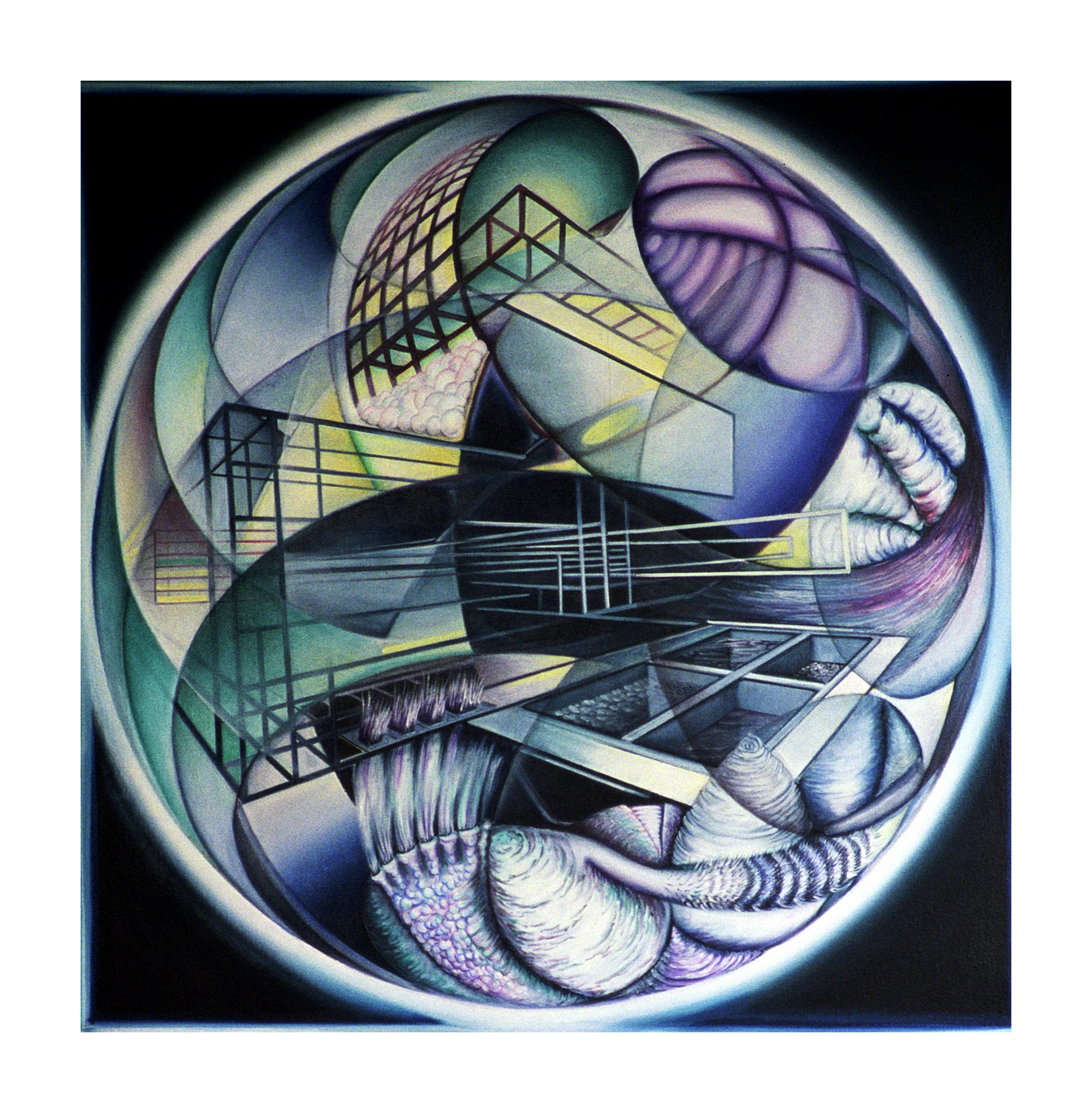
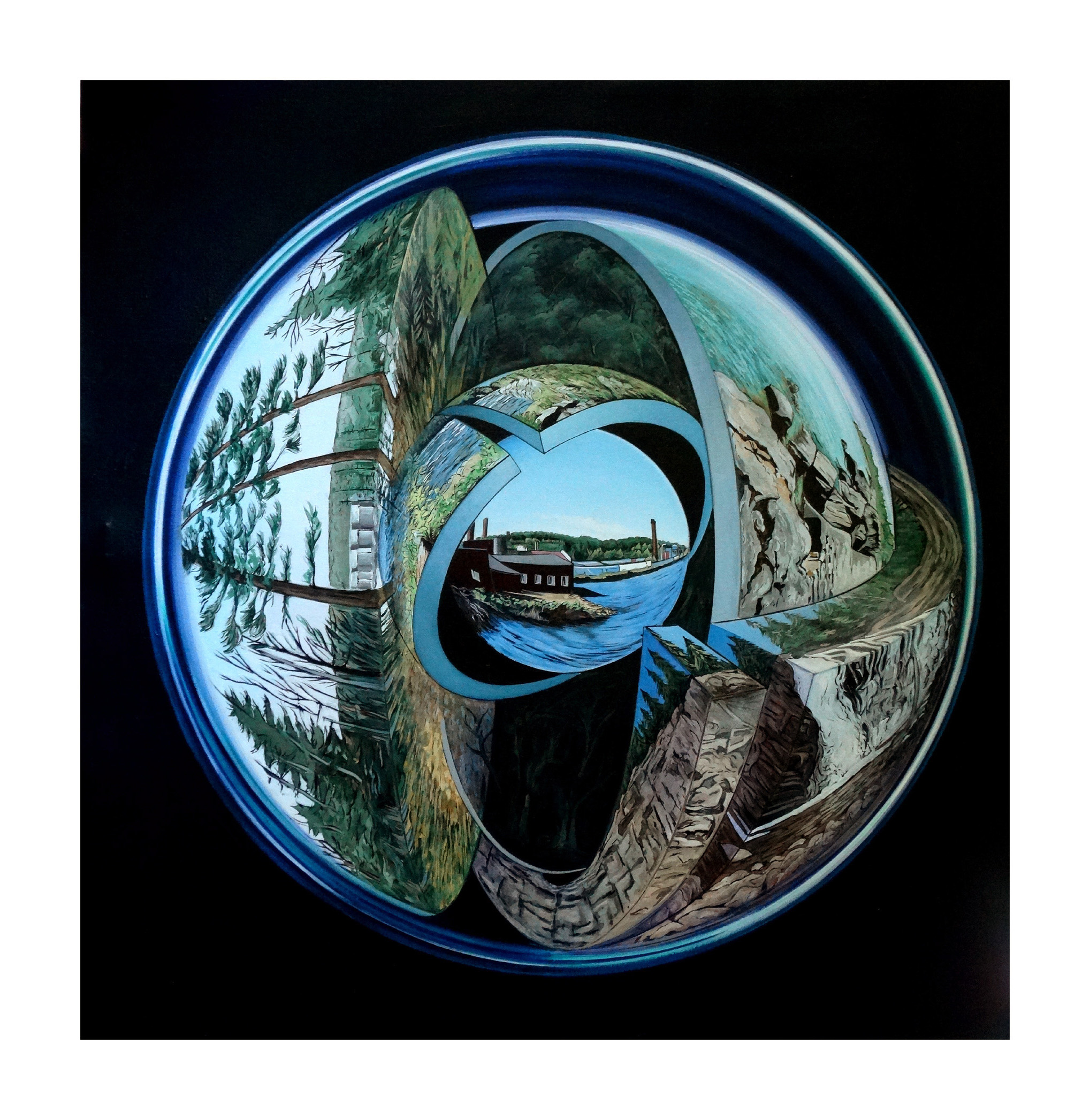
I’ve been wondering about this most incredible idea, that, quantum mechanically speaking, there may exist any number of universes. As hard as I try to visualize such an idea in my limited three-dimensional capacity to imagine spatially it all seems pretty much beyond comprehension. When I add time to the mix I can sort of get an idea of it all. After all, the world as it is right now is not quite the same as the world as it is right now. A micro-second in the past or the future might define an entirely separate reality, a parallel existence.

I wonder if these separate realities float around, bump into each other and maybe intersect for brief periods. Is it possible the remarkable sparkling landscape you saw last week was of another world never to be seen in your reality again? Maybe realities are nested within each other. Do the places you glimpse through the trees and bushes on that familiar winding trail through the woods have a certain other-worldly feel?

I find such thoughts intriguing. I revel in the possibilities, and, as long as I don’t think too hard about trying to define the multiverse in three-dimensional terms, I remain content in the limitations of my understanding.

meditationdevice13a

Are Watched People Nice People?

I’ve been reading that there are a number of scientifically sound studies in psychology that suggest people tend to be good, more generous, altruistic when they’re being watched. And, more specifically, when they are thinking about God, or gods, or other supernatural entities people are more inclined to behave nicely toward others.

I’ve recently been made aware of the fact that a quite large percentage of prisoners in American prisons suffer from one sort of disability or another. According to the report, one of the most common disabilities among the incarcerated is something called ‘executive function disorder’. What this means, I guess, is that those who suffer from EFD are unable to organize themselves well enough to take care of those basic actions required to function successfully, you know, get the things done that need to be done. These folks are apparently unable to get in step with their fellow citizens, or, to put it more simply, they don’t follow the rules, which seems to me a pretty good explanation as to why they’re incarcerated.

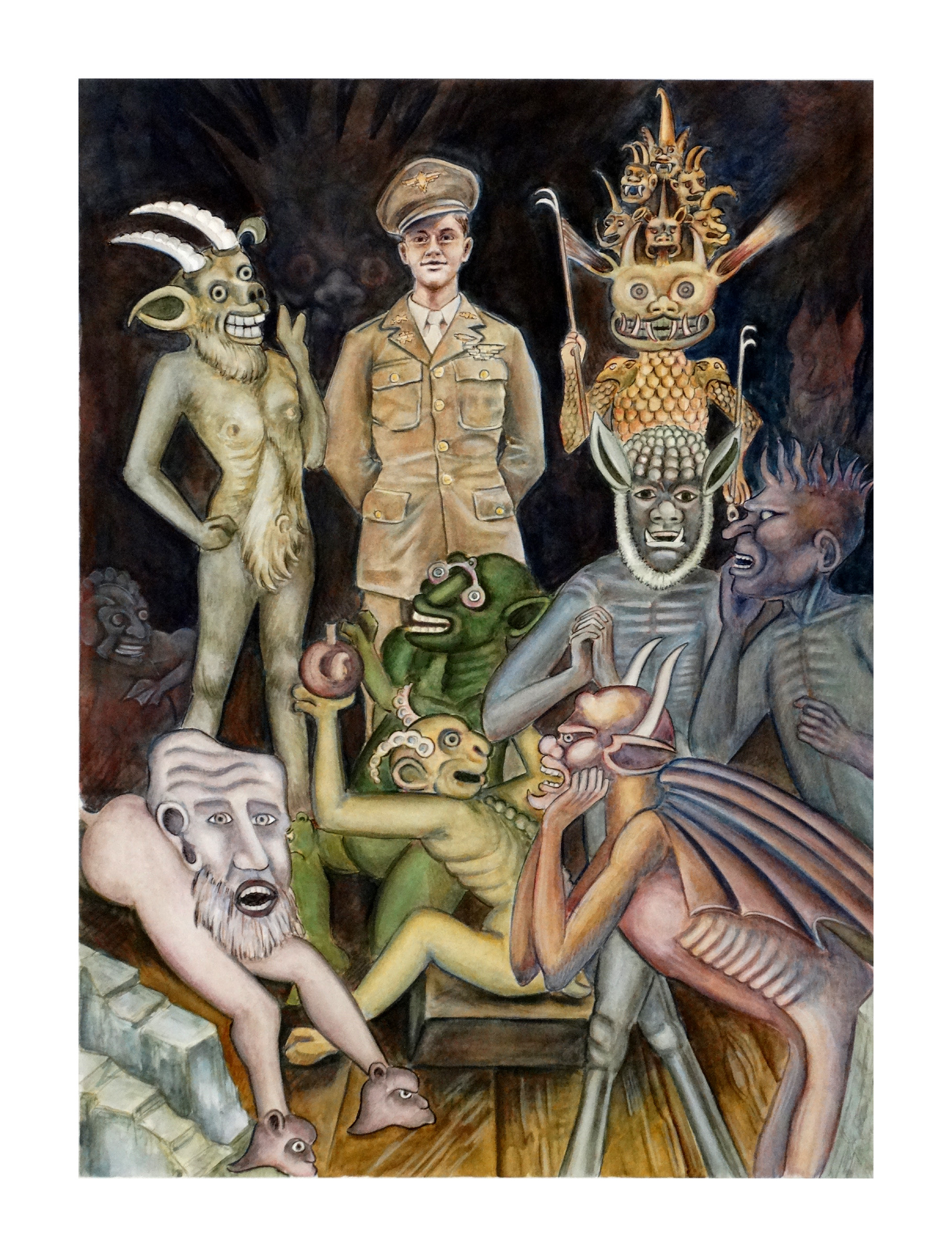
I wouldn’t be surprised if these incarcerated individuals thought about God quite a bit, at least in the beginnings of their time behind bars. I wonder if this means, being watched as they are with great care, these folks are nicer, more generous and cooperative with each other than they might otherwise be.

horrors of war

Totalitarianism

I’ve been thinking about totalitarianism lately. This, in part I guess, because I’ve been reading about the philosopher Hannah Arendt who escaped Nazi Germany in the 1940’s and, as a Jew, gave considerable thought to the subject.

Ms. Arendt determined that a successful totalitarian regime is able to establish a commitment to certain idealisms, such as racial purity or nationalistic solidarity, at the expense of basic human rights. By creating and enforcing with a heavy hand certain rules and laws focused on idealisms, plurality and individuality are undermined and an undifferentiated populace is championed. Faced with being ‘for us or against us’ the individual trying to go about his business taking care of family, putting food on the table and such will understandably become fearful. The fear of being perceived as an outsider tends to push ordinary citizens to embrace and participate in the extreme right wing political agenda. And, before long, most everyone is on board except, of course, those chosen as scapegoats to represent all that is evil and in opposition to the selected ideal truths.

As I think about it, it seems to me most all political structures, even those that declare democratic rule, have a bit of an inclination to push idealisms and demonize an opposition. Hopefully, individual strength and perseverance will hold such totalitarian impulses at bay. One must be careful, thought, not to take individual freedoms for granted, I think.

shriners3

In Groups/Out Groups

I’ve been reading, lately, how evolutionary theory offers insights into human behavior. Apparently, deeply ingrained within our genetic make-up, we survivors have certain inherent inclinations that, despite how desperately we may want to rationalize them away will always be with us. Our ultimate evolutionary need to pass on our genes has embedded within our psyches the drive toward group membership: like-minded individuals to share values and reciprocal support and the presupposition of a supernatural agency. I guess what happens over (a long, long, long) time is that the group establishes an identity: cultural, moral, spiritual, that separates it from other groups.

So, what this must mean is that we all will forever be divided into in-groups and out-groups. In the best of times, I suppose, toleration will reign, there will be peaceful co-existence. But even when such periods exist, the Ins will know that they are the trustworthy ones who recognize the true supernature, which means that there will always be a sort of tension between Ins and Outs that could, and sometimes does, fester and erupt into violence. And such a situation will be more likely to happen, I further suppose, when one group feels its existence is threatened if political power becomes imbalanced. And, as much as one might like to disassociate oneself from this ridiculous op positional stance, you really can’t since you wouldn’t be here to even think about it all if your ancestors hadn’t passed on the necessary survival genes.

I guess this evolutionary perspective explains a lot about the nature of the world today. I will try to remember that as evolution continues to slowly and erratically move along, in some distant future perhaps it will catch up to an intellectual enlightenment.

born-again-3.jpg

What it means to be an Intellectual

It has occurred to me recently that people who identify themselves as being intellectual, or are thought of in that way, are often considered arrogant. There seems to be an elitist connotation associated with intellectualism. The image, I guess, is one of out of touch academic ideologue lacking a pragmatic real world outlook.

And this, despite the fact that intellectualism is really nothing more than an attitude of exploration and investigation; an open perspective to ideas and positions of all sorts. Questioning is the essence of the intellectual stance, which, when healthy, stops short of blanket skepticism to arrive at the best possible answers at the moment, aware, always, that better answers may certainly appear in the future.

According to Richard Hofstadter, former Pulitzer Prize winner and history professor at Columbia, anti-intellectualism has probably always been with us but was exacerbated in America by frontier expansion which left behind the social structures of education, religion and government resulting in social regression. The early pioneers found themselves in a more primitive social situation where rule of law was replaced by retributive payback and moral relativism replaced trusting reciprocity between neighbors. By the time religion finally caught up to the westward expansion the unlettered populace responded to a revivalist approach that undermined education in favor of pure passionate religious response.

What makes all this so fascinating to me is the fact anti-education, anti-intellectual sensibilities have not only not dissipated but, judging by current political occurrences gained strength, at least in some quarters. I wish I knew what it would take to get more people to think things through a little better. I don’t think one has to be an intellectual to do that.

root people 3

Our Innate Spirituality

I’ve been reading, lately, that our innate spirituality is deeply rooted in our evolutionary past. According to the religious scholar John Teehan (actually I don’t know if he’s religious or not but he sure knows a lot about the origins of religion) a sense of the supernatural developed very early on in our evolutionary past.

The early pre-historic survivors of a very dangerous world were those who maintained a constant alertness. They thrived because they kept a watchful eye on the beings around them. They were, more than likely, overly conscientious which led to them over-interpreting under-determined phenomena. In other words, rustling in the bushes and other things they weren’t quite sure about were attributed to intelligent being, like dangerous animals or hostile others. These overly-cautious folks, though, were the survivors because they were ready when danger appeared.

Over the millennia, the watchfulness gene was passed along. Even when no danger was present our surviving ancestors sensed intelligent life where clear knowledge wasn’t available: the mountain top, beyond the clouds, in the dense forest. This sense of an ever-present but invisible intelligence developed into an animistic sense of spirit beings and then eventually evolved to the conception of gods.

I guess what this all means is that the human mind is designed to naturally and automatically interpret the world in terms of intelligent agents: beings acting with intention.

So, anyway, with all this in mind, I’ve been thinking of revisiting the vortices in Sedona, you know, let my primal mind take hold and embrace the spiritual power, maybe even pass through a portal into another realm. Like Kierkegaard said in another context: embrace the absurd and leap into faith.

meditationdevice12

Contributing to the Social Good

I’ve been thinking it may be time for me to step up and do a little more for those around me. I have for some time been the recipient of a very favorable social environment which has enabled me to live my quite serene life of artistic endeavor and contemplation. But, lately it seems to me that simply offering my unassuming, benevolent countenance is maybe a bit lacking; I could, perhaps, do something more for my neighbors. I don’t think I’m a good candidate for public office of any sort and policing or firefighting is beyond my abilities but it sure seems I should be able to find some way to be of service.

A friend suggested, when I put the dilemma to him, that the best thing I could do for mankind is simply stand aside-just stay out of the way, by which I assume he meant I should let those with energy and capabilities make the things that need to happen, happen.

I still think there must be something, some small skill I could share that might be beneficial. I do like to read, so perhaps I could build a little free library. Then I could fill it with philosophy books. It seems to me it would certainly be a good thing if I were able to turn my neighbors into enlightened liberal thinkers.


An Aversion to Heat

I’ve found myself, lately, inextricably rooted in a mindset of cynicism that I think may be due to being in the heat of these southern climes where I am temporarily residing.

Cynicism is not foreign to my nature by any means but it seems to have assumed a stronger grip on my thought processes these days as I endure temperatures in the 80’s and 90’s. For example, when I see all the elderly individuals down here, plodding along on their walkers or holding up traffic in their golf carts, rather than commiserate, I am drawn to thinking that their migration to these sunny climes is but preparation for their soon to experience date with the crematory oven.

And then there’s the ubiquitous border patrol’s insidious presence on the roadways seeking to intercept any illicit Hispanic migrants who might be crossing the border looking for honest work. And this is not to mention the legions of homeless individuals on bicycles, pulling wagons containing all of their worldly belongings, sleeping in the parks while being ignored by a government adverse to social provision of any sort.

Anyway, I’m thinking it may just be the heat that has me so off-center; it may be time to proceed north to cooler climes and a more compassionate perspective.

meditationdevice11