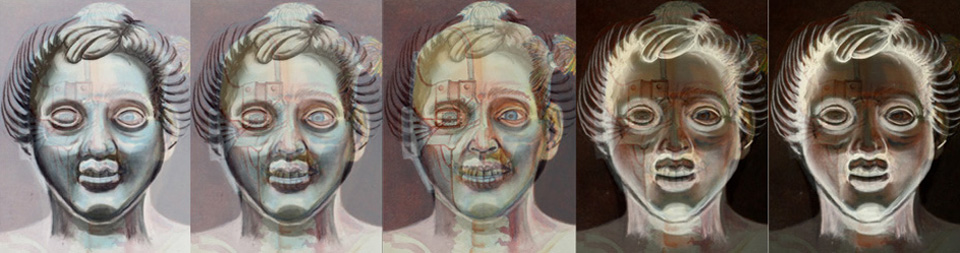
Dangerous Times

I’ve been thinking about the George Orwell novel 1984, how the totalitarian regime in the book implemented catch phrases to secure the minds of the populace. ‘War is Peace’ is used to establish a permanent enemy, a scapegoat, that can be blamed for any and all ills that befall the citizenry. ‘Freedom is Slavery’ discourages individualism tribalism in order to keep everyone bound to the collective. ‘Ignorance is Strength’ encourages the subservient populace to forego intellectual reflection, follow the dictates of those in power, not think about things to hard and they will realize contented peace. The message is, I guess, that given such ideas along with sufficient deterrents a totalitarian regime turns people into sheep without them realizing it.

Sounds familiar, doesn’t it; we owe it to ourselves to step up, encourage opposition, reaffirm our freedoms and checks on excessive power. The democratic media voices critical commentary daily; let’s make sure we support it.

Transcendence or Distraction?

It occurs to me the single thing common to all humanity is the desire to deflect, in some way, mundane reality; to find meaning beyond routine daily existence. Aldous Huxley calls such an accomplishment transcendence. Whether it be of a spiritual nature or other special interests, hobbies, travel or whatever the desire to transcend is primary motivator.

Is such pursuit transcendence or simply distraction? If the latter, what are we distracting ourselves from? Could it be the existential fear of having to find our true values: the fear of living an authentic life?

Or maybe we realize we don’t need to get all philosophical about doing what we enjoy, for whatever the reason may be. Maybe making up and playing a board game may be sufficient irony in response to such questions.

Different Hats

I have a friend who is a school administrator. Although he never complains, it’s apparent the pressures of the job are often trying. He told me once that the job requires him to wear different hats by which I assume he meant the need, sometimes, to act the policeman, other times to accommodate with a smile undeserved criticism, and so forth.

As I think about this, hat wearing, in fact, often carries meaning beyond its basic head-covering function. Political affiliations may be conveyed, products advertised, and humorous familial contexts presented. These presentations of identity along with the desired in-group associations the wearer wishes to convey may also carry an accompanying negative reaction that the hat wearer may not desire. Repulsion and hostility being real possibilities.

So, thinking about it, I intend to be careful what I put on my head.

Orbital

Samantha Harvey tells the story of a crew of astronauts circling the earth in an international space station. Each crew member contemplates his or her existence with a new awareness, removed as they are from the 24 hour cycle of life one experiences on the planet surface. Circling the globe as many as fourteen times in an earth day, accompanied by fourteen sunrises and as many sunsets, the astronauts watch, god-like, as a cyclone forms above the Philippines. They each come in time to the profound realization their very existence is extremely fragile, dependent upon the celestial body they’re circling.

As they perform their assigned experiments and daily maintenance tasks, over-coming the space sickness and lack of sound sleep, they nevertheless marvel at the constantly changing color and light show they see as they hurdle, weightless behind and around the entity that sustains they’re existences.

Such a perspective must surely overshadow the petty power struggles that define life on planet Earth.

Story Lines

As people became more sedentary during the Neolithic era tribal groups united forming larger populations. These disparate groups, to form a functioning society needed to share a common sense of the way things are, a shared belief system. They needed a storyline that all could grasp, accept and believe in order to accept a hierarchical structure to deal with property ownership and exchange of goods.

A workable storyline would need to include reference to the supernatural. Human uncertainty requires connection to an entity that can be appealed to when crops fail, drought occurs, or outsiders threaten the groups existence.

As societal stability evolves, multiple story lines will develop, one flexible and open to new developments, another rigid, protective and resistant to change. Hopefully stable institutions will be in place at that point to accommodate such diversity of thought.

An Ominous Future?

In 1935 Sinclair Lewis wrote a novel: It Can’t Happen Here, detailing the horrors of a totalitarian dictatorship. In the novel the ‘corpo’ government takes control, restrictions on personal freedoms emerge and the press becomes the voice of the state, dissidents are rounded up and imprisoned or executed and minorities become scapegoats. Young men are conscripted into the quasi-militaristic “Minute Men’ whose task is to seek out and arrest anyone suspected of subversive activities. As people began to realize their loss of freedoms mass demonstrations formed and were brutally put down by the oppressive regime

In America today we see militaristic ICE agents assaulting immigrants deporting them without legal recourse to interminable prison time in Venezuela. We see attempts to suppress free speech in the racist intentions to cancel Diversity Equity and Inclusion programs in colleges and universities. We see ICE agents removing books from public libraries which can only be seen as an attack on education.

This totalitarian wave we’re experiencing is intended to overwhelm us; resistance is necessary; silence is acquiescence.

The Dissolution of Hope

I’ve been thinking about what happens when life imposes obstacles so overwhelming one loses the hope a better life is within the realm of possibility. A darkness settles in with the realization a livable future doesn’t exist. Socially enabling behaviors, neighborly connections, dissipate, alienation results, hostility develops, obsession finds only the enemy.

Does such a one entertain a death wish or strike back and initiate an evil response?

Moral, Amoral Immoral

I’m wondering lately what part morality plays in our social behaviors these days, how morally ambivalent we’ve become in our acceptance of the less that morally stellar actions of some of our public figures. The ‘designer’ morality many of us assume these days lacks the omniscient overseer Christian believers have: an entity able to impose punishment or reward for behaviors well spelled out and without compromise.

However, we draw our moral guidelines it seems pretty clear that lack of any moral truths has dangerous implications for personal well-being and for our relationships with our fellow man. Amorality turns into immorality that leads to evil intent, the inclination to replace social benevolence with Will-to-Power.

A Shadow Self

I guess it’s pretty clear that we are all innately susceptible to wicked behaviors. That, while we maintain a respectable public persona within us burns a shadow-self, a dormant entity that when motivated surfaces to exhibit behaviors that can only be described as evil.

There are various reasons why an evil shadow-self might reveal itself: fear of the Other among them. An obsessive jealousy might ignite one’s Darkside as well as vain responses to threatened identity. Instigators might arouse the shadow-selves in whole populations by demonizing a scapegoat as happened with the witch burnings during the Middle Ages and antisemitism in the 1930’s and 40’s.

When the eruption of the shadow-self occurs, our moral imperatives will likely be overwhelmed allowing our innate wicked behaviors to flood in.

Our Evil Selves

I’ve been reading that everyone has within them the potential to behave in ways that can only be described as wicked. The idea is that although most of us develop moral values that help us remain socially responsible neighbors, (you know, do unto others as we would have them………..), a shadow self that has the potential to cause us to engage in evil behaviors, lurks within us.

Sometimes obsessions driven by envy, pride, greed or lust can turn us away from the moral guidelines that have made it possible for us to live socially responsible existences. If these obsessions grow and fester, continue unchecked, they may disrupt our sense of identity to such an extent we may forget who we are. When this happens the potential for evil behaviors against our fellows becomes all too possible may even lead us to actions that go far beyond the disquiet that led us initially to the obsessiveness, which can result in a total annihilation of what was initially desired and spiral us downward into self-destruction.