Migrating South

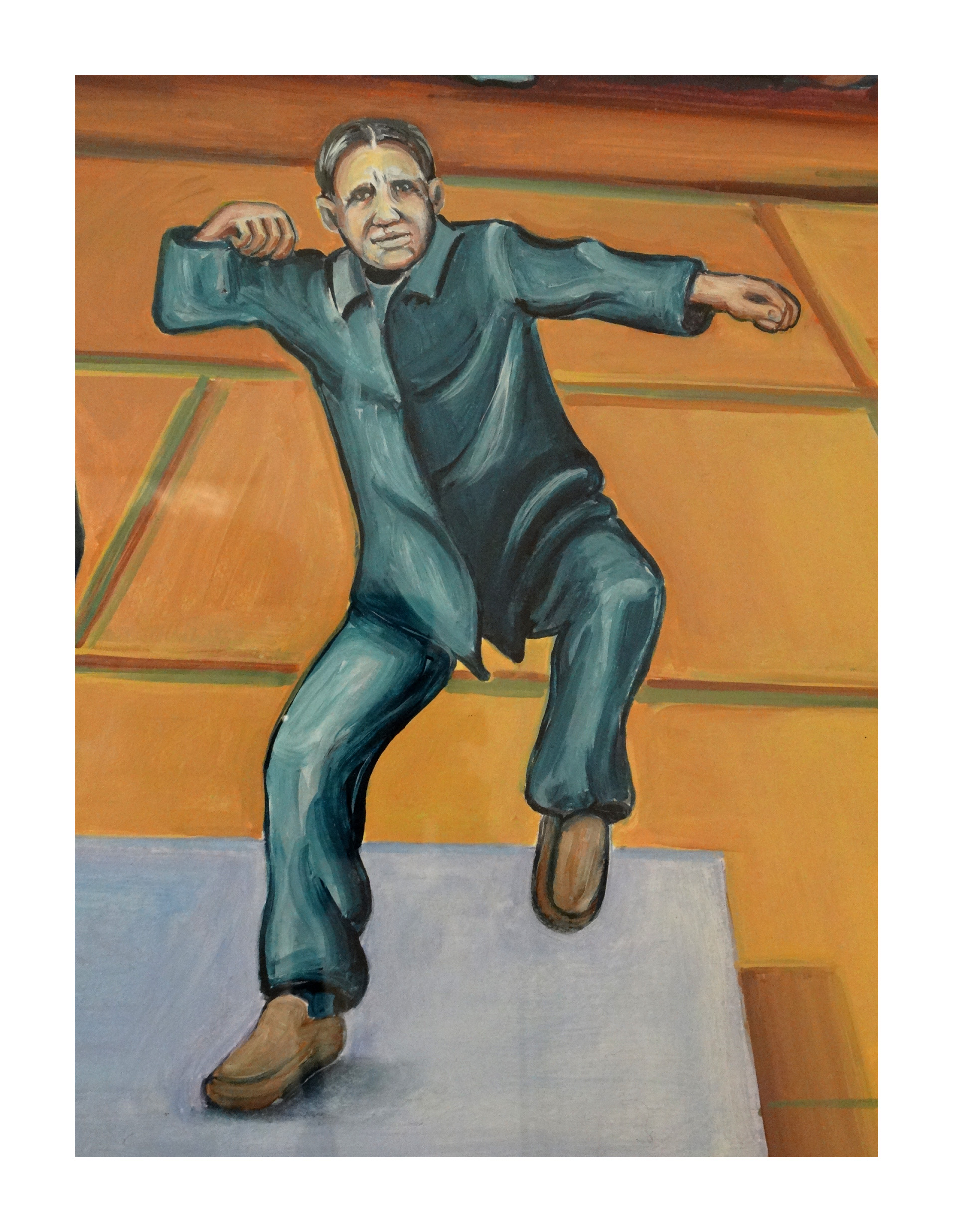
Granny Applehead has been talking about joining the migration of the elderly to the warmer climes of the south.  She says that, as one’s metabolism slows down with age warmth is a primary need for any sort of comfort to exist.  She yearns for the nice dry walks and roadways and the easy availability of golf carts allowing a mobility that the ice, cold and snow prohibit.

Besides, she says, a retirement community offers the benefits of social interaction with others of one’s own age and, often, sensibility.  Structured days playing mahjong, drinking tea and attending concerts and lectures are pleasant distractions from our ever present aches and pains.  Everything about it points toward enjoying quality time in our autumnal years and prepare us for the day when the warmth of the cremation furnace will return us, dust to dust, to our mother earth from whence we came.

She jokes with her friends that she might instead opt for Plastination so that her children will be able to enjoy her personage gathering dust in the corner of the living room (boy, does that sound familiar).  It seems kind of morbid to me but I guess it’s just her way of making lite of the impending reality; the unknowns of death everyone must face.

granny3

Fertility Rites

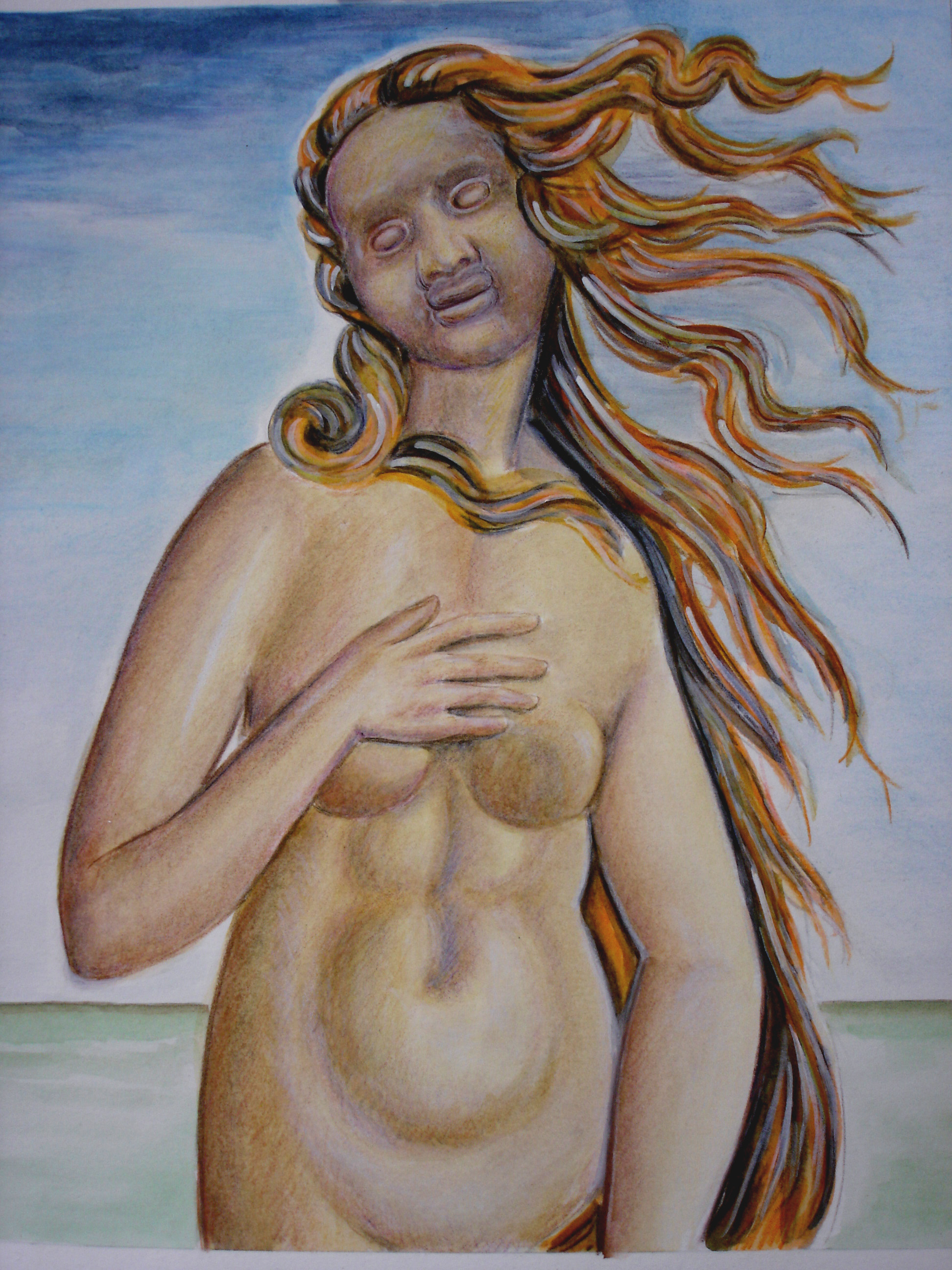
Eastra, the doll of the season, was telling me the other day that in ancient times the beginning of spring at or about the time of the vernal equinox was celebrated with fertility rites which were meant to encourage a general fecundity among all living things animal and vegetable.

Many cultures had gods and goddesses honored in these rites; there was Artemis in Greece, Cebele in Phrygia, Diana in Ephesus and Attis the god of ever-reviving vegetation who was believed to have been born of a virgin and who died and was reborn annually.

I was trying to imagine what these rites might have been like. They probably involved a lot of fertilizing of various seeds and things and to get everyone into the mood, to get their energy up, to really get into the re-generation mind set there probably was a bit of strong drink, wild dancing and singing.

I found out Cebele the Phrygian Earth goddess was honored with a procession involving wild, high pitched flute music and drumming, scattered rose petals and clouds of incense followed by priests and priestesses scourging themselves with sharp knives.

But that was mild compared to the cult of Ishtar that may have involved child sacrifice, ritual copulation and virginal girls dancing around large male genitalia.

Whatever the rites involved the celebrants must have thought it worked. Besides the great fun had by all (excepting the sacrificial victim) animals reproduced, babies were born and crops grew. It does seem pretty magical and I guess it was hard for most people to take for granted the resurrection of the dormant (or dead) without providing some sort of penitential assistance even though we all know Mother Earth is a gigantic incubator and really doesn’t need that kind of help.

I think I’ll celebrate Mother’s magic with a nice contemplative walk in the woods.

rite of spring 3

Beyond Space and Time


Free-thinking Frank was telling me the other day about this group-a movement really-of skeptics dedicated to the task of debunking all things paranormal like ESP, UFO sightings, conversing with the deceased, telekinesis, and anything else they see as magical thinking.  They’re a conscientious bunch, Frank says, avoiding generalization and attending to the particular, which means they pretty much take all claims seriously.

Employing the scientific method these skeptics seek out verifiable data and eye-witnesses with consistent, non-contradictory accounts but for the most part are seeking normal and natural explanations for the anomalous phenomena thought of as paranormal.  Frank said these skeptics find religious claims dubious as well but aren’t inclined to consider them for analysis since they rely so heavily on non-falsifiable premises.

All in all, Frank said he thought the skeptics are on the right track attempting as they are to clear the air of the fog of magical thinking, you know, putting people on the path of verifiable truth.

As I thought about it, I wasn’t so sure; I found myself skeptical of the skeptics.  It seems to me science has relinquished its claim to the ground of truth these days.  The space-time continuum among other things has really messed with our intuitive sense of the cosmos.  Do our processes of thought even correspond to the structure of nature?

So, for me, it’s time to re-examine the paranormal.  The first thing I’m going to do is dig out my birth chart and see what the stars have in store for me.


evolvingworlds3

Thoughts on an After-Life

I’ve been reading lately about the various ways different cultures and people think about after-life. Many of the various after-life conceptions identify an inner spirit or soul within each individual that is in some way immortal and will live on in a place determined by their conduct in the life they’ve just left. Some contend the deceased will be reborn taking a living form, animal or human, consistent with their previous moral, ethical existence.

Some researchers have hypothesized what the after-life might be like. One suggests that after death the soul floats into the atmosphere where it lives off of the ultra-violet rays from the sun. Another believes after death the self will find itself in a dream word of memories and mental images. Still another thinks the mind will merge into a collective consciousness the downside being it will relinquish its personality.

But, the idea about what the after-life will be like that I like best is that each person will experience a world of her own, unique to herself and consistent with her earthly existence. If my next world follows my nature then it will be filled with wonder and uncertainty and I will continue to question, to look for the ever elusive answer and to revel in the ever-present Mystery. What could be better than that?

Being-in-the-world

Truth and Power

Brother Abraham, the biblical scholar (who happens to look quite a bit like St. Jerome), was telling me the other day about the beginnings of the early church.

He said that early on there were all sorts of different beliefs about God; some thought of him as creator-in-chief, others saw him as an ever-present spirit permeating all of nature; even God’s gender was questioned by some.

People, Abraham told me, looked for different ways to get in touch with God.  Some thought the church with it’s doctrines and rituals was the way to go but others thought they could meet God themselves if they tried really hard so they sought revelation through fasting and other kinds of bodily denials.  Others believed secret knowledge was hidden in the words of the Bible, there to be deciphered by the truly committed.

Then, while the Christians were busy seeking an audience with God the Romans were feeding them to the lions or killing them in other really nasty ways because they felt the Christians were disrespecting the true gods which of course were the Roman ones.

But, around the year 300 or so the Emperor Constantine had a revelation of his own and declared Christianity not only lawful but THE religion of the whole Roman Empire.  Then he provided lots of money to build churches which made the early church fathers very happy.

These early bishops soon took a dim view of people seeking God on their own.  They encouraged them, in not always pleasant ways, to come into the fold and renounce their heretical ways since they (the bishops that is) felt that they clearly didn’t need the competition.  And, besides, they (the bishops again) had Truth on their side.

Well, I went home and thought about this story for a while.  I had to wonder if conflicts such as these are really about truth.  It seems to me the desire to be in charge has something to do with it.

brotherabraham

Demons

The demons are after me these days.  They’re insinuating themselves into my consciousness relentlessly and in ever more devious ways.  They invade my psyche with unhelpful thoughts.  They seek and find my psychic weaknesses-poke at them to bring them to the surface.

They manifest themselves in the most unlikely places, turning friends into evil antagonists, pleasant situations into depressing occurrences.  I must be on my toes constantly to identify their presence-separate them from normalcy.  They come by so frequently lately I’m beginning to be able to identify each individually:

There’s Andros the sewer of discord, Alastor the personification of curses and the host of Hindu Rakshasas poking and pestering but perhaps the greatest distress emanates from Kali who is constantly inciting me to violent action.

I’m consolidating my energies.  Soon I’ll call them together and give them each a sound thrashing.  It may have to wait until spring.

kali

The Plain Truth

The Jesus People stopped by the other day.  They wanted to know if I was interested in learning the Plain Truth.  When I didn’t immediately respond I was told that ever since the sins of Adam sentient beings (such as myself, I guess) have found themselves in a downward spiral away from God, and, being lost, attempted to find meaning on their own, their egotistic hubris leading them down dead end paths of misunderstanding and away from the mysteries of life and God’s purpose for all.  They told me all I had to do was appeal to God to reveal himself to me and I would then be in possession of the Plain Truth; just don’t over-think it.

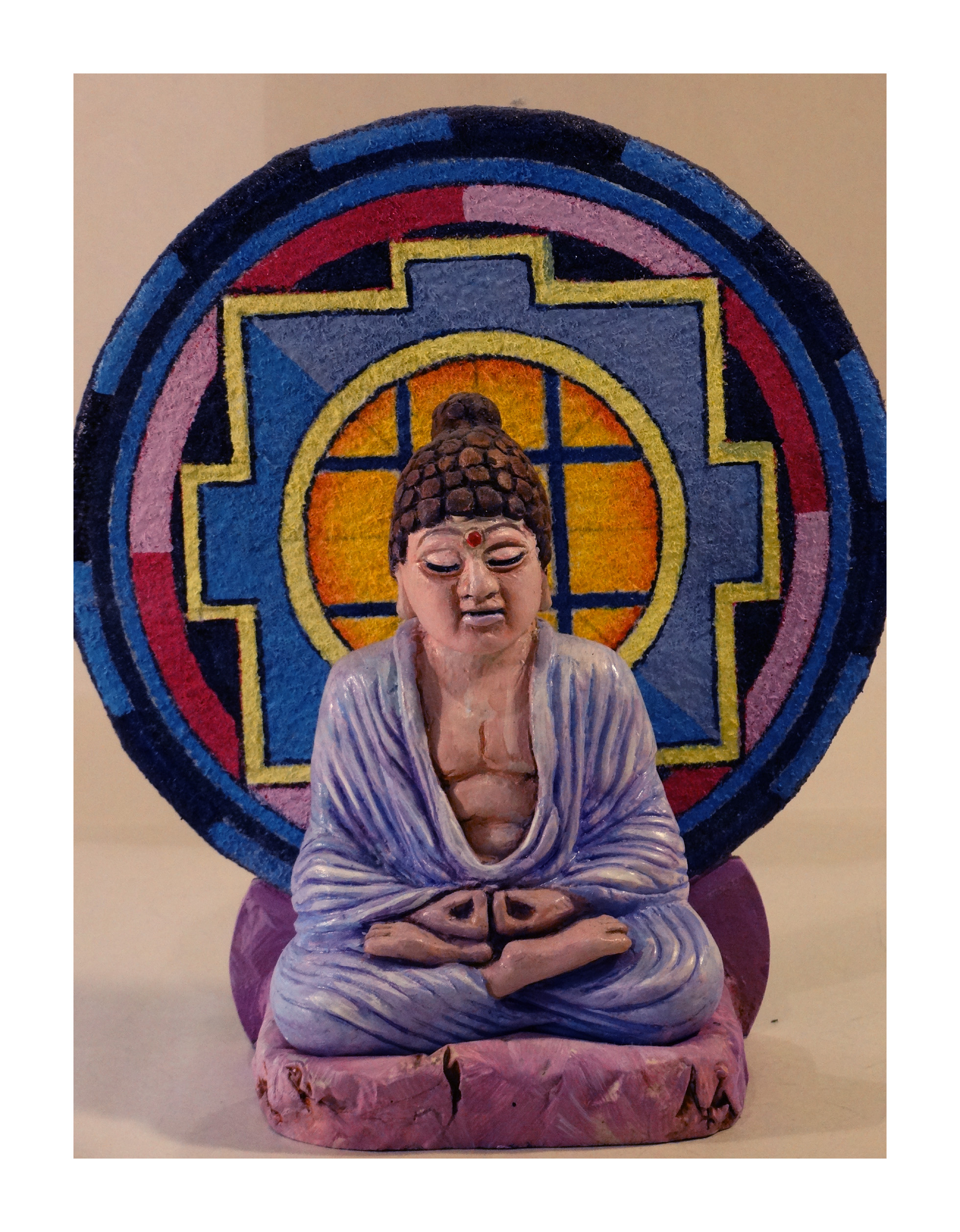
I responded that I was cognizant of an essence outside myself, an ineffable aspect alive within and without nature that I recognized nourished my imaginative being allowing access to infinite possibility.  It provided a truly positive beauty I thought about and nurtured daily through meditation and community with nature.

Well, we found ourselves at a standstill; they clearly saw me as a lost soul heading south and I was pretty sure I didn’t want to travel their road no matter what direction it was going.  They walked off hoping, I suppose, for a more favorable response from my neighbor.

But the thing is there was no animosity present in our exchange maybe because we, on some level, recognized a kindred sense of common pursuit.  We’re all searching for the ineffable, just taking different paths.  Hooray for pluralism.

jesuspeople

Thoughts on Death

I’ve been thinking about death lately.  I know, I know, but it’s winter what can I say.  Anyway, I was thinking if one is healthy and death suddenly appears it really has little effect on the suddenly deceased other than the fact he/she is dead, but, minimal pain is involved; healthy life, then extinction.

But, when I think about dying, anticipate it, I face the existential dilemma of no longer being here, in this my familiar environment which may not be perfect but certainly has pleasant aspects that I will surely miss, which is the reason, I guess, that thoughts of death are generally not thought of  in a positive light.

Which then leads me to wonder what’s next; the idea of a descent into nothingness is pretty hard for most of us to bear, which explains the various incredibly complex explanations and anticipations of preternatural existences man has thought up over the millennia.  There’s the heavenly realm, a Zanadu-like ideal city and Valhalla, the home of the gods. And then there are the more new-agie notions of rejoining the Collective Consciousness and the ancient Hindu notion of reincarnation leading eventually, if one is lucky, to re-unity with the Atman.

I guess some would call this fantastic, even delusional, but when I think of the absurdity of maintaining a sense of our individual significance in a world of billions of people and dolls in a limitless universe I guess entertaining thoughts of an after-life isn’t so terrible.

Mysterious Burial

Mysterious Burial

Winter Doldrums

The winter doldrums have set in.  Nature lies in dormancy and I must admit I’m affected.  My thoughts increasingly become dark.  It’s like I’m living under a black cloud.

It seems like everyone’s rubbing me the wrong way these days.  I’m getting negative vibes from dolls (and people) I usually co-exist with easily.  Why does it seem they’re trying to impose their values-values that make absolutely no sense to me or with which I totally disagree.  I’m perfectly ok with others having opposing views but why can’t they just keep them to themselves.

And the weather’s terrible; cold, cold, cold.  I’m afraid of being taken outside, my plastic body becoming brittle and cracking; then I’d be in a fix.  I’d be destined for the scrap heap no doubt.

If I was religious I might be thinking about the sweet here-after, but given the mood I’m in crossing the River Styx is the more likely consideration.  I wonder which place houses the more interesting residents.

Oh well, I know it will pass. One morning I’ll wake up to a slightly stronger sunshine which will trigger a change.  I’ll once again be my usual upbeat self with an added bit of residual annoyance.

BRIDGE REPAIR3

A Renaissance Woman

During the renaissance period in Europe, when artists weren’t painting scenes from the Bible commissioned by the church, they were likely painting portraits of the rich and famous.

Among the rich and famous at the time was the Borgia family whose numerous intrigues, rumors of incest, murder and orgiastic engagements made for great story telling in 15th century Valencia.

Often the future Pope Alexander VI’s daughter (and lover) Lucrezia was the center of attention.  She was by all accounts a captivating young woman, betrothed twice before her teen years and otherwise regularly used to further the political ambitions of the family.

But Lucrezia wasn’t simply a pawn in the Borgia’s game of political domination.  She was a true Renaissance woman, well educated, fluent in a number of languages including Latin and Greek.  She was politically astute and well-spoken at court where she cultivated friendships with leading artists, courtiers and poets of the day turning Ferrara into a center for the arts.

When one’s flame burns strong it’s often short-lived and such was the case for Lucrezia.  She wound up submersing herself in religion and dying at the age of 39.

I wonder where someone like Lucrezia would fit into the contemporary social milieu.  Would she contribute a strong and articulate female voice to the world dialogue regarding politics, feminism and the arts only to burnout in the futility of the endeavor, find religion and end up probably not being an asset to the abbey?

Whatever happened she would most certainly become a media favorite adored by the left and abhorred by the right.

ddsquashhat1