Fertility Rites

Eastra, the doll of the season, was telling me the other day that in ancient times the beginning of spring at or about the time of the vernal equinox was celebrated with fertility rites which were meant to encourage a general fecundity among all living things animal and vegetable.

Many cultures had gods and goddesses honored in these rites; there was Artemis in Greece, Cebele in Phrygia, Diana in Ephesus and Attis the god of ever-reviving vegetation who was believed to have been born of a virgin and who died and was reborn annually.

I was trying to imagine what these rites might have been like. They probably involved a lot of fertilizing of various seeds and things and to get everyone into the mood, to get their energy up, to really get into the re-generation mind set there probably was a bit of strong drink, wild dancing and singing.

I found out Cebele the Phrygian Earth goddess was honored with a procession involving wild, high pitched flute music and drumming, scattered rose petals and clouds of incense followed by priests and priestesses scourging themselves with sharp knives.

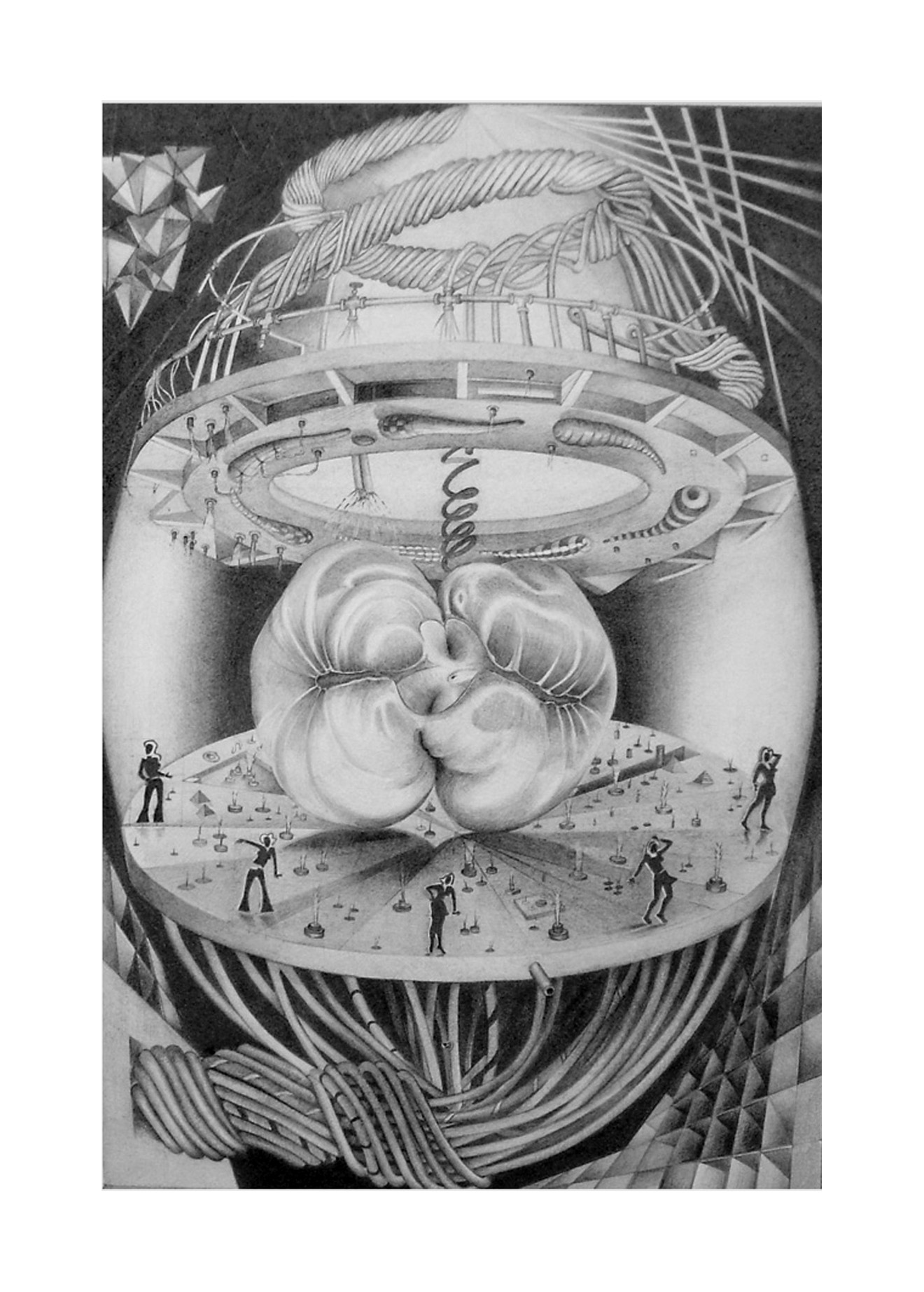
But that was mild compared to the cult of Ishtar that may have involved child sacrifice, ritual copulation and virginal girls dancing around large male genitalia.

Whatever the rites involved the celebrants must have thought it worked. Besides the great fun had by all (excepting the sacrificial victim) animals reproduced, babies were born and crops grew. It does seem pretty magical and I guess it was hard for most people to take for granted the resurrection of the dormant (or dead) without providing some sort of penitential assistance even though we all know Mother Earth is a gigantic incubator and really doesn’t need that kind of help.

I think I’ll celebrate Mother’s magic with a nice contemplative walk in the woods.

rite of spring 3

Who Are We?

Celestial Steven was waxing idealistic recently about the tenuous existence of humankind.  He said, that, early on-that is way, way back in time-cooperation among advanced sentient beings was primary.  An individual’s survival depended upon interaction with others.  On an individual level everyone was equal.

Problems, he said, began when the individual started identifying with a particular group; with group identification came conflict with others.  The whole process has continued to grow and fester into the sectarian, racial, and religious conflicts (not to mention the divisive social class distinctions brought about by economic inequities) we now experience.

So, Celestial Steven said, if we could re-establish the one on one or establish an egalitarian collective everything would be peachy.

Mini-Max, being an unapologetic pragmatic conservative, took immediate exception to this idea.  He said it is only human nature to desire the security of association with one’s own kind.  The social security and economic stability of such alliances brings about fair competition between groups resulting in innovation and invention that lead to affluence and raise everyone’s quality of life.

So, I guess what it comes down to is racing blindly toward self-destruction as we fall deeper into our tribal differences in the interests of more for us or waking up, over-coming our jealousy and fear of the other and moving toward a more egalitarian world.

Well, I think collectivity may be the way to go but I would hate having to give up my playhouse.

celstevminmax

Cultural Autism

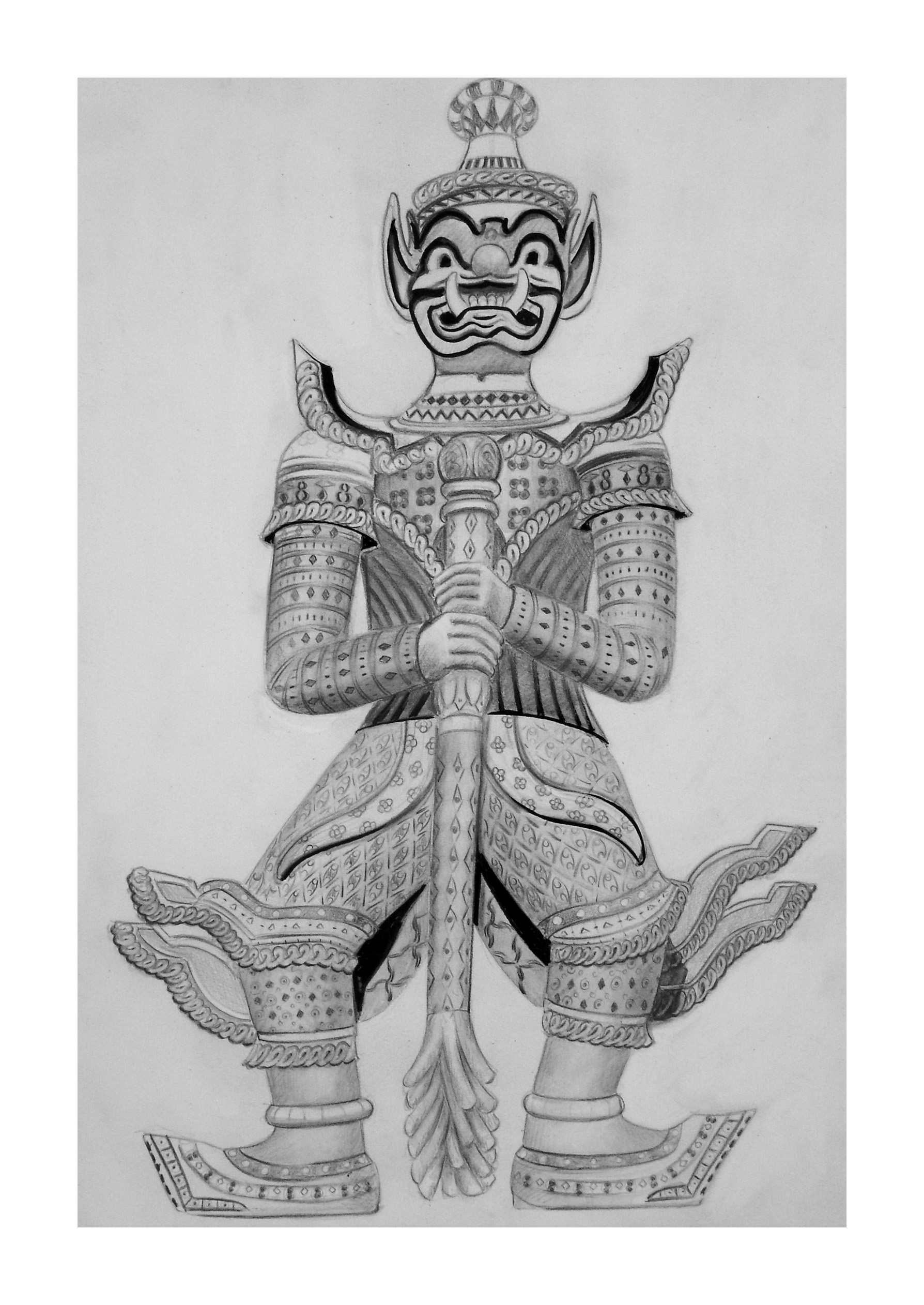
I was thinking the other day about the significance of the temple guardian figures one finds at the entrances of eastern religious shrines and temples.  The guardian, I understand, is the symbolic protector of the sanctity of the sacred space; he stands as defender against essence or evil threatening contamination or dilution of the truth within.

For many, the temple (or church or other social or economic institution) embodies a culture with which they deeply identify.  So I got to wondering what would happen if that culture was compromised.  What would happen if our sacred cultural space(s) were invaded by a malevolence that convinced us the tenets we’ve always held to be irrefutable were in fact not only refutable but quite false; without merit of any sort?

Since so much of who we are, how we identify ourselves to ourselves and others is tied to these now discarded cultural tenets do we become ‘culturally autistic’-blank stare meeting blank stare as we pass on the street unable to relate in any way to our neighbors beyond basic physical functioning?

I’m really not too worried about this happening to us dolls as we’re pretty tightly united by our vulnerabilities.  Here in the playroom, we have managed to maintain our basic values even with a fairly steady influx of new and diverse members.  The rules we set for ourselves focus on maintaining a mutual respect for each other’s self-worth as well as a collective sense of strong group participation that leaves no one out.

So, I think we have pretty good control of the sanctity of our playroom space and I guess we probably don’t need a symbolic guardian figure although there has been some discussion about forming political parties.  Is two too many?

temple guardian3

Dr. Freud and the Superego

Dr. Freud said if you have a strong superego it will help you subdue those baser instincts and depraved inclinations (which he called the id) and keep you on the straight and narrow.

I guess my superego must be pretty good because I’ve pretty much avoided participating in any of the seven deadly sins very much.  As I think about it, I’m pretty modest, my desires are nearly non-existent, I don’t eat very much, am generally pretty good natured and I really try to keep my room clean.

So I guess maybe I might be thought of, in all modesty, as a good role model for the younger dolls, you know, someone to look up to.  They might even find me admirable even saintly, after I’m gone; someone they can place on a pedestal as the paradigm of virtue.  And then maybe they’ll build a temple for me where I can be forever held in the highest esteem-even worshiped.  Maybe the Church will canonize me and actually make me a saint.

Boy, what a thought!  I wonder what Dr. Freud would say.  I hope he wouldn’t think I’m suffering delusions of grandeur.

temple of babydeidei

Medieval Vision

Have you ever had a supernatural experience?

It could have been something you dreamed was going to occur that, later, seemed to really happen.  Or maybe you saw something that you were pretty sure couldn’t really exist in the world as we know it.  Or, as you sat contemplating things a message from beyond seemed to pop up out of nowhere, maybe from an incorporeal being.

Apparently this sort of thing happened to people living in medieval times pretty regularly; the difference for them was they had a more fluid idea of what constituted the real world then we do today.

I was reading the journal of three 12th century monks who set out to find the ‘terrestrial paradise.’  As they traveled to the east they encountered little people ‘no more than two feet high’ and went through a mountain region where there were basilisks, unicorns and dragons.  They passed through a region of constant darkness where ‘mournful shrieking came from sinners drowning in a sea of serpents’ and ‘a giant chained between two boulders’ was being tortured with fire…..  Well, the account goes on and on, one extraordinary event after another.

In my rationalistic way of thinking it all seems very imaginative.  They simply were encountering things they had never seen before and were interpreting them in terms of the magical world in which they lived.

I don’t know if I should be happy in my understanding of the natural world or sad in my inability to realize a truly magical kingdom.

medieval vision3

Discord in the Playroom

Not too long ago three new dolls joined our playroom family. Muscleman and Bobble-head St. Patrick were the first to settle in and it didn’t take long before Muscleman began imposing his will, bullying the other dolls.  He was constantly jostling Bobble-head St. Patrick and causing the rest of us grief.

But then Athena showed up.

Scale can be very disparate among dolls and Athena has a considerable size advantage over most all the rest of us.  That fact plus Athena Parthenos’ warrior mentality quickly changed the playroom dynamic.

Muscleman, as you can imagine, has a very large ego and he initially refused to recognize that his days of domination were over.  Athena had to whack him down a couple of times before he got the message.  Even then he continued to yell and boss dolls around but eventually things settled down and Athena no longer needed to wield her physical size and strength to maintain the peace.

The playroom has always been, up until Muscleman showed up, pretty egalitarian.  Most everyone tolerates others’ idiosyncrasies without too much complaint.  But, the turmoil did get me thinking about how tenuous group dynamics can be-how opinions can form and change and political pressures can develop-what can happen when a strong personality feels compelled to impose its will.

Bobble-head St. Patrick is really quite a pleasant doll but he does have the reputation of being quite strong willed.  What if he suddenly got the notion to evangelize and got some (maybe a lot) of the other dolls to embrace his religious beliefs?  Would we all then be expected to follow the tenets of their beliefs?

And then there’s Mini-Max, who’s quite materialistic.  He’s been accumulating toys of his own for some time.  He’s already been hinting that he could use more shelf space.  What if he began bribing dolls-offering them favorite treats in order to acquire more room for his possessions?  Would the rest of us end up having to live in the closet?

Well, hopefully my imaginings are nothing more than just that.  But, it does make me think a just and fair judicial system is nothing to sneeze at.

discord in the playroom3

Dreams

I had a dream the other night in which I became human; or rather I multiplied into five human children plus my normal plastic self.  We were all standing in front of Notre Dame Cathedral.  St. Francis was there.  The human DeiDeis seemed sort of mesmerized-focused intently on their surroundings as if they were anticipating an imminent occurrence or contemplating some sort of action.

When I awoke the next morning I couldn’t stop thinking about the incongruities in the dream.  I wondered what Dr. Freud would say but then I figured it would probably have something to do with sex and considering the presence of St. Francis and young naked girls I thought it best to just leave that alone.

Then I remembered reading about Carl Jung’s idea that deeply embedded within our psyches are primordial forms or archetypes common and meaningful to all self-conscious beings.  Certain situations like the Hero’s quest or the fall from grace, dichotomies like good vs. evil and light vs. darkness, and character types like the evil figure, the scapegoat and the outcast are just a few of these common archetypes Carl believed we all share; and he thought that sometimes these forms crop up during sleep when our unconscious is in charge.

I had to wonder if there could be archetypal meanings in my dream.

Being generally pretty upbeat about things my first thought was the dream must be about rebirth or renewal.  In this sense the saint might be the archetypal magician or Christ figure who transforms me: the many mes representing naked innocence seeking and discovering goodness and truth.

But then as I thought about it further the pragmatic me took hold; my ambivalence regarding structured religion suggested a darker aspect; maybe the dream was about evil overcoming good.  The saint becomes the archetypal devil casting a spell and creating six of me (six being the archetypal number of evil) to carry out the vile edicts of a corrupt church.

Well, the investigation was all very fascinating and I do think Carl’s got something with his notion of collective subliminal meanings, but  I’m going to be pretty careful who I talk to about my dreams and their meanings.

dreams of freedom3

Beyond the Grave

I see by the calendar Dia de Muertos, the Day of the Dead, is approaching.  Death isn’t something dolls, particularly plastic ones, think about very much but at this time of the year, with nature racing toward dormancy, the topic tends to come to mind.

In medieval times death was on everyone’s mind daily.  The Black Plague invited Death to be a regular visitor if not a live-in house guest.  She became so well-known she starred in a regularly performed play called the Danse Macabre.  In the play the Black Angel would appear and along with her spirit helpers the psychopomps  invite victims to accompany them beyond the grave; the beyond being, I guess, a promised land of paradise.

Throughout history (and even earlier than that I bet) people have sensed an existence beyond the grave:  The ancient Egyptians conceived of a Ka or immaterial double that would live on after the demise of the physical body so the deceased would be able to keep doing the same fun things they had always done when alive.

The philosopher Arthur Schopenhauer was inclined to believe that, upon death, an individual’s will or essence of being would be reunited with it’s Cosmic origins: a sort of collective world soul (Plato called it the anima mundi) from which all life originates and subsequently returns; it’s a pretty cool idea of togetherness even though one wouldn’t really be aware of it because one’s memory and ego would cease to exist.

The Hindu people understand the universe to be eternal and that rebirth will continue to happen until enlightenment of the soul propels a leap into the infinite, which, I guess must be a bit like Arthur’s cosmic origins only they call it the Atman.

Contemporary Trans-humanists anticipate a situation in which one’s brain activity is downloaded to a computer and since the brain is where one’s being resides one can expect to live on forever provided someone is around to keep the batteries charged.

I’m sure I’m like everyone else in hoping the Black Angel stays away for a while but when it does come time for me to leave the realm of the physical, wherever  I end up, I hope I will have left behind a reasonably positive image for my friends to remember me by.

dayofthedead3

True Happiness

Pearl and Imacgirl got into a discussion the other day about whether one was better off and would be happier establishing firm beliefs or maintaining a healthy skepticism, you know, as a basic philosophy of life.

Imacgirl, the more pragmatic of the two, inclined as she is toward science, maintained greater understanding and happiness would be achieved by building on the core of established empirical truths methodically, the walls of which providing safety and security for the believer.

Pearl on the other hand, has a skeptical nature and is inclined toward unconventional explanations for what most would consider conventional wisdom.  She said doubting razes pre-established thought structures presenting unlimited opportunities.  Truth becomes an open question.  Walls disappear leaving one awestruck by the vastness of possibility and here, she said, is where true happiness lies.

My two friends were clearly at a stalemate so they asked me what I thought.  I guess it all came down to whether I would prefer the predictability of a life within the confines of common understanding or if I would throw caution to the wind, go where no doll has gone before and take my chances in the ethereal realm of the unknown.

Well, I told them that as much as I enjoyed abstract philosophical thinking what I really wanted to do was go for a walk in the woods, feel the breeze and listen to the birds. They decided to go along and eventually we all agreed that the experience we were having fit well with both philosophical positions.

eithoror3

Accomplishment

I spent a couple of hours cleaning my Notre Dame playhouse the other day.  It was quite a mess; hadn’t been organized for some time.  I straightened the pews, relighted the votive candles, moved the priest from the sacristy to the confessional, replenished the Holy Water and separated the Brothers and Sisters (for some reason they always seem to end up together).  I did all the things necessary to put a cathedral in good order.

When I finished I considered what I’d done and thought it was quite an accomplishment-maybe not on the scale of actually building Notre Dame-but still it was something.

Wasn’t it?

Okay, so what does it mean to accomplish something?  Does accomplishment occur if no one knows about it?  And, as soon as someone finds out does judgment occur?  And, then, if the accomplishment is deemed worthy do accolades follow?  I doubt the Buddha meant, when he said to his disciples: ‘accomplishment is transient; strive unremittingly’, that they should pursue an ego boost.

The Stoics were pretty sure finding yourself in favor (which is certainly what would happen if people thought you did something good) wasn’t a good thing; once favored the only direction to go is down.

Well no one will probably know about my cathedral dollhouse cleaning anyway; it’s stuck back in a corner of the den.  People rarely come by now that little Bobby entered the seminary.

So I guess I needn’t fear recognition for my accomplishment.  But, I suppose I could take a few photos just to remember how nice it looks once it gets messy again.  But, then, someone might see the photos and nominate me for the Good Playhouse Keeping Award.  Then I’d be expected to keep it clean all the time and if I didn’t people would think I was a messy doll.

Boy, those old guys sure knew what they were talking about.

notre dame playhouse3