Primitive Science

I was reading, recently, that science, in the broadest sense is simply the systematic knowledge obtained through observation and experimentation, which means, I guess, that our earliest ancestors were practicing science as they observed and learned the habits of their prey and the locales where edible vegetation could be found. And then, later, our forebears developed a pretty sophisticated understanding of stellar and planetary movements affecting seasonal change and growing seasons: science without question.

There have been, of course, a few observational glitches along the developmental path. Grasping and accepting heliocentricity involved overcoming considerable cognitive dissonance (which might be attributed, to a considerable extent, to the Catholic Church). And, I guess, religion has thrown a monkey wrench into the workings of scientific progress on a somewhat regular basis through the ages. There are still quite a number of folks out there suspicious of ‘science’ when it questions long held beliefs or offers inconvenient truths.

But, it’s hard to argue that our very existence today isn’t due to a significant extent to our embrace of science. And, as we understand more and more about the workings of the natural world and even more questions arise we will trust science to address the questions with the knowledge that a definitive explanation of how it all works will probably never be seen. Progress will continue, nevertheless, new ideas will be presented and peer reviewed until established facts present themselves.

I can only hope education will prevail. Science, after all, is without ulterior motive; the betterment of humankind is its only goal.
 

Gender Identity

I’ve recently become aware of the significance these days of the idea that one’s gender may not be written in stone, exactly. A considerable percentage of millennials, for instance, view gender in terms of a spectrum: that is the male/female composition of most all individuals is probably less than 100% either way; which should, I guess, open the door to an enlightened perspective of gender issues that have been thought about, if at all, in pretty simplistic terms for a very long time.

Unfortunately, deep within the darker reaches of our cultural milieu there exists a mindset unwilling or unable to accept the beauty of free gender expression. Maybe antiquated religious notions or, perhaps, personal confusion over where exactly they, themselves, fall within the gender spectrum has these tortured souls in vehement opposition to any sort of non-traditional gender identity.

All we can do, I suppose, is hope for an awakening. In the mean time we really do need to champion diversity. What could be better, after all, than a population that is able to sustain pride in who they are.

Consumer Appetites

There was a time, not so very long ago, when the powers that be exercised what we all thought to be altruistic tendencies in the selection and dissemination of public information. We folks got to hear and read what was thought to be most important to make us informed and responsible citizens. And, while censorial editing isn’t exactly consistent with first amendment freedoms, most allowed that the narrative presented was basically accurate and, at any rate, in the public’s best interests.

And then but so things began to change: market share became an issue, advertising dollars; profit motive began to compete with program content. Sophisticated analysis of the target consumer determined a bit more ‘colorful’ (as in lurid and debased) programming was needed to draw and keep more viewer/readers. In addition, it was learned that stories eliciting anger and outrage tended to be a lot more compelling than ‘feel-good’ sorts of things; conspiracy theories were also found to be useful in maintaining viewer loyalty.

Well, the next thing you know, we have competing narratives out there designed to appeal to particular constituencies, reinforced daily, convincing folks of the truth of their chosen perspective and the blatant inaccuracy of any other.

As philosophically divided as we are, I guess it would be in everyone’s interests to look inward to our common humanity and seek out, once in a while, the values we share.

A Social Animal

I’ve been reading that despite the nature vs. nurture debate it’s likely that a moral sense is innate in us all, the result of evolutionary selection dictating an inherent need we share to bond with our fellows. According to the late James Q. Wilson, even the most hardened, egregious individual has a modicum of moral sensitivity. Granted, there are other factors affecting a person’s behavior, self-interest leading to greed among them, but in the deepest recesses of our psyches we need positive human relationships; we are social animals and this fact leads us to desire to do right by others.

I know, as we look at those around us and perceive what appears to be a generally accepted moral relativity, an innate moral sense seems somewhat counter-intuitive. But, even tiny infants exhibit sympathy and practice fairness through sharing. Given the divisive nature of the world we live in perhaps we all need to become a little more child-like; offer a friendly smile and pat on the head, maybe even a hug to the next person we meet. What’s the worst that could happen; other than legal action?


A Machiavellian Epoch

The political climate these days has got me reading about the 16th century Italian Nicolo Machiavelli. Living, as he did, in tumultuous times and never ending political intrigues which saw him rise to prominence and then fall out of favor with the ruling elites and, being the libertine he was, it’s pretty clear why he maintained a pessimistic assessment of his fellow men.

Machiavelli has earned his reputation as the paradigm of hard-fisted (under-handed?) political maneuvering due, to a great extent, to his book The Prince. In the book Nicolo determines that the Prince, whether secular or religious must learn to do evil and develop the art of deceit. Testosteronal virtu, necessary to tame O Fortuna is an absolute must for anyone wishing to sustain power, he writes. A Prince must exhibit cruelty, kill a few of his people, maybe, in order to instill fear among the populace.

Interestingly, around the same time the Prince was written, Martin Luther, in a pretty disagreeable frame of mind due to hemorrhoidal issues, brought about the beginnings of centuries of religious conflict, breaking as he did from the Catholic Church (not that that body was in anyway an innocent victim).  So, it seems to me, 16th Century Italian power struggles resulting in a blatant disregard for the well-being of the people, although perhaps being a bit more violent than today, still seems pretty familiar.

I suppose an evolving humanity plodding along by fits and starts into the future is about all we can really expect. Still, hope is in my nature; I always look forward to tomorrow.


Block Time

I’ve been reading that the idea of ‘time flow’ might be an illusion. According to some theoretical physicists time is maybe better thought of as a series of ‘instants’. On this theory, past, present and future are meaningless; all ‘instants’ exist within a block of time. ‘Now’ is a timeless instant that is recorded in memory, but as it distances from ‘now’, dissipates as it is retired to deeper recesses of the mind or is moved deeper toward the blocks periphery.

In such a perspective a loved one’s death doesn’t mean non-existence but is comparable to the existence of someone living far away, beyond communication lines. And, me blowing out candles at my 10th birthday party is just as real and in existence as me writing this right now.

As Dan Falk, in the book, In Search of Time, points out, psychologically, linguistically, we are so locked into a flowing time, block time is pretty counter-intuitive to real life experience. Still, I bet those inclined toward religious practice might kind of like the idea.

father and son

Alternative Realities

I’ve been hearing, lately, about the proliferation of witches in late 17th century New England. Apparently, there were quite a number of people identified as such. A penetrating gaze into the eyes of a young girl suffering adolescent angst could result in an accusation of witchery. Men, women and children were found to be guilty and imprisoned. Two dogs were determined to be witches and executed. Widespread frenzy turned son against parent, husband against wife, child against family pet. Witches were seen flying about on broomsticks, gathering in covens, casting evil spells. The guilty were brought before Judge William Stoughton, who, supported by the likes of Cotton Mather, tried and executed the guilty.

Anyway, this got me thinking about current alternative realities which seem to be proliferating these days. It seems all it takes is for a localized majority or a community of like-minds, egged on by media venues that know a good thing when they see it, to distill the complexities of modern life into a palatable elixir. Upon consumption everything becomes crystal clear. Black and white eliminates those difficult shades of gray, good and evil become clearly defined and it becomes very evident there is no room for compromise.

Well, apparently what happened in Salem was that some astute individual saw the witch hunts as disrupting business as usual; it was bad for the economy and in very short order the issue was dropped. After all is said and done pragmatism rules, I guess.

A Private Life

I’ve been thinking, lately, about how much time I spend thinking. I find contemplation to be a very important part of my daily regimen, to the extent that social interaction is non-existent some days; a lot of days, really.

Of course much of my thinking is about people, wondering about how some folks arrive at the opinions they hold, how groups of like-minds take on a public identity which lifts individuals out of their private worlds and offers a public character which seems to be what a lot of people crave. On a personal level, social networking is pretty easy, social media being what it is, and, I guess, having a large group of ‘friends’ tends to fend off perceived loneliness even if it is delusional (any sort of personal closeness, that is).

If social striving and seeking public identity gets out of hand, if popularity is too high a priority, danger lurks. When you think of individuals in the spot-light these days it’s unlikely anyone’s public persona provides much more than a caricature; which certainly can’t be what anyone wants. Better to spend more time thinking.

brotherabraham

The Agri-culture

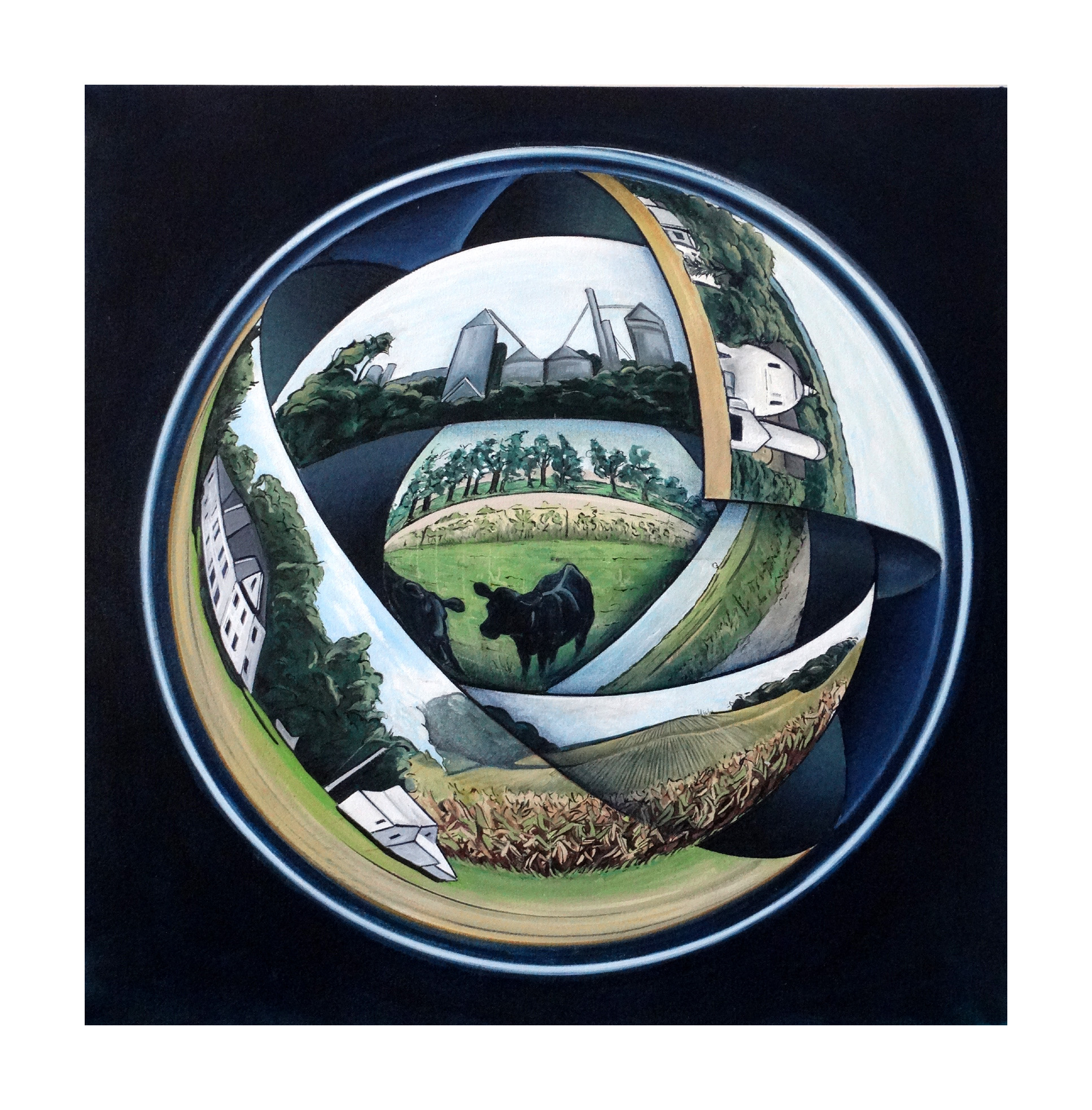
As I understand it civilization advanced, as the human mind developed, from nomadic hunter gatherers to an understanding of domestication of plants and animal life; which led to a fairly sedentary existence and population growth. Clan organization gave way to diverse populations that learned to work together for mutual benefit; up to a point. Class structure developed and with it the inherent violence of workers and overseers, haves and have-nots.

Which I guess, is kind of where we’re at right now, although what ‘having and needing’ means has changed no doubt. Beyond our basic needs of food, clothing and shelter we have found significantly more is required for our well-being; our mobility and entertainment needs require considerable resources. I wonder, sometimes, if happiness might be better served up living closer to basis subsistence, growing and raising what is needed; supporting and receiving support from my neighbors.
It seems pretty appealing, this agricultural life-style, in a Thomas Hardy pastoral sort of way. But, of course it’s just a romantic delusion isn’t it.

I think we might do well to continue subsidizing the farmers.

meditationdevice19

Fanaticism

I’ve been reading and thinking about fanaticism, how and why it arises and the forms it takes. The idea can certainly be thought of in terms of most any passionate belief, but most often, I think, it is thought of in terms of religion.

At some point in the development of the human intellect belief in some sort of supernatural entity was a given; it defined a singular reality. But, as the mind evolved toward reasoned thought, belief in nature spirits gave way to religion, with its requisite doctrinal, dogmatic and political implications, which in turn led to skepticism. Beliefs came to a fork in the road and took it. As beliefs grew further and further apart, fanaticism reared its ugly head; people at opposite extremes being absolutely certain about things no one can be absolutely certain of. Unfortunately, this seems to be the place where humankind presently resides.

I guess a lot of people like to grasp certainty and then not think about it too much anymore. It would be good, wouldn’t it, if everyone put a little energy into questioning? You know, questioning what we can truly know, questioning the efficacy of our chosen beliefs, questioning the legitimacy of our op positional stances. Wouldn’t the resulting cooperation override the necessity of blind faith?

Krishna and the Walking Dead3