The World Without Us

There’s a lot of discussion these days about whether or not humankind is putting excessive pressure on our earth’s finite resources. Population growth, new technologies for extracting fossil fuels, depletion of forest lands, loss of clean fresh water sources, garbage in the oceans, over fishing, the list goes on and on.

I was reading an interesting commentary on what would happen to our world if humankind was suddenly to disappear, how quickly it would rebound, become healthy again. Such a scenario, human extinction that is, is not all that unthinkable in view of international tensions these days.

Such thinking made the book, The World Without us, by Alan Weisman, compelling reading. Mr. Weisman suggests that, in his believable future world, infrastructures would begin to fail, the New York subway tunnels would flood almost immediately and within a few hundred years our most solidly built brick, mortar and concrete structures would crumble. Native vegetation would push up through asphalt roadways hastening nature’s reclamation of the earth. Coral reefs and sea life would rebound as the resilient oceans healed themselves.

Even 500 years later the earth, it seems to me, would be a much more attractive place to be; except, of course, I wouldn’t be here; unless I could somehow live in the future. But, I guess that’s a whole other issue.
An Alternative Civilization

I’ve been reading about an ancient culture of copper smelters that lived in what is now Southern Israel some 3000 years ago. Archaeologists excavating the site of an ancient copper mine have determined these people developed sophisticated smelting techniques, had domesticated animals and traded for food items that originated hundreds of miles away. But other than the information deciphered from the mine site the archaeologists know nothing of these people: no village sites or even single building structures have been found in the vicinity leading to the conclusion these people must have been nomadic.

Such information has me wondering how many other ancient cultures might have existed but are undiscovered; people who might have acquired knowledge, possibly had learned truths about planet Earth that hasn’t come down to us. Maybe these unknown people learned how to live in harmony with their environment, how to nurture and be nurtured. Maybe material acquisition wasn’t important to these ancient, enlightened people who worked together to forge healthy, satisfying autonomous existences, being of the land rather than seeing the earth as a resource to be exploited. This idea has me thinking the values and beliefs we associate with an ‘innate human nature’ may be other than the linear progression of civilization which is our heritage has led us to believe them to be.

It all makes me wonder if we might have become a kinder, gentler people had we followed a different evolutionary path.

The Attraction of Authoritarianism

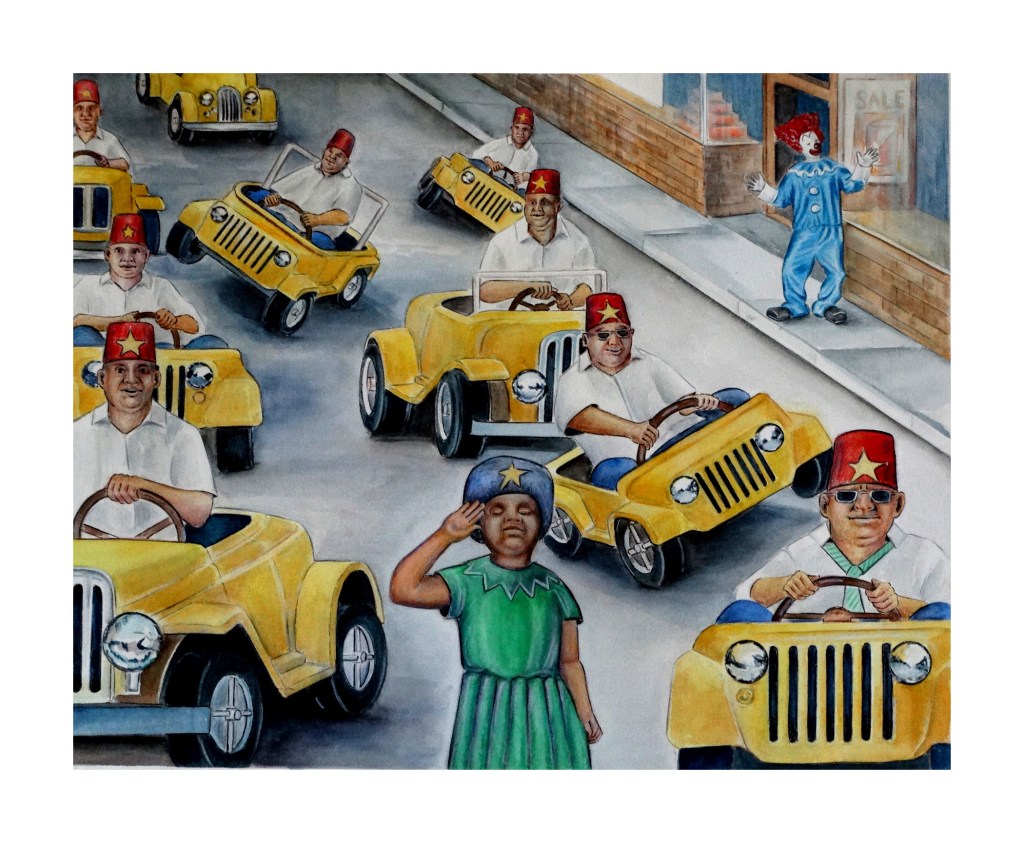
I’ve been trying to understand the fluctuations in the world order these days with populist movements arising around the world ushering in strongman politicians, spinning narratives of restorative nostalgia, remembrance of times past when everything was better than it now is despite the relative affluence most of us realize.

There are always, I suppose, folks of ambition but mediocre talent who don’t achieve desired advancement, who might seek a less competitive structure than the socio-economic system that promotes the best and most able and insures the system functions as effectively as possible. And then there are those of modest ambition who may fear disenfranchisement and the disfavor of the strongman who climb on the bandwagon.

The problem is that the strongman, assuming free reign, may begin to make up his own rules, begin suppressing opposition, placing restrictions on access to information until there’s only one narrative. And, with only one narrative truth can be stretched, people demonized, scapegoats created to be blamed when things go awry.

Better I think to have a sometimes messy and chaotic pluralism where everyone has a say even if considerable energy may be required in public debate.

Liberty and Justice for All

After reading a definitive, in-depth account of the conflicting narratives between the various parties involved in the American Revolution it occurs to me how amazing it is that any sort of resolution was ever reached, deeply flawed as it was.

Liberty and justice for all was far from the truth of what occurred during and after the war. Moneyed interests controlled the economy to the detriment of the small landowners, Native American populations were pressured off tribal lands, Black Americans were returned to forced servitude. Widespread unrest prompted the founding fathers to push for a restrictive democracy, granting increasing power to the federal government. Congressional checks and balances negated sought after control by special interest groups.

200 years later I guess a certain equity has obtained. Many, assured as they are of equal treatment under the law have freedom to speak their views and can realize a reasonably stable existence even though ‘liberty and justice for all’ is far from a reality.

A Meaningful Existence

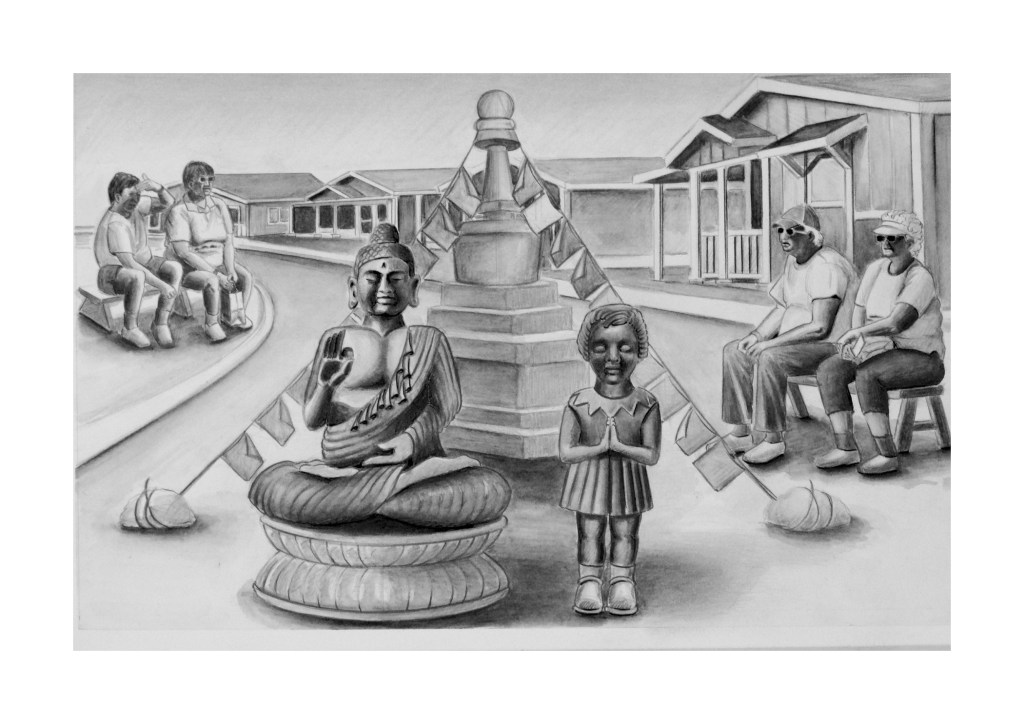
It occurs to me that although a majority of people look forward to being relieved of the responsibilities (and tedium) working for a living entails, that, after a while, maybe a few months or a couple of years an existential void may very well appear in the retired person’s psyche. A certain guilt that one is no longer a contributor may have the thoughtful retiree wondering about what constitutes a meaningful existence.

Most, I suppose, find things to do: necessary activities of social support, volunteering where needed. And most everyone of sound mind will be cognizant of one’s impending mortality as physical health inevitably declines, knowing every moment must be embraced, valued. Eat well, exercise, stay healthy, experience life to its fullest.

So, along with the afternoon dances at the VFW, the early bird specials and retirement community life in the southern climes, life proves to be good.

Evil as Natural Inclination

I’ve been reading, lately, a treatise by the 18th Century philosopher Immanuel Kant in which he determines through his meticulous thought processes that man is evil by nature. He reasons that, while man is aware of moral laws, that there are morally acceptable behaviors toward others one knows should be followed, there is at the same time a natural inclination to favor personal interests above moral concerns for others that may, when push comes to shove, result in evil behaviors.

So, I guess everyone is naturally inclined to be evil, although I suppose one could quantify degrees of evilness: whether one’s self-interest completely undermines rules of morality resulting in despicable behaviors, as opposed to those of us who occasionally find ourselves exaggerating reality for personal gain if we think we can get away with it. The latter doesn’t seem to me to be evil, exactly, but probably merits a certain sense of shame, at least a guilty conscience.

I wonder if Kant thought himself to be evil in any sense. I understand he was pretty reclusive, hardly left his home but for a daily walk around the neighborhood. He probably didn’t have the opportunity to be too evil.

Does Life Imitate Art?

I’ve been thinking, lately, about what art is. A common understanding of art, I guess, will specify that it reflects our visual world and offers insights into our common human experiences. The idea is that art codifies our existence, how we understand who we are. A museum visit invites us to look into our collective psyche, to view clearly our values, beliefs and limitations.

What happens, though, when the consumption of the art that popular culture imposes in the forms of literature, movies, music, not to mention social media platforms becomes so ingrained that we begin to mimic the stereotypes, become the actors art invents? I suspect most of us, by the time we pass adolescence have discovered a solid enough sense of being that we can see past superficial identities so as to not become something other than what we know ourselves to be. Still, it seems there’s a powerful inclination for most of us to slide into a persona, the roll we wish to play in the story of life.

Even though I’m aware of this conundrum I wonder to what extent my identity is altered by the popular culture. It makes me think I need to temper my media consumption.

The Impending Demise of Old White Guys

TV ads these days have made me aware the country’s demographic is changing. Savvy advertisers are using more people of color and those living alternative lifestyles to sell their products. It only makes sense of course; old white guys are dying by the droves due not only to covid but to natural life span.

One doesn’t have to look too hard to see the desperate war of resistance the aging white population is waging. The political realm is rife with frenzied folks upset about the changing status quo, opposing the surge of youthful, socially and racially pluralistic energy, which is slowly, steadily driving the conventional beliefs of a previously white cultural dominance into extinction.

There are aspects of the new tolerance for fluid gender identity and sexual lifestyles that are difficult for me, given the social structures I have grown up with, to integrate. I firmly believe, though, change must happen. I sense in the young a positive life force asserting itself; one necessary to overcome the difficulties maintaining life as we know it will require.

Imaginings

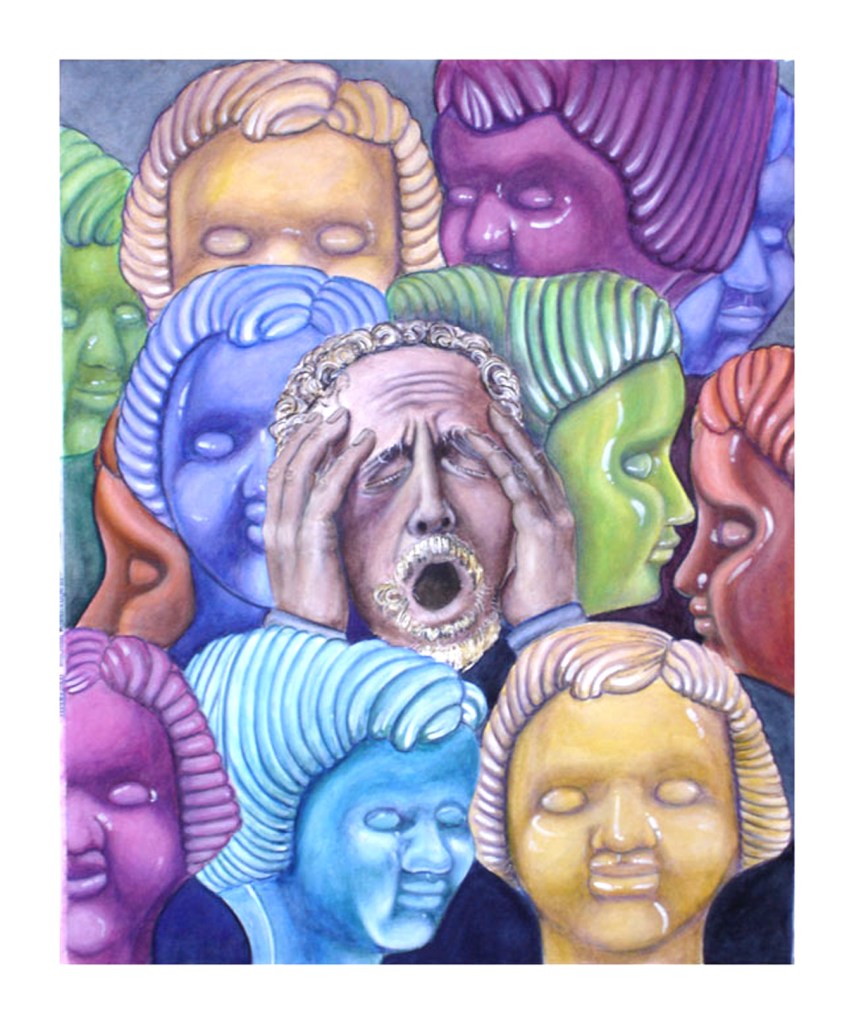
I’ve been reading in the news lately political pundits and others in the know are suggesting, warning in some cases, that we are in danger of experiencing another civil war. The crux of the concern seems to be that with large numbers of us polarized as to what we perceive to be true, supported as we are by our chosen information sources, contradictory one side to the other, finding common ground seems unlikely. We find ourselves living in alternate realities and the more firmly we embrace our beliefs the more we fear the other. It’s common these days to see opponents demonized and violence perpetrated.

But, on the positive side there have recently been those on the political fringes calling for state secession. One can imagine a red state/blue state divide although I suppose there’d have to be some voluntary resettlement in order to consolidate realities. Once everyone was on their chosen side of the new international border it would seem peace would be obtainable. Narratives would evolve reflecting relative realities. There will of course be differing perspectives: a democracy on one side, totalitarianism on the other; one state operating according to logic and reason the other embracing the dictates of authority; basic trust in the peace and goodness of humanity on the one hand, paranoia driven preparation for armed conflict on the other. Family get-togethers will be difficult for those on opposite; sides of the fence and given the opposing opinions of the efficacy of science I guess another pandemic will not be good for the red staters.

Imagining a red/blue divide could produce a modicum of peace is hopeful, I suppose, but what is more likely, the mistrust inherent in such a philosophical chasm will feed the human need to demonize each other further.

It’s hard not to imagine mankind’s self-destruction.

Belief in God

As things began spiraling out of control she wondered if belief in God was a viable option.

Well, maybe belief was the wrong word. It seemed to her unlikely one can suddenly ‘believe’ something not believed or at least had taken to be credible at some earlier time in life. Something, some idea, introduced to her, possibly in childhood that kind of drifted along in the sub-conscious for years until some sort of existential shock brought it (the belief) to the surface and seemed suddenly to be just the things the extraordinary times required.

So maybe it was more like expedient, practical to seek and find a supernatural entity to appeal to in these dire times when her resources were strained and uncertainties about her very survival constantly pressed. She had settled, after all, as she had thought about it over the years, on an enlightened agnosticism not a hard atheism. God as a concept was elusive but not easily dismissed in totality and now seemed the time to, if not make re-acquaintance, at least allow the embedded idea to come a bit closer to the surface. There is something comforting about the idea of a benevolent overlord, protector, benefactor in these uncertain times.

If only maintaining belief was that simple.