The Right Way to Live

I’ve been reading, lately, about the conflicts that developed between the ancient Romans and early Christians. The Romans were polytheistic, their many gods acquired for the most part from the Greeks were represented by magnificent marble sculptures housed in elaborate temples that played significantly in their daily rituals. Through sacrificial offerings the gods were appeased whereby good fortune reigned upon the Romans (well, the monied ones anyway).

The monotheistic early Christians were reluctant, to say the least, to recognize the Roman gods much to the displeasure of the Romans, and, so, suffered some pretty nasty earthly ends for their defiance, that is, until the visionary emperor Constantine converted, tossing the ball into the Christians court. The game changed big time; churches were built, idols and temples destroyed.

Over the centuries to follow the Christians, through draconian laws and inquisitions singled out the heretics, finding ever more creative tortures to convince the pagan Romans of the truth of the Cross. Tit for tat, I guess.

Other than who or what was worshipped the rub seemed to be primarily about the right way to live. The Romans ate, drank and were, more or less, happy in their licentious debauchery, recognizing as they did, the shortness of life while the Christians lived in severe austerity forgoing anything they saw as sinful in nature, suffering this life for the rewards of the next.

Notions of how best to live one’s life have been somewhat softened these days but the dichotomy persists. I guess we’re pretty evenly divided as to which path is the best one to take. A good case could be made, I think, for pursuing a middle way.

In the Blink of an Eye

I’ve been reading that neuroscience has made significant inroads toward determining how exactly the brain makes possible our biological existence. Apparently, the mind can be thought of as a neural computer comprised of modules, each with specific tasks, that respond to the input of information that arrives through the senses. Within the brain, billions of neurons make up various organs that control everything from toe wiggling to eye blinking.

I find it all pretty hard to picture but maybe it can be thought of as a sort of ‘light show’, neurons sending electric pulses down a line to a ‘blink center’ (in the case of eye blinking) which converts the pulse to a chemical which is sent to nerves in the eye lid and blinking happens.

As I think about it, I suppose there must be another organ with it’s contingent of neurons that keep the lungs inflating and deflating, another one that processes the oxygen and delivers it to the blood cells and yet another that maintains blood flow to the extremities and on and on; and all of this brain activity happening just to keep us animated and more or less cogent.

In the light of such knowledge one might not be surprised, I guess, if mental lapses are experienced occasionally.

Status

I’ve been contemplating, lately, the mystery of how exactly certain people gain status these days. Apparently material wealth is a significant factor, but one must wonder what else is required for one to attain pre-eminence. I get that prehistoric cave dwellers and school yard children look up to those larger and stronger than average, maybe quicker-witted as well but the rule doesn’t seem to follow for today’s notables. Observing those in the public eye these days has me wondering how so many of modest abilities and unexceptional skills could have gained attention except through happenstance, luck or inheritance.

At any rate, once realized, status holders seem reluctant to relinquish the attention. The tendency seems to be to remain in the spotlight by what ever means available. Conspicuous display of wealth through ostentatious consumption is an age-old tactic meant to ensure special recognition: it was a traditional status move by the indigenous people of the Northwest Coast in their Potlach ceremonies and such behavior is easy to observe in today’s affluent culture.

The problem now is, so many are affluent that it’s pretty difficult to attract much attention through wastefully excessive behavior. Some have upped the ante by exercising conspicuous outrage: offering incendiary commentary that demonizes groups and individuals which is then readily picked up by the media always interested, as they are, in feeding controversy.

Such self-serving mean spiritedness, one would think, should provide short-lived attention but the opposite seems to be the case. I guess too many of us are comfortable viewing reality as melodrama.

Our Primitive Brain

I’ve been reading about parallels between biological evolution and cultural progression over the years. Biologically humankind has evolved over the millennia to produce, over thousands of generations, a fitter specimen, better able to sustain and thrive in a sometimes hostile natural world.

Similarly, I’m led to understand, ideas arise, catch on for their beauty and usefulness, spread from brain to brain and sometimes mutate into more useful variations. These ‘memes’ will evolve to become part of our common knowledge and humankind’s cultural sophistication grows accordingly.

Problems occur when our biological selves which are pretty much now what they were 50,000 years ago must reconcile our primitive brains with a rapidly evolving culture. Our essentially tribal inclinations tend to interfere with our ability to assimilate the pluralism our intellects assure us is a reasonable way to coexist in our culturally shrinking world, which, I guess, somewhat explains the populism rampant in today’s politics.

It’s one thing, though, to understand all of this, something else to have to live through it.

Natural Selection

I’ve been reading that evolutionary progress will proceed through natural selection. Generational changes to an organism, occurring as the demands of existential pressures require, upgrade survival abilities; which suggests, I guess, that those beings that evolve with the fittest genetic make-up will be the ones that thrive and reproduce, passing on their fitness to their offspring. But I’m led to understand, the system isn’t fool proof; occasionally a glitch in the system will cause unfavorable genetic mutations to be passed on which results in less than desirable progeny.

One does have to wonder sometimes at the actions and decisions some people choose; maybe it’s the ‘choice gene’ that has mutated or perhaps it’s missing altogether in those folks who seem to proceed through life in a more or less spontaneous and thoughtless manner. These unfortunates may find themselves making bad life choices that result in a failure to mate and reproduce or prematurely exit existence, which I suppose, is how nature cleans up the gene pool.


Superior Intelligence

I’ve been reading that there is evidence to suggest that the world is getting smarter, that world-wide, IQ scores have been steadily rising at a rate much faster than an evolving humanity can explain, which doesn’t necessarily mean, I guess, that a person of average intelligence one hundred years ago, transported by time machine to the present would be borderline retarded by our standards. But the presumption is our great grandparents would be sorely lacking in the intellectual flexibility we’ve become adapted to in recent generations to deal with the complexities of technological advancements not to mention the inter-connectedness communications with the world-at-large has impressed upon us. It appears our existence, the intellectual world we occupy, is larger and multi-faceted in ways unimaginable in the world of the 1920’s.

One wonders, though, if living in a smaller reality back then, restricted even to a limited geographical existence, you know, knowing less, didn’t have its advantages in terms of less anxiety, stress, working longer days and weeks making for less time to contemplate, anticipate all of the potential evils one might imagine. Living as they did through the devastation of WWI and the 1918 flu epidemic, did a naïve faith make it possible for them to realize a peace we will never again be able to grasp?

We’re healthier, wealthier and longer-lived than our great-grandparents could have ever hoped to be, but I have to wonder if our increased awareness makes us happier.


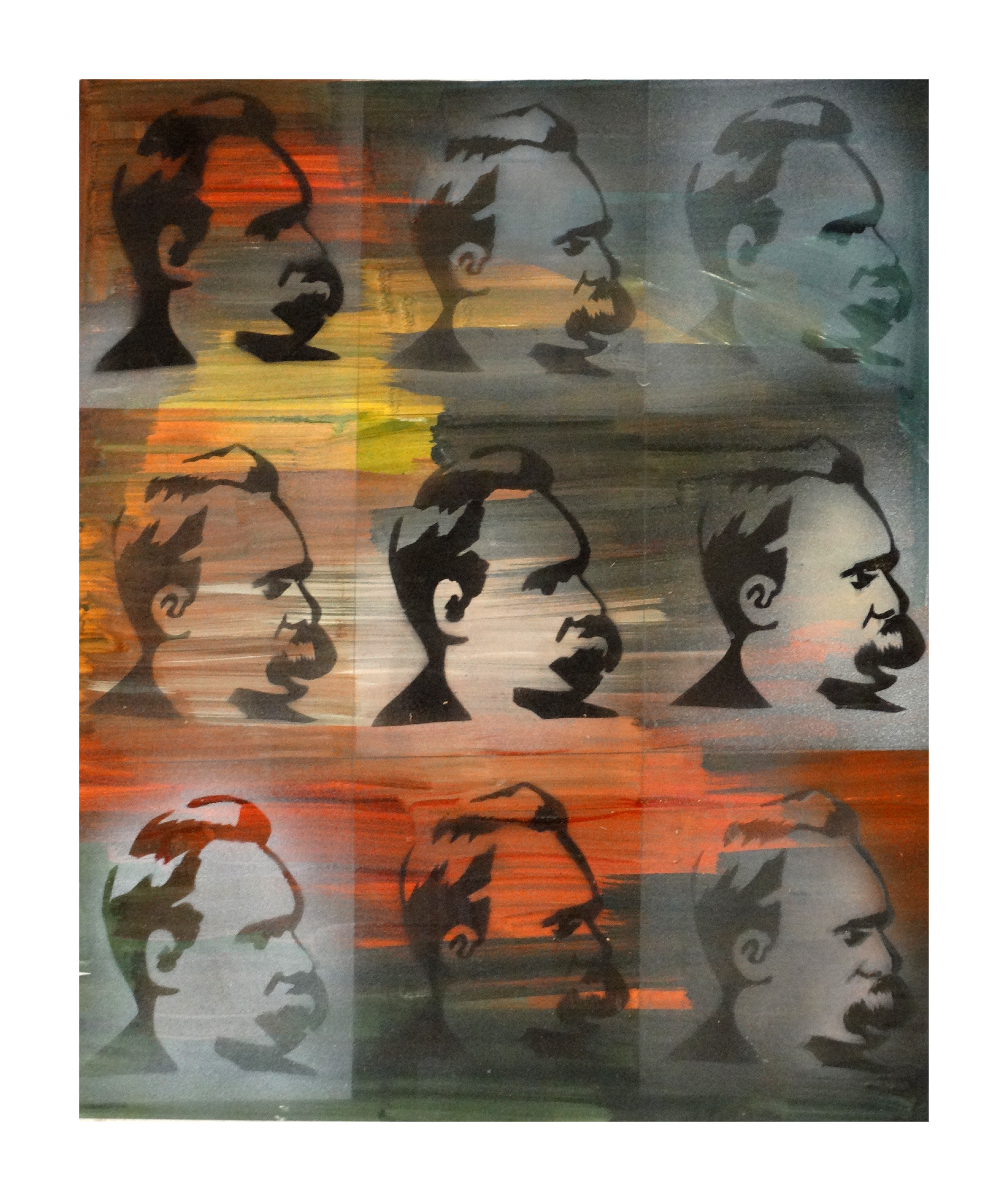
Maybe Nietzsche wasn’t so Pietzsche

I’ve been reading that, perhaps, Friedrich Nietzsche doesn’t deserve the unqualified admiration many, including me, have afforded him. His narrative flair, admonition to become; to rise above the masses and his denigration of the humble subservience, the ‘slave morality’ the church imposes, was, and still is I suppose, heady stuff for energetic youth who see before them boundless opportunity once they break free of the shackles of their controlling elders. I guess the problem becomes, how many friends and relatives end up under the bus as our young Nietzschean races toward becoming all she can be.

Our young pursuer of truth doesn’t realize, I guess, that Nietzsche’s ‘Overman’ is beyond her reach, the amoral purveyor of ‘Beyond Good and Evil’ will without second thought cast her into the abyss alongside her fellow inferiors. Our philosopher’s dismissal of moral proprieties, advocacy for the advancement of a dominant ‘higher man’ and elimination of the decaying races was philosophical fodder upon which the fascist evils of the 20thl century fed.

There’s no doubt Nietzsche was a great intellect (with an ego that matched). It’s unfortunate his social isolation or, perhaps, his austere Christian upbringing took him down such a pessimistic path. What would it have taken, I wonder, for him to have found true human compassion?

The Cave and the Light

I’ve been reading a quite in-depth account of how, throughout history, two particular strains of thought have been instrumental in quidding our understanding of the world around us.

Platonic thinking attributes essential truth to an eternal reality in relation to which our world is but a temporary, fleeting imperfection. The ultimate answers we seek, according to this philosophy, will be realized in contemplation of the eternal ideal forms of true reality.

On the other hand, Aristotelian thought is, that to know, to gain knowledge of the world in which we live requires sensory observation. Experiencing first hand, gathering information and applying inductive logic to what we see around us will unravel the mysteries of this life.

The thinking is, I guess, that pretty much all our philosophical tendencies will fall into one of these two modes. The Plutonic tending toward (or rationalizing) religious engagement with an heavenly realm, while the Aristotelian thinker gravitates toward science with its logical processes and empirical observations.

On a personal level it seems to me both perspectives can be embraced to some degree without contradiction. In fact remaining open to all possibilities would appear a smoother road to travel and with better scenery along the way.


The Romantic Sublime

The romantic inclination to solitary communion with nature in order to find truth in beauty is beyond doubt appealing and resonates with anyone who enjoys an invigorating walk in the woods.  The thoughtful Romantic realizes, of course, that nature has her darker side. The sun isn’t always shining, the birds sometimes are silent and Nature can on occasion lose her nurturing aspect, may in fact turn violent and even hostile, threatening the well-being of humankind. Nature’s beauty isn’t lost, though, in the violence of a hurricane or snow-storm but is re-characterized as sublime: an overwhelming and awesome power beyond human imagining.

It seems Nature’s sublimity is increasingly apparent these days, extreme weather events occurring with regularity. A thoughtful Romantic might wonder if perhaps there’s anger being leveled at a humanity exploiting her realm, encouraging us to take heed, to realize a necessary respect for the nurturing environment that sustains us.  Well, being the timid Romantic I am, I’m doing my best to reduce my carbon footprint in the hope Mother Nature will see fit to allow my continuing existence.


An Incurable Romantic

I suppose there must be an inclination for the thoughtful mind to balance opposites. During the 18th century the scientistic logic of the Enlightenment generated the philosophical counterpoint of Romanticism, a view of nature as transcendent ‘beauty as truth, truth beauty’. The thinking was, I guess, that Nature was the source of all knowledge, the way to deep understanding, so communing with nature, engaging in contemplation of the natural world was the way one might proceed to fully find the secrets our world holds.

I wonder if the adolescent ideas of ‘romance’ get in the way sometimes of an understanding of the significance of this early philosophy. Certainly the aspects of the romantic displayed in media dramatics: maudlin emotionalism, heroic fantasy and the like are a far cry from the philosophical significance of 18th century Romanticism.

I think that the attention to our nurturing natural world that the Romantics found so significant mustn’t be forgotten. The contemplative mind will embrace those ideas and work to philosophically assimilate them. Hopefully the true’ Romantic spirit’ won’t be lost amidst the superficiality of our popular culture.