Winning and Losing in the Material Realm

I’ve been getting caught up in winning and losing lately. The politics, these days,is getting pretty cut-throat and the pressure to take sides, whether regarding sports activities, political discussions, philosophical positions, religious notions, you name it, is increasingly intense. It almost seems as if winning or losing is more the issue than thoughtful reasoning about issues. Winning, it seems, becomes synonymous for many with success.

I read an article recently that suggested one was less likely to succeed if she was overly optimistic. I guess the idea is too much optimism inhibits the drive to compete; to strive for the head of the line, for the promotion or the big raise. The optimist, the writer suggests, assumes good things are in store regardless of how hard she works for them.

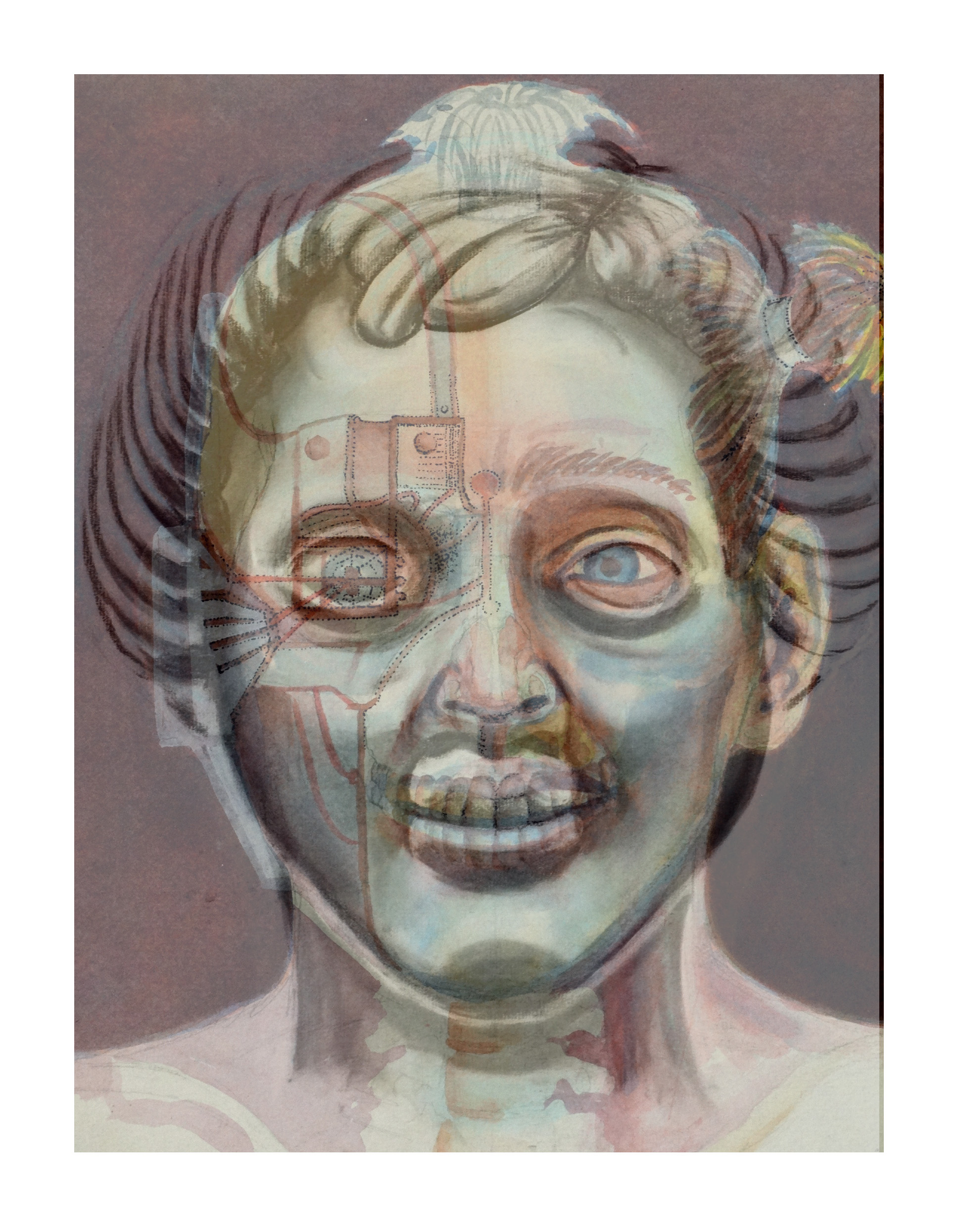
It seems to me the whole idea of winning presupposes a common desire which will be satisfied by material reward resulting in an enhanced sense of well-being. This ‘success’ will never be more than temporary which means additional winning will be required to not simply sustain it but to avoid the debilitating depression of ‘failure’, the result being a vicious cycle of competing egos egged on by media hype and recognition. Then, one day I awake to the realization someone else is determining my values for me; my well-being is no longer in my own hands and has become embedded in the competitive, material realm.

Well, I’m not having any of it. I really don’t care how popular success is measured. I’m staying positive and optimistic. I’ll look past the material realm and embrace the purity of beauty and truth. I understand this may require some disassociation.

Taking Advantage

I’ve been wondering how natural it is for those who are able to take advantage of others. Beside the moral imperative to do to others what one would have done to one’s self and the often stated acknowledgment of the appropriateness of equal rights there seems to be a strong impetus for factions to separate along ideological lines and when those ideologies gain sufficient support, to find in others’ actions and beliefs a corruption deep enough to find those others undeserving of any respect for their contrary views.

So, the factions struggle for political dominance in order to impose their particular values in a way which will be, pretty clearly, disadvantages to the opposition. And, since it’s also pretty clear there will never be full consensus about much of anything, someone will suffer at the hands of the other, which makes me think the potential for discontent and even violence is in the nature of our society. And, the vulnerable minority or passive majority may find their very being twisted and tortured in most inhumane ways.  A benevolent overseer, Plato’s philosopher king maybe, might deal fairly with the most egregious of impositions of one on the other but it seems, ultimately, human nature will prevail; the strong imposing it’s values and beliefs on the weak.

Maybe a good solution, a means of avoiding the discomforts associated with factionalism, would be to remain apolitical, avoid the news of the day, and even, if necessary, maintain one’s being outside of the social milieu.   It’s not an unprecedented move after all; Buddha did it and by all accounts ended up in quite a favorable situation.

evil me

Beyond the Grave

I see by the calendar All Soul’s Day and with it The Day of the Dead is here. Death isn’t something most of us want to think about very much but at this time of the year, with nature racing toward dormancy, the topic tends to come to mind.

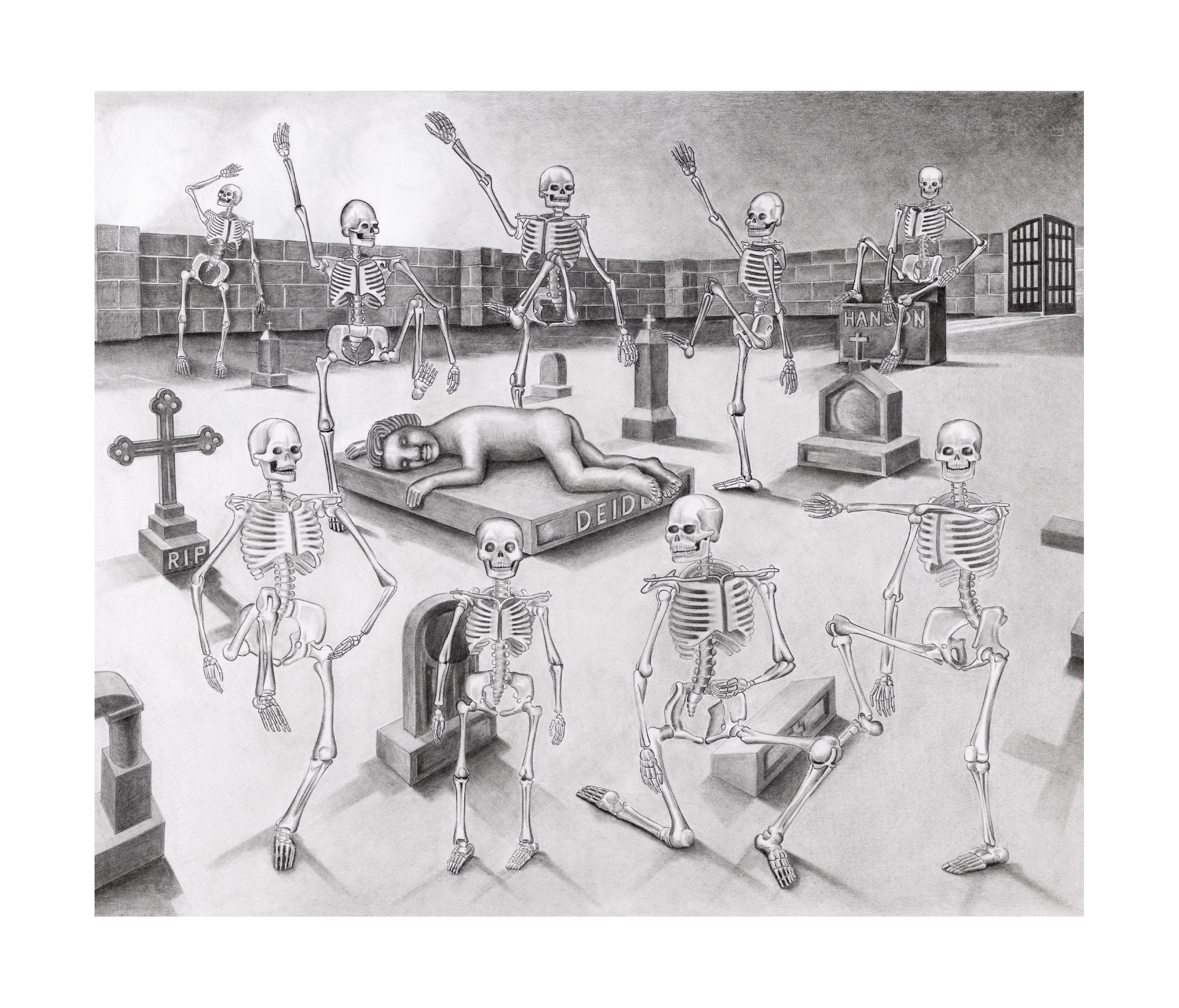
In medieval times death was on everyone’s mind daily. The Black Plague invited Death to be a regular visitor if not a live-in house guest. She became so well-known she starred in a regularly performed play called the Danse Macabre. In the play the black Angel would appear and, along with her spirit helpers the psychopomps, invite victims to accompany them beyond the grave; the beyond being, I guess, a promised land of paradise.

Throughout history (and even earlier than that I bet) people have sensed an existence beyond the grave: The ancient Egyptians conceived of a Ka or immaterial double that would live on after the demise of the physical body so the deceased would be able to keep doing the same fun things they had always done when alive.

The philosopher Arthur Schopenhauer was inclined to believe that, upon death, an individual’s will or essence of being would be reunited with its Cosmic origins from which it originated, which is a pretty cool idea of togetherness even though one wouldn’t really be aware of it because one’s memory and ego would cease to exist.

The Hindu people understand the universe to be eternal and that rebirth will continue to happen until enlightenment of the soul propels a leap into the infinite, which, I guess must be a bit like Arthur’s cosmic origins.

Contemporary Trans-humanists anticipate a situation in which one’s brain activity is downloaded to a computer and since the brain is where one’s being resides one can expect to live on forever provided someone is around to keep the batteries charged.

I’m sure I’m like everyone else in hoping the Black Angel stays away for a while but when it does come time for me to leave the realm of the physical, wherever I end up, I can always look forward to new experiences.  Or, perhaps, oblivion.

dayofthedead3

Belief is Truth to the Believer

Boy, it’s really hard to know what to believe these days. I read in a news magazine my hero, Mr. Rogers, was a former Navy Seal with twenty five confirmed sniper kills during the war in Viet Nam; truly mind-boggling. But, then I went on line looking for details and found out that the story wasn’t true, that it was just an urban legend.

I got to thinking that the safest thing to do is doubt everything, but my friend told me that it’s impossible: to be skeptical of everything is to be skeptical of being skeptical which is a logical contradiction. (I guess he didn’t know about Godel’s Incompleteness Theorem).

My friend said I should have faith that some things are true, that belief is truth to the believer. I guess people with a strong religious faith believe God is truth and that when they’re in doubt they can ask God to direct them, which means they have a way of communicating with a supernatural entity. I don’t doubt their sincerity but judging from the variety of interpretations different people have for the Biblical texts I wonder if they’re all talking to the same Being.

Well, maybe it’s just that wires get crossed sometimes.

absolute truth 3


Me, Myself and I

I’ve been thinking about my Self lately; mostly about how to reconcile the beauty and freedom of selflessness with the necessity of maintaining a healthy self-image to deal with the pressures of everyday reality. Looking to both positions seems kind of contradictory.  On the one hand, releasing attachment to the self opens awareness to full realization of the here and know in all its complexity. And, although not all one experiences is of a positive nature, un-attachment makes it possible to maintain perspective, to reach a reasonable understanding, without creating a “story line” in which “I” am the protagonist.

On the other hand, I am led to believe that without a healthy, confident self I probably won’t fare too well out in the world, socially speaking. The meek may inherit the earth, so it’s said, but in the meantime one should expect some serious bullying.  I suppose, maybe, like much else, the problem may just be a matter of degree. Perhaps the self is nothing more than the subject of the perceptions, emotions and thoughts we experience rather than the independently existent entity that leads to narcissism and tunnel vision.

As nice as it would be, intellectually (and emotionally, too), to be absolutely sure one direction is better than the other, I guess I must be content with attempting to balance the ideas. It just goes to show, I suppose, living an examined life takes some work.

me, myself and I


Dreams and Consciousness

I’ve been reading about dreams lately. Not about Freudian interpretations like what it might mean to dream about being naked in public but, rather, about the nature of consciousness. Rather about, if, in deep dreamless sleep, one is still conscious and how in terms of consciousness one experiences dreaming.

Most of my dreams, the ones I remember, I recall upon awakening as experiences in which I’m present as a participant. Lucid dreams, on the other hand, are ones in which, in the dream, I might find myself standing outside the action viewing myself participating in whatever adventure my sleeping imagination might decide to conjure; which, I guess, is like out of body experiences.

OBE’s have been recorded over time immemorial by all sorts of people and have sometimes been interpreted as an actual second or astral body separating from the physical one to go onto adventures of it’s own. A terrific thought, I must admit, but neuro-scientists are dubious.

Apparently one can acquire, overtime, the ability to dream lucidly and I’m thinking about trying to obtain such a skill. I think it might make my dreams of nakedness less distressful, you know, being a member of the audience.

dreamsofnakedness3

Platonic Love

I’ve been thinking about Plato’s Symposium lately. The short book details a social get-together of a group of Greek intellectuals each speaking about the nature of love. Apparently these old guys felt the need to discuss philosophy while consuming large amounts of wine. Anyway, the speech I like best is Aristophanes’ explanation of the origins of love.

He offers that humankind began as spherical beings with four arms, four legs, two faces and opposing genitalia. There were men and women but mostly hermaphrodites. These beings were so complete in themselves, so capable and without need they pretty much ignored the gods, which was a mistake because Zeus took particular umbrage at their arrogant self-satisfaction and split them all in half. Each man became two men, each woman two women and each androgynous one became one man and one woman.

These new beings found themselves lost without their companion half, found themselves subject to all sorts of human foibles, insecurities and fears, which, I suppose, made them more attentive to the gods, at least for a time. The upshot of this bizarre episode was an innate yearning on the part of each new individual to reunite with his or her missing half, which, according to Aristophanes, marked the beginnings of romantic love.

When I think about it, as wonderfully imaginative as his story is, it kind of makes sense that some men and some women would seek soulmates of common gender even though the majority, having been androgynous to begin with seeks union with the opposite sex.

Anyway, as you might expect, Socrates gets the last word and explains in his speech that love of Man, true love, is much deeper than the physical attractions of youth, that, through love, man has access to Absolute Beauty and Goodness which lead him to ultimate truth and bring him as near immortality as Man may ever come.

I bet Socrates and the Buddha would have gotten along well had they known each other.

With Greek Philosophers

With Greek Philosophers

Seeking Common Ground

Public discourse sure seems divisive these days. There seems to be a lot of people holding pretty strong oppositional opinions on a host of contemporary issues. The disagreements appear to be pretty deep; not just apples and oranges but more of a God/Satan divergence; a profound philosophical divide beyond any sort of reconciliation; neighbor versus neighbor has led to political gridlock. I’m inclined to level some of the blame for the situation on football; it’s all come down to a position of win or lose.

Which has led some wise pundits to suggest we need a change of attitude; a spirit of compromise along with a sense of civil exchange of ideas; allow the other side their dignity while articulating your own point of view clearly and calmly and try to avoid taking the issues personally.

I grant you this isn’t an easy task when you know for certain the other side is clearly wrong. I wish I could tell you I’m immune to this discordant dilemma but reading the news from the perspective of my favored aps keeps me regularly angry at the other side, and, I suspect, the other side is similarly seething while absorbing the bias of their favored sources.

The conundrum brings me back to a need to spend more time on my meditative practices: focus on by-passing the Self, allowing disquieting thoughts to evaporate, strive for ultimate nature of being, seek absolute truth. It’s difficult but I can think of no better solution and maybe I’ll eventually reach a point of toleration for those on the other side.  Besides, political issues shouldn’t really be taken all that seriously, should they?  And religion…..what about religion?

common ground3


Why Question?

In my ongoing interest in understanding more fully what is, I’ve been thinking about Socrates’ admonition: ‘An unexamined life is not worth living.’ What I think he must mean is one should continue to question. Not in the sense of total skepticism but with the understanding things change: situations, contexts, nuances offer new perspectives on commonly and generally held beliefs. And, new perspectives can lead to renewed energy and enthusiasm, adding dimensions to what I may have previously seen as pretty one-dimensional.

But, I suppose, at the same time questioning too vigorously may very well lead to profound uncertainties which will lead some who would prefer to just latch onto the Truth and leave it at that to lock up the box within which their knowledge is kept.

I guess those with such a mindset may be driven by an innate fear of the unknown, those for whom the terror of living is so overwhelming that they seek certainty at all costs, grasping with white-knuckled ferocity at dogmatic beliefs and limiting their community to others of similar ilk while denouncing those who don’t share their view, becoming pseudo-tribal as it were. And, by assuming such a stance, securely locking up the box of their understanding, distorted as it must be, resigning their conception of existence to remain in stasis until the farm is purchased.

Maybe it all comes down to intellectual capacity, and, as arrogant as that may sound, those of expansive vision, while less sure of ultimate outcomes, must surely lead a fuller, deeper consciousness, energized by the plethora of possibilities such an openness offers.

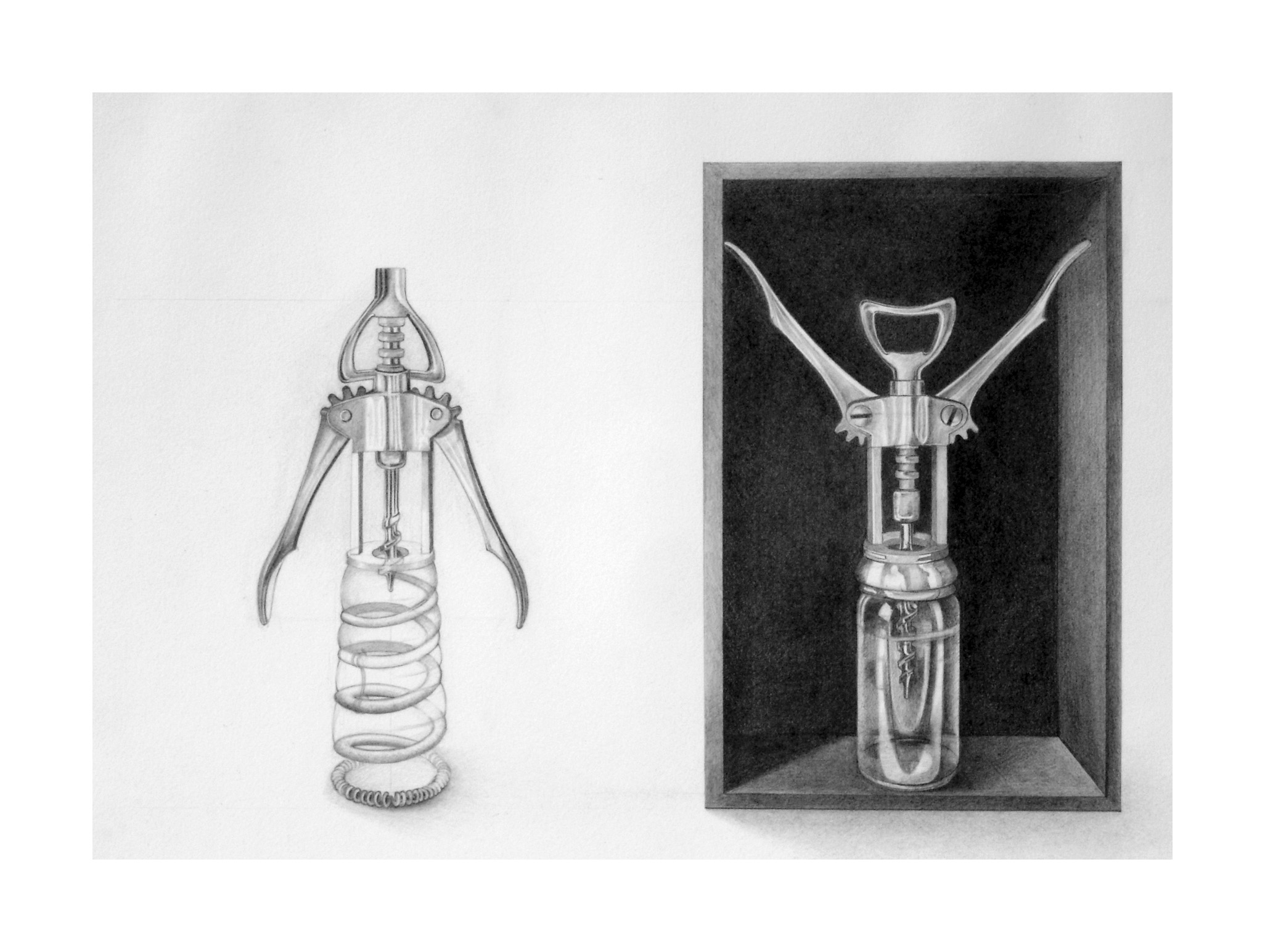
So, I guess I have to decide whether to live contentedly and securely if a bit unimaginatively inside the box or to break down the walls and revel in the uncertainty of infinite possibility. Such a decision, for me, is pretty easy to make.

Either/Or

Either/Or

The Magic of Belief

In my ongoing interest in getting a handle on religious faith and practices I’ve been researching the concept of transubstantiation. It appears church fathers have debated the idea of the magical change from wine and bread to blood and flesh for centuries in an attempt to convey legitimacy to the literal acceptance of Biblical metonymy. There have been council’s discussions and disagreements as to what Jesus actually meant when he told the disciples, “this is my blood”, etc. Since he was standing there holding a glass of wine and wasn’t apparently bleeding makes me wonder what all the uproar has been about after all this time.

I guess the acceptance of magic is key in such a debate. You know, all things are possible with God. The issue as well as many other doctrinal beliefs appears to depend on just such a faithful acceptance, which pretty much leaves logical understanding out in the cold.

Not that all that is, or could be, should necessarily fall within the bounds of my understanding. I do appreciate a regular dose of curiosity and wonder at the workings of the natural world and the people in it. There will, I’m sure, always be experiences beyond my conceptual abilities. But I do have to wonder if too much belief in magic might not be a bad thing for humankind after all. You know, if it relieves people from the responsibility of trying to understand and do something about the multitude of problems in the world, which, I fear, will be the case for those magical thinkers looking forward to a next life.

But, I suppose most people temper their acceptance of magical occurrences beyond the fantasies they tell themselves, the soundness of lottery participation, that the stranger on the phone isn’t going to ask for money. Nevertheless, it does appear self-deception may be the one commonality we all share.

administering the eucharist