The Human Soul

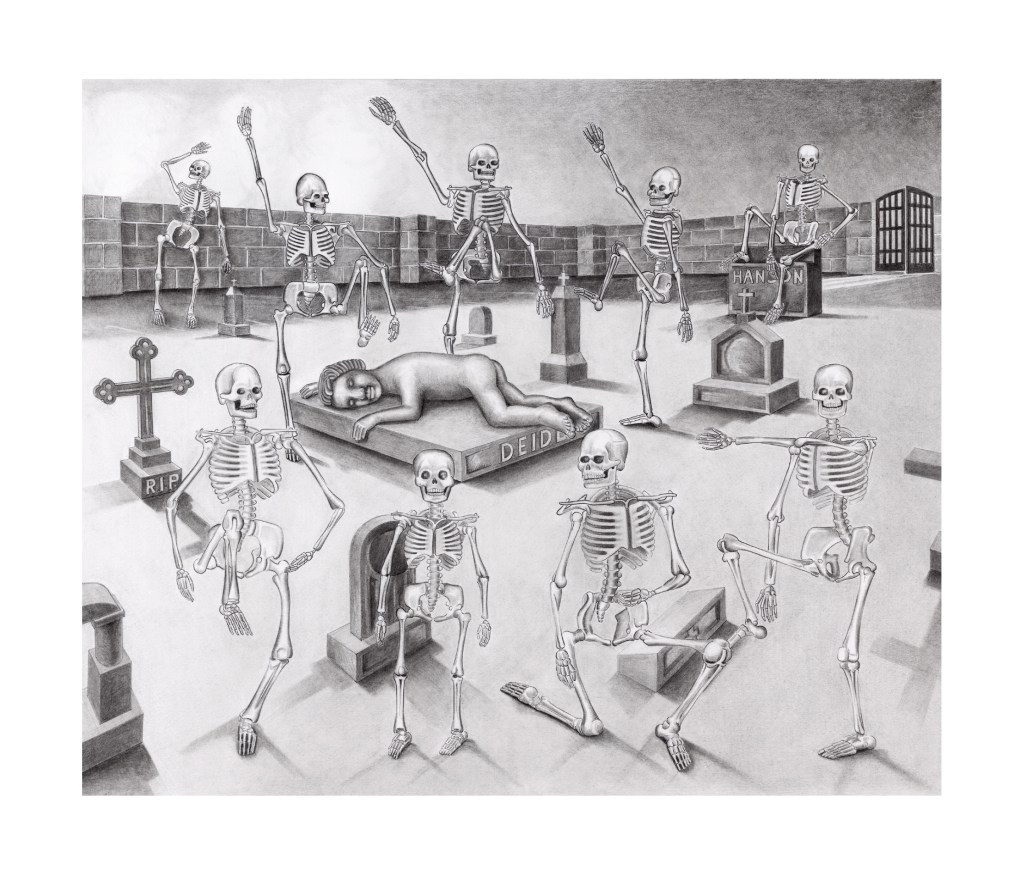
I’ve been reading about the various ways the human soul is perceived by various religious traditions as well as non-believers. In most cases the soul is seen as an entity that remains in existence after death of the body. For those uninclined toward religious dogmatisms the soul may, if accepted as existential at all, likely lack individual identity and will, after death, merge into a collective unconscious, a mindless and immaterial essence.

A common religious perspective has the soul maintaining the identity, personality and memories of the individual from which it emanates. If one is to experience the benefits of heaven or the eternal miseries of Hell such a soul will be necessary, even as such a belief may be a strain on the thoughtful faithful who may have trouble with the idea of a functioning dead brain.

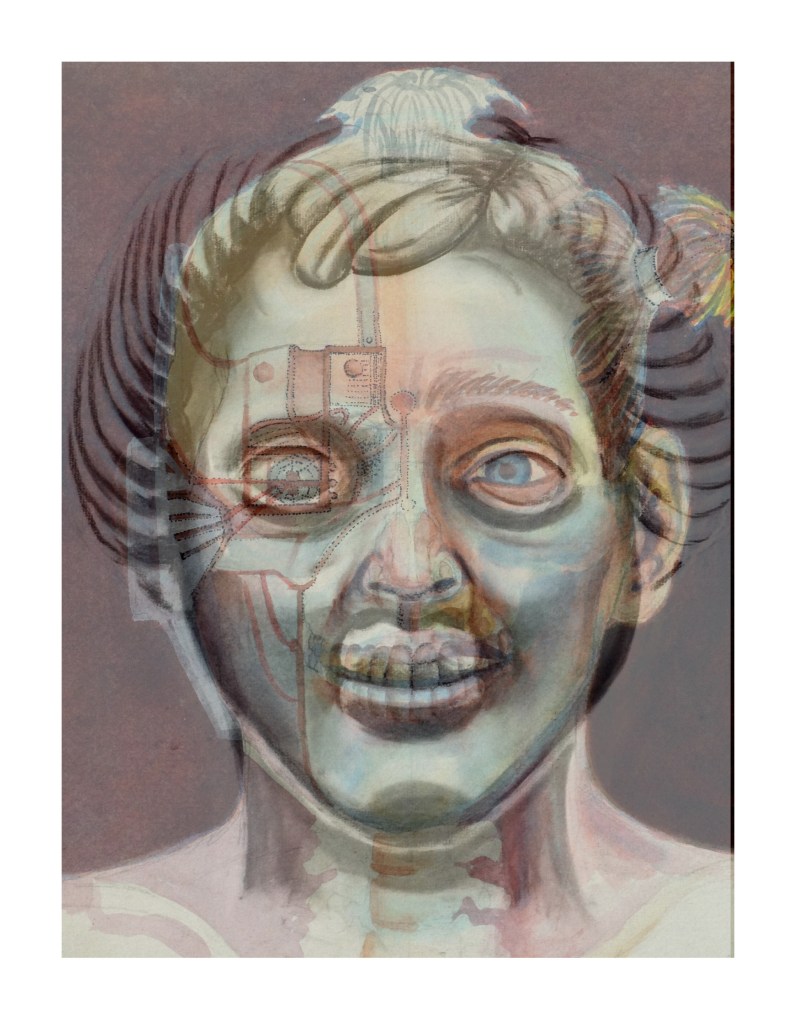
Another concept of soul can be found in the scifi realm. A ‘cortical stack’ situated between the brain and spinal column containing one’s identity is found to be portable. This ‘personality package’ can be transferred once one’s body wears out into a fresh physical specimen creating in effect a new you. Belief in such futuristic technology will certainly be a significant strain on even the most avid of scifi proponents.

Anticipating a future reality beyond life as we know it is something humankind has been contemplating for millennia and it’s pretty compelling for many of us to continue to do so. Contemplation is never a bad thing.

Time

I suppose it doesn’t take much imagination to understand time as a social construct, a means of keeping society organized. Counting the hours keeps us showing up on time so progress can happen, so we’ve accepted time as an absolute: the structure of our reality depends on it.

But what if we didn’t think of time in terms of seconds, minutes and hours? What if societal time was held at bay, not allowed to invade our psyches? If our natural rhythms determined the flow of our existence, being late would no longer be a serious concern.

Minimal servitude and an understanding partner might make such a thing possible.

Ahimsa

The eastern religious principle of Ahimsa proposes that one ‘do no harm’: to achieve enlightened insight one must come to the realization that all things human and animal, animate and inanimate have soul-like presence, deserve respectful consideration.

The Jains are a traditional Indian religious sect that take the principle of Ahimsa very seriously. The deeply spiritual among them practice extreme measures to avoid injuring any living thing, plant or animal, will avoid walking at night so as not to injure unseen insects and mask so as not to inhale any sort of minute flying being. The idea is I guess, that in order to achieve Ahimsa one must get in touch with what one imagines that even the least of life forms has valid meaningful existence.

With this in mind, I found myself recently watching a tiny winged creature walk across my pants leg. I wondered where it might be headed, whether it might be seeking food of some sort. Certainly it must be considered a conscious being aware of the dangers around it and what stone it might find that would willingly harbor it for the night. Would it be able to form a bond with the sheltering rock one might assume has being in itself?

There is something enlightening about acknowledging the validity of our fellow beings.

What It Means to be a Rando

Realizing myself to be far removed from the popular culture these days I nevertheless caught on to the term ‘rando’ I overheard being used recently in a conversation between two 20-somethings. The term refers, I guess, to someone of little importance, a slight for sure.

As a result, I’ve become aware of how out of touch I am with the ‘in’ use of language and I find it a bit disconcerting, being so unhip (and I’m sure such term itself would be considered pretty lame; as would the use of the word lame in such a context) that I feel a need to try and remedy the situation, try to fit in at least to a degree

In hopes of moderating my pop cultural inadequacies I’ve decided that the next time I find myself in an elevator next to a girl wearing ear buds, I’ll turn to her and ask: ‘So, how do you like your beats?’ That should gain me a degree of cool, shouldn’t it?

Maybe not.

The Bright Side of Life

I’ve been thinking about the satirical Monty Python tune ‘Always look on the Bright Side of Life’. The song comes to mind because I’m finding myself in quite the opposite situation lately: entertaining a dark humor. Being aware of the need to lighten up before I descend too far into the abyss, Eric Idle and the gang, always quick with dark humor of their own temper my daily diet of the news, the knowledge of world events that are consistently quite the opposite of enlightening.

Putting things into perspective, not wanting to totally abandon reality, the boys continue; ‘always look on the bright side of death’, informing us ‘we come from nothing, return to nothing, what’s lost’. And if humor doesn’t lighten one up whistling might help.

Impending Mortality

I had my last colonoscopy today: no polyps, colon nice and clean, good to go. I was beyond pleased at the announcement. Preparation for the procedure I find to be particularly unpleasant. Never having to ever again drink half a gallon of laxative in order to thoroughly cleanse my bowels and then suffering through a day of fasting is so relieving, particularly in view of the fact food is usually at the top of my daily thoughts.

So, I’ll never need the procedure again, my colon will stay healthy. Forever? The procedure being my last one ever along with an earlier assessment of my general health that led to the comment that, I would probably ‘have another twenty years’ before me sounds pretty good but the underlying implication is pretty hard to miss.

Anyway, right now I feel great and can easily live with the predicament of mortality.

A Symbol of Serenity

I purchased a Buddha the other day; a concrete yard sculpture, a fairly generic cast form, the sort of thing one finds at garden stores next to the gnomes and angels. Being concrete the buddha was pretty heavy to move, it required two workers to lift it into my van and a couple of hours sweat on my part to move it to the location near the pond in my backyard where I’d chosen to place it.

Now, as I stand back and view this sculpture situated as it is amid the verdancy of the surrounding ferns, hostas, Maple canopy and water surface it seems to emanate a significance greater than its generic origin would suggest; maybe it’s massive weight contributes psychologically to the concrete Buddha’s inflated worth, but, even so, it conveys a sense of the serene that I’m thinking will be helpful as I contemplate the big questions from the comfort of a lounge chair on my back deck.

Realizing the Sublime

The diminutive tribal people indigenous to the primal forests of equatorial Africa represent an autonomous culture able to thrive in a most prohibitive environment. Survival means understanding the flora and fauna, what’s edible and what has medicinal applications since the extremely dense jungle in which they live is rife with tropical diseases and man-eating predators. To thrive, tribal identity requires a philosophy of sanctity of group rather than individuality. To exist in such a place means finding the sublime in the terrible. They must become one with their sacred world.

Lessons to be learned here, I think, about how to nurture and support a life-providing environment.

Immortality

I’ve been reading that death, to die, wasn’t always in the evolutionary cards. Science speculates that the earliest life forms (single cell Amoeba, I’m guessing) didn’t die, that death emerged during evolution because it was advantageous to survival of the species. Over population being the problem, I suppose; a lesson to be learned considering the pressure humankind is putting on the earth’s resources these days.

Now we have big money interests pursuing the science involved in rehabilitating human cells in order to reverse the aging process with the hope of extending life indefinitely. It’s human nature, I guess, to want to postpone, even imagine the elimination of death. It all has me wondering though, how happy we’d be if we lost the uncertainty we experience as we fall into the small death of sleep, the elation of discovering in the morning we live another day.

The Limitations of Language and Memory

I’ve been thinking lately that language is a limiting and essentially inadequate means of describing experience. (As I think about this it occurs to me I’ve probably thought this very thing before; in fact, I doubt I’ve had a truly original thought anytime recently).

Anyway, language may be the only way of describing experience, but the descriptions rendered no matter the mastery one may have of the written word will fall well short of sufficiently describing the color and complexities of sensual experience.

Roland Barthes, the late French literary theorist, said that man cannot know, understand prior to developing at least a rudimentary language. I’m inclined to disagree with such an idea. It seems to me my colorful and complex sensual experiences can occur to my conscious self without interpretation; that it is unnecessary for language to supervene upon my experiences for them to actually exist. 

But, then, maybe my memory is going, I am aging after all; brain cells are being lost. Still, the visual imagery is there and doesn’t seem to require captions. I’m thinking language is over-rated. It simply is unable to account for the ineffable.