The Inerrancy of the Bible

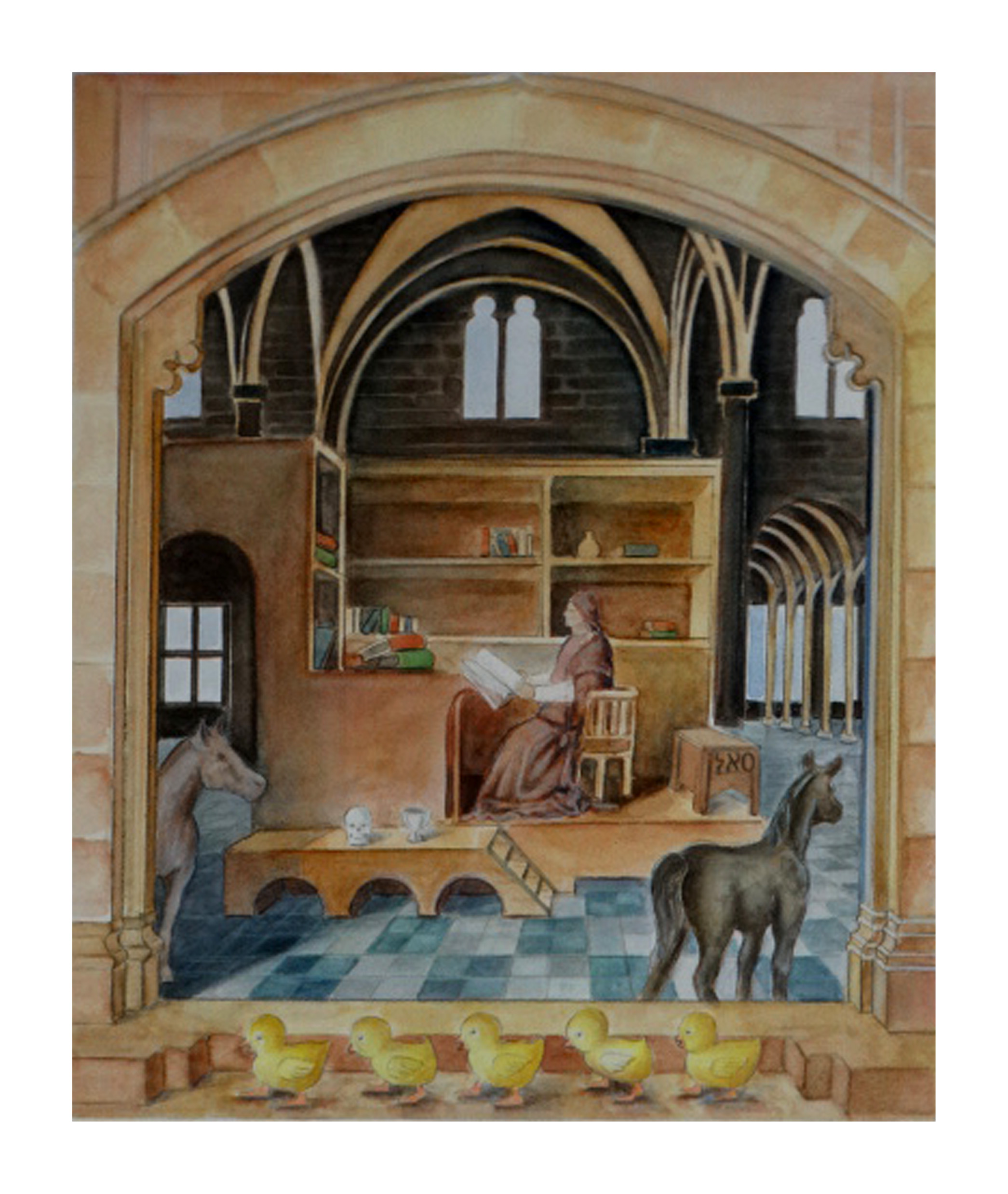
I’ve been reading about the difficulties that the Early Christians faced translating the Bible into Latin. There were, apparently, a number of translations from the original Hebrew and Greek in early Christian times that were treated as ‘living text’, altered to suit the inclinations and personal biases of the interpreter. Serious scholars like Jerome (whom the church eventually thought well enough of to grant sainthood) struggled, in the 4th century CE, to gain a sufficient knowledge of Greek to produce an accurate (or fairly accurate anyway) translation of what was originally written. Even so our intrepid scholar, given the enormity of the task, made plenty of mistakes. And on top of it all, the time being pre-printing press, copies had to be made by hand by ill-fed, poorly housed monks who it is certainly reasonable to understand, made plenty of errors of their own.

Later, in the 16th century, Erasmus of Rotterdam, a respected Biblical scholar, unhappy with the grammatical errors and discrepancies of meaning in the New Testament returned to the original Greek in order to produce a translation more in keeping with the intentions of the authors of the gospels and epistles. Erasmus (whom the church apparently didn’t deem sufficiently saintly) spent years working on his Biblical update. He, too, was prone to translating mistakes.

Assuming the multiple translations into modern languages has inevitably built mistakes upon mistakes I have to wonder how today’s Christian Fundamentalists can maintain a belief in Biblical inerrancy.


Outside the Envelope

I’ve been thinking, lately, about the idea of the inter-connectedness of all things and events. I get it in an abstract sense, from the standpoint of particle physics, you know, sub-atomic particles in constant flux moving between solid objects and the ethereal. But, from a pragmatic point of view, the idea is contrary to my ingrained perspective of linearity, one thing following another in straight forward cause and effect.

I’m beginning to see, though, that sometimes seemingly inconsequential occurrences can have wide-spread ramifications affecting a multitude of subsequent events. And, inclined as I am to dismiss as ludicrous the realm of the extra-sensory I’m beginning to think there may be something to the notion that the subtlest of actions, an intense thought, even, might alter the behavior of animate beings as well as affect the very structure of the physical world.

This line of thought may be due, I realize, to the existential discomfort of the changing seasons, the slumber onto death of on-coming winter, but, on the positive side I’m finding a new focus for a time, a new way of thinking outside of the envelope of logic and rationality. Maybe I’ll come up with some great new ideas before I retreat back into my rational world, which, I’m pretty sure I will do.

Alternate Realities

Reading the news these days leads me to the observation that humankind is existing in disparate realities. Political discourse seems to be polarizing, getting nastier, adherents on left and right becoming angrier and angrier. It’s almost as if we’ve submerged ourselves in sensory deprivation chambers resulting in a behavioral regression to a more primitive animal nature. ‘Sensory deprivation’ in this case amounts to willful ignorance, to a refusal to see views other than our own as valid, leading to tribalistic demonization of the ‘Other’.

It is pretty easy to find one’s preferred narrative nowadays, there being such a variety of news offerings. Unfortunately, many of these information providers seem to be less interested in providing fair assessment than attracting followers who prefer their intuitive beliefs reinforced, which seems to be a pretty consistent characteristic of our innate tribal natures.

Sometimes it’s hard not to be embarrassed for our species.

Amor Fati (The Love of Fate)

I’ve learned from the ancient Stoics that one must pick one’s battles: there are certain things that will occur in one’s life that one simply has to accept and live with. I get the idea, you know, that screaming and hitting one’s head against a wall in impotent exasperation is never a useful procedure.

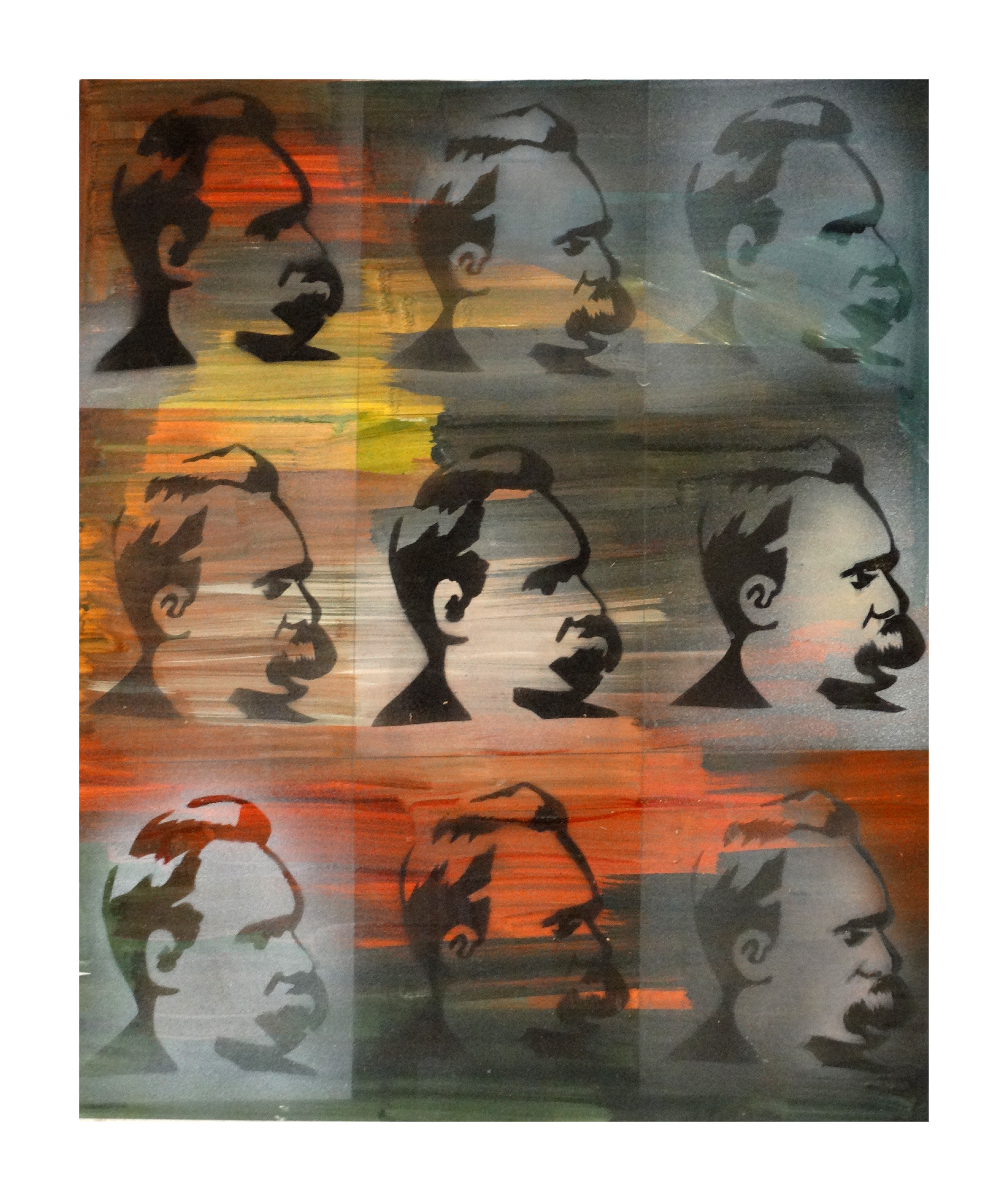
But now I read that Friedrich Nietzsche not only advocated the acceptance of one’s fate, but he said it should be embraced, loved even. Granted, F. was a bit crazy toward the end of his life and not particularly upbeat before that, still, the idea deserves contemplation, I suppose. As I wait around to see what happens next, what fate has in store for me, embedded as I am in the real world, I’m not sure all conceivable possibilities will necessarily be loveable. In fact, there are several scenarios I can imagine so dire, that, if they were to happen, may lead me to the precipice, threaten my very sanity, be so totally incapacitating as to render me catatonic and irretrievably mentally lost.

Such a realized occurrence may, I guess, have been what happened to F.

I Think the World is a Pretty Good Place for the Most Part

I happened upon a commentary the other day about perspectives: how we as individuals see our world(s) as inherently good places or as bad and getting worse. The suggestion the psychologist author offers, in the end, is that our world view(s) are less about the world than about certain primal beliefs we harbor. To emphasize her thesis the author provides access to an on-line questionnaire whereby the reader might find out why, exactly, he or she wakes up in the morning enthusiastic and ready to face the new day or in a funk.

I couldn’t resist. I answered the 20 or so questions designed to determine to what degree I saw the world as safe, enticing and alive fairly quickly and was then presented with bar graphs ranking my responses with those of other survey takers. According to the results I found that my world view is pretty positive; a safe and enticing place (for the most part) inviting enthusiastic exploration, rife with opportunities to earn and grow and populated with mostly warm and supportive people.

When it came to the ‘alive ‘ part I didn’t fair so well, ranking down in the 20-30 percentile, which meant, I guess, that I couldn’t come to grips with the idea worldly events happen for a purpose which was how the questions were posed. But then I got to thinking about the idea of synchronicity, the idea that coincidences of time and place occur too frequently to be, well, coincidences: like thinking of an old friend one day and then hearing from him the next. And then there’s chaos theory, you know, like the butterfly effect where a small inconsequential occurrence begins a chain of events that snowball into a happening of enormous consequence, like the meteor sited by the Emperor Constantine providing the impetus for the rise of Christianity.

So, it has become clear to me that the world is a living, dynamic albeit chaotic place. I retook the test and did much better on the ‘alive’ part. So, I guess I see the world as a pretty good place. Well, mostly anyway.

(If you’re curious about your own perspectives take the survey at myprimals.com)


Trending Conservative

I’ve been thinking lately about what it means to be conservative. The tendency is, I think, to consider the term in a political sense, the stereotypical conservative/liberal dichotomy of uncompromising social and economic positioning that even conjures images of partisan physical appearance.

But, what I’m thinking about is how one deals with, resists or assimilates, changing social, cultural and moral values; how flexible one’s thinking needs to be to accommodate new ideas regarding ingrained beliefs that have become firmly ensconced and unchallenged for, maybe, generations.

Having long thought of myself as a progressive and open-minded individual, I’m finding it difficult of late to go beyond a ‘live and let live’ acceptance of notions that seem to be widely and enthusiastically embraced. It’s a bit disconcerting. The person I’m seeing in the mirror these days is less someone on the cutting edge of new ideas, someone not so avant-garde as I had always thought of myself as being.

I hate to think it but I’m afraid I’m becoming conservative.

In the Blink of an Eye

I’ve been reading that neuroscience has made significant inroads toward determining how exactly the brain makes possible our biological existence. Apparently, the mind can be thought of as a neural computer comprised of modules, each with specific tasks, that respond to the input of information that arrives through the senses. Within the brain, billions of neurons make up various organs that control everything from toe wiggling to eye blinking.

I find it all pretty hard to picture but maybe it can be thought of as a sort of ‘light show’, neurons sending electric pulses down a line to a ‘blink center’ (in the case of eye blinking) which converts the pulse to a chemical which is sent to nerves in the eye lid and blinking happens.

As I think about it, I suppose there must be another organ with it’s contingent of neurons that keep the lungs inflating and deflating, another one that processes the oxygen and delivers it to the blood cells and yet another that maintains blood flow to the extremities and on and on; and all of this brain activity happening just to keep us animated and more or less cogent.

In the light of such knowledge one might not be surprised, I guess, if mental lapses are experienced occasionally.

Status

I’ve been contemplating, lately, the mystery of how exactly certain people gain status these days. Apparently material wealth is a significant factor, but one must wonder what else is required for one to attain pre-eminence. I get that prehistoric cave dwellers and school yard children look up to those larger and stronger than average, maybe quicker-witted as well but the rule doesn’t seem to follow for today’s notables. Observing those in the public eye these days has me wondering how so many of modest abilities and unexceptional skills could have gained attention except through happenstance, luck or inheritance.

At any rate, once realized, status holders seem reluctant to relinquish the attention. The tendency seems to be to remain in the spotlight by what ever means available. Conspicuous display of wealth through ostentatious consumption is an age-old tactic meant to ensure special recognition: it was a traditional status move by the indigenous people of the Northwest Coast in their Potlach ceremonies and such behavior is easy to observe in today’s affluent culture.

The problem now is, so many are affluent that it’s pretty difficult to attract much attention through wastefully excessive behavior. Some have upped the ante by exercising conspicuous outrage: offering incendiary commentary that demonizes groups and individuals which is then readily picked up by the media always interested, as they are, in feeding controversy.

Such self-serving mean spiritedness, one would think, should provide short-lived attention but the opposite seems to be the case. I guess too many of us are comfortable viewing reality as melodrama.

Our Primitive Brain

I’ve been reading about parallels between biological evolution and cultural progression over the years. Biologically humankind has evolved over the millennia to produce, over thousands of generations, a fitter specimen, better able to sustain and thrive in a sometimes hostile natural world.

Similarly, I’m led to understand, ideas arise, catch on for their beauty and usefulness, spread from brain to brain and sometimes mutate into more useful variations. These ‘memes’ will evolve to become part of our common knowledge and humankind’s cultural sophistication grows accordingly.

Problems occur when our biological selves which are pretty much now what they were 50,000 years ago must reconcile our primitive brains with a rapidly evolving culture. Our essentially tribal inclinations tend to interfere with our ability to assimilate the pluralism our intellects assure us is a reasonable way to coexist in our culturally shrinking world, which, I guess, somewhat explains the populism rampant in today’s politics.

It’s one thing, though, to understand all of this, something else to have to live through it.

Natural Selection

I’ve been reading that evolutionary progress will proceed through natural selection. Generational changes to an organism, occurring as the demands of existential pressures require, upgrade survival abilities; which suggests, I guess, that those beings that evolve with the fittest genetic make-up will be the ones that thrive and reproduce, passing on their fitness to their offspring. But I’m led to understand, the system isn’t fool proof; occasionally a glitch in the system will cause unfavorable genetic mutations to be passed on which results in less than desirable progeny.

One does have to wonder sometimes at the actions and decisions some people choose; maybe it’s the ‘choice gene’ that has mutated or perhaps it’s missing altogether in those folks who seem to proceed through life in a more or less spontaneous and thoughtless manner. These unfortunates may find themselves making bad life choices that result in a failure to mate and reproduce or prematurely exit existence, which I suppose, is how nature cleans up the gene pool.