Evolutionary Aesthetics

I’ve been wondering how we’ve come to associate aesthetic values the way we do. I’ve been reading that our human nature, our genetic inheritance, has, over the millennia, found beauty in those things that reflect or resemble qualities necessary for basic survival like verdant planes, water sources, food animals in visual representations, the social bonding realized in sharing structured, repetitive rhythms musically and sculptural representations of fecundity and animal nobility.

I get this, you know, but now I’m reading that the impulse to create art was, and still is I guess, a mating tactic, a way to impress prospective sexual partners with the superior quality of one’s genetic make-up and intelligence. The idea does seem to explain, to some extent the artistic temperament, the volatile and delicate ego that seems characteristic of those engaged in art-making.

Being of a reserved nature myself, I’m good with leaving the romantic intrigues to the more flamboyant among us..

Samadhi

I’ve been thinking lately about the concept of Samadhi: the realization of oneness, that through focused attention, subject and object merge, which, I guess, means ‘me’, as subject, losing myself in identification with the object of attention, whatever that may be.

The idea seems appropriate to consider these days with my mind soaring a million miles an hour between thoughts of what just happened as well as those of the more distant past and thoughts of what will soon happen and what I should anticipate occurring in the more distant future, most of which being of a personal nature causing anguish to ‘me’.

So, I think what I need to do is take some time regularly, multiple times a day, to focus my attention on a singularity, breathe deep, let the proliferation of thoughts, which will arrive, pass through until I achieve a sense of a much desired peace. I’m pretty sure I can do this. I just need to find an appropriate object on which to focus.

Nature/Nurture

I’ve been reading lately, about the on-going controversy regarding the development of the human persona. There seems to be, among psychologists, a never-ending debate as to whether we inherit, genetically, the intellectual tools to decipher, through our senses, the world around us or whether we arrive on this earth without a clue.

Those on the ‘nurture’ side of the argument tend to view the human intellect as being formed for the most part by the culture in which we grow up. The values we hold dear, our sense of place in the world, our spiritual nature are written on the blank slate of our being by our unifying culture.

The ‘nature’ folks, on the other hand, site the cross-cultural similarities humankind shares. Western cultures, primitive tribal groups and most all cultures between are amazingly similar in how social relationships function, the significance of spirituality, development of art expression and the use of moral taboos. The cultural commonalities would suggest the pre-natal slate was anything but blank.

On the ‘nature’ side I suspect all of human kind views itself as special beings of superior intelligence within our respective worlds which would seem to suggest a potential unifier; something to bring us all together; to encourage cooperation. I guess it must be the ‘nurture’ aspect of our being that creates divisiveness, religious conflicts, ideological differences, a misplaced sense of superiority over those unlike us.

I guess who we are is a bit of both nature and nurture; it would seem to me a push toward the nature side would be beneficial to all.

The Dangers of Religious Fundamentalism

I’ve been reading that one of the primary drivers of religious fundamentalism is the sense of feeling under siege: the opposition, anyone holding a perspective contrary to the orthodox view, is identified not simply as apostate but as the enemy: immoral and evil.

With the firm belief God is on their side, fundamentalists embrace a world view that may include cosmic battle against the forces of evil.  Fundamentalists convince themselves they are the chosen ones of God which sometimes leads to nationalistic fervor and an aggressive political stance and may even include the idea of replacing secular government and constitution with the tenets of their religious beliefs. They evangelize, convinced anyone not a believer is doomed to eternal Hell, which I suppose might be considered somewhat altruistic ( the evangelizing that is), if the rigidity of their demanded beliefs weren’t quite so outrageous and their methods of conversion less oppressive. These folks take their sacred writings literally, a gift from God, inerrant, any metaphorical allusions lost on their determined black/white perspective. So, the fundamentalists flex their muscles in tense confrontation, waiting for the sign from God signaling Armageddon.

Whew! This all might make exciting TV drama if it weren’t so real.


Social Darwinism

I’ve been reading lately about the strange and self-serving developments that followed Charles Darwin’s determinations of biological evolution. There were certain late 19th century thinkers that found it advantageous to apply the evolutionary theory to the social milieu: that the ‘fittest survivors’ referred to those most able to exploit the economic system, that material wealth meant social progress, and unimpeded pursuit of capital gains would lead to a better world, in the interests of which capital would not be wasted to shore up the least able, and, in fact, eugenic cleansing would provide a superior ultimate outcome.

In opposition or at least counter-point to such an hard-hearted position were those who saw man as a social animal, empathetic to his fellows and reliant on community to provide a reasonable, happy and successful life for all. These altruistic sorts saw social solidarity as evolutionary, naturally evolved over millennia, evidenced by primitive, tribal man whose very survival required social care and cooperation.

Anyway, the majority of folks found well-reasoned logic in both of these fairly divergent positions, the result being a populous which has since embraced philosophical contradictions between our natural propensity for empathy toward our fellows, our common humanity, and the conviction we’re not all equal, some of us being morally and intellectually superior.

We can only hope that, at some point in the not too distant future, recognition of our mental incapacities will be realized and we’ll come to our senses.


Sacred Gitche Gumee

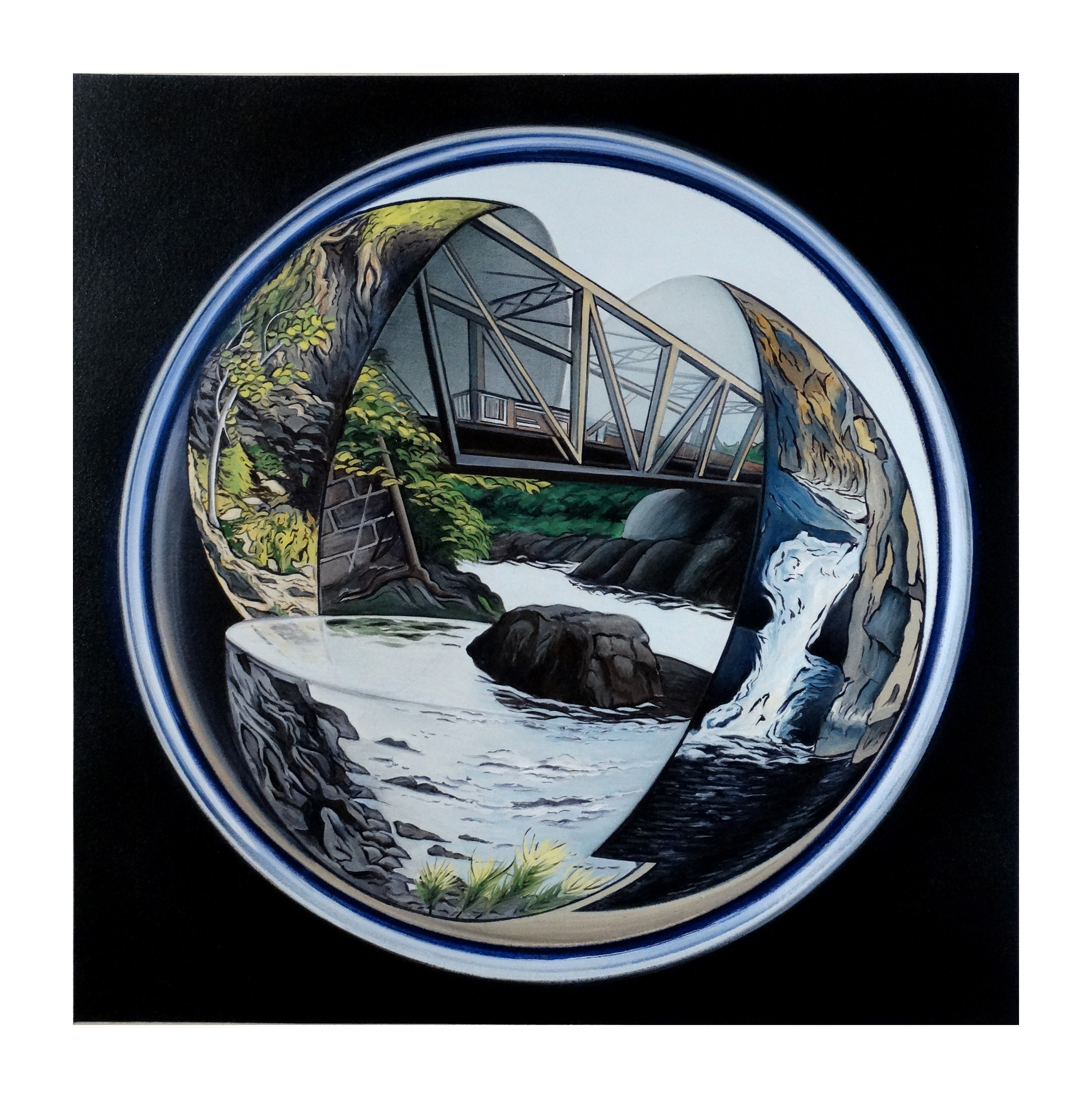
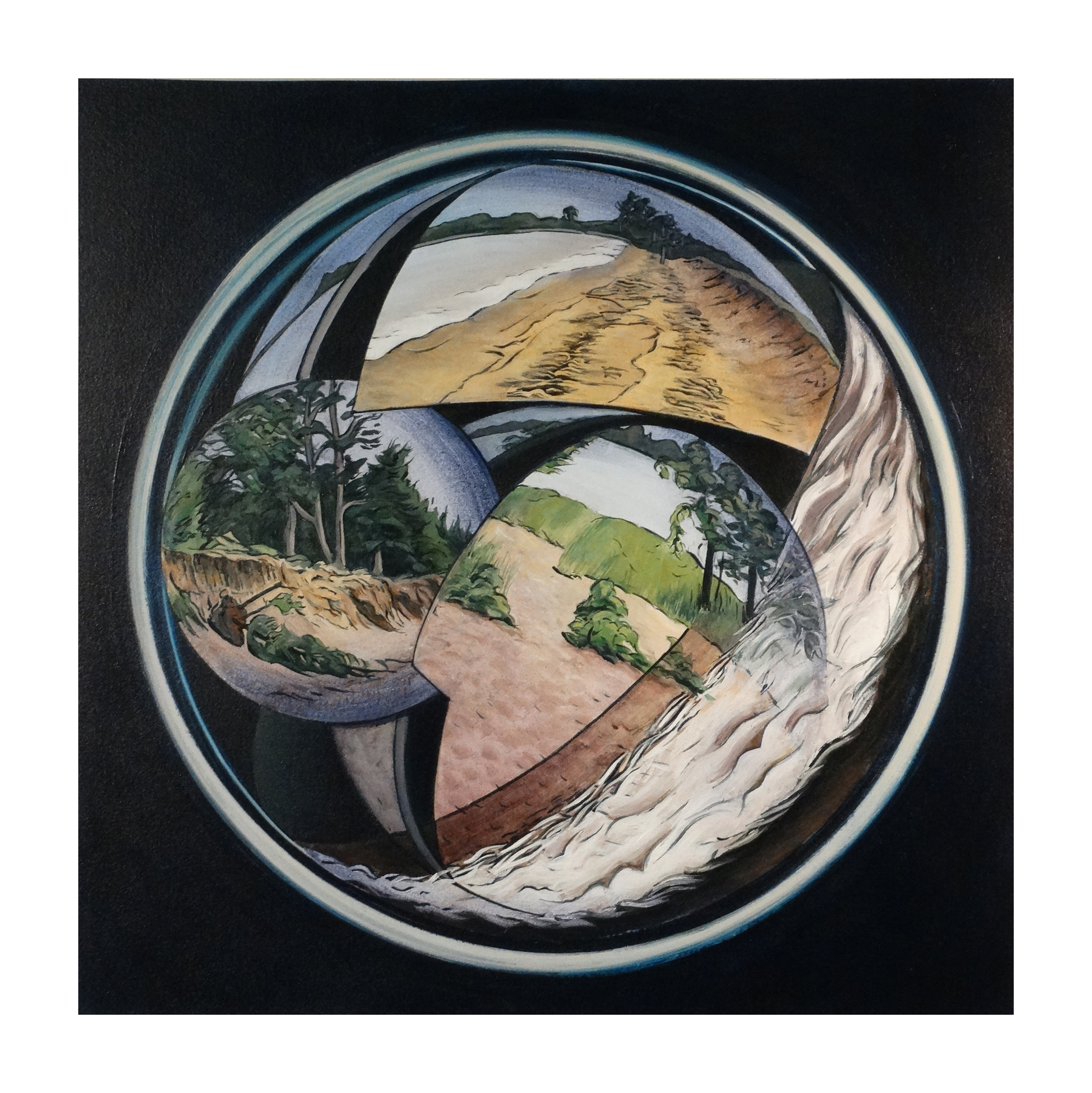
I have just recently spent some time along the shore of the largest freshwater lake on the Continent.
The experience has me thinking about a poetic comment made by a local resident well familiar with the immense waterbody and its impact on the natural environs: the lake, he said, is God.

I’ve been reading how water functions as religious symbol, you know, as primordial formlessness from which all life emerges and as purifier, cleansing the world of the detritus and accumulating filth that profane existence necessarily produces. The big lake does seem to fit the profile in both cases. As I sat on the shore admiring the pristine beauty and vastness, a certain serenity did seem to subvene upon my restlessness. Maybe the lake is God.

A Sense of the Sacred

So, I was reading that the most hardened atheist more than likely has some sort of sense of the sacred. It may be in the remembrance and contemplation of a personal past experience or as an instance in time and space when an acute awareness of the efficacious natural world transcends the mere physical. I suppose there are all sorts of possibilities.

Anyway, after reading a very convincing tome suggesting the likelihood our universe came into existence from nothing: that’s no space and no matter for that matter and certainly no creative overseer, I’ve nevertheless come to realize a sense of the sacred is and always has been a part of my reality. As exciting as the new theories and discoveries in particle physics are I still, and suspect I always will, relish the enrichments I experience from a cool breeze on a warm summer’s day that often mean more, have a greater personal significance than can be explained by science.

As I sit here surrounded by nature, despite the potential distress the wood tick crawling up my pants leg may cause and the lack of potable water to quench my thirst and the ache in my back due to an unseen mud hole, the sacred, nevertheless is present.

A Universe from Nothing

So, particle physicists and cosmologists are theorizing that there are infinitesimal universes popping into and out of existence all the time and that these universes are occurring from nothing: no space, no particles, no gravitational fields, no electro-magnetism, no laws of nature: nada, zero. These universes, they theorize, are the result of quantum fluctuations of ‘virtual particles’ (here one nano-second, gone the next). And, the thinking goes, there is a very strong likelihood that the universe within which we live may very well be an inflated version of such a universe from nothing.

I must admit this is all pretty hard for me to grasp, has me wondering about what nothing is and isn’t, among other things. Does this mean, our universe having popped into existence, that it could suddenly pop out of existence as well? If it did would the resulting vacuum suck all and everything into a very large black hole only to reconfigure as a new universe: a mirror image of its former self?

I find these ideas pretty exciting and they have me wondering about what the quantum world will show us next. I imagine, though, theologians might not like the ideas very much.

Despair in Florence

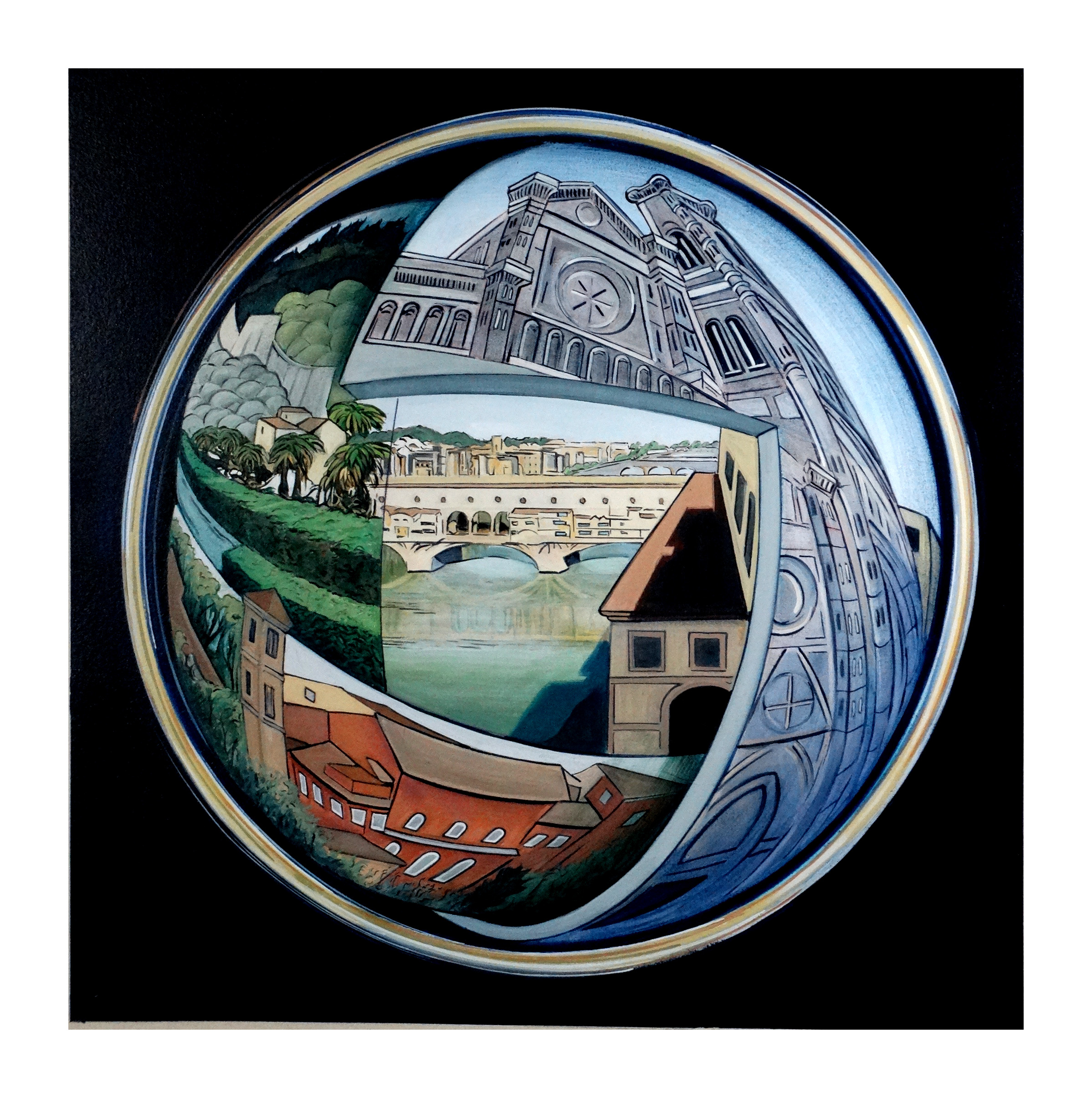
I was speaking with a very insightful young Florentine during my recent travels. He commented that the state of American politics (of which I must admit to being a bit embarrassed) isn’t surprising to most Europeans given the populist anti-immigrant goings-on in Italy and throughout Europe. “What we don’t understand about the Americans,” he said, “is the guns.”

This got me thinking about a Goethe quote I ran across recently that goes: ‘There are times when all consolation is base and it’s our duty to despair’, which resonates, no doubt, but I have to wonder how much value there is in despairing, you know, all by itself.


Maybe Sometimes a Good Scare isn’t such a Bad Thing

I have this friend who, fairly out of the blue, received a shocking medical diagnosis that put to question the likelihood he would be unable to carry on his chosen life-style not to mention the possibility of an all-too-sudden permanent demise. Well, upon re-evaluation the dire prognosis was over-turned and things suddenly reverted to how things had been, you know, business as usual, except, the scare of imminent demise led my friend to a re-evaluation of priorities, what, essentially does matter after all and a sudden acute awareness of Here and Now.

I guess what the shock of a good scare can do is bring Here and Now into sharper focus. And, of course, Here and Now is where we live and should be where we always want to be but often aren’t, completely, distracted as we tend to be by thoughts of what occurred last week or what will happen after dinner tonight, perceived occupational successes and failures, personal relationships, the rising cost of satisfying our material desires, our minds constantly flitting from one thing to another. We live so much of the time, it seems, in a fog through which Here and Now is only occasionally glimpsed.

The whole episode has me thinking I need to spend more time focusing on Here and Now.