Leaps into Freedom

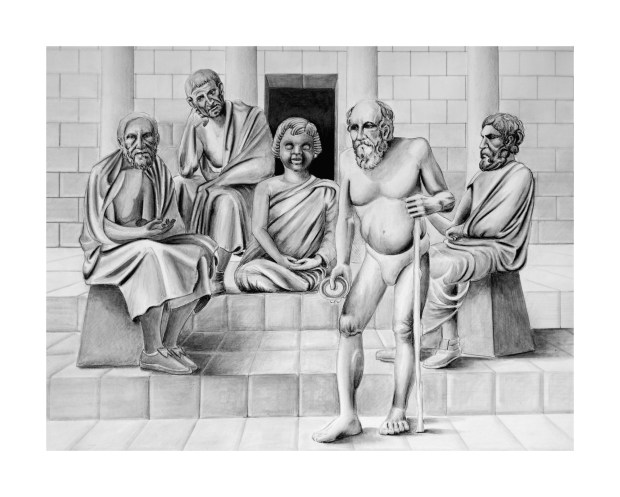
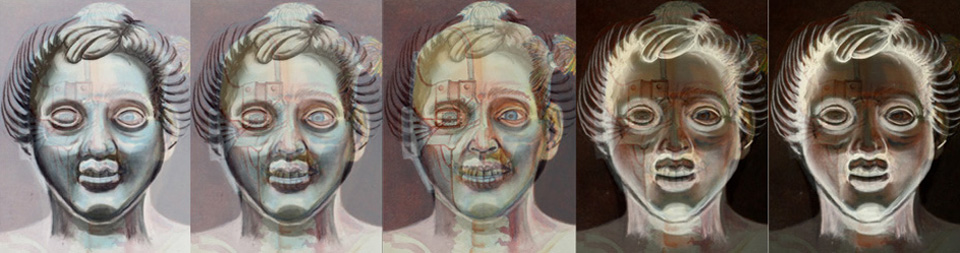
I’ve been reading about some of the deep thinkers of the early 20th century, how they struggled to come to grips with the tumultuous uncertainty of the time. Clearly, the 1920’s must have been difficult: the western world had just endured a devastating world war that put question to the very value of human life. The dissolution of long held beliefs brought about by Darwin’s theories of evolution 20 years earlier had serious religious implications for many and Einstein’s relativity theory upset the belief that time and space were fixed entities.

So, the philosophical search was on to find a grounded reality. Questions abounded: What lies within the bounds of knowable truth? How does language determine what can be thought? How do social norms repress spirit? In various ways a common thought occurred to these brilliant thinkers: In order for man to rise above the moral and spiritual ennui of the times he must muster the courage to intellectually move beyond, to take the leap into the freedom of personal choice without any assumption of reward, earthly or heavenly, expecting nothing and assuming total responsibility for one’s existence. Setting aside the false assumptions brought about by the mythical thinking embedded in language will lead one to realize a truly authentic life: to being one’s true self.

How exciting it must have been for those who dared take the leap beyond conventional foundations, accepting one’s existence fully in place and time, realizing the freedom of personal responsibility. The headiness of absolute personal freedom, I suspect, was eventually tempered by the need for close relationships and the giving they require.

A Balanced Nature

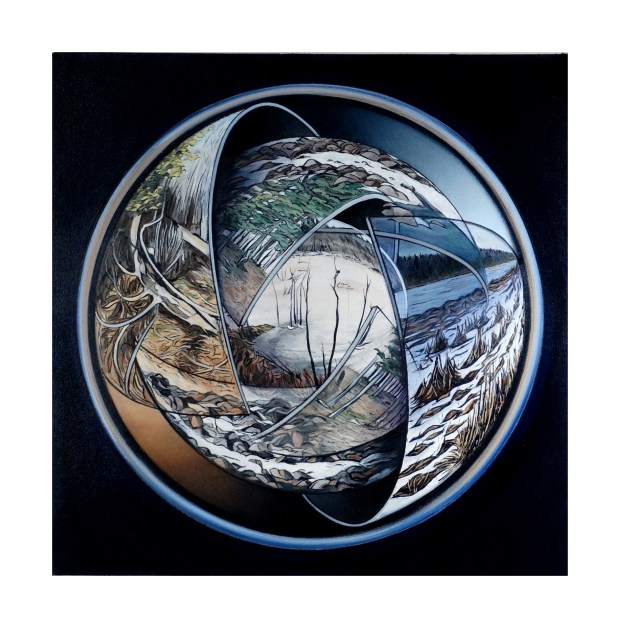
I’ve been reading a very interesting article about the tiger population in India. Bengal tigers, considered a threatened species, have been given protections against hunting as well as a large protected reserve in the jungles of Madya Pradesh were they share the land with the indigenous forest villagers. To the east, in the Sundarbans mangrove swamps between India and Bangladesh the growing tiger population, facing a scarcity of traditional food animals ( due in part to human incursions exploiting resources), have turned to humankind as an easily obtained substitute, killing and eating one or more villagers a week.

This got me thinking about the food chain. While we may entertain the notion that we, humankind, have an advantage, a superior position among our animal neighbors in securing our piece of the environmental pie, upsetting the natural balance would seem to be a dangerous ignorance. Logic would have us focus on providing necessary habitat and resources for survival of all species. When one species grows and exploits the earths finite resources beyond what is fair to all, perhaps limits should be imposed.

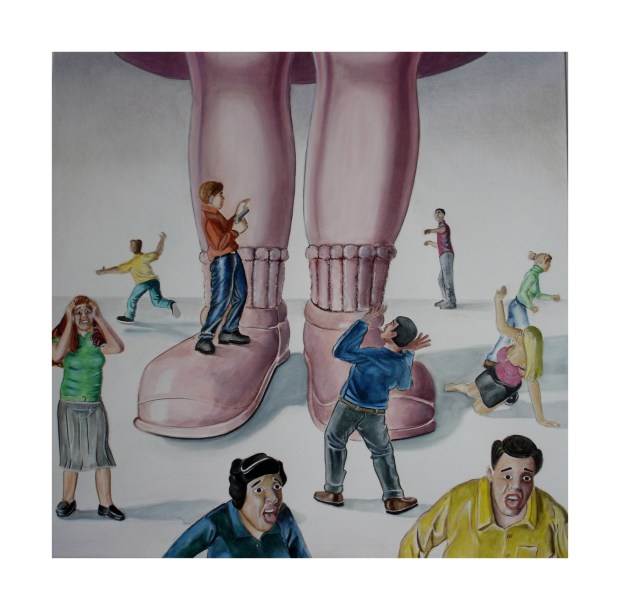
Just wondering if we might not have a moral obligation, you know, in terms of the health of all earthly inhabitants to encourage the tigers to eat the villagers.

Resisting the Inevitable

Doing my daily stretching regimen the other day and finding it occasionally painful has gotten me thinking about the inevitability of the physical downslope I’m descending. Ageing has a way of putting one’s physical prowess into perspective. Memories of the stamina and flexibility that once were mine have become distant.

So, as a counter measure to deal with this somewhat depressing realization I’ve obtained a wrist mounted device that measures my daily physical activity. I get encouragement sent to me online if I meet certain daily parameters. The device functions as a personal trainer to keep me on task, keep my physical activity reasonably high, keep the calories burning. This athletic enterprise has me, for the time being, feeling pretty good about my physical health, stamina and weight stability. My daily exercises, though, aren’t getting any easier. I remain aware of the reality of my situation, that the best I can hope for is to maintain an equilibrium for awhile.

I’m not giving up. Better, I think, to at least stay mobile. I’m determined to use it until I lose it.

A Playful Adolescent

I’ve been reading about the idea of man as a perpetual adolescent, forever youthful (in mind anyway), playfully making and thereby discovering and inventing. Given time to play without the pressure to produce, the theory goes, valuable discoveries and innovations may very well result.

History informs us that, indeed, such a process has been the impetus for quite a number of important innovations. Brilliant people engaged in playful thinking (Isaac Newton, Leonardo DaVinci among them) have produced profound concepts that have contributed to our collective knowledge. Sometimes invented toys become practical machines: the wheel may have first appeared on a child’s toy in Pre-Columbian America.

I guess it’s the unique nature of humankind to have a prolonged childhood unlike many of our animal relatives who must be ready to hide or fight, defend or flee almost immediately after birth. As annoying as the perpetual adolescent may be to our adult pragmatic selves, with a bit of encouragement perhaps the slacker living in the basement might conceive an idea that will improve life for us all. At the very least it might get her into her own apartment.

The Uncommon Man

I’ve been reading, lately, about the common man, the 99% of the population that make up the social milieu and wondering what exactly common men have in common. I’m guessing these folks (well, us folks) are mostly of middle-of-the-road social and economic status, probably have limited educational accomplishment, likely adhere to some sort of religious beliefs and most certainly rely on a social network of other individuals of more-or less like mind. We’re the everyday working stiffs who execute our often-uninteresting daily toils in the hope there lies ahead a future of personal economic progress which will provide and secure leisurely retirement.

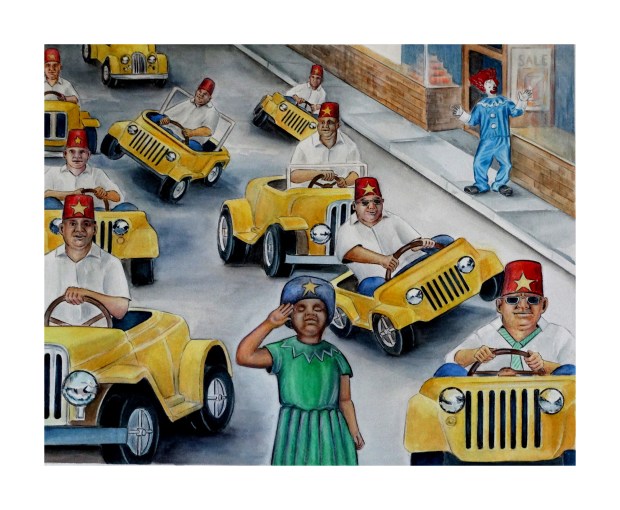
The uncommon man on the other hand is the intellectual or man of action who drives the public narrative. Maintaining his superior status in a democratic society requires he keep a finger on the pulse of the populace. When the common man begins to lose his sense of hope in a favorable future the uncommon man, in order to maintain his status, must placate the masses by providing a positive vision that a favorable future lies in wait. To maintain societal stability, keep the masses striving for more and better, the uncommon man paints a picture of prosperity near at hand, the good life awaiting those who sustain the necessary drive to be successful.

The philosopher Eric Hoffer thought an uneasy, socially and economically threatened populace of common men who, perhaps, had lost the dream of upward mobility have the potential to produce mass movements that have in the past and will likely in the future dramatically affect the course of history.

Given the state of our world, these days, it seems to me, what we need to do is seek out an uncommon man who can produce for us all a vision of hope and cooperation.

Unimpeachable Truths

I’ve been thinking lately about the multitudes of good and sincere people in the world who have arrived at dramatically conflicting views as to the nature of reality.

Most all of us rely on what we consider to be unimpeachable support sources for our views and usually a contingent of like-minded others that reinforce our beliefs. The evangelical Christian, the Qanon conspiracy buff and the liberal mainstreamer will tend to approach daily occurrences with sets of premises and then conclusions that are quite different. Such conflicting perspectives are the stuff of the social divisiveness manifesting itself these days; the dilemma of free thought in a free society free from coercive oversight, I guess.

I have no answers other than responding with patient tolerance in the knowledge that most everyone deserves respectful acknowledgement of their usually carefully considered views. The hope is that we can all spot disinformation when it presents itself. Hopefully, we can think past the response of the recently interviewed lady asked why she embraces her position on a current controversial idea. ‘I know it’s not true’, she said, ‘but it’s consistent with my beliefs.’

An Educational Dilemma

I’ve been reading about knowledge boundaries and the idea of island as metaphor. Within the island, our body of knowledge, we pursue lines of thought, traverse the island, and eventually reach the shore beyond which lies the unknowable. The island grows as the breadth of our knowledge increases, the shoreline expands, and we are confronted with more mysteries and incomprehensive considerations that, when the island was smaller, were beyond our wildest imaginings. I guess the idea is, the more we know the more we don’t know.

For those of us who are not inclined to add dilemmas to the one’s we already struggle with, perhaps limiting knowledge is a preferable strategy. We gain the peace of unquestioning acceptance of things simply being the way they are as opposed to living the uncertainty of constantly seeking answers; the problem the chronically curious must deal with.

Maybe it doesn’t have to be either/or. I can appreciate peaceful contemplation and still entertain intermittent bouts of curiosity. I think, these days, my island is still slowly growing. I’m just not venturing to the beach as often as I used to.

A Chosen Leader

I’ve been reading about how mass movements are started, what exactly is required for people to unite in a collective opposition to the status quo. Such a phenomenon is often brought about, I guess, by economic insecurities and perceived loss of status which sometimes results in a breakdown of the social order. A lot of frustrated people find themselves treading water without a worthwhile goal to swim toward.

What these folks want, I suppose, is hope for a better future. They seek a leader who can spin a believable narrative promising improvement; someone to thumb his/her nose at the established ways, one who has little regard for prevailing institutions, one defiant in word and deed.

Usually such an individual emerges in response to the cries of the disenfranchised. Sometimes, though, a talented ambitious man may insight the masses through coercion and false narrative to rise up against their own best interests, to champion change for the sake of change, fed by the energy of their common opposition to perceived injustices and identification with their chosen leader. They rally for their side to win at all costs, but in so doing threaten in their vehemence the integrity of the institution allowing them the free expression they exercise.

An unsettling scenario, it seems to me.

The Twisted Contradictory Mottos of Totalitarianism

I’ve been thinking about the George Orwell novel “1984”, how the totalitarian regime in the book implemented catch phrases to secure the minds of the populace. ‘War is Peace’ is used to establish a permanent enemy, a scapegoat, that can be blamed for any and all ills that befall the citizenry. ‘Freedom is Slavery’ discourages individualism, promotes tribalism in order to keep everyone bound to the collective. ‘Ignorance is Strength’ encourages the subservient populace to forego intellectual reflection, follow the dictates of those in power, not think about things to hard and they will realize contented peace. The message is, I guess, that given such ideas along with sufficient deterrents a totalitarian regime turns people into sheep without them realizing it.

It does seem a bit familiar these days but I guess as long as a free exchange of ideas remains in place reasonable responses can happen.


Routine

The idea of routine these days has taken on a sort of oppressive new meaning, limited as we are in our ability to socially interact and move about freely without concern of infection. Before the onset of the dreaded virus relieving a tedious daily cycle was as simple as a museum visit or dinner out with friends, experiences that give life meaning, expand imagination and help us realize possibility.

The conundrum has me thinking about cyclical time, how daily experiences reoccur with a good deal of regularity. Eastern Religions have long understood time to cycle on a cosmic scale which, I suppose, gave hope to those living less fortunate existences (who also looked forward to reincarnation). The philosopher Fredrich Nietzsche came up with a thought experiment he called Eternal Recurrence. The idea is to suppose one is destined to live this life over and over repeating the same experiences forever, an eternal cycle. The implication is, that if such were to be the case, one would want to be very careful that each moment of life was lived to the optimum: as best and as positive as one could make it happen.

What we need to do in covid world, I guess, is find ways to sustain ourselves positively, in uplifting ways. As important as it is to stay centered, alive and present in the moment, distraction may be in order. Many may find solace in readings with happy endings while others may seek the catharsis of apocalyptic disaster literature. Hobbies might be developed. Exercise is always good, solitary sport activities might be explored.

I really don’t have any particular advice for anyone, just trying to work it all out for myself.