The Sacred and The Profane

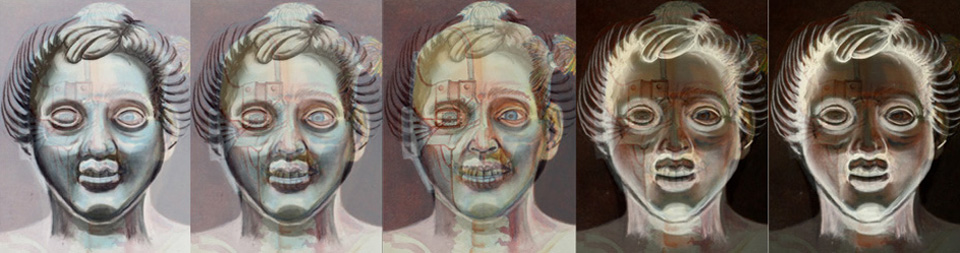
Today’s newspaper carries news of a recently deceased 15-yearold Italian boy, Carlos Acutis, who has been designated by the Church for sainthood. Carlos developed an on-line exhibit of Eucharistic miracles that have occurred over the centuries, which caught the imaginations of the faithful making him prayer-appealable, accrediting to him miracles of healing through his on-line exhibit.

The Church in its infinite wisdom, had Carlos’ body exhumed, organs removed and cosmetically enhanced so pilgrims journeying to Assisi can receive whatever blessing the future saint might grant, the Church, meanwhile holding the increasingly valuable relics.

Faith is a tenuous thing. I suppose it’s necessary, in order to maintain belief, to find new saints and have their body parts available for purchase.

The Sacred and The Profane

Unimpeachable Truths

I’ve been thinking lately about the multitudes of good and sincere people in the world who have arrived at dramatically conflicting views as to the nature of reality.

Most all of us rely on what we consider to be unimpeachable support sources for our views and usually a contingent of like-minded others that reinforce our beliefs. The evangelical Christian, the Qanon conspiracy buff and the liberal mainstreamer will tend to approach daily occurrences with sets of premises and then conclusions that are quite different. Such conflicting perspectives are the stuff of the social divisiveness manifesting itself these days; the dilemma of free thought in a free society free from coercive oversight, I guess.

I have no answers other than responding with patient tolerance in the knowledge that most everyone deserves respectful acknowledgement of their usually carefully considered views. The hope is that we can all spot disinformation when it presents itself. Hopefully, we can think past the response of the recently interviewed lady asked why she embraces her position on a current controversial idea. ‘I know it’s not true’, she said, ‘but it’s consistent with my beliefs.

The Problem with the Theory of Intelligent Design

After thinking about for some time, it occurs to me that the problem with the theory of Intelligent Design is that it requires combining and organizing disparate parts into a whole; particularly complex structures may involve evolved parts which are themselves constructed from even more basic components making such a concept unimaginable.

But biological life begins as a whole (single cell amoeba) that evolves from a primordial chemical soup. It grows and evolves from infancy to adolescence to maturity. Only afterward does the evolved being manifest the intelligence to conceive the notion of organized parts.

Eternal Recurrence

I’ve been reading about the fairly difficult existence that the philosopher Friedrich Nietzsche endured over his life time. Given his self-imposed isolation and the debilitating health issues that he endured: fairly constant migraines and nausea, it’s small wonder many of his thoughts were less than uplifting.
But, the physical and mental infirmities led him, I suppose, to one of his most notable ideas.

Eternal recurrence, stated simply, is to “live this life again in all its aspects, every pain and every joy, every thought and sigh and everything unspeakably small and great in the same succession and sequence over and over for ever and ever”, which must have been a pretty horrible idea for Nietzsche given his health and loneliness issues.

So, I’ve been thinking, maybe there’s something to be learned here, you know, make friends, go to the doctor, do good things; if life is indeed cyclical than maybe recurrence wouldn’t be so bad. There still would be periods of boredom to deal with though, I suppose.

The Effete Aesthete

I’ve been thinking about how visual art is consumed. I’m inclined to believe most people, viewing representational artwork relate favorably or unfavorably as the content reflects their interests: outdoor lovers and landscapes, hunters and wildlife, etc. Then, there are the aesthetes who revel in the beauty of color and composition or disdain the lack thereof. They seek rhythm, form and pictorial depth rather than meaningful subject matter.

The Effete Aesthete takes the visual art experience a step further. She seeks aesthetic nuance, contextual reference or artist intent as basis for value judgement, even though such meaning depends on secondhand interpretation provided by a critic or curator thereby eliminating the need for an honest interpretation of her own. Such action would seem to be a sterile and overrefined approach to visual art viewing.

Unimpeachable Truths

I’ve been thinking lately about the multitudes of good and sincere people in the world who have arrived at dramatically conflicting views as to the nature of reality.

Most all of us rely on what we consider to be unimpeachable support sources for our views and usually a contingent of like-minded others that reinforce our beliefs. The evangelical Christian, the Qanon conspiracy buff and the liberal mainstreamer will tend to approach daily occurrences with sets of premises and then conclusions that are quite different. Such conflicting perspectives are the stuff of the social divisiveness manifesting itself these days; the dilemma of free thought in a free society free from coercive oversight, I guess.

I have no answers other than responding with patient tolerance in the knowledge that most everyone deserves respectful acknowledgement of their usually carefully considered views. The hope is that we can all spot disinformation when it presents itself. Hopefully, we can think past the response of the recently interviewed lady asked why she embraces her position on a current controversial idea. ‘I know it’s not true’, she said, ‘but it’s consistent with my beliefs.’

Witch Hunts: The Problem of Inter-subjective Knowledge

The idea of the existence of witches is age-old but became particularly oppressive in 15th and 16th century Europe when imaginative tales of satanic behaviors became so ingrained in people’s minds it created a pseudo-reality that led neighbors to accuse neighbor of subversive behaviors, witchcraft, based on little more than petty jealousies. The accused were often tortured to confess and then burned or drowned on little more than hearsay evidence. Fear, fed by the church, was rampant, accusations plentiful, stories of satanic tortures and murders of children spread through the populous daily. Thousands were accused and put to death based on information that carried no factual evidence.

As the stories spread, igniting the imagination, they became seen as fact, even doubters were drawn in until the reality of the stories were known to be true beyond doubt.

I wonder how often the information we glean on-line inspires descent down the rabbit hole into equally absurd beliefs.

Fundamentalist Fervor

I’ve been wondering lately what sort of life events, what kind of social influences one would have to experience to lead him or her to embrace the stringent discipline of fundamentalist religion.  Apart from an innate proclivity toward a rigid, reactionary conservatism (can there be such an inclination?), what, I wonder, propels some people toward angry condemnation of any and all perspectives differing from their own?  

 In fairness, most everyone seeks answers to the big questions: the nature of existence, life’s inherent meaning, but only some of us (a small minority one hopes) determine their answers to be an infallible, absolute truth that leads them to rail against the slightest suggestion that there might be other good answers. 

Some of these true believers have come to the conclusion that the life they had lived before finding the Truth was so despicable that a psychic renewal was required: a re-birth into a total acceptance of, commitment to, their recognized god.  In order to maintain their new persona and recently acquired cosmic world view, an Opposition, an inherent Evil identified as constant reminder that one’s beliefs are constantly under siege, that life is a battle between the forces of God and Evil.  Tension and conflict then become an everyday experience and concern. 

There are, of course, degrees of fundamentalist fervor.  Not everyone who embraces conservative religious beliefs are overtly hostile to those they might consider infidel or apostate.  Still, the idea of immanent cosmic conflict isn’t buried too deeply below the surface. 

These are disconcerting thoughts to my mind, but, I guess, in the end, it’s all about being certain where the truth lies: for these folks it’s not within the empirical but rather the cosmic realm.  For some the rewards of a promised afterlife tempers the outrage and sustains their vision of the soon to be realized cosmic light.  

False Narratives

I’ve been reading about how mass movements are started, what exactly might inspire otherwise uninvolved people to rise up, to act with energy against what they see to be a real threat to their way of life.

Fear has something to do with it, I guess. The realization of an unthoughtful populace falling behind a demagogue who promises one thing and delivers another.

What these folks want, I suppose, is the re-establishment of a fair and inclusive structure, a pluralistic society threatened by the xenophobic ministrations of a leader whose motivations are at odds with the best interests of the people. Such a man spins a believable narrative promising improvement, thumbing his nose at the established ways, he is one who has little regard for prevailing institutions, one defiant in word and deed.

Usually such an individual emerges in response to the cries of the disenfranchised. Sometimes, though, a talented ambitious man of low moral integrity may insight the masses through coercion and false narrative to rise up against their own best interests, to champion change for the sake of change, fed by the energy of their common opposition to perceived injustices and identification with their chosen leader. They rally for their side to win at all costs, but in so doing threaten in their vehemence the integrity of the institution allowing them the free expression they exercise.

An unsettling scenario, it seems to me.

Nightmare Scenarios

As my mind wanders these days it finds its way into various nightmare scenarios: unsettling thoughts about what may happen when I embark on a soon to occur trip across the big water. I’m having dire imaginings about potential occurrences; lost or pilfered necessities like phone or passport, missed travel connections, unavailable accommodation; the list goes on and on. These thoughts are occurring to me frequently and in great detail and last until I can forcefully break from beneath the dark cloud and relax my furrowed brow, only to imagine another unpleasant scenario a few hours later.

As I check and recheck my travel plans, entertain alternative options just in case, I have to wonder if I’m not making the whole future enterprise more complicated than it needs to be. I know, having traveled as much as I have, problems can be solved, the locals are helpful, and worst-case scenarios are unlikely to occur.

My mind will continue to race and I will worry but I’m still not buying insurance.