Violence

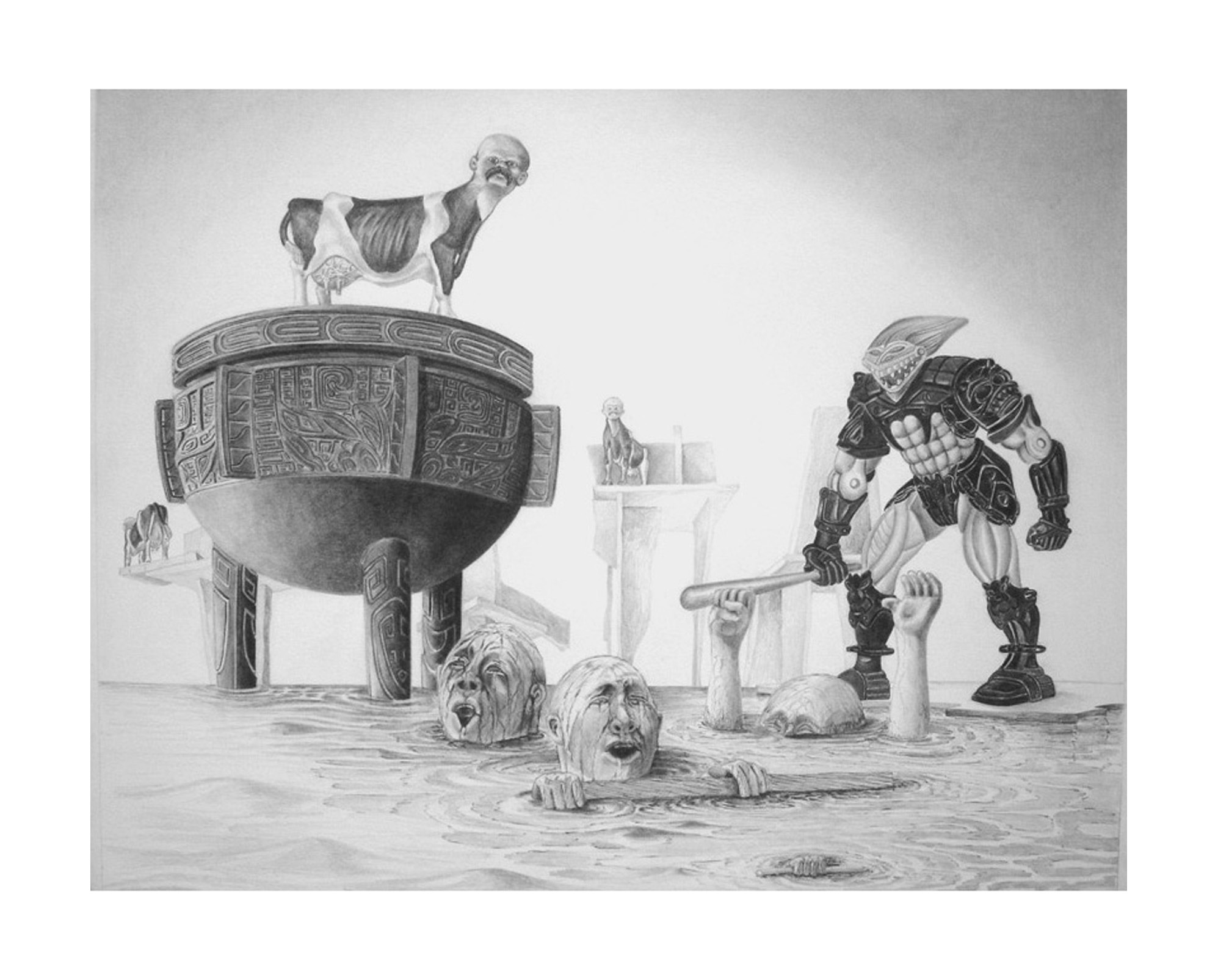
I’ve been reading that, by nature of our very existence at this point in time, most everyone has been endowed with the genetic propensity to behave violently. Given the necessary provocation, or not, our ancestral drive for survival has instilled the will and desire toward physical aggression in the interests of protecting kith and kin on the positive side and for some of us who may be leaning toward the psychopathic, rape and kill for personal gain. Violence may be the prevailing characteristic of humankind given our histories of Wild West lawlessness, clannish feuds and nearly constant warring.

Passivity is, I guess, a logical reaction against having to deal with any sort of revenge perpetrated upon us by survivors of aggressive behavior on our part, who, then, would have to be back-watching for retributive response from us, which would likely create a stand-off and perhaps perpetual distrust, which would place everyone in a fairly constant state of tension.

So, I’m sticking with passivity; I’m anxious enough as it is.
Samadhi

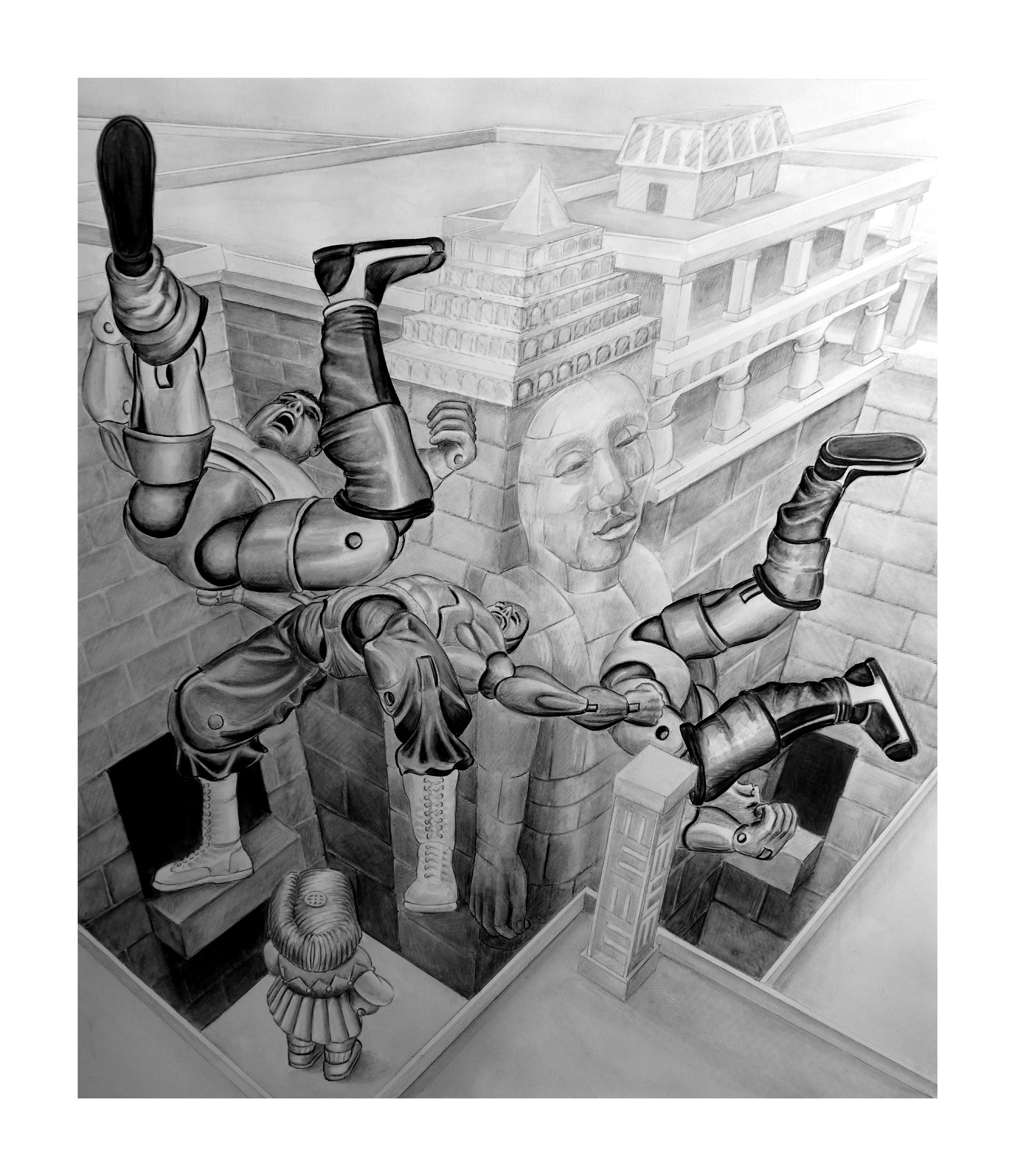
I’ve been thinking lately about the concept of Samadhi: the realization of oneness, that through focused attention, subject and object merge, which, I guess, means ‘me’, as subject, losing myself in identification with the object of attention, whatever that may be.

The idea seems appropriate to consider these days with my mind soaring a million miles an hour between thoughts of what just happened as well as those of the more distant past and thoughts of what will soon happen and what I should anticipate occurring in the more distant future, most of which being of a personal nature causing anguish to ‘me’.

So, I think what I need to do is take some time regularly, multiple times a day, to focus my attention on a singularity, breathe deep, let the proliferation of thoughts, which will arrive, pass through until I achieve a sense of a much desired peace. I’m pretty sure I can do this. I just need to find an appropriate object on which to focus.

Nature/Nurture

I’ve been reading lately, about the on-going controversy regarding the development of the human persona. There seems to be, among psychologists, a never-ending debate as to whether we inherit, genetically, the intellectual tools to decipher, through our senses, the world around us or whether we arrive on this earth without a clue.

Those on the ‘nurture’ side of the argument tend to view the human intellect as being formed for the most part by the culture in which we grow up. The values we hold dear, our sense of place in the world, our spiritual nature are written on the blank slate of our being by our unifying culture.

The ‘nature’ folks, on the other hand, site the cross-cultural similarities humankind shares. Western cultures, primitive tribal groups and most all cultures between are amazingly similar in how social relationships function, the significance of spirituality, development of art expression and the use of moral taboos. The cultural commonalities would suggest the pre-natal slate was anything but blank.

On the ‘nature’ side I suspect all of human kind views itself as special beings of superior intelligence within our respective worlds which would seem to suggest a potential unifier; something to bring us all together; to encourage cooperation. I guess it must be the ‘nurture’ aspect of our being that creates divisiveness, religious conflicts, ideological differences, a misplaced sense of superiority over those unlike us.

I guess who we are is a bit of both nature and nurture; it would seem to me a push toward the nature side would be beneficial to all.

The Dangers of Religious Fundamentalism

I’ve been reading that one of the primary drivers of religious fundamentalism is the sense of feeling under siege: the opposition, anyone holding a perspective contrary to the orthodox view, is identified not simply as apostate but as the enemy: immoral and evil.

With the firm belief God is on their side, fundamentalists embrace a world view that may include cosmic battle against the forces of evil.  Fundamentalists convince themselves they are the chosen ones of God which sometimes leads to nationalistic fervor and an aggressive political stance and may even include the idea of replacing secular government and constitution with the tenets of their religious beliefs. They evangelize, convinced anyone not a believer is doomed to eternal Hell, which I suppose might be considered somewhat altruistic ( the evangelizing that is), if the rigidity of their demanded beliefs weren’t quite so outrageous and their methods of conversion less oppressive. These folks take their sacred writings literally, a gift from God, inerrant, any metaphorical allusions lost on their determined black/white perspective. So, the fundamentalists flex their muscles in tense confrontation, waiting for the sign from God signaling Armageddon.

Whew! This all might make exciting TV drama if it weren’t so real.


Where’s the Nuance?

I’ve been reading about the most incredible difficulties those individuals of unorthodox thinking had around the turn of the 19th century (that is 1890’s to 1910’s or so). Public awareness of ideas questioning religious dogmas, racial inequities, subjugation of women and the like, often resulted in ostracization for any mindful individual who voiced such thoughts. Condemnation by a powerful fundamentalist clergy and demonizing by the mainstream press were powerful disincentives to speak out and those courageous enough to do so were often censored or ignored.

It must have been really hard to have a creative mind back then. New ideas were often seen as blasphemous or heretical by the majority; absolute truth ruled the day and made it easier, I suppose, for those who didn’t want to think too hard about the big questions.

These days it seems the majorities, consuming as they do their preferred sound bites, butt heads pretty much on a daily basis. Knowing their own truth leaves small room for considering the complexities, gray areas or subtleties of today’s issues, leaving free thinkers without much of a voice.

Some things never change, I guess, but resistance to free thought can be pretty disturbing sometimes.

What Hell is Like

I’ve been thinking lately about the implications spelled out in Dante’s Inferno and the pre-occupation of the middle-agers in one’s ultimate demise and the potential horrors of Hell.

In the book, Dante tells about being guided by the poet Virgil into the underworld, which is this huge pit containing the souls of all the people who have died and been found guilty of evil doings without having done anything, penitence-wise, that would have maybe gotten them to a more favorable eternal location. The first level of the underworld is for people who haven’t been baptized and, basically, all they have to do is wait around forever, but as Dante and Virgil go down deeper and deeper they discover each successive level holds souls who have been more evil than the last and are made to suffer worse conditions.

On level five heretics are encased in fiery graves and watched over by the Furies and Medusa. On level seven violent souls are submerged in a river of boiling blood and watched over by the Minotaur who, when they come up for air, shoves them back down.  When the poets get to the very bottom they find Satan encased in ice and unable to move, so they climb up his huge body and escape from Hell.

It’s pretty clear Dante must have thought about Hell a lot.  The amount of detail he goes in to is amazing. I wonder if he felt guilty about something or if he was just trying to warn people to walk the straight and narrow.

Anyway, I think people today think differently about what Hell will be like than they did in Dante’s day. It probably will have more to do with the loss of mobile communication devices and reality TV.

circle seven 3

Spiritual Common Ground

Having spent some time recently visiting a Christian pilgrimage site of some considerable significance to believers (and history buffs as well), it became apparent to me the penitents amongst the crowds stood out. It was pretty clear there is a deep emotional engagement, a heart-felt belief in the Christian dogma many of the pilgrims feel and adhere to.

It got me thinking about the sort of commitment other spiritual engagements require of their followers if their followers can be expected to remain followers. Other than Reformed Judaism which appears to be based pretty much on cultural tradition most other religious endeavors expect, if not an emotional commitment, an intellectual discipline whereby the metaphysical can be approached, the value of which for the honest participant is cultivation of a groundedness that is helpful in seeing through and beyond the petty and not so petty distractions life presents with considerable constancy.

Problems tend to arise when differences in doctrinal beliefs lead followers to deny the legitimacy of other traditions. It would be good, I think, if more adherents would focus on the common rather than the different and set aside the arrogance of an assumed superiority.


Social Darwinism

I’ve been reading lately about the strange and self-serving developments that followed Charles Darwin’s determinations of biological evolution. There were certain late 19th century thinkers that found it advantageous to apply the evolutionary theory to the social milieu: that the ‘fittest survivors’ referred to those most able to exploit the economic system, that material wealth meant social progress, and unimpeded pursuit of capital gains would lead to a better world, in the interests of which capital would not be wasted to shore up the least able, and, in fact, eugenic cleansing would provide a superior ultimate outcome.

In opposition or at least counter-point to such an hard-hearted position were those who saw man as a social animal, empathetic to his fellows and reliant on community to provide a reasonable, happy and successful life for all. These altruistic sorts saw social solidarity as evolutionary, naturally evolved over millennia, evidenced by primitive, tribal man whose very survival required social care and cooperation.

Anyway, the majority of folks found well-reasoned logic in both of these fairly divergent positions, the result being a populous which has since embraced philosophical contradictions between our natural propensity for empathy toward our fellows, our common humanity, and the conviction we’re not all equal, some of us being morally and intellectually superior.

We can only hope that, at some point in the not too distant future, recognition of our mental incapacities will be realized and we’ll come to our senses.


A Deeper Intuition

I’ve been reading that, in centuries past, some very bright and talented men held that within human nature an ‘inborn knowledge’ existed. But, what exactly this inner faculty was, wasn’t so easy to explain or necessarily easy for folks to recognize being housed as it was (and still is, I guess) within the subconscious. This innate psychic potential could, it was believed, foretell future events to those awakened to the ability, and numerous examples of just such occurrences were collected by the true believers, among whom was Johannes Kepler (the renowned 16th century mathematician) who also believed, along with numerous others, that each of us is under the influence of astrological movements that form our characters and behaviors and feed our psychic awareness.

So, before science gained the firm grasp on our sense of reality that it has today, explanations of why we feel, behave and act the way we do had firm bases in the occult. And, lest we dismiss these ideas too quickly we must admit that we do have déjà vu moments now and again and there are times when I’m hard pressed to explain the nature of my sudden psychic discomforts.

I have this nagging feeling I’ve traveled these same roads somehow, somewhere before.

In Search of Truth

I’ve been reading this very credible account of how the historical, earthly, human Jesus of Nazareth became, over time, other-worldly and part of the Godhead; in essence, something entirely other.  Whereas the historical Jesus was a compassionate advocate for the down-trodden masses, he was nevertheless put to death for what was seen as political ambitions. There were those not content to let the man they perceived as messiah, savior of the world to pass into oblivion before his promised kingdom of God on earth was established. A pretty good number of his most ardent followers swore on their very lives that the body in the tomb was re-animated, became once again a flesh and blood individual. The historical Jesus was thus re conceived as God Incarnate and the remarkable, admirable man, a role-model for all, was lost for all time.

The logical thinkers of the time found all of this pretty hard to believe; they were thinking, I guess, some sort of mass hypnosis or hysteria must have brought about the idea of a resurrected person who was, in addition, imagined to have been virgin born.  But, logical progression isn’t necessarily the final determinant of what may or may not actually be the case; an open-mind must allow for the inconceivable, that unexplainable things occur all the time. (Just consider political occurrences these days).

Anyway, it appears that, when it comes down to deriving an honest perspective of the existence and workings of the universe the Christian believer will rely on his truth of God’s hand in it all, while the curious unbeliever will look toward continued scientific research to find explanations of why things are as they are while acknowledging the many mysteries of existence.

Seems pretty irreconcilable; truth eludes us; we all must just keep thinking, I guess.