Totalitarianism

I’ve been thinking about totalitarianism lately. This, in part I guess, because I’ve been reading about the philosopher Hannah Arendt who escaped Nazi Germany in the 1940’s and, as a Jew, gave considerable thought to the subject.

Ms. Arendt determined that a successful totalitarian regime is able to establish a commitment to certain idealisms, such as racial purity or nationalistic solidarity, at the expense of basic human rights. By creating and enforcing with a heavy hand certain rules and laws focused on idealisms, plurality and individuality are undermined and an undifferentiated populace is championed. Faced with being ‘for us or against us’ the individual trying to go about his business taking care of family, putting food on the table and such will understandably become fearful. The fear of being perceived as an outsider tends to push ordinary citizens to embrace and participate in the extreme right wing political agenda. And, before long, most everyone is on board except, of course, those chosen as scapegoats to represent all that is evil and in opposition to the selected ideal truths.

As I think about it, it seems to me most all political structures, even those that declare democratic rule, have a bit of an inclination to push idealisms and demonize an opposition. Hopefully, individual strength and perseverance will hold such totalitarian impulses at bay. One must be careful, thought, not to take individual freedoms for granted, I think.

shriners3

In Groups/Out Groups

I’ve been reading, lately, how evolutionary theory offers insights into human behavior. Apparently, deeply ingrained within our genetic make-up, we survivors have certain inherent inclinations that, despite how desperately we may want to rationalize them away will always be with us. Our ultimate evolutionary need to pass on our genes has embedded within our psyches the drive toward group membership: like-minded individuals to share values and reciprocal support and the presupposition of a supernatural agency. I guess what happens over (a long, long, long) time is that the group establishes an identity: cultural, moral, spiritual, that separates it from other groups.

So, what this must mean is that we all will forever be divided into in-groups and out-groups. In the best of times, I suppose, toleration will reign, there will be peaceful co-existence. But even when such periods exist, the Ins will know that they are the trustworthy ones who recognize the true supernature, which means that there will always be a sort of tension between Ins and Outs that could, and sometimes does, fester and erupt into violence. And such a situation will be more likely to happen, I further suppose, when one group feels its existence is threatened if political power becomes imbalanced. And, as much as one might like to disassociate oneself from this ridiculous op positional stance, you really can’t since you wouldn’t be here to even think about it all if your ancestors hadn’t passed on the necessary survival genes.

I guess this evolutionary perspective explains a lot about the nature of the world today. I will try to remember that as evolution continues to slowly and erratically move along, in some distant future perhaps it will catch up to an intellectual enlightenment.

born-again-3.jpg

What it means to be an Intellectual

It has occurred to me recently that people who identify themselves as being intellectual, or are thought of in that way, are often considered arrogant. There seems to be an elitist connotation associated with intellectualism. The image, I guess, is one of out of touch academic ideologue lacking a pragmatic real world outlook.

And this, despite the fact that intellectualism is really nothing more than an attitude of exploration and investigation; an open perspective to ideas and positions of all sorts. Questioning is the essence of the intellectual stance, which, when healthy, stops short of blanket skepticism to arrive at the best possible answers at the moment, aware, always, that better answers may certainly appear in the future.

According to Richard Hofstadter, former Pulitzer Prize winner and history professor at Columbia, anti-intellectualism has probably always been with us but was exacerbated in America by frontier expansion which left behind the social structures of education, religion and government resulting in social regression. The early pioneers found themselves in a more primitive social situation where rule of law was replaced by retributive payback and moral relativism replaced trusting reciprocity between neighbors. By the time religion finally caught up to the westward expansion the unlettered populace responded to a revivalist approach that undermined education in favor of pure passionate religious response.

What makes all this so fascinating to me is the fact anti-education, anti-intellectual sensibilities have not only not dissipated but, judging by current political occurrences gained strength, at least in some quarters. I wish I knew what it would take to get more people to think things through a little better. I don’t think one has to be an intellectual to do that.

root people 3

Contributing to the Social Good

I’ve been thinking it may be time for me to step up and do a little more for those around me. I have for some time been the recipient of a very favorable social environment which has enabled me to live my quite serene life of artistic endeavor and contemplation. But, lately it seems to me that simply offering my unassuming, benevolent countenance is maybe a bit lacking; I could, perhaps, do something more for my neighbors. I don’t think I’m a good candidate for public office of any sort and policing or firefighting is beyond my abilities but it sure seems I should be able to find some way to be of service.

A friend suggested, when I put the dilemma to him, that the best thing I could do for mankind is simply stand aside-just stay out of the way, by which I assume he meant I should let those with energy and capabilities make the things that need to happen, happen.

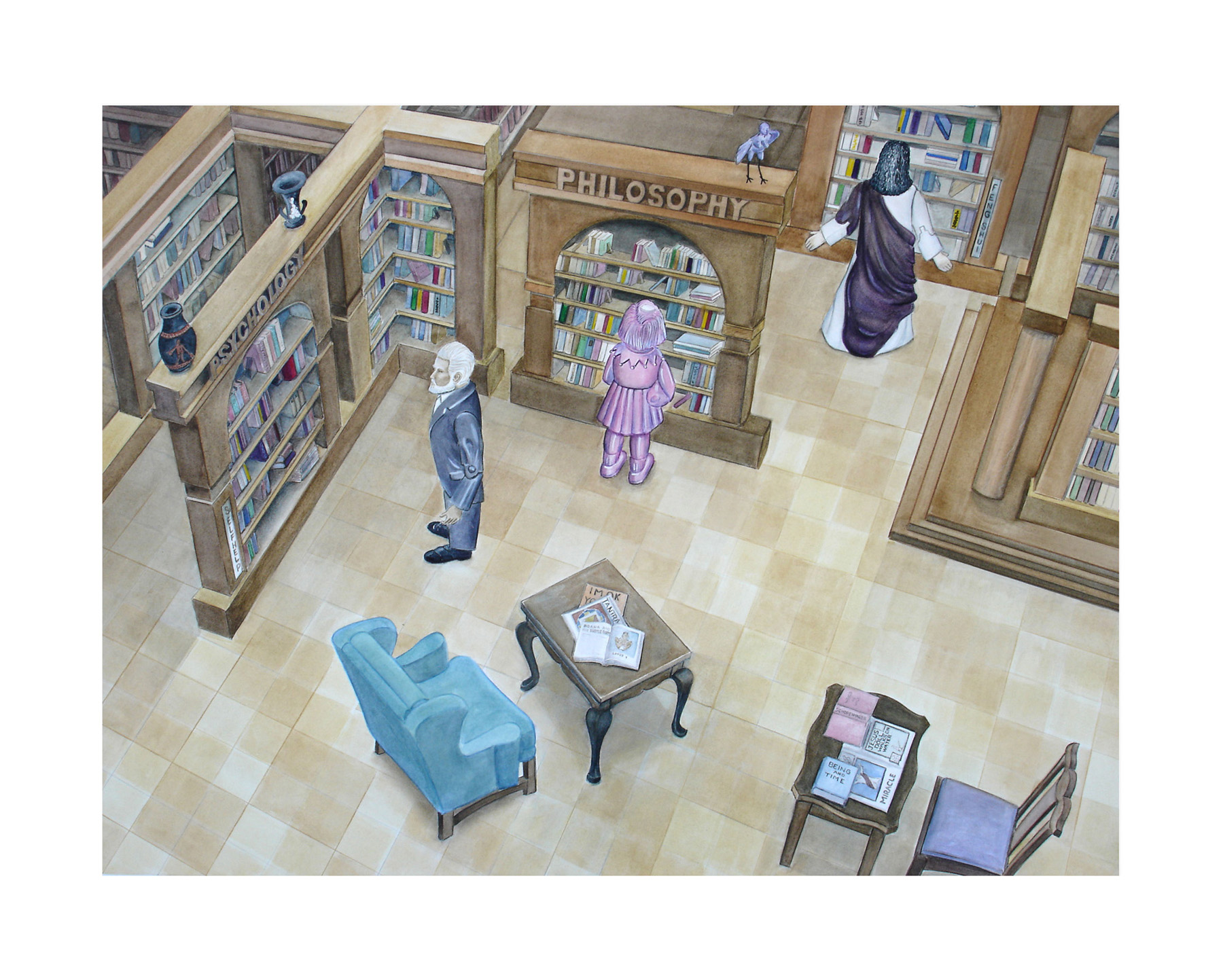
I still think there must be something, some small skill I could share that might be beneficial. I do like to read, so perhaps I could build a little free library. Then I could fill it with philosophy books. It seems to me it would certainly be a good thing if I were able to turn my neighbors into enlightened liberal thinkers.


High Comedy

As abrasive, ugly and, I guess, pretty comical  public debate has become these days (although it’s probably always been such, visibility being exacerbated by our competitive media outlets) maybe it’s time to extol the virtues of the high energy levels our contentious philosophical exchanges generate. However distasteful, things are certainly better than the situations censorious political structures in other parts of the world impose on their populations.

Still, I have to question motivations sometimes. I’m afraid rather than championing fairness and what’s best for all, it appears, often, the primary concerns center on me and mine, my own situation and how it measures up to what I see around me; seems like arrested development sometimes; a perpetual adolescence.

The 19th century philosopher John Stuart Mill reminds us that in any debate, both positions will contain a certain degree of truth; issues are never simply black and white. So, it’s up to us all, I guess, to try to make reasonable sense of the oppositional view rather than mindlessly rely on logical fallacies, strawman simplifications and ad hominem put-downs to bind us with our allies and reinforce what we wish to be the right and only view.

As I contemplate these ideas I’m fully aware of my own complicity, my own inclination to jump on my preferred band wagon, you know, thumb my nose at the opposition. But, at least it gets my blood pumping, raises the old energy level; better than wasting away in lethargy ville I suppose.

ship of fools


An Aversion to Heat

I’ve found myself, lately, inextricably rooted in a mindset of cynicism that I think may be due to being in the heat of these southern climes where I am temporarily residing.

Cynicism is not foreign to my nature by any means but it seems to have assumed a stronger grip on my thought processes these days as I endure temperatures in the 80’s and 90’s. For example, when I see all the elderly individuals down here, plodding along on their walkers or holding up traffic in their golf carts, rather than commiserate, I am drawn to thinking that their migration to these sunny climes is but preparation for their soon to experience date with the crematory oven.

And then there’s the ubiquitous border patrol’s insidious presence on the roadways seeking to intercept any illicit Hispanic migrants who might be crossing the border looking for honest work. And this is not to mention the legions of homeless individuals on bicycles, pulling wagons containing all of their worldly belongings, sleeping in the parks while being ignored by a government adverse to social provision of any sort.

Anyway, I’m thinking it may just be the heat that has me so off-center; it may be time to proceed north to cooler climes and a more compassionate perspective.

meditationdevice11

Populism

I’ve been trying to make sense of the term populism which has been in the news so much lately. I’ve always thought being popular meant acceptance by a large segment of people-the populus, I guess.

I’m familiar with the idea of popular culture: art forms like comic books, easy listening music, feel-good movies, reality TV and such that are easily accessible to many. On the surface, it sure seems like popularity ought to be a good thing.

But, whereas one might suppose populism might be about bringing everyone together in support of the common good, what it appears to really be about is dividing and conquering. I guess, when it comes down to it popularity generates the ‘Other’. In popular culture the ‘Other’ is the antiquated or out of style, in religion, those on the wrong path. In the political realm a populist seeks to gain popular support often times by demonizing those less virtuous than his own constituency, who are characterized as in opposition to the traditions and values so dear to his followers.

Given the disparate values –realities, really-of so many, I guess it’s probably unreasonable to expect wide spread agreement about political or religious issues. Still, it does seem reasonable to assume that everyone should be in favor of seeking the common good.

near vilnius 3

The Seven Deadly Sins

I’ve been thinking about the goings-on in the political realm, lately, in terms of the seven deadly sins the fourth century church fathers saw fit to impose on their faithful practitioners. I suppose those early church leaders may have been thinking of the moral health of the people, at least to some degree, while imposing a social order that was disregarded under penalty of mortal oblivion.

It appears the current flock are not as concerned about sinful mortality as they might have been centuries ago considering what appears to be widespread desires for more, more, more, material excesses and gluttonous consumption while basking in the vegetative state.

But, it seems to me these indiscretions are pretty minor compared to the behaviors of some of those seeking public office these days. What it all appears to come down to is hubris of monumental dimension, which, if we are to give credence to Dante, who gave this issue considerable thought, placed the prideful in the deepest bowels of his Inferno. Not scary anymore, I guess.

Zombie Apocalypse

There sure is a lot of negativity in the news these days: gun violence, terrorist threats, economic inequality, ecological degradation; the list goes on and on. Some think the situation is so dire the collapse of civilization as we know it is immanent: apocalypse on the horizon, I guess.

In order to preserve the way of life we’ve come to know, the thinking goes, we must take these world-threatening issues and deal with them. We’re bombarded daily with ideas advocated by the powers that be or would be on how disaster might best be avoided. The solutions offered vary considerably but the goals are the same: to preserve our way of life as we’ve grown to love and tolerate it.

There are other thinkers, however, that believe the harder we try to solve the problem, to prevent the disasters we anticipate, the more quickly we move toward their realization. The suggestion is, I guess, that these dire problems we face are inherent within the paradigmatic social, economic and cultural structures that define our lives. If these innovative thinkers are right, I suppose we might as well suck it up, embrace the imminent demise of the world as we know it and prepare ourselves for a great leap into the unknown, remain open to the unimaginable and to seek a dramatically different reality than the one we now know.

I must admit I’m at a loss as to how to think about all this: if working toward solutions to potential disasters will only hasten the consequences they portend, I suppose I could just ignore the issues of the day all together, but that seems pretty irresponsible. I’ve been reading a lot about zombie infestations lately that I’ll bet have to do with glitches in bio-genetic engineering. Maybe this will be the new reality. I think I’ll start reading apocalyptic sci fi more seriously.

Krishna and the Walking Dead3

The Imagined Order

I’ve been reading this truly wonderful book about the history of humankind that suggests, from a biological perspective, all of our social, economic and religious structures are fictions.

The beginnings of language, according to Dr. Harari, provided the means for storytelling. Putting words to phenomena and situations not quite understood produced magical beings and assigned human characteristics to the animal kingdom. These stories spread and were embraced by the imaginative creating a unity among otherwise alien groups which allowed a certain trust to develop, cooperation was established, and before they knew it populations of mutually dependent individuals became what we know as civilization. This, of course, took millennia to occur and the stories tended to lose their impact over time so the stories needed to be modified or replaced, upgraded I suppose, because civilization depended upon social, economic and religious structures to maintain validity.

I guess what this all means is that without fairly immediate familial connections humankind is unlikely to trust or cooperate with others unless they share some sort of fictional structure.  They need to learn to play the game.

I have to wonder how many, if any, of these games are good for biological mankind. Social organization of any kind inhibits instinctual behavior, communism undermines individualism, most religions emphasize a next life scenario which doesn’t bode well for biological survival and capitalism encourages excessive consumption which threatens the health of our natural world. I could go on and on.

Well, I suppose, as humankind evolved, shedding unnecessary and destructive genes along the way in favor or a larger brain and opposable thumbs, perhaps a gene or two of dubious worth survived. Maybe humankind’s demise will be the result of a ‘security gene’ that led to the development of civilization.

cosmic plan 3