Interpretations of Faith (Covering all the Bases)

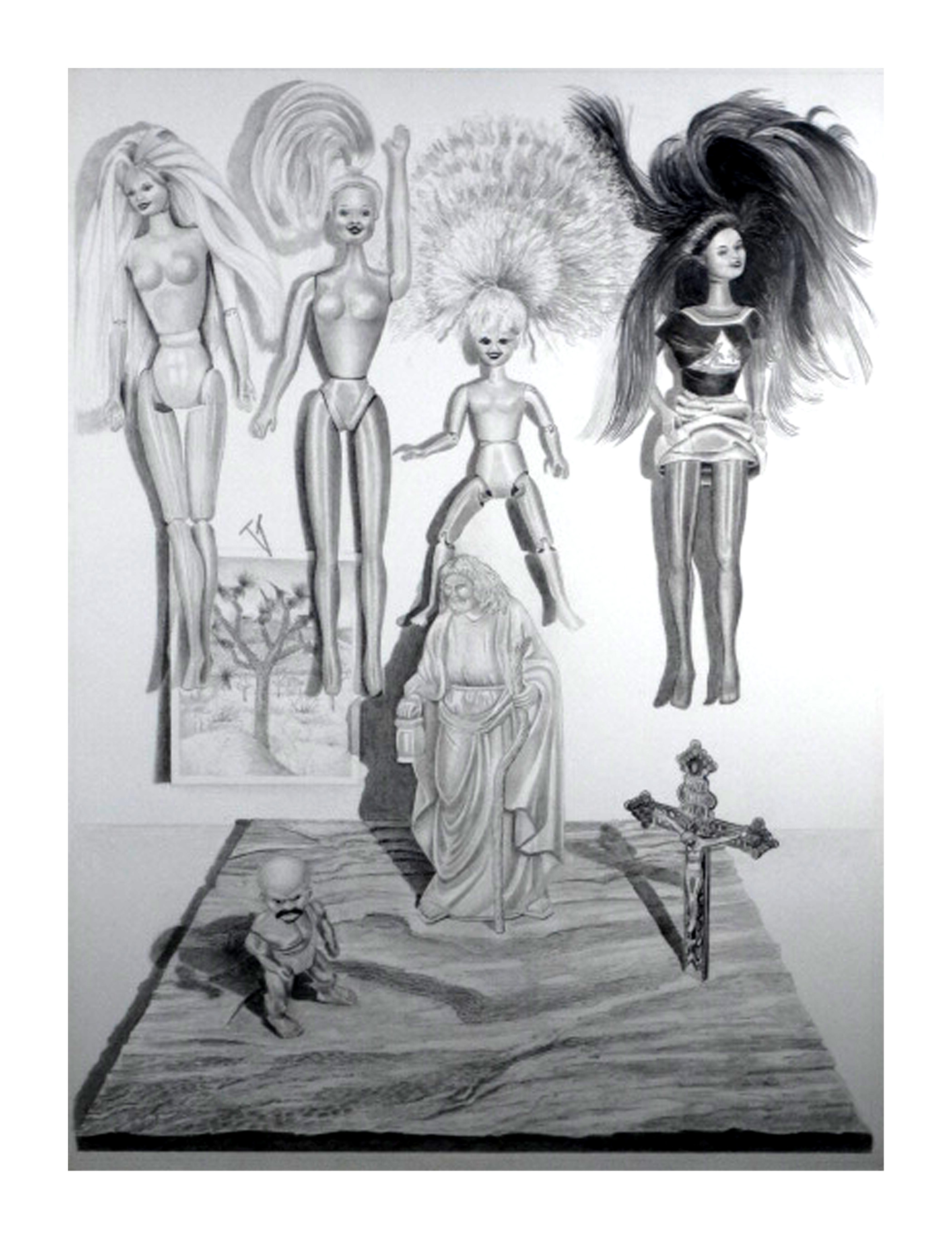
I’ve been reading, lately, about the beginnings of the religion of Islam. It appears the prophet Mohammad realized, early on, Truth was available as belief in a single all-encompassing deity that could be appealed to by each faithful man or woman. Each supplicant, through engagement in personal devotion and by leading a virtuous life would come to realize a heavenly reward.

As I think about the Christian belief in a triune but singular God and the promise of immortal reward for one’s resistance to sinful ways, I can’t help but recognize significant commonality, you know, in the way humanity seeks appeal to a higher Truth and hopes to avoid mortal extinction through adherence to a Supreme Being.

The divisiveness playing out these days as a result of fundamental extremism on both sides of the religious divide doesn’t seem to fit with the common tenets these religions share. One has to wonder if the essentials have some how been lost in the interpretations.

What’s Art got to do with It?

I’ve been reading that our brains evolved over the millennia to serve pragmatic purpose, you know, solve basic problems of survival: how to fend off dangers, procure nourishment and such. I have to wonder, if this is indeed the case, how and why, exactly, a pleasure center that responds to something as trivial as art evolved. It seems reasonable that our primeval ancestor was happy to experience a sharp and clear visual image as it would certainly be advantageous in hunting, foraging and warding off dangers, but at what point and for what reasons did our minds evolve to include the concept of beauty?

I can only imagine that at some point our primordial hunter may have been walking along a beach when his eye caught an unusually shaped piece of driftwood. Thinking about the bison pursued in the morning hunt he came to the stunning realization that this broken shard of willow resembled, quite accurately really, a large running animal. In this instant of cognitive brilliance we must assume the beginnings not only of animistic spirituality but the birth of art as well.

It all snowballed from there, I guess.

Diogenes the Cynic

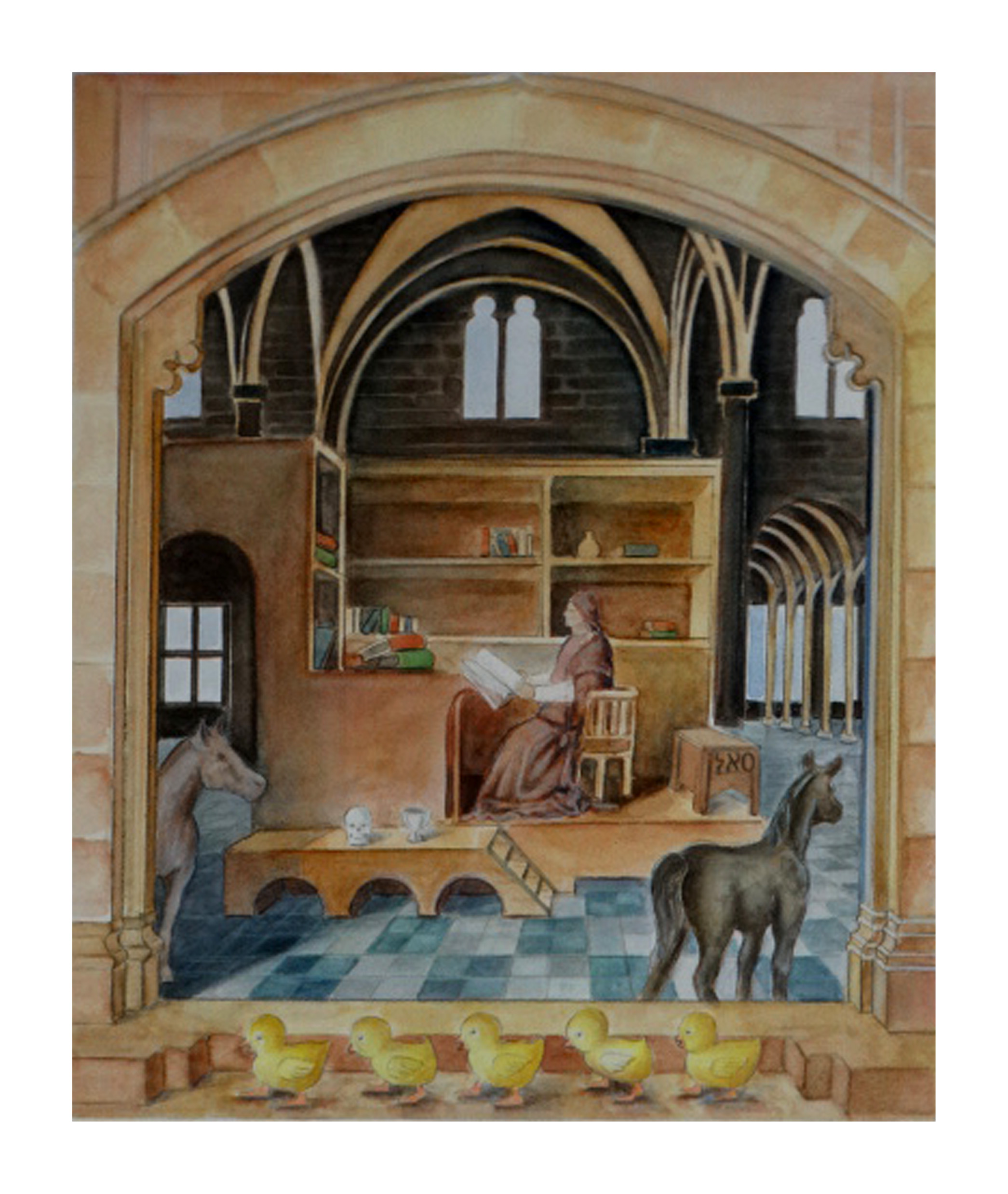
The ancient Stoics were of the opinion that in order to maintain a stable and strong essence a man has to prepare a bit by voluntarily practicing austerity, depriving himself (or herself, women too, of course) of certain basic human needs for a time in order to strengthen him/herself to face the inevitable difficulties life will most certainly offer at some point, probably in the not too distant future. This means, I guess, one should suffer a bit in order to steel oneself to better face future personal disasters, which could mean turning off the phone and laptop but could be a real challenge like spending time with the homeless for a while.

This idea got me thinking about Diogenes the Cynic, who for very different and less personal reasons, voluntarily lived the life of a social outcast dressed in rags, living in a wine cask and existing on handouts. But, living the meanest of existences he feared no loss which enabled him to live with absolute integrity.
He exhibited great strength of character unaffected as he was by the cultural trappings of the day, unintimidated by the power players of the time. Even Alexander the Great addressed him respectfully. (Bob Dylan’s admonition ‘you have to serve somebody’ doesn’t apply to Diogenes).

Well, as much as I admire Diogenes commitment, I’m not about to give up all my creature comforts, but I can see the value in modest deprivation, you know, as a way to prepare for the inevitable ill winds.

Maybe I’ll go camping for a while.

Trending Conservative

I’ve been thinking lately about what it means to be conservative. The tendency is, I think, to consider the term in a political sense, the stereotypical conservative/liberal dichotomy of uncompromising social and economic positioning that even conjures images of partisan physical appearance.

But, what I’m thinking about is how one deals with, resists or assimilates, changing social, cultural and moral values; how flexible one’s thinking needs to be to accommodate new ideas regarding ingrained beliefs that have become firmly ensconced and unchallenged for, maybe, generations.

Having long thought of myself as a progressive and open-minded individual, I’m finding it difficult of late to go beyond a ‘live and let live’ acceptance of notions that seem to be widely and enthusiastically embraced. It’s a bit disconcerting. The person I’m seeing in the mirror these days is less someone on the cutting edge of new ideas, someone not so avant-garde as I had always thought of myself as being.

I hate to think it but I’m afraid I’m becoming conservative.

Status

I’ve been contemplating, lately, the mystery of how exactly certain people gain status these days. Apparently material wealth is a significant factor, but one must wonder what else is required for one to attain pre-eminence. I get that prehistoric cave dwellers and school yard children look up to those larger and stronger than average, maybe quicker-witted as well but the rule doesn’t seem to follow for today’s notables. Observing those in the public eye these days has me wondering how so many of modest abilities and unexceptional skills could have gained attention except through happenstance, luck or inheritance.

At any rate, once realized, status holders seem reluctant to relinquish the attention. The tendency seems to be to remain in the spotlight by what ever means available. Conspicuous display of wealth through ostentatious consumption is an age-old tactic meant to ensure special recognition: it was a traditional status move by the indigenous people of the Northwest Coast in their Potlach ceremonies and such behavior is easy to observe in today’s affluent culture.

The problem now is, so many are affluent that it’s pretty difficult to attract much attention through wastefully excessive behavior. Some have upped the ante by exercising conspicuous outrage: offering incendiary commentary that demonizes groups and individuals which is then readily picked up by the media always interested, as they are, in feeding controversy.

Such self-serving mean spiritedness, one would think, should provide short-lived attention but the opposite seems to be the case. I guess too many of us are comfortable viewing reality as melodrama.

Natural Selection

I’ve been reading that evolutionary progress will proceed through natural selection. Generational changes to an organism, occurring as the demands of existential pressures require, upgrade survival abilities; which suggests, I guess, that those beings that evolve with the fittest genetic make-up will be the ones that thrive and reproduce, passing on their fitness to their offspring. But I’m led to understand, the system isn’t fool proof; occasionally a glitch in the system will cause unfavorable genetic mutations to be passed on which results in less than desirable progeny.

One does have to wonder sometimes at the actions and decisions some people choose; maybe it’s the ‘choice gene’ that has mutated or perhaps it’s missing altogether in those folks who seem to proceed through life in a more or less spontaneous and thoughtless manner. These unfortunates may find themselves making bad life choices that result in a failure to mate and reproduce or prematurely exit existence, which I suppose, is how nature cleans up the gene pool.


Superior Intelligence

I’ve been reading that there is evidence to suggest that the world is getting smarter, that world-wide, IQ scores have been steadily rising at a rate much faster than an evolving humanity can explain, which doesn’t necessarily mean, I guess, that a person of average intelligence one hundred years ago, transported by time machine to the present would be borderline retarded by our standards. But the presumption is our great grandparents would be sorely lacking in the intellectual flexibility we’ve become adapted to in recent generations to deal with the complexities of technological advancements not to mention the inter-connectedness communications with the world-at-large has impressed upon us. It appears our existence, the intellectual world we occupy, is larger and multi-faceted in ways unimaginable in the world of the 1920’s.

One wonders, though, if living in a smaller reality back then, restricted even to a limited geographical existence, you know, knowing less, didn’t have its advantages in terms of less anxiety, stress, working longer days and weeks making for less time to contemplate, anticipate all of the potential evils one might imagine. Living as they did through the devastation of WWI and the 1918 flu epidemic, did a naïve faith make it possible for them to realize a peace we will never again be able to grasp?

We’re healthier, wealthier and longer-lived than our great-grandparents could have ever hoped to be, but I have to wonder if our increased awareness makes us happier.


Politics and Reason

I’ve been reading that one’s political affiliation is the primary determiner of the position one assumes regarding the hot-button issues of the day. Well, maybe not everyone’s, but the suggestion is that a political stance is determined to a great extent by social relations, how one identifies with those around her: a kind of in-group, tribal association that leads to consumption and regurgitation of the appropriate sound-bites consistent with the ‘correct’ political view.

To support such a perspective my very credible source suggests that, when questioned, most on the political fringes (which now make up around 40% of the electorate) have little knowledge of the nuances of the issues: global warming, health-care for all, world trading agreements, capitalistic regulation, the social safety-net, the plight of immigrants are all seen through the lens of political bias; which accounts, pretty much, for the divisiveness in the contemporary social dialogue: each side demonizing the other aided and abetted by profit-seeking punditry.

So, I guess the question is, how to discourage unreasoned dogmatic belief and encourage critical thinking: thinking carefully about both sides of issues and side-stepping political flashpoints. It may all be left up to a younger generation to re-find enlightened thinking; their power is growing, after all, funeral by funeral.

Maybe Nietzsche wasn’t so Pietzsche

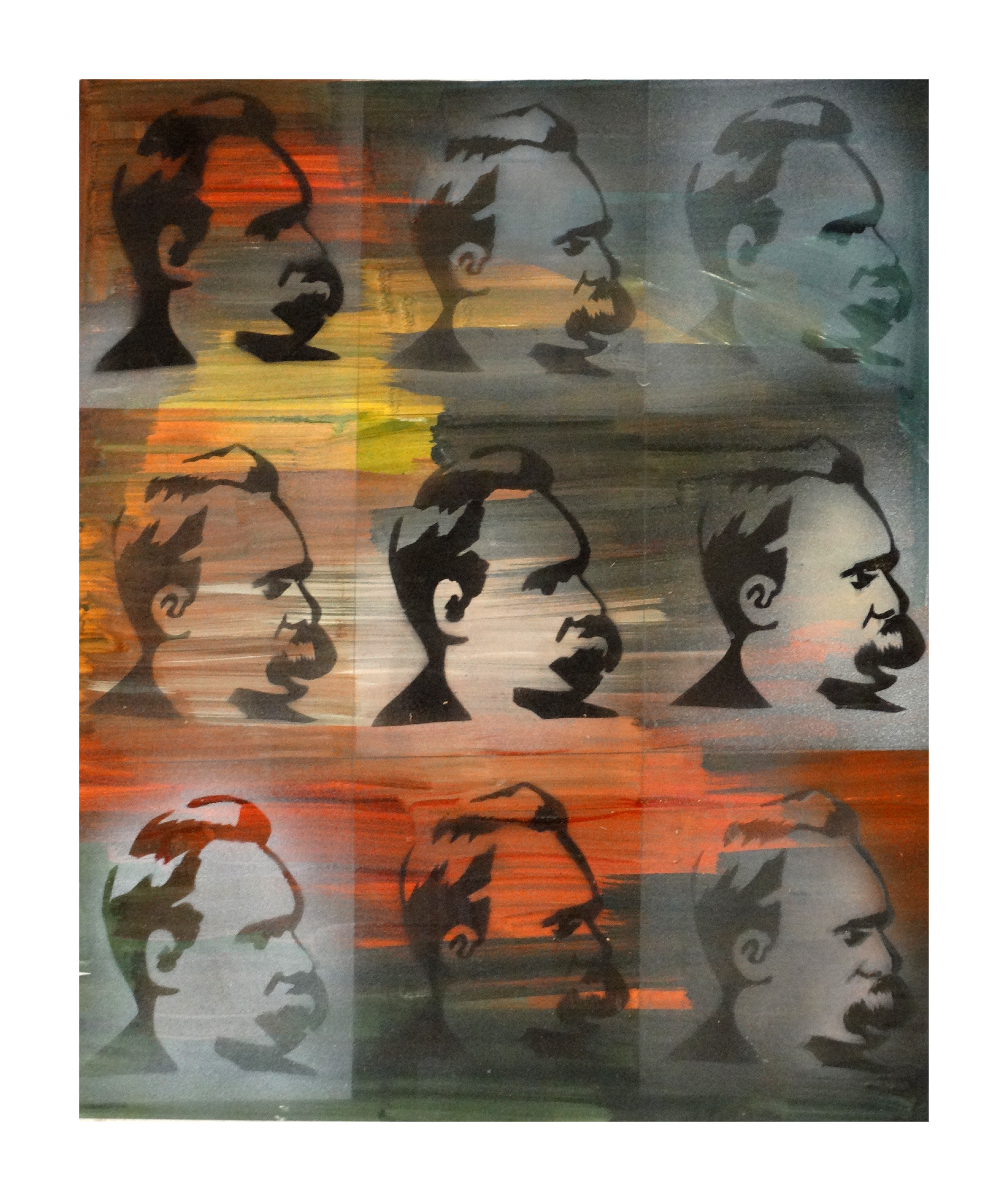
I’ve been reading that, perhaps, Friedrich Nietzsche doesn’t deserve the unqualified admiration many, including me, have afforded him. His narrative flair, admonition to become; to rise above the masses and his denigration of the humble subservience, the ‘slave morality’ the church imposes, was, and still is I suppose, heady stuff for energetic youth who see before them boundless opportunity once they break free of the shackles of their controlling elders. I guess the problem becomes, how many friends and relatives end up under the bus as our young Nietzschean races toward becoming all she can be.

Our young pursuer of truth doesn’t realize, I guess, that Nietzsche’s ‘Overman’ is beyond her reach, the amoral purveyor of ‘Beyond Good and Evil’ will without second thought cast her into the abyss alongside her fellow inferiors. Our philosopher’s dismissal of moral proprieties, advocacy for the advancement of a dominant ‘higher man’ and elimination of the decaying races was philosophical fodder upon which the fascist evils of the 20thl century fed.

There’s no doubt Nietzsche was a great intellect (with an ego that matched). It’s unfortunate his social isolation or, perhaps, his austere Christian upbringing took him down such a pessimistic path. What would it have taken, I wonder, for him to have found true human compassion?

Populism

It appears populism has become a significant factor in world events these days. I guess the term refers to, among other things, belief in the need to protect the homeland against outside pressures and influences; the homeland being the small segment of the world where the populists reside. Ideas like establishing a world community where important issues like environmental degradation, global conflict, world hunger or the potential spread of catastrophic diseases might be addressed isn’t on the agenda apparently.

I’ve been reading that populist movements are made up, primarily of old white guys that oppose, for the most part, in-coming populations of people of other ethnicities, who, they apparently think (the old white guys, that is) are weighing too heavily on limited resources. Other fears surface as well: fears of being over-run by alien cultural beliefs and being relegated to minority status if the influx is allowed to continue.

There’s a sense here of not wanting to think too hard about the big picture, or, maybe even acknowledging there is a big picture. It seems a bit like, you know, when you were a kid, pulling the covers over your head to escape the unknown entity that is making the noises under the bed and then in the morning manning-up and informing the authorities of the presence of aliens.

Well, anyway, I’m hopeful that an enlightened view will reappear in the not-to-distant future and a cooperative, inclusive humankind will re-emerge and the light of reason will break through the momentary darkness.