Populism

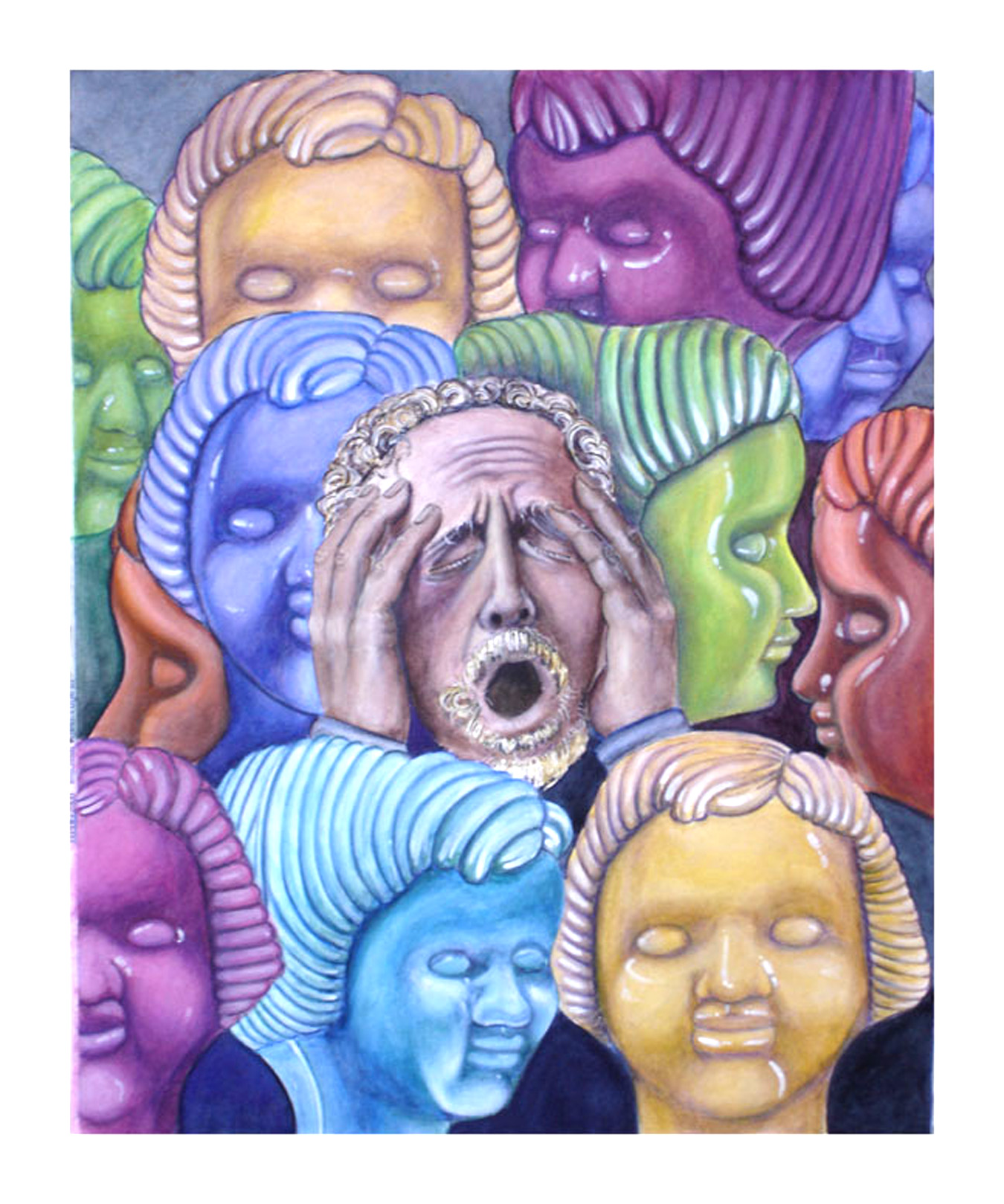
I’ve been trying to make sense of the term populism which has been in the news so much lately. I’ve always thought being popular meant acceptance by a large segment of people-the populus, I guess.

I’m familiar with the idea of popular culture: art forms like comic books, easy listening music, feel-good movies, reality TV and such that are easily accessible to many. On the surface, it sure seems like popularity ought to be a good thing.

But, whereas one might suppose populism might be about bringing everyone together in support of the common good, what it appears to really be about is dividing and conquering. I guess, when it comes down to it popularity generates the ‘Other’. In popular culture the ‘Other’ is the antiquated or out of style, in religion, those on the wrong path. In the political realm a populist seeks to gain popular support often times by demonizing those less virtuous than his own constituency, who are characterized as in opposition to the traditions and values so dear to his followers.

Given the disparate values –realities, really-of so many, I guess it’s probably unreasonable to expect wide spread agreement about political or religious issues. Still, it does seem reasonable to assume that everyone should be in favor of seeking the common good.

near vilnius 3

Oneness

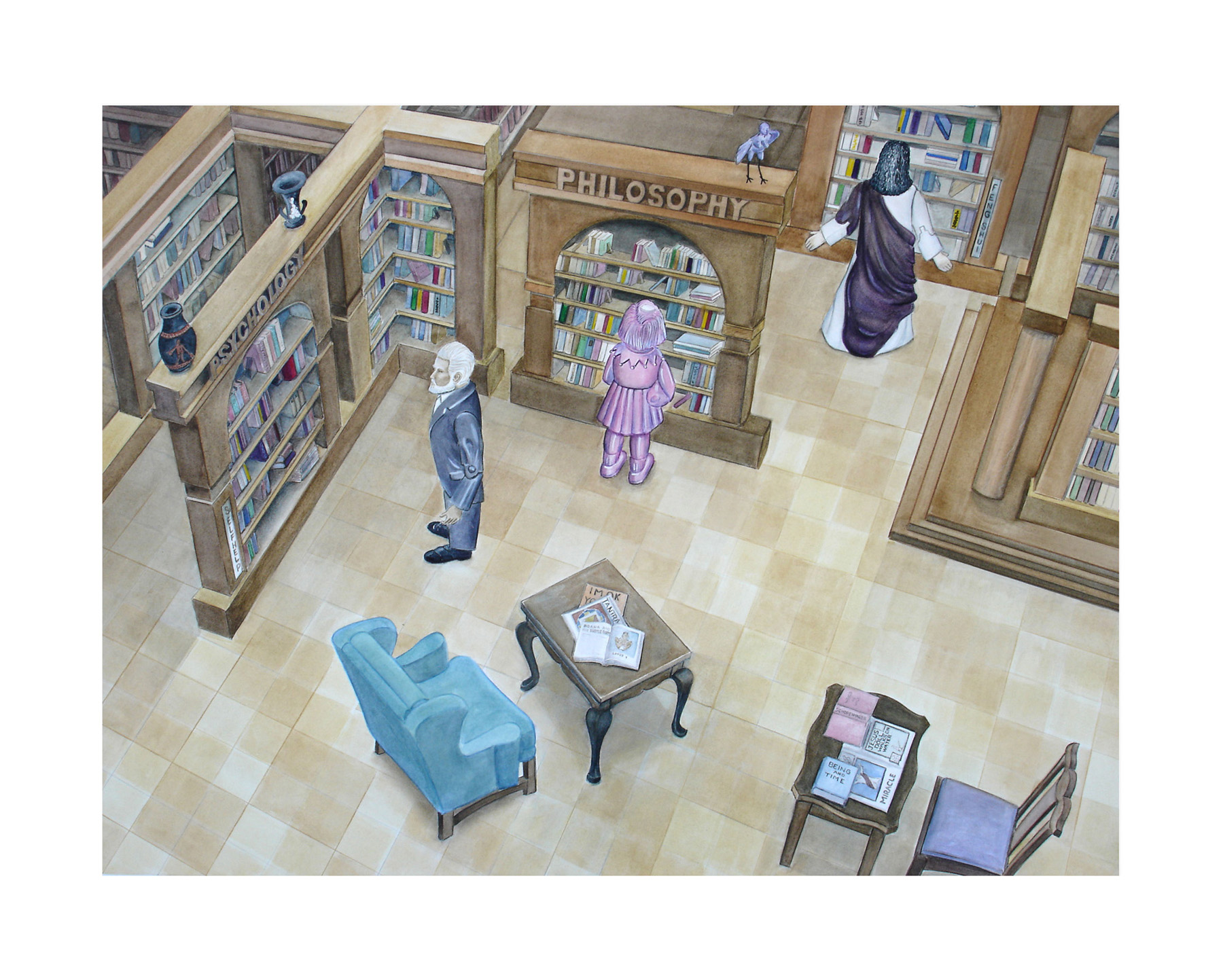
I’ve been trying to make sense, lately, of the philosopher Arthur Schopenhauer’s concept of ‘Will’. As far as I can tell, rather than connoting the generally held understanding of the term as having to do with conscious desire, mood swings or self-awareness, ‘Will’ for Schopenhauer is the non-living force, the undifferentiated, timeless, space less, noumenal Oneness from which all differentiated phenomena (including us) is manifest. This means, I guess, that we all share a common origin that may account for our moral proprieties, compassion and fellow-feeling.

Well, as I was contemplating this recently during a three hour flight, the beauty of the idea really hit home. I found myself in an aisle seat in the last plane row right next to the rest rooms. After drinks were served a flow of humanity descended upon me, enveloping me in what I can only imagine must be very much like the primordial ‘Will’ in which we all swam and to which we will return.

I must say the experience was a striking realization of how connected we sentient beings are, at least in a very general sense; so simpatico, comfortable in our oneness as long as we don’t individuate too much. It was actually fairly pleasant in remembrance until I discovered I had acquired an unfamiliar germ that caused me a bit of distress.

existential angst

The Basis of Morality

I guess the German Philosopher Friedrich Nietzsche is still getting a bad rap for recognizing, in the late nineteenth century, that belief in Christian dogmas was in a steep decline. And then, he added fuel to the fire by condemning what he called Christian ‘slave morality’, arguing that such a stance undercuts the abilities of the capable among us from exercising the strength and knowledge necessary for social advancement.

Unfortunately for our philosopher certain totalitarian regimes, have, over the years taken this philosophy as a justification to terrorize and exterminate populations of peoples of their choice. It’s all so unfortunate because the valuable message Herr Nietzsche gave to us all is that we need to rethink our moral values, find true ground for our personal moral values rather than rely whole-heartedly on a two thousand year old text.

So, anyway, what got me thinking about this was an article I read recently that suggested our moral values can be thought of as having a firm grounding in evolution. For life as we know it cooperation has always been the key; on a molecular level single cells join together to form complex organisms, which, of course, are basically us. Cooperation is primary to the survival and flourishing of animal life, from acquiring basic needs to the care and protection of off-spring, and is found everywhere. In humankind our inherent cooperative tendencies manifest as love, compassion and altruism. The aberrations hate, lust, greed are fairly looked upon in a negative light.

So, perhaps we should all thank Charles Darwin for having the strength and courage to bring to light the true basis for our humanity.

evolutionary truth

Winter Musings

Winter in the northern climes, where I now am, demands one’s attention. Temperatures can be frigid, even gelid; if one is inclined toward optimism, at least fresh. Outdoor activities usually require a reasonably vigorous energy output just to keep up body heat. Walking about can be treacherous; light snow cover over ice almost begs for a twisted knee or sprained ankle. When the wind comes up out of the north it can take one’s breath away. I could go on and on, but the fact is I love winter: the beauty of the high visual contrasts in the landscapes, the deep shadows and black woods on dominating white snow and the clean, pure cold that eradicates the rotting vegetation along with those inhospitable microbes the summer and fall have produced.

Anyway, I was thinking about the analogic connections often made between seasonal progression and animal life cycle: Spring is often associated with youthful exuberance (not to mention fecundity); Summer is thought of as a time of maturation and maximal productivity- a fully realized adulthood; Fall is often seen as a time of rest and reflection, of old age and remembrance of what has been. What, then, does that make winter? I would rule against death because I don’t believe one can be aware of being dead. Maybe dormancy is a bit like the concept of purgatory; not viable as far as I can see.

So, I guess that leaves winter as the after-life. I know hell-fires are a common conception of what one might encounter in the least favorable after-life scenario, but certain medieval thinkers indicated a belief that ice and cold will be a part of one’s final sufferings. So, if winter is Hell and winter is where I eventually end up in perpetuity, I’m thinking it may not be such a bad thing.

meditationdevice10

Our Tenuous Existence

I’ve been reading about the recent astronomical discoveries related to gravitational waves and it’s got me thinking about how very tenuous our existence is. Apparently, it’s been known for some time that the slightest variation in gravitational fields could send the earth cascading to its fiery demise in collision with the sun, or, shooting off into space where it’s very dark and cold; not exactly up-lifting scenarios.

I suppose the healthy thing to do would be to not pay a lot of attention to these abstract astronomical notions but the way it’s presented, for anyone with a penchant for SciFi, the vision is pretty terrifying.

I guess researchers have found evidence of gravitational ripples originating from the very beginnings of time and now believe they can actually hear such waves occurring from the collision of two black holes deep in space. If these waves are out there it may be just a matter of time until they get close enough to maybe raise havoc with our solar system.

Let’s hope our brave scientists keep looking, as they have been, I guess, for some time, for other worlds out there somewhere that have the capacity to support life as we know it. Any planets they find that might fit the bill will probably be too far away to do any of us much good, but the knowledge of the existence of such places is bound to provide a bit of peace of mind for us SciFi readers.

biosphere8

The Nature of Love

I was thinking the other day how emotions sometimes creep up on a person, how they seem to come out of nowhere. Suddenly one finds herself overwhelmingly attracted to someone for no apparent good reason; logic doesn’t seem to play a part in what might be called, I suppose, love at first sight, but may be better described as ‘animal attraction’.

If the object of one’s desire shows any sort of mutual interest things can get pretty complicated.  When one finds herself deeply in love it often comes as a revelation; one moment content living the single life and suddenly emotionally connected to another.  Such a situation can considerably upset one’s well-established independent life-style; tensions will invariably emerge and a re-evaluation of the situation will more than likely be necessary.

At this point a not insignificant dilemma has developed; one must weigh the idea of returning to the peacefulness of single existence against the occasional elation and/or camaraderie of the relationship.  The realization that both parties must assume a stance of ‘give and take’ if the union is to be successfully sustained will bring to light the personal differences the individuals bring to the table.

And, those differences can be significant.

lossofinnocense3

Mandalas to Order

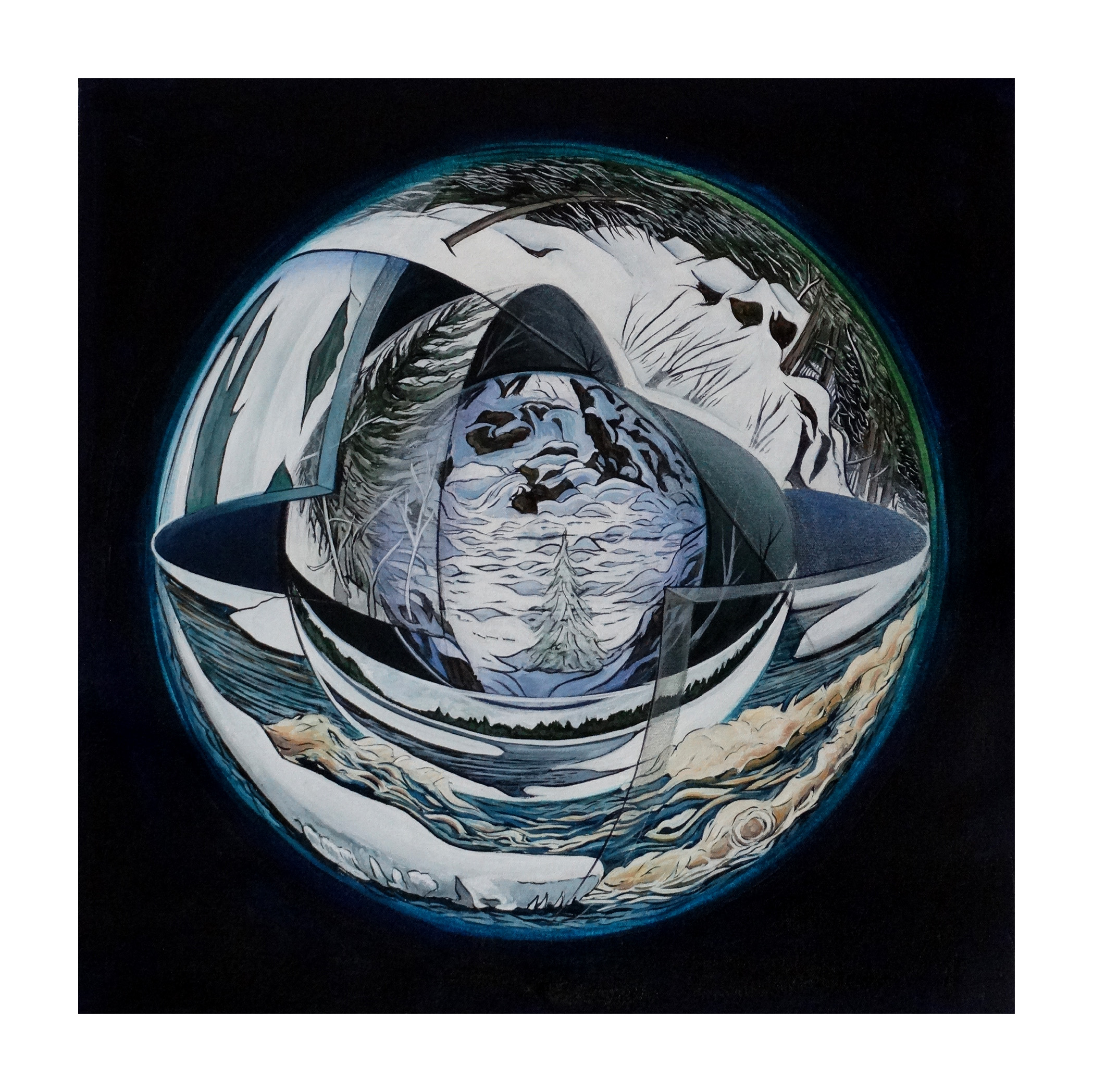
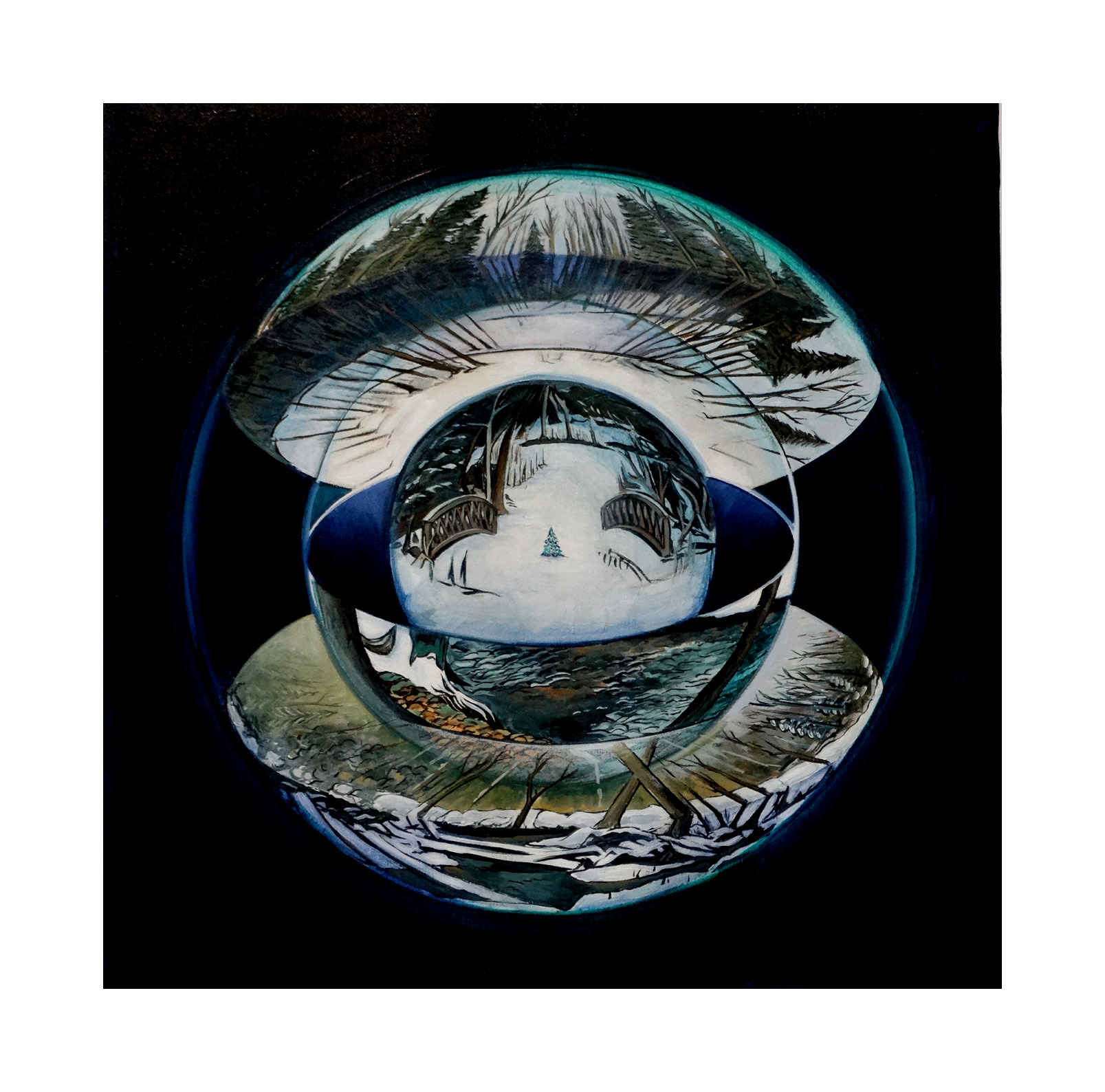
An idea has come to me lately that, perhaps, the problem I have with meditative practice has to do with not having an appropriate focus to immerse myself in to. I’m pretty sure that if I’m ever to build regular periods of meditation into my daily goings-on I’m going to need a more meaningful target on which to concentrate.

As much as I love the Buddhist mandalas, I find it difficult to fully appreciate the iconography. The multiplicity of various Buddha manifestations and bodhisattvas and their relationships and stories, although colorful and interesting just don’t work for me from a meditative stand point.

But, the idea of sitting before one of these large circular structures, concentrating on ‘entering’ and moving through the various protective layers to reach a meaningful center has a lot of appeal. So, I’m thinking that maybe a more appropriate mandala for those of us not steeped in a religious tradition might contain aspects of our familiar environs: imagery that we non-religious can relate to. Those of us desiring a regular time of introspection who happen to live in rural areas might relate better to landscape elements; city dwellers in need of times of reflex ion might appreciate urban elements in their mandalas.

Well, I’ll see what I can come up with; let me know what you think.

meditationdevice9

The Inadequacy of Language

There is a certain philosophical perspective I’ve been reading about lately that maintains language is the basis of all thought. Not only can one not think without a language structure, but, on this view, one experiences in terms of language; to know the empirical truth before you is to be able to formulate what you see, hear, smell, and taste in language. In fact, on this view, all cognitive activity of any value is language based.

I have no doubt there are nuances to philosophical thinking that are beyond me, but this view seems just wrong. I don’t know how, exactly, these thinkers determine what is valuable but it seems to me there are plenty of thoughts and experiences that precede language and to my mind are pretty significant. For instance, if I tell a story about an experience I have, if I tell it well, it may provide insight, even be elegant but the story will never be the experience or get at all the experience, whatever it may be, means to me. In any experience I, and I would think anyone else, has beside the sensory input from all of my senses occurring simultaneously, memories, relationships, and various connections come into play. My story, being necessarily linear can do little more than summarize.

And, as far as thoughts go, when I’m making a sculpture or painting the thinking I’m doing having to do with structure and color or whatever certainly precede any language that may later be applied to them. I think this is true for most people; consider how inauthentic, ridiculous even, artistic statements made after the fact often appear.

So, I will continue to enjoy the complexities and depth of my experiences and activities, and, although there will be much I experience of an ineffable nature I will always know of the reality they hold.

meditationdevice8


Zombie Apocalypse

There sure is a lot of negativity in the news these days: gun violence, terrorist threats, economic inequality, ecological degradation; the list goes on and on. Some think the situation is so dire the collapse of civilization as we know it is immanent: apocalypse on the horizon, I guess.

In order to preserve the way of life we’ve come to know, the thinking goes, we must take these world-threatening issues and deal with them. We’re bombarded daily with ideas advocated by the powers that be or would be on how disaster might best be avoided. The solutions offered vary considerably but the goals are the same: to preserve our way of life as we’ve grown to love and tolerate it.

There are other thinkers, however, that believe the harder we try to solve the problem, to prevent the disasters we anticipate, the more quickly we move toward their realization. The suggestion is, I guess, that these dire problems we face are inherent within the paradigmatic social, economic and cultural structures that define our lives. If these innovative thinkers are right, I suppose we might as well suck it up, embrace the imminent demise of the world as we know it and prepare ourselves for a great leap into the unknown, remain open to the unimaginable and to seek a dramatically different reality than the one we now know.

I must admit I’m at a loss as to how to think about all this: if working toward solutions to potential disasters will only hasten the consequences they portend, I suppose I could just ignore the issues of the day all together, but that seems pretty irresponsible. I’ve been reading a lot about zombie infestations lately that I’ll bet have to do with glitches in bio-genetic engineering. Maybe this will be the new reality. I think I’ll start reading apocalyptic sci fi more seriously.

Krishna and the Walking Dead3

Qualia

I’ve been making paintings, lately, as foci for meditation. The images in the paintings represent places in my familiar environs that have personal significance for me. What the bases of the deep feelings I have for these places is, is hard to explain.
I suppose reminiscence might be part of it. I’ve visited most of the places depicted in the paintings many times, so one might assume some of the significance the images hold for me has to do with remembered experiences, you know, feelings of nostalgia for an innocent past, even though I’m quite cognizant of the fact that past experiences are often stripped and cleansed of their reality.

Maybe the emotional responses I experience upon viewing the images in these paintings are a result of the physicality of place, the natural beauty, the richness of a supportive environment so favorable to my well-being. Or, perhaps, the significance of these represented places is due to my considerable imagination, whereby I bend the environs to suit my fantasies of an idyllic Shangri-La.

Or, maybe these images are important for no other reason than that they were selected by me and therefore received more attention than I usually pay to the world around me.

As I think about it, no one of the above explanations seems to capture the essence of the deep feelings the places depicted in my paintings elicit in me. The feelings I experience seem to be beyond rational explanation-ineffable, really; a result of my peculiar phenomenal consciousness. Which makes me a unique, special and, dare I say, magical individual.

But, perhaps the significance of these images for me is all explainable in terms of a combination of sensory input, memories, introspection and habit; not one but parts of all the above thoughts are involved; maybe it’s all about mind, not magic.

As much as I might like to recognize my individual uniqueness, it seems much more likely that I, and everyone else, might better be analogized in computational terms rather than thought of as metaphysical curiosities.

meditationdevice6